

Authenticity, origin and certificates
Which laboratories examine gemstones, what a report tells you and how Vikar Ahmed in Idar-Oberstein discloses the origin and treatment of every stone.

The short answer
A gemstone report is the assessment of an independent laboratory on the authenticity, quality and treatment of a stone and, on request, its origin. For diamonds, the GIA report is the widely used standard, while for colored gemstones the Swiss laboratories SSEF and Gübelin are considered especially reputable. You should clarify which report is available for a stone before you decide, as well as the treatment statement, which must be disclosed under CIBJO rules. For diamonds, Vikar Ahmed works almost exclusively with GIA, in exceptional cases with HRD Antwerp. For colored gemstones he uses Gübelin, SSEF, GRS and the DGemG.
Which laboratories examine gemstones?
A report is only as good as the laboratory that issues it. In the international trade in fine stones, only a few houses have become the reference. Their reports are read and compared by collectors, jewelers and auction houses worldwide.
The Gemological Institute of America (GIA) grades diamonds by the 4Cs: carat, color, clarity and cut. A GIA report is therefore the standard above all for diamonds. The Swiss laboratories SSEF and Gübelin are known for colored gemstones. Their reports are held in particularly high regard for Paraíba tourmaline, emerald or rubellite, especially where treatment and origin are concerned.
Laboratory | Focus | Typical details |
|---|---|---|
GIA | Diamonds and colored stones | Authenticity, 4Cs, treatment |
SSEF | Colored gemstones | Authenticity, treatment, origin on request |
Gübelin | Colored gemstones | Authenticity, treatment, origin on request |
At Vikar Ahmed | GIA for diamonds (HRD Antwerp as an exception), Gübelin, SSEF, GRS and DGemG for colored stones | Original certificate for diamond center stones from 0.50 ct and fine colored stones, origin report from 1 ct |
What a report shows
Every report begins with the identification: is the stone natural, synthetic or an imitation, and which gemstone species is it? Weight in carats, measurements and cut follow. One carat equals 0.2 grams.
For diamonds the report also grades color and clarity. The highest grade for a colorless diamond is D Flawless: color D and flawless. For colored stones the focus is on treatment. An origin report also states the country of origin.
The report number is important. It usually lets you verify a report with the issuing laboratory, at GIA for example via Report Check. Keep the report and number separate from the piece of jewelry.
What a report states
- Identification
- natural, synthetic or imitation
- Weight
- in carats (1 ct = 0.2 g)
- Measurements and cut
- as stated in the report
- Color and clarity
- for diamonds according to the 4Cs
- Treatment
- untreated or type of treatment
- Origin
- only in an origin report
Treatments under CIBJO rules
A treatment is any change made to a stone after mining, such as heating or oiling. Many colored stones are treated to improve color or clarity. This is common in the trade but must be disclosed.
CIBJO, the World Jewellery Confederation, sets out how stones and treatments are named. A stone is untreated when its color and clarity have not been altered, as confirmed by a laboratory report. Such stones are rarer.
At Vikar Ahmed, every treatment is disclosed openly, in the consultation and in writing on the certificate, expert report and invoice. Common treatments include heating sapphires, rubies and Paraíba tourmalines or oiling emeralds. For emeralds, Vikar Ahmed accepts only light, colorless oiling, no artificial resins and no colored oil.
Good to know
Always ask for the laboratory report before deciding and read the line on treatment. If it is missing, the information on the stone is incomplete.
Proof of origin
An origin report is a laboratory finding that states the country in which a stone was mined. It is a separate commission and goes beyond a pure identification report, which confirms species, authenticity and treatment.
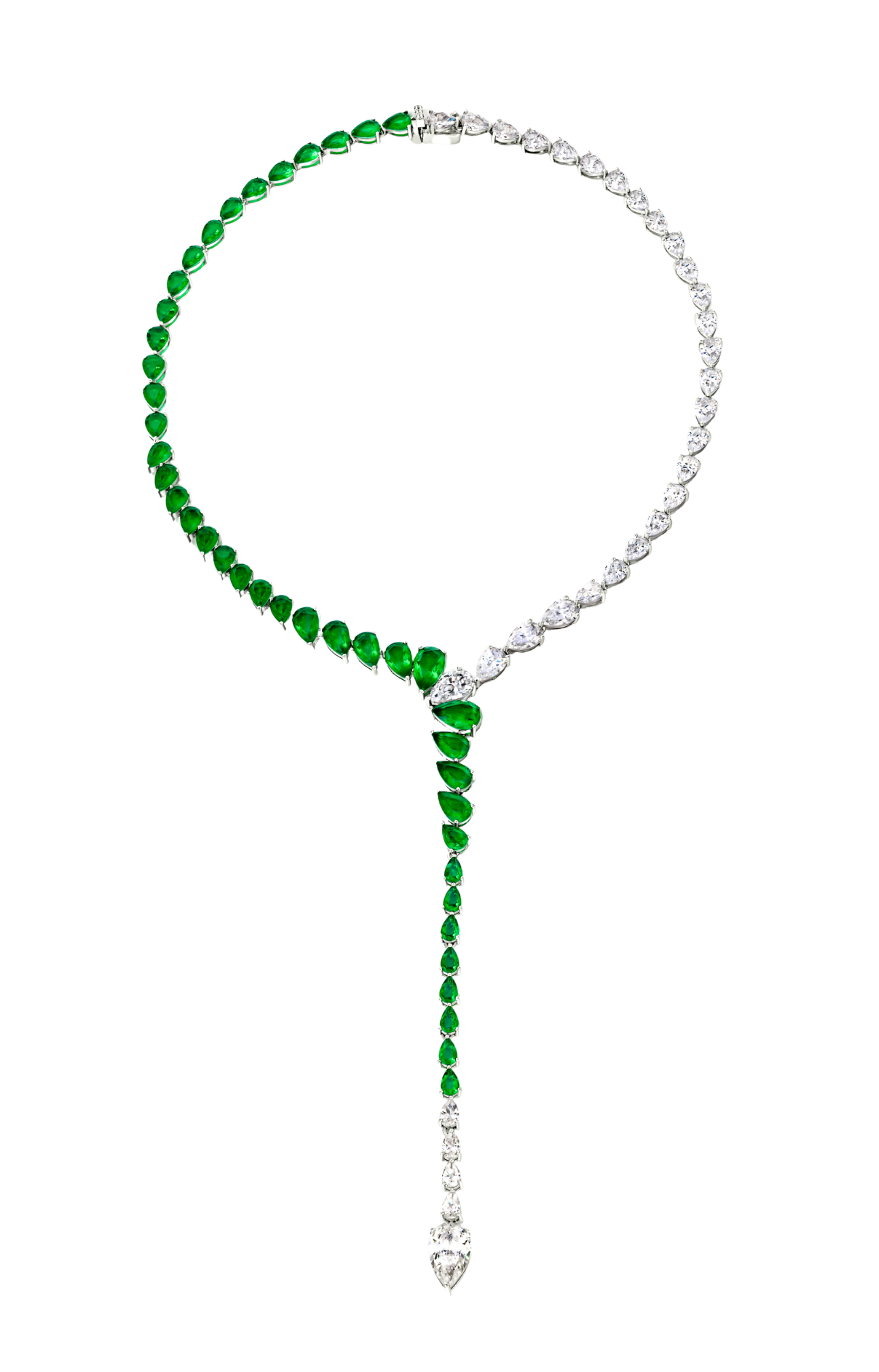
For some stones origin has a marked effect on value, for example Paraíba tourmalines from Brazil or emeralds. For a bespoke necklace or an exceptional colored stone it is therefore worth asking whether an origin report is available.
Vikar Ahmed is based in Idar-Oberstein, the gemstone town with centuries of gem cutting and goldsmithing tradition. A statement of origin is a laboratory's assessment and only as reliable as the report behind it. So ask specifically for an origin report. At Vikar Ahmed, a report with origin determination is standard for fine colored gemstones from 1 carat, and for Brazilian Paraíba often below that. Emeralds come mainly from Colombia, with some from Zambia, and Paraíba tourmalines from Brazil, Mozambique and Nigeria.
Sample report
This is how a laboratory report is structured. The fields show which details you will find on the report for your stone.
Frequently asked questions
Is a GIA report worth the extra cost for an engagement ring?
A GIA report independently documents a diamond's authenticity and 4Cs. That provides certainty when deciding and for a later appraisal. The larger the diamond's share of the ring's value, the more worthwhile the report. At Vikar Ahmed, every diamond center stone from 0.50 carats comes with a GIA report.
Which jewelers clearly state the origin and treatment for colored-stone engagement rings?
A statement is traceable when it is based on an independent laboratory report. Make sure the treatment and, if desired, the origin are stated in the report and that the laboratory is named. Under CIBJO rules, treatments must be disclosed. Ask about this before the design stage.
Which engagement rings with an untreated colored gemstone are worth the premium over treated stones?
Untreated stones are rarer, but the added value depends on the stone. For species that are almost always treated, such as heated sapphires or oiled emeralds, an untreated stone is a real distinction. Only a laboratory report documents this. The color, clarity and cut of the individual stone still matter. Vikar Ahmed works with both heated and unheated Paraíba tourmalines. The laboratory finding records this as “heated” or “no indications of heating”.
Origin report or identification report only: what do I need for an emerald in a bespoke necklace?
An identification report confirms that the stone is an emerald and names treatments such as oiling. An origin report adds the laboratory's assessment of the country of origin. For a necklace with a significant emerald, origin is worthwhile mainly if it matters to you, for example with Colombian stones.
Engagement ring with or without an origin report: does it make a difference?
Not for the beauty of the ring, but for its documentation. An origin report records the laboratory's assessment of the country of origin. This matters mostly for colored stones, where origin helps determine value. For a diamond, the 4Cs are usually the focus.
Which jewelers in Idar-Oberstein supply a gemstone report with the engagement ring?
At Vikar Ahmed in Idar-Oberstein, every diamond center stone from 0.50 carats comes with a GIA report, and fine colored stones with a report from Gübelin, SSEF, GRS or the DGemG. In general, before deciding, ask which laboratory issued the report and whether it states treatment and origin.
Terms to look up
GIA report
An assessment by the Gemological Institute of America on the authenticity and quality of a stone.
SSEF and Gübelin
Swiss laboratories whose reports are held in particularly high regard for colored gemstones.
CIBJO
The World Jewellery Confederation, whose rules set out how stones and treatments are named.
Treatment
Any change made to a stone after mining, such as heating or oiling, which must be disclosed.
Untreated
A stone whose color or clarity has not been altered in any way, confirmed by a laboratory report.
Origin report
A laboratory finding that states the country in which a stone was mined.
Sources
- Gemological Institute of America (GIA)
- CIBJO: The Gemstone Book
- SSEF Swiss Gemmological Institute · Gübelin Gem Lab
Read more
All insights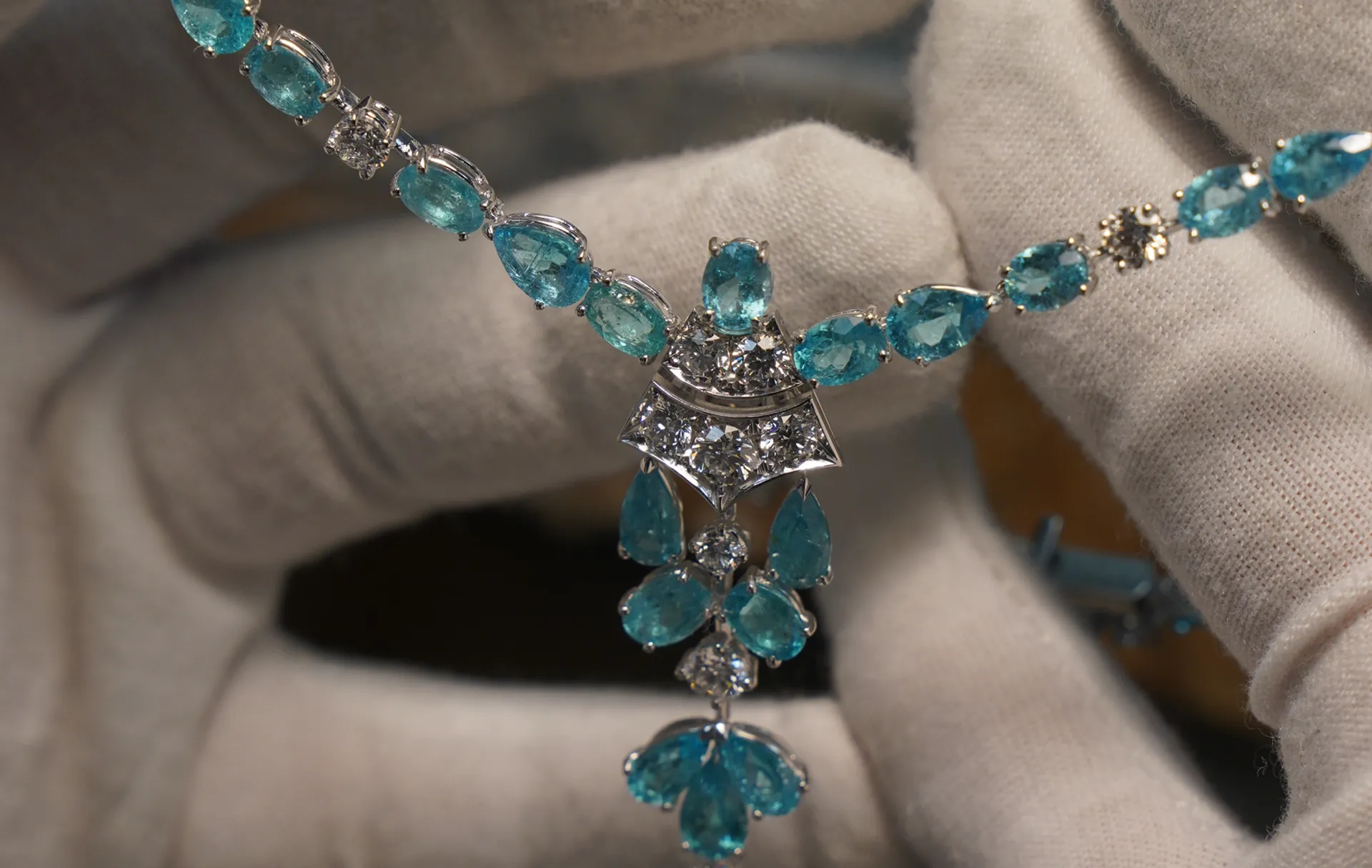

A personal conversation starts here.
At the showroom in Idar-Oberstein or by video. Vikar Ahmed discusses your ideas, stones and designs with you and answers your questions calmly and in confidence.


Thank you for your request.
Your request will be handled with the utmost attention and discretion. Vikar Ahmed will get back to you.
Your details
Request
–
Occasion
–
Consultation
–
Contact
–
In the meantime
Insights: What is a Paraíba tourmaline? · Engagement ring to your own design: how does it work?
Confidential and without obligation
Back to the pagePrivate consultation
A personal conversation starts here.
- Time for your questions, wishes and ideas
- In the showroom in Idar-Oberstein or by video
- Confidential, discreet and without obligation
Vikar Ahmed · Hauptstraße 111 · 55743 Idar-Oberstein, Germany