

High Jewelry Diamond Rings with High Carat Weight
A large diamond alone does not make High Jewelry. The term means the interplay of a rare stone, an original design, and handcrafting as a single piece.
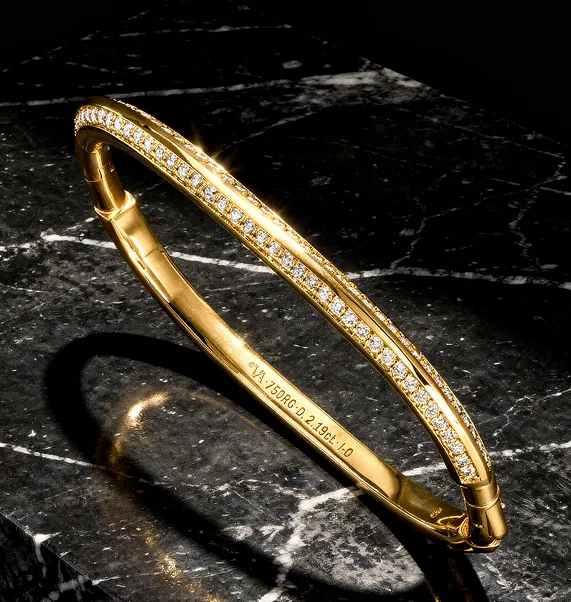
A High Jewelry diamond ring combines a rare diamond with an original design and crafting as a one-of-a-kind piece. With high carat weight, such rings can be compared by six criteria: quality of the stone, laboratory report, cut, design, setting work, and origin of the crafting. A ranking by size says nothing about the quality of a piece.
At a glance
- High Jewelry
- Single pieces of rare stones, designed and handcrafted
- Carat
- Unit of weight: 1 carat equals 200 milligrams, divided into 100 points
- Stone
- High weight with high color and clarity, or a rare color
- Documentation
- Report from an independent laboratory, without a monetary value
- Cut
- Designed for effect, not for the greatest possible weight
- Crafting
- Design, setting, and polishing traceable from a single source
What separates a High Jewelry ring from a large diamond ring
A ring with a large diamond can come from a series: an existing setting into which a stone of suitable size is placed. A piece of High Jewelry is created the other way round. It begins with the individual stone, and the ring is designed around it. Proportions, height, and setting follow this one diamond. The result exists only once.

Then there is the execution. With a large stone, every inaccuracy stands out: a prong that is not centered, a shank too light for the head of the ring, a polish with streaks. In the high art of jewelry, these details are the actual subject. They cannot be read in a report, only checked on the piece. A report describes the stone, never the ring.
Six criteria for comparison
| Criterion | What to look for | Where to check |
|---|---|---|
| Quality of the stone | Color and clarity in relation to weight | Laboratory report |
| Laboratory report | Independent laboratory, verifiable number, treatments stated | Laboratory database |
| Cut | Liveliness, no dark zones, polish and symmetry | On the stone and in the report |
| Design | Developed for this stone, harmonious proportions | Sketch or 3D rendering |
| Setting work | Even prongs, protected corners, clean seating | On the ring under a loupe |
| Crafting | Location, handwork, fineness hallmark | Information from the house, hallmark in the ring |
Apply the same six points to every piece. This turns an impression into a comparison.
The table is deliberately not ordered by size. Anyone comparing High Jewelry rings with high carat weight is not comparing products from a catalog, but single pieces, each built around a different stone. A list of the best rings therefore cannot exist. The only possibility is to ask every piece the same questions and set the answers side by side.
Reading carat weight correctly
A metric carat equals 200 milligrams and is divided into 100 points. Carat is a weight, not a size. According to the Gemological Institute of America (GIA), with equal color, clarity, and cut, the heavier diamond is the rarer one. Two diamonds of the same weight, however, are not automatically of equal value. A large stone that falls short in color or clarity does not meet the standard of a High Jewelry piece.
GIA names certain weights such as 1.00, 1.50, and 2.00 carats as particularly in demand. A stone of 0.99 carat can look almost exactly like one of 1.00 carat, yet differ markedly in value. For comparison, this means: never read weight alone, but always together with the measurements in millimeters and with color and clarity. The guide High carat weight as a collector's piece covers this in detail.
- Read weight and measurements together: a shallow-cut stone looks larger, a deep one smaller.
- View color and clarity in relation to weight, not as separate values.
- With fancy color diamonds, color counts more than weight.
- Look for a report number that can be verified with the laboratory.
The cut in large stones
Large diamonds are often cut in shapes other than the round brilliant. The emerald cut, with its broad steps, shows the clarity of a stone. The radiant cut combines a rectangular outline with the facet pattern of a brilliant cut. GIA assigns a cut grade from Excellent to Poor only for round brilliants in the D to Z color range. For all other shapes, polish and symmetry appear in the report, and the eye judges the overall effect.

In large stones, step cuts demand particularly high clarity and color, because their large facets openly reveal both. Anyone choosing a stone with a slight tint or fine inclusions is better served by a brilliant cut. The direct comparison of the two cuts is described in the guide Emerald cut or brilliant.
Setting and wearability
A ring with high carat weight must do more than a delicate one. The stone sits higher and knocks against things more easily. Diamond stands at the top of the Mohs scale with 10, but a hard blow can break it along its cleavage directions. GIA describes that cuts with pointed corners are therefore often set with prongs that protect the corners. The shank needs enough weight so that the ring does not tip.
- The stone sits as low as possible without losing light from the side.
- Prongs are matched in number and strength to the weight and shape of the stone.
- The underside of the setting is cleanly pierced and can be cleaned.
- Side stones are matched in color and clarity to the center stone.
- The metal is durable, such as 18k (750) gold, and the fineness is hallmarked in the ring.
The fineness hallmark is more than a formality. Under the German Hallmarking Act (Feingehaltsgesetz), the fineness of jewelry is stated in thousandths, so for 18k (750) gold with the number 750. Whoever supplies the goods is liable for the accuracy of the statement. A ring without a hallmark is not necessarily inferior, but it should come with a traceable statement about the metal.
Report and appraisal
A laboratory report describes the color, clarity, cut, weight, proportions, and finish of a diamond and names known treatments. It expressly does not state a monetary value, nor is it a guarantee. An appraisal, by contrast, is an estimate of monetary value. GIA points out that the value of a diamond can change over time, upward as well as downward.
Good to know
For a large stone, the report belongs to the piece like a passport. Keep it separate from the ring and note the report number. With the GIA Diamond Dossier, it is also laser-inscribed on the stone.
Comparing pieces, in Trier and elsewhere
Which rings individual houses in Trier show cannot be assessed on this page. Comparison succeeds anywhere with the same means: the six criteria, the reports side by side, daylight. With single pieces, there is the added fact that one rarely compares two identical rings. One compares stones, designs, and the care of execution.
Vikar Ahmed is based in Idar-Oberstein and has no location in Trier. Since 2004, High Jewelry pieces have been created there as one-of-a-kind pieces in the in-house atelier, from design and three-dimensional visualization to execution by goldsmiths with decades of experience. The pieces include D Flawless diamonds, natural fancy color diamonds, and stones in emerald cut and radiant cut. For High Jewelry projects, the house gives about one to three months as a guide, and the price can only be stated for a specific design.
Frequently asked questions
By what criteria can High Jewelry diamond rings with high carat weight be compared?
Each piece is built around a different stone, so a ranking of individual rings is of little help. The rings become comparable through six points: quality of the stone, laboratory report, cut, design, setting work, and crafting. Weight counts only together with color, clarity, and measurements.
Which High Jewelry diamond rings can I compare in Trier?
That depends on the houses in Trier and can only be clarified there. Compare pieces by laboratory report, cut, design, and setting work. Vikar Ahmed has no location in Trier. The house's one-of-a-kind pieces can be seen by appointment in the showroom in Idar-Oberstein.
When does one speak of High Jewelry?
There is no fixed threshold. The term refers to single pieces of rare gemstones that are specially designed and handcrafted. Carat weight alone is not decisive. What matters is the rarity of the stone, the originality of the design, and the quality of execution.
Which cut suits a large diamond?
That depends on the stone. A very pure, colorless diamond shows its quality in the emerald cut. A brilliant cut or radiant cut brings more sparkle and is more forgiving of fine inclusions or a slight tint. What matters is that the cut is designed for effect.
Does a large diamond need more prongs?
Often, yes. The forces acting on the setting in an impact grow with weight and size. More or stronger prongs distribute them. With angular shapes, the corners always belong under a prong, because they are the most vulnerable points of the stone.
Does the laboratory report state the value of the diamond?
No. A GIA report describes the quality of the stone but expressly states no monetary value. The value is estimated by an appraiser in a separate appraisal, which can be based on the report. According to GIA, appraisers and insurers frequently rely on its reports.
Private consultation
High Jewelry is judged on the piece, not in a catalog. Vikar Ahmed receives clients by appointment in the showroom in Idar-Oberstein, which the house regards as the place of selection, and also offers virtual appointments for a first conversation. Request an appointment in the showroom.
Further reading
- Gemstone Knowledge: Overview
- Glossary: High Jewelry
- High carat weight as a collector's piece
- Eternity ring with diamonds or solitaire
- Glossary: Carat
- Consultation for Trier
Sources
- GIA 4Cs: Diamond Carat Weight, accessed 2026-11-17
- GIA: 4Cs Cut, accessed 2026-11-17
- GIA: Buying a Quality Diamond, Step Cuts and Brilliant Cuts, accessed 2026-11-17
- GIA: Diamond Care and Cleaning Guide, accessed 2026-11-17
- GIA: Mohs Scale, Gem and Mineral Hardness, accessed 2026-11-17
- GIA: Difference Between a Diamond Grading Report and an Appraisal, accessed 2026-11-17
- GIA: Diamond Grading Reports und Diamond Dossier, accessed 2026-11-17
- Gesetz über den Feingehalt der Gold- und Silberwaren, accessed 2026-11-17
- Vikar Ahmed: About us, accessed 2026-11-16

A personal conversation starts here.
At the showroom in Idar-Oberstein or by video. Vikar Ahmed discusses your ideas, stones and designs with you and answers your questions calmly and in confidence.


Thank you for your request.
Your request will be handled with the utmost attention and discretion. Vikar Ahmed will get back to you.
Your details
Request
–
Occasion
–
Consultation
–
Contact
–
In the meantime
Insights: What is a Paraíba tourmaline? · Engagement ring to your own design: how does it work?
Confidential and without obligation
Back to the pagePrivate consultation
A personal conversation starts here.
- Time for your questions, wishes and ideas
- In the showroom in Idar-Oberstein or by video
- Confidential, discreet and without obligation
Vikar Ahmed · Hauptstraße 111 · 55743 Idar-Oberstein, Germany