

High Carat Weight in a Diamond Ring: Collector's Piece or Not?
Rarity grows with the weight of a diamond. A ring becomes a collector's piece only when color, clarity, cut, and documentation keep pace with the carat weight.
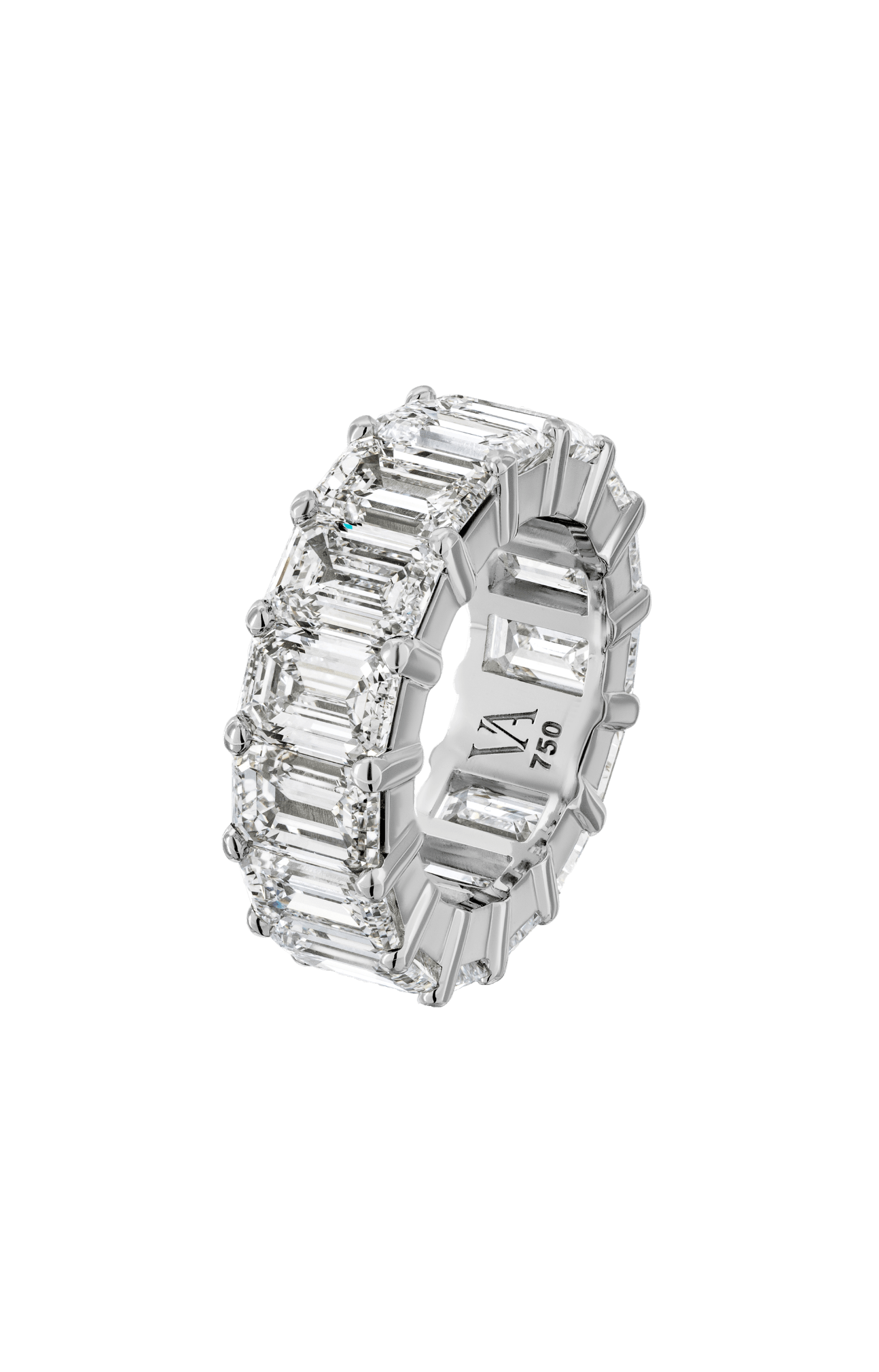
A high carat weight makes a diamond rarer, but not automatically a collector's piece. Color, clarity, and cut must also be at a high level and documented by an independent laboratory report. A large stone of medium quality is less rare than a smaller one of top quality. Future value development cannot be derived from the weight.
At a glance
- One carat
- 200 milligrams, divided into 100 points
- Carat measures
- Weight, not visible size
- Rarity
- With equal color, clarity, and cut, the heavier stone is rarer
- Sought-after thresholds
- 1.00, 1.50, and 2.00 carats
- For collectors
- Interplay of all 4Cs, documented by a laboratory report
Carat is a weight and a measure of rarity
A metric carat equals 200 milligrams. The weight is stated to one hundredth of a carat. According to the Gemological Institute of America (GIA), if two diamonds match in color, clarity, and cut, the heavier one is rarer. Large rough crystals of good quality simply occur less often in nature than small ones. That is the appeal of high carat weights.

The statement has a condition that is often overlooked: equal quality. GIA expressly points out that two diamonds of the same weight can have very different values, depending on how the other characteristics turn out. Carat is the easiest of the 4Cs to understand and is therefore often overrated. On its own, it describes only how much material is present.
How the weight appears in the report
In the laboratory report, the carat weight is given to two decimal places. GIA divides each carat into 100 points and even measures to one thousandth for rounding. In the trade, a stone weighing 0.25 carat is therefore called a twenty-five pointer. For large stones, this precision is more than a formality: whether a stone weighs 1.99 or 2.00 carats decides how it is classified at a threshold.
Besides the weight, the report states the measurements in millimeters and shows the proportions in a diagram. Only the two together reveal how large a diamond appears from above. Two stones of the same weight can differ markedly in diameter and depth. For a ring intended as a collector's piece, the complete report should therefore be available, not just a weight on an invoice.
What makes a large diamond a collector's piece
Collectors look for rarity in several characteristics at once. A stone of high weight that is also at the top of the scales in color and clarity is many times rarer than an equally heavy stone of medium quality. The combination of color D and clarity Flawless, D Flawless for short, stands for this peak among colorless diamonds. With colored diamonds, color takes first place.
| Characteristic | What collectors expect | Why |
|---|---|---|
| Color | Upper end of the scale or a strong fancy color | Rarity within the color scale |
| Clarity | High grades, especially with open cuts | Large stones show their interior more clearly |
| Cut | Balanced proportions, very good polish and symmetry | The cut determines the effect |
| Documentation | Report from an independent laboratory | Makes the details verifiable |
| Treatment | Disclosed openly, ideally none | Untreated stones are rarer |
General criteria. They do not replace an assessment of the individual stone.
With large stones, the cut deserves particular attention. A diamond can be cut to retain as much weight of the rough as possible, even if its appearance suffers. A stone with slightly fewer carats and better proportions is then the more convincing choice. For shapes other than the round brilliant, GIA does not assign a cut grade. Here, looking at the stone is what counts.
Weight thresholds
Certain weights are considered especially sought-after in the trade. GIA names 1.00, 1.50, and 2.00 carats. A stone just below such a threshold can hardly be distinguished by the naked eye from one just above it, yet it is valued noticeably differently. For collectors, this means two things. The round number is part of what is sought. And it says nothing about the beauty of the stone.
Good to know
Carat measures weight, not diameter. A deeply cut stone carries weight where it cannot be seen. Always compare the measurements in millimeters stated in the laboratory report as well.
High weight in colored diamonds
With colored diamonds, the ranking of the characteristics shifts. According to GIA, any diamond with a color outside the usual D to Z range counts as a Fancy Color Diamond. This includes yellow and brown stones with stronger color than grade Z, and diamonds in colors such as pink or blue. For them, color comes first and weight follows.

For collectors, this means that a colored diamond of high weight is exceptional only if its color is also convincing. For such stones, GIA issues a separate report that describes the color. According to the institute, whether the color formed naturally or through a treatment, such as irradiation, can only be determined in a laboratory. The guide Colored diamonds gives an overview.
A large stone must remain wearable
A ring is not a piece for the safe. The larger the stone, the higher it sits and the more easily it knocks against things. With hardness 10, diamond is the hardest mineral on the Mohs scale, but a hard blow in certain directions can cleave it. Pointed corners are therefore protected with prongs. With high carat weights, the setting is part of preserving value: it must hold the stone securely while covering as little of it as possible.
- Check the height of the setting in the design, ideally in a three-dimensional rendering.
- Plan prongs of sufficient strength and number, and always cover corners.
- Dimension the shank so that the ring does not become top-heavy and turn on the finger.
- Take the ring off for sports and rough work.
How to examine a large diamond
- Ask for a report from an independent laboratory and check the number in the database yourself.
- Read weight and measurements together. The millimeters show how large the stone appears from above.
- Place color and clarity in context. With open cuts such as the emerald cut, clarity matters more.
- Check cut, polish, and symmetry. For fancy shapes, looking at the stone takes the place of the cut grade.
- View the stone unmounted and in different light before the design is finalized.
The most common mistake with large stones is fixation on the number. A stone close to a round threshold is chosen for its weight while weak proportions are overlooked. A second mistake concerns expectations of value: weight makes a stone rare, but it does not secure future price development. A third lies in the design, when a high setting leaves the ring vulnerable in everyday wear.
Value and value development, soberly considered
Rarity is a property of the stone. Future price development is not. It depends on markets and can be derived neither from the carat weight nor from a laboratory report. A GIA report deliberately contains no monetary value. Anyone choosing a large diamond should therefore do so first for its quality and its beauty. What defines the report is explained in the guide Diamond ring with a GIA report.
Vikar Ahmed crafts diamond rings as one-of-a-kind pieces in its in-house atelier in Idar-Oberstein. The house's pieces include D Flawless diamonds as well as stones in emerald cut and radiant cut. For engagement rings, the weight of the natural, GIA-certified center stone is open-ended, and solitaires are also made with 10 to 40 carats. If you would like to compare several large stones at the appointment, it is best to state the weight and cut in your request.
Frequently asked questions
Is a particularly high carat weight worthwhile for a diamond ring as a collector's piece?
Only if the other characteristics keep pace. At equal quality, a heavy diamond is rarer than a light one. Collectors, however, look at the interplay of weight, color, clarity, and cut, and at an independent report. A large stone of medium quality does not meet this standard.
Does a diamond with double the carat weight look twice as large?
No. Carat measures weight, and that is distributed across the length, width, and depth of the stone. The visible diameter therefore grows much more slowly than the weight. The measurements in millimeters in the laboratory report give a better impression of size.
What does point mean for diamonds?
A point is one hundredth of a carat. A diamond of 50 points therefore weighs 0.50 carat, and in the trade it is also called a fifty pointer. The term is used mainly for smaller stones. In the laboratory report, the weight always appears as a carat figure with two decimal places.
Is carat more important than cut?
No. Carat weight contributes to rarity, while the cut determines how the stone looks. A heavy diamond with weak proportions appears less lively than a lighter one with a very good cut. Both should be considered together.
Does a large diamond need a laboratory report?
For a collector's piece, yes. With high weight, the value depends heavily on how color, clarity, and cut are graded. Without an independent report, these details cannot be verified. The report also documents weight and measurements so precisely that the stone can be clearly identified even years later.
How securely does a large diamond sit in a ring?
As securely as its setting. A diamond is the hardest mineral, but according to GIA a hard blow in the right spot can cleave it, during setting or while it is worn. Strong prongs, covered corners, and a setting that is not too high protect it. Have the prongs checked regularly.
Private consultation
With stones of high weight, direct comparison is decisive. Vikar Ahmed takes time for this in the showroom in Idar-Oberstein, by appointment and in a discreet setting. A virtual appointment is also possible. Request a consultation on diamonds of high carat weight.
Further reading
- Gemstone Knowledge: Overview
- Gemstone: Diamond
- Glossary: Carat (ct)
- When higher clarity is worthwhile in a diamond ring
- High Jewelry diamond rings with high carat weight
- Diamond ring with a GIA report
Sources
- GIA 4Cs: Diamond Carat Weight, accessed 2026-11-17
- GIA 4Cs: Diamond Color, Fancy Color, accessed 2026-11-17
- GIA: Natural Diamond Reports, Proportionen und Reinheitszeichnung, accessed 2026-11-17
- GIA: Diamond Care and Cleaning Guide, accessed 2026-11-17
- GIA: An Introduction to Gem Treatments, accessed 2026-11-17
- GIA: Expert Tips for Buying Fancy Shaped Diamonds, accessed 2026-11-17
- GIA: Does GIA certify or appraise diamonds and other gemstones?, accessed 2026-11-17
- GIA: 4Cs Cut, accessed 2026-11-16
- Vikar Ahmed: Collections, accessed 2026-11-16

A personal conversation starts here.
At the showroom in Idar-Oberstein or by video. Vikar Ahmed discusses your ideas, stones and designs with you and answers your questions calmly and in confidence.


Thank you for your request.
Your request will be handled with the utmost attention and discretion. Vikar Ahmed will get back to you.
Your details
Request
–
Occasion
–
Consultation
–
Contact
–
In the meantime
Insights: What is a Paraíba tourmaline? · Engagement ring to your own design: how does it work?
Confidential and without obligation
Back to the pagePrivate consultation
A personal conversation starts here.
- Time for your questions, wishes and ideas
- In the showroom in Idar-Oberstein or by video
- Confidential, discreet and without obligation
Vikar Ahmed · Hauptstraße 111 · 55743 Idar-Oberstein, Germany