

Colored Diamonds: Natural Color or Treated
With colored diamonds, the deciding question is whether the color formed in the earth or in a laboratory. An overview of rarity, grading, and proof.
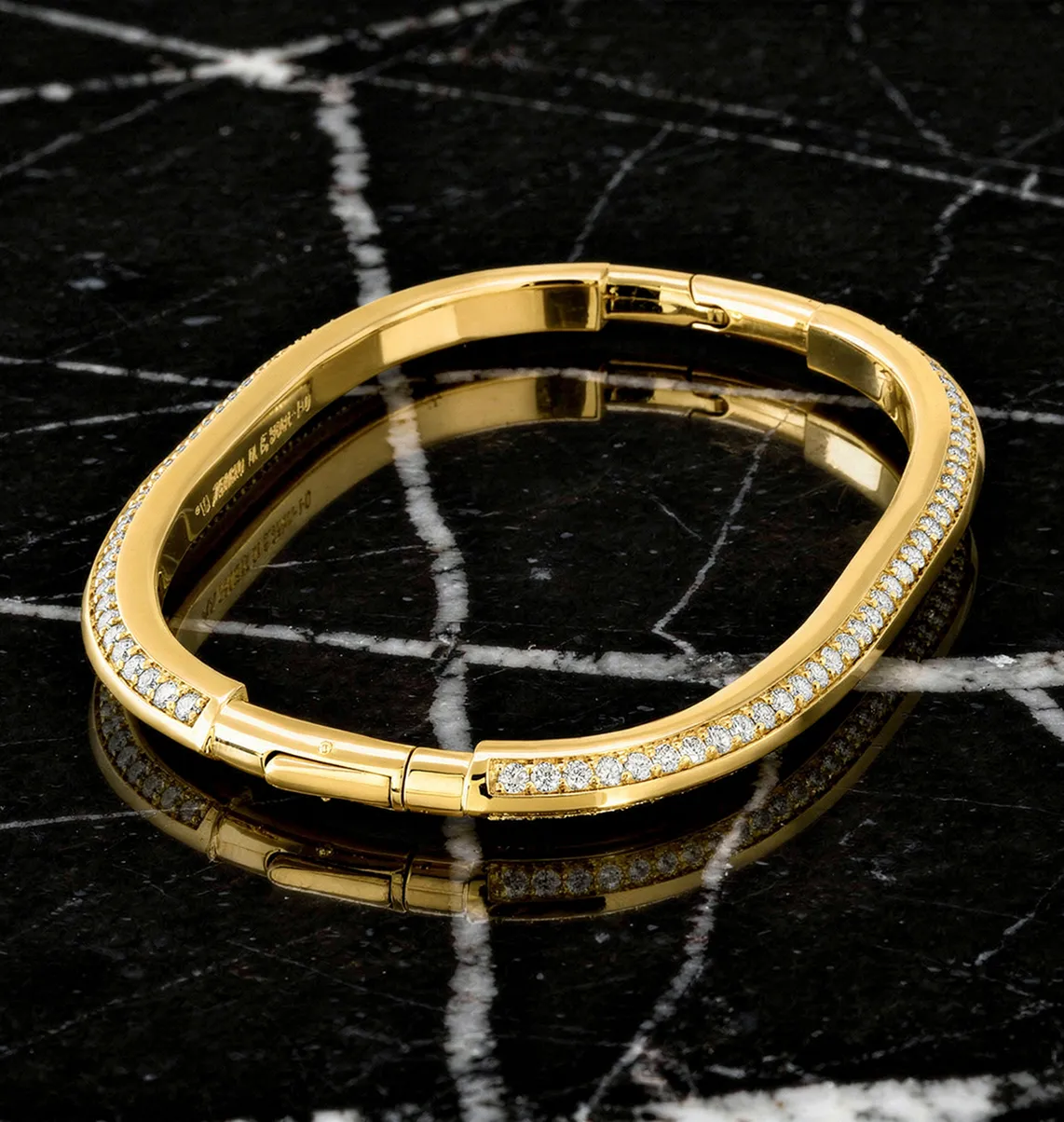
A colored diamond is suitable as a collector's piece only with natural color that a laboratory report explicitly confirms. Colors can be produced by irradiation, high pressure and heat, or coating, and some of these colors are sensitive. In natural colored diamonds, color counts for more than clarity. The stronger and purer it is, the rarer the stone.
At a glance
- Colored diamond
- Yellow or brown beyond Z, or any other color in the face-up position
- Rarest (GIA)
- Red, green, purple, and orange, followed by pink and blue
- Most common
- Brown, followed by yellow
- Color grade
- 27 hues, grades such as Fancy Light, Fancy Intense, Fancy Vivid
- Treatments
- Irradiation, high pressure, high temperature (HPHT), coating
- Proof
- Color origin, natural or treated, in the laboratory report
What makes a diamond a colored diamond
Colorless diamonds are graded on the scale from D to Z. D stands for colorless, Z for a slightly yellow or brown stone. A colored diamond, known in the trade as a Fancy Color Diamond, lies outside this scale. According to the Gemological Institute of America, GIA for short, these are yellow and brown stones with more color than Z, as well as diamonds that show any other color in the face-up position. Black, gray, and milky white also count among them.
Grading is thus reversed. In a colorless diamond, value rises the less color it shows. In a colored diamond, according to GIA, it generally rises with the strength and purity of the color. In an example given by GIA, a yellow diamond of 0.81 carats can rank higher than a stone of the same size in the normal color range. Many colored diamonds, however, show muted tones, and deep yellow and brown tones are considered less valuable.
Which colors are rare
Rarity determines rank in a colored diamond. GIA names red, green, purple, and orange as the rarest colors, followed by pink and blue. Brown is the most common color, yellow the second most common. In its description of the quality factors, GIA highlights saturated pinks, blues, and greens as the rarest and most valuable. It calls red, green, and blue diamonds with medium to dark tone and moderate saturation extremely rare.

There are also gradations within a single color. In pink, according to GIA, pure hues are valued more highly than purplish, orangy, brownish, or grayish ones. Blue is caused by boron; more boron results in a deeper blue. Green color is due to radiation that displaces carbon atoms in the crystal, naturally near radioactive rocks or through artificial irradiation. With green in particular, a laboratory therefore cannot always determine whether the color is natural.
| Color | Rarity according to GIA | Particularity in proof |
|---|---|---|
| Red, green, purple, orange | Rarest | Strong green and red are considered suspect, laboratory testing needed |
| Pink, blue | Very rare | Strong pink is also produced by coating |
| Yellow | Second most common color | Can be produced from brown by HPHT |
| Brown | Most common color | Can be reduced or altered by HPHT |
According to GIA: Fancy Color Diamond Description, Quality Factors, and Gem Treatment.
How colored diamonds are graded
For color, GIA selects one of 27 hues and describes tone and saturation with grades such as Fancy Light, Fancy Intense, or Fancy Vivid. According to GIA, intense and vivid stones are the rarest. Color is the dominant value factor. A stone with low clarity but beautiful face-up color can be sought after. Inclusions that threaten durability, on the other hand, reduce the value considerably.
Size and cut also affect the color. In larger or deeper stones, light travels a longer path, and the color appears stronger. According to GIA, mixed cuts such as the radiant cut can intensify the color of yellow stones that lie near the lower end of the D-to-Z scale. Large colored diamonds are rarer than small ones. Anyone assessing a stone should therefore read color grade, cut, and measurements together.
Treated color: processes and durability
GIA describes three ways of altering the color of a diamond. In high-pressure, high-temperature treatment, HPHT for short, the stone is heated under high pressure. It can reduce brown tones or turn brown stones yellow and is considered stable under normal wear. Irradiation with neutrons or electrons can produce black, green, blue-green, yellow, orange, pink, and red diamonds. Irradiated color can be damaged by the goldsmith's torch.
The third method is a thin coating, today mostly of metal oxides. It can give a stone a strong pink, for example, but is susceptible to scratches. Once suspected, it is easily recognized by an experienced gemologist. HPHT and irradiation, by contrast, can often be confirmed only in a gemological laboratory. According to GIA, irradiation is common in colored diamonds. GIA advises regarding strong greens, pinks, and reds as suspect on principle until a laboratory has examined them.
Good to know
According to GIA, anyone who passes on a gemstone must disclose a treatment, even between private individuals. A treated colored diamond is a genuine diamond, but its color is not natural. This statement belongs in every description.
Natural or treated: what the report clarifies
GIA issues its own reports for colored diamonds. Alongside color grade, clarity, polish, and symmetry, the Colored Diamond Grading Report explicitly states the color origin, that is, natural or treated. The Colored Diamond Identification and Origin Report contains color grade and color origin and, according to GIA, is issued only for natural colored diamonds that have not received an unstable treatment. What a GIA report generally contains is explained in the glossary.
- Check whether the report explicitly states the color origin as natural.
- Compare hue, grade, and color distribution with the stone.
- Check weight, measurements, and any laser inscription.
- Verify the report number with the issuing laboratory.
- For irradiated stones, inform the goldsmith before any work on the setting.
If the statement on color origin is missing, the report is incomplete for a colored diamond. A description such as "Fancy Intense Pink" without the addition natural says nothing about how the color came about. With pink, green, and red in particular, testing is demanding. For colorless stones in a ring, other priorities apply, as described in the guide Diamond ring with a GIA report.
Colored diamond or colorless diamond as a collector's piece
Gemologically, both paths can be justified. Colorless diamonds in the top color grades are rare, and a D-grade stone is considered colorless. Natural colored diamonds in strong tones are rarer than most colorless stones, but their grading is less uniform, because hue, tone, and saturation interact. Which direction suits you is a matter of taste and of willingness to engage with the grading of color. No forecast of value can be derived from this.

For both, collector value arises only with documented natural origin and traceable quality. A colorless D Flawless stone and a natural Fancy Vivid Pink have in common that both can hardly be classified without a report. A treated colored diamond can be very beautiful in jewelry. As a collector's piece in the gemological sense it is not suitable, because its color did not form in nature.
Common mistakes with colored diamonds
- Reading the color grade and overlooking the line on color origin.
- Assuming a strongly green or pink stone is natural without laboratory testing.
- Weighting clarity in a colored diamond as heavily as in a colorless stone.
- Having an irradiated stone soldered or reset without protection.
- Treating a coated color as a permanent property of the stone.
Most mistakes arise because the rules of colorless diamonds are applied to colored diamonds. Here, color carries the value, and it is precisely color that can be treated. That is why color origin comes first, then hue and grade, and only then clarity and weight. How individual colors look in jewelry is shown in the guides on orange diamonds and in the comparison Paraíba or Fancy Pink.
Colored diamonds at Vikar Ahmed
The pieces Vikar Ahmed shows include natural fancy color diamonds in yellow, pink, purplish pink, and orangy brown, alongside colorless diamonds up to D Flawless. One-of-a-kind pieces are created in-house, from design through three-dimensional visualization to production in the in-house atelier in Idar-Oberstein. Whether a color is natural is established by a report from an independent laboratory. For diamonds, the house works almost exclusively with GIA, in exceptional cases with HRD Antwerp, and does not work with laboratory-grown diamonds. More on the stone on the page Fancy Color Diamond.
Frequently asked questions
Natural or treated colored diamonds: which make real sense as a collector's piece?
As a collector's piece in the gemological sense, only colored diamonds with natural color that a laboratory report explicitly confirms are suitable. Treated stones can be beautiful in jewelry, but their color was produced by irradiation, HPHT, or coating and is in part sensitive. No statement about future value is implied by this.
Are natural fancy colored diamonds more interesting as collector's pieces than high-quality colorless diamonds?
That depends on your expectations, not on a fixed ranking. Strong natural colors such as pink, blue, or green are rarer than most colorless stones. Colorless diamonds, on the other hand, can be graded more uniformly. For both, only a laboratory report makes quality and natural origin traceable. No forecast of value can be derived from this.
How can I tell whether a diamond's color is natural?
Not at all with the naked eye. Irradiation and HPHT can often be detected only in a gemological laboratory, and with green stones sometimes not reliably even there. Rely on a report that explicitly states the color origin as natural. A coating, by contrast, is usually recognized quickly by an experienced gemologist.
What do Fancy Intense and Fancy Vivid mean?
They are grades in the GIA color grading. They describe how light or dark and how saturated the color of a colored diamond appears. Fancy Vivid stands for a particularly strong color, Fancy Intense for a strong one. In addition, one of 27 hues is stated, such as pink or purplish pink.
Can a treated colored diamond lose its color?
That depends on the process. HPHT is considered stable under normal wear. Irradiated color can be damaged by the heat of a soldering torch. Coatings are susceptible to scratches and can wear off. Before any work on the piece, therefore, inform the goldsmith about the treatment.
Does clarity count as much in a colored diamond as in a colorless stone?
No. In a colored diamond, color is the dominant value factor. A stone with lower clarity can be sought after if its face-up color is convincing. Inclusions become a problem only when they threaten durability. Color zoning in the crystal also counts as an inclusion in this respect.
Private consultation
A colored diamond should be assessed in its color, report, and setting together. Vikar Ahmed offers consultations in the showroom in Idar-Oberstein by appointment, and on request also in a virtual appointment. Custom projects are reviewed on request. Request a private consultation.
Further reading
- Gemstone: Fancy Color Diamond
- Glossary: Fancy Color Diamond
- Pendants with yellow diamonds
- Laboratory-grown or natural diamond
- Tracing the origin of diamond jewelry
Sources
- GIA: Fancy Color Diamond Description, accessed 2026-11-17
- GIA: Fancy Color Diamond Quality Factors, accessed 2026-11-17
- GIA 4Cs: Colored Diamond Reports, accessed 2026-11-17
- GIA: Gem Treatment, accessed 2026-11-17
- GIA: 4Cs Color, accessed 2026-11-17
- Vikar Ahmed: Collections, accessed 2026-11-17
- GIA: Gem Laboratory, accessed 2026-11-17
- SSEF Swiss Gemmological Institute, accessed 2026-11-17

A personal conversation starts here.
At the showroom in Idar-Oberstein or by video. Vikar Ahmed discusses your ideas, stones and designs with you and answers your questions calmly and in confidence.


Thank you for your request.
Your request will be handled with the utmost attention and discretion. Vikar Ahmed will get back to you.
Your details
Request
–
Occasion
–
Consultation
–
Contact
–
In the meantime
Insights: What is a Paraíba tourmaline? · Engagement ring to your own design: how does it work?
Confidential and without obligation
Back to the pagePrivate consultation
A personal conversation starts here.
- Time for your questions, wishes and ideas
- In the showroom in Idar-Oberstein or by video
- Confidential, discreet and without obligation
Vikar Ahmed · Hauptstraße 111 · 55743 Idar-Oberstein, Germany