

Diamond Rings with a GIA Report: What the Report Provides
The report belongs to the stone, not to the ring. It makes the quality of a diamond verifiable and is therefore the basis on which two rings can be compared at all.
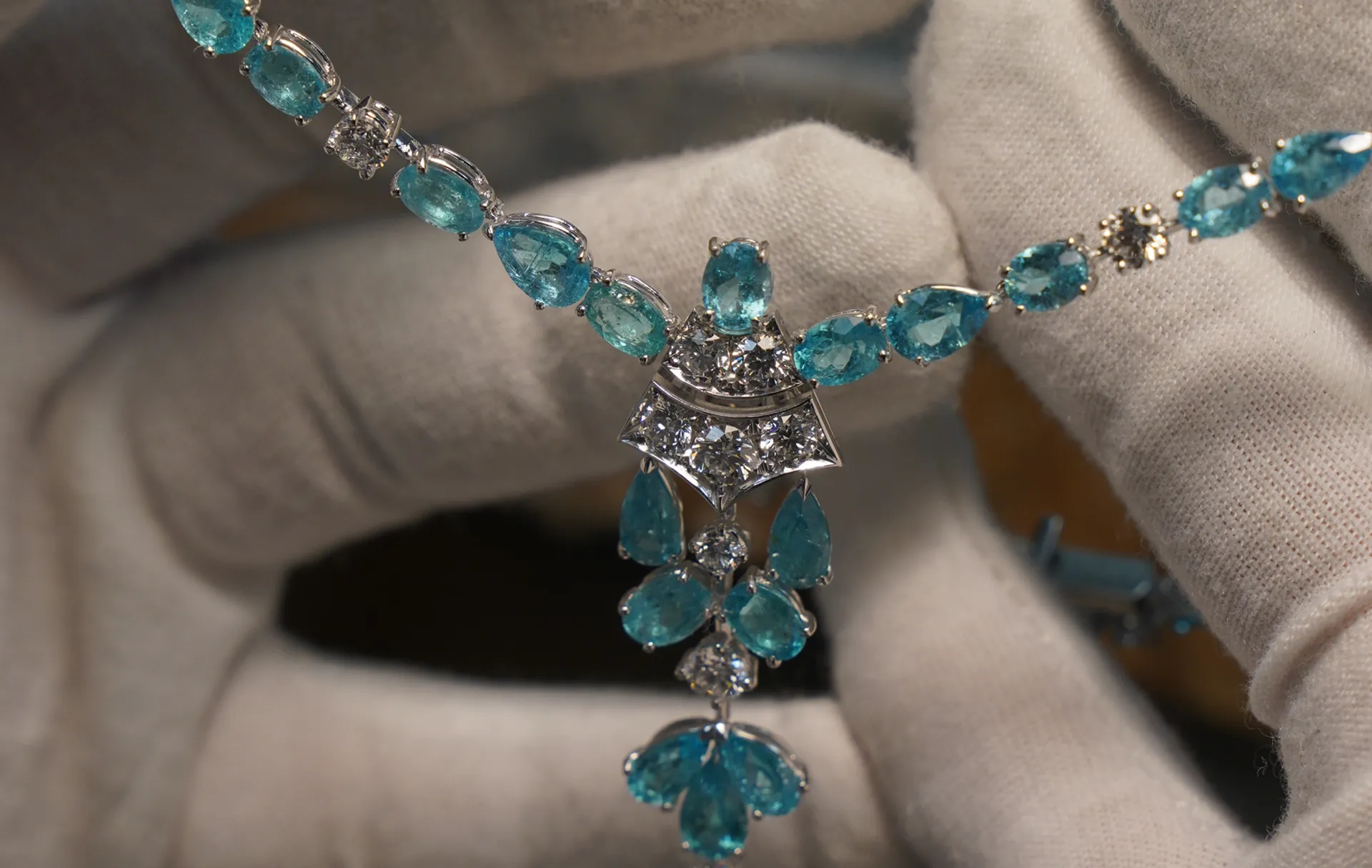
A GIA report describes the diamond in a ring independently of the seller: weight, color, clarity, cut, as well as polish and symmetry. It states no monetary value and is not a certificate. Its benefit is that the quality of the stone becomes verifiable. Without a report, the same details rest solely on the word of whoever offers the ring.
At a glance
- Issuer
- Gemological Institute of America, independent and nonprofit
- Subject
- The individual diamond, examined unmounted
- Contents
- The 4Cs, proportions diagram, polish and symmetry, clarity plot
- Not included
- Monetary value, guarantee, statement on the finished ring
- Verification
- Look up the report number in the GIA online database
- Small stones
- Diamond Grading Report only from 0.15 carats
The report describes the stone, not the ring
The Gemological Institute of America (GIA) examines gemstones in an unmounted state. A diamond that already sits in a piece of jewelry generally has to be removed from its setting for examination. The report is therefore created before the ring is made and accompanies the stone from then on. It says nothing about the setting, the metal, or the workmanship. That quality shows in the ring itself and in its fineness hallmark.
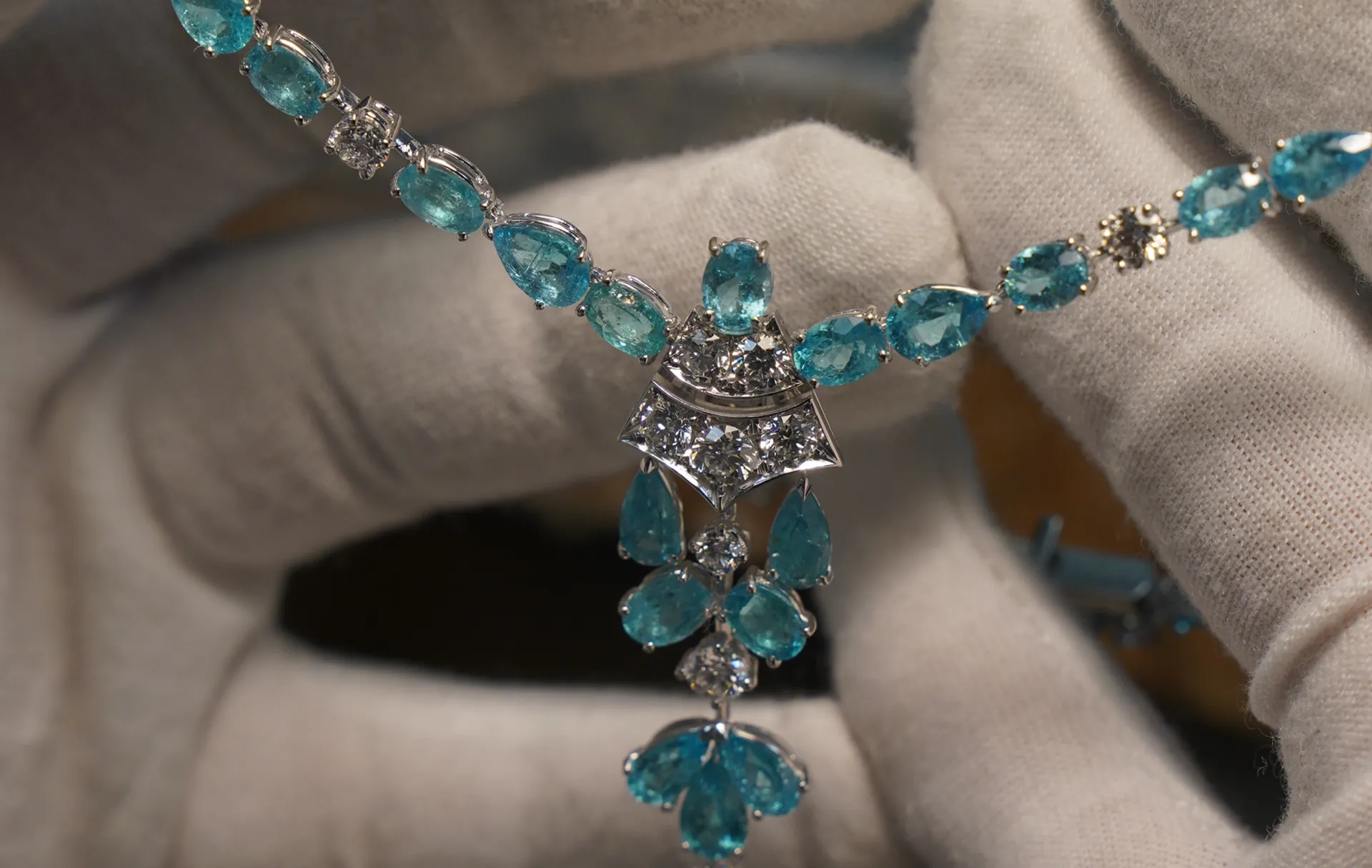
The institute stresses that it neither certifies nor appraises. Its documents are called reports. They provide technical details on the dimensions, quality, and identifying characteristics of a diamond. GIA does not mine diamonds and does not trade in them. The report is thus a statement that does not come from the seller of the stone. The glossary explains its structure in detail under GIA report.
What the report contains
The core of the report is the 4Cs: weight in carats, color, clarity, and cut. The full report also includes a diagram plotting the stone's clarity characteristics and a graphic representation of its proportions. GIA assigns a cut grade only to round brilliants in the D-to-Z color range. For other shapes, polish and symmetry indicate the quality of the execution. The institute names the grades Excellent or Very Good as a good sign.
| Detail | In the report | What it means for you |
|---|---|---|
| Carat weight | Yes | Weight, not visible size |
| Color and clarity | Yes, on the GIA scales | Comparable with any other GIA report |
| Cut grade | Round brilliants only, D to Z | For other shapes, read polish and symmetry |
| Laser inscription | Always with the Dossier, otherwise in some cases | Links stone and report permanently |
| Monetary value | No | This requires a separate appraisal |
Contents of a GIA report for natural diamonds, according to the institute.
Alongside the full report there is a compact version, the Diamond Dossier, for stones from 0.15 to 1.99 carats. It omits the clarity plot. Instead, the report number is laser-inscribed on the stone's girdle, the edge running around the stone between its upper and lower part. This way the stone can still be clearly identified in the finished ring.
GIA report or dealer certificate
A dealer certificate is a description that the seller issues itself or has prepared on its behalf. It may be accurate. The difference lies in independence and verifiability. A GIA report comes from a nonprofit institution that does no business with the stone, and it can be retrieved through the report number in the Report Check database. Whether another document can be publicly verified depends entirely on its issuer.
For color and clarity, this independence matters most. GIA grades color under controlled lighting by comparison with master stones whose color grade is established. According to the institute, even fine gradations can significantly change the quality and price of a diamond. Grade a stone one step too favorably, and two rings appear comparable when they are not. When a higher clarity grade becomes visible in a ring is shown in the guide Clarity in a diamond ring.
- Who issued the document, and does the issuer have its own interest in the stone?
- Can the number be looked up independently of the seller?
- On which scale are color and clarity stated?
- Is there a clarity plot or a laser inscription that identifies the stone?
How to verify a report yourself
- Note the report number. It appears on the document and is unique to each report.
- Enter the number in the GIA online database under Report Check and compare the details with the document.
- If present, ask to be shown the laser inscription on the girdle under a loupe. It must match the report number.
- Have the weight and measurements in the report checked against the stone while it is still unmounted.
Good to know
A report records the condition at the time of examination. It is not a guarantee. If a stone is later damaged or recut, the details no longer apply. With older reports, it is worth asking whether the stone has been altered since.
A ring with a report and a ring without: the difference
The report does not change the diamond. A stone without a report can be of the same quality as one with a report. The difference lies in verifiability. Between neighboring grades, color and clarity often differ only in nuances that can hardly be determined without a loupe and comparison stones, yet still affect value. Without independent examination, there is no way to establish whether the stated grades are accurate.
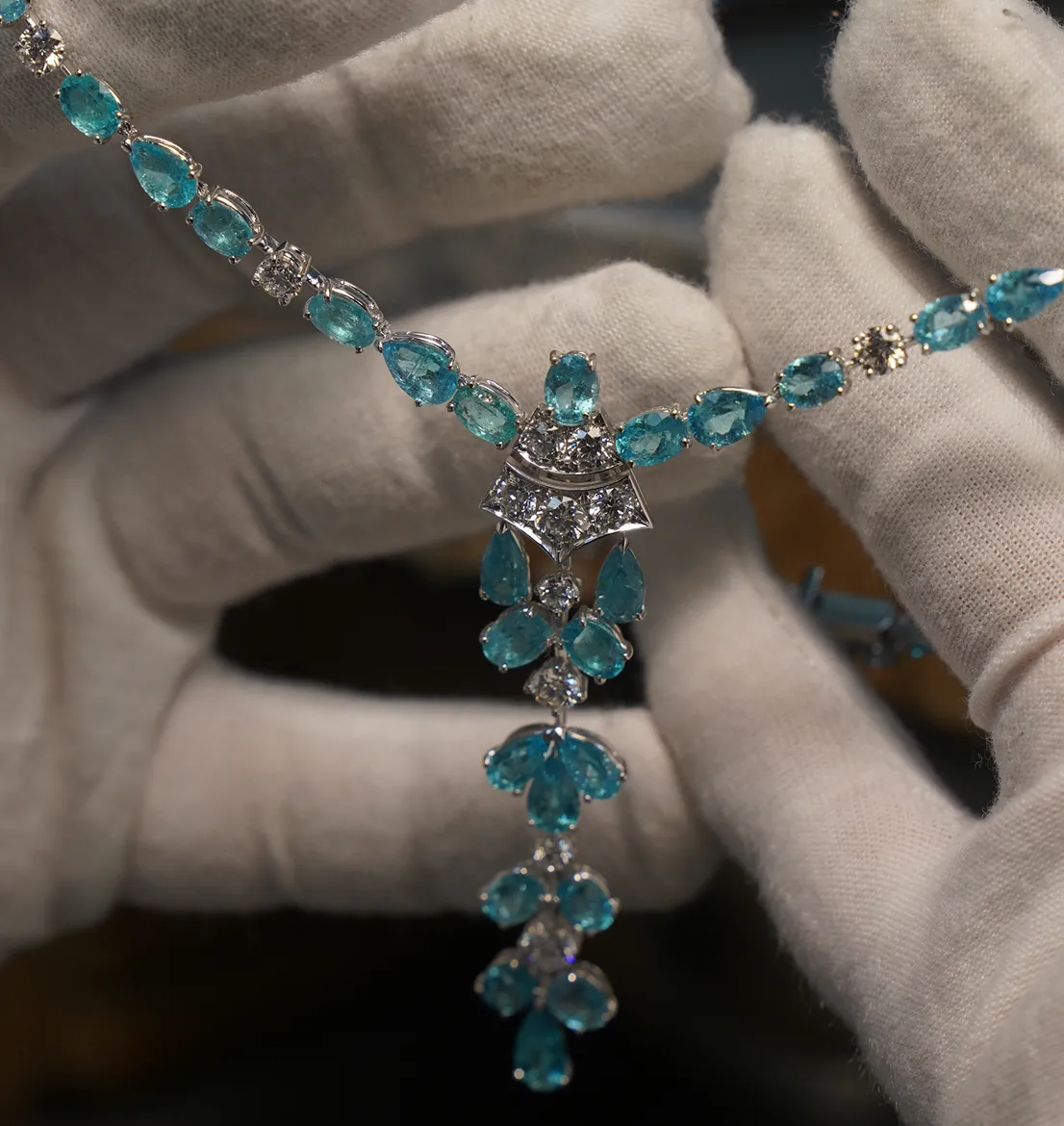
There is also the later benefit. For insurance, the division of an estate, or an appraisal, the report serves as the basis on which an appraiser relies. The higher the quality and the larger the stone, the more weight this evidence carries. How clarity and carat interact is explored in the guide Clarity and carat in diamonds.
Center stone and accent stones in a High Jewelry ring
In a High Jewelry ring, the report generally covers the center stone. The small diamonds of an accent setting, such as a pavé surface, are usually below 0.15 carats, the lower limit for the Diamond Grading Report. For selected loose stones under 0.40 carats, GIA does offer the digital Diamond Focus Report. With many small stones, however, what counts above all is consistency in color and size and the quality of the setting work.
If the ring carries a colored center stone, the type of report changes. Diamonds with a color outside the D-to-Z scale, known as Fancy Color Diamonds, receive their own report from GIA. For colored gemstones such as emerald or Paraíba tourmaline, there is the identification report, which lists detectable treatments and, for certain species, also the origin. More on this in the guide Origin and treatment in colored gemstones.
Reports for custom-made rings
In a bespoke commission, the stone is selected before the design. That is the right moment to read the report: the stone is still unmounted and can be checked against the document. Whether a report is part of the commission and which laboratory it comes from varies between ateliers. Ask about it before the design begins, and have the report number given to you.
Vikar Ahmed designs and makes diamond rings as one-of-a-kind pieces in its in-house atelier in Idar-Oberstein. The house's pieces include colorless diamonds up to D Flawless quality and natural fancy color diamonds. Diamond center stones from 0.50 carats come with an independent original certificate, almost exclusively from GIA, in exceptional cases from HRD Antwerp.
Frequently asked questions
Which jewelry ateliers provide a GIA report with a custom-made diamond ring?
There is no uniform practice, so this should be asked before commissioning. It is a sound sign when the report is available before production, the report number is given to you, and you can check it in the GIA database. Also clarify what the report covers, such as identity, quality characteristics, and any treatments.
Is a diamond ring with a GIA report worth the extra cost compared with one without a report?
For a high-quality diamond, yes. The report makes color, clarity, and cut verifiable and protects against details that are too favorable for the stone. It also makes insurance and later valuation easier. The stone itself does not become better through the report, only provable.
Is a GIA report the same as a certificate?
No. By its own account, GIA certifies nothing and appraises no values. It describes what it has measured and observed on the unmounted stone. The institute therefore calls the term "GIA-certified diamond" misleading, even though the report is often called a certificate in everyday use.
Does the GIA report state the value of the diamond?
No. The report contains no monetary amount and no estimate. An appraiser determines the value in a separate appraisal based on current market conditions, relying on the details in the report. The value can change over time, while the described properties of the stone generally do not.
For a loose diamond, is a GIA report worth it compared with a simple dealer certificate?
Yes, as soon as the stone has significant value. A dealer certificate comes from the seller or is prepared on its behalf and does not necessarily follow a fixed scale. The GIA report comes from an independent body and can be verified by its number. As long as the diamond is loose, it can be checked against the report with ease.
Which jeweler offers High Jewelry with a GIA report for the center stone?
What matters is less the name of the house than the commitment that the center stone will be presented with a report before production. Ask about the type of report and its number, and check them yourself. Vikar Ahmed makes High Jewelry as one-of-a-kind pieces in Idar-Oberstein. There, every diamond center stone from 0.50 carats comes with an independent original certificate, almost exclusively from GIA.
Private consultation
Reading a report is one thing; seeing the stone next to it is another. In the showroom in Idar-Oberstein, Vikar Ahmed explains by appointment what the details mean for the stone in front of you. A virtual appointment is also possible. Request a consultation on stone and report.
Further reading
- Authenticity and Certificates
- Glossary: GIA report
- GIA report for an engagement ring
- When higher clarity in a diamond ring is worth it
- High Jewelry diamond rings with high carat weight
- Glossary: SSEF and Gübelin
Sources
- GIA: Does GIA certify or appraise diamonds and other gemstones?, accessed 2026-11-17
- GIA: Natural Diamond Reports, Inhalt des Diamond Grading Report, accessed 2026-11-17
- GIA: Diamond Grading Reports, Dossier und Focus Report, accessed 2026-11-17
- GIA: Difference Between a Diamond Grading Report and an Appraisal, accessed 2026-11-17
- GIA: What is a GIA Diamond?, accessed 2026-11-17
- GIA 4Cs: Diamond Color, accessed 2026-11-17
- GIA: Expert Tips for Buying Fancy Shaped Diamonds, accessed 2026-11-17
- GIA: Colored Stone Reports & Services, accessed 2026-11-17
- Vikar Ahmed: Collections, accessed 2026-11-16
A personal conversation starts here.
At the showroom in Idar-Oberstein or by video. Vikar Ahmed discusses your ideas, stones and designs with you and answers your questions calmly and in confidence.





Thank you for your request.
Your request will be handled with the utmost attention and discretion. Vikar Ahmed will get back to you.
Your details
Request
–
Occasion
–
Consultation
–
Contact
–
In the meantime
Insights: What is a Paraíba tourmaline? · Engagement ring to your own design: how does it work?
Confidential and without obligation
Back to the pagePrivate consultation
A personal conversation starts here.
- Time for your questions, wishes and ideas
- In the showroom in Idar-Oberstein or by video
- Confidential, discreet and without obligation
Vikar Ahmed · Hauptstraße 111 · 55743 Idar-Oberstein, Germany