

What a GIA Report Does for an Engagement Ring
The report of an independent laboratory makes a diamond describable and comparable. What it contains, what is missing, and how to read it.
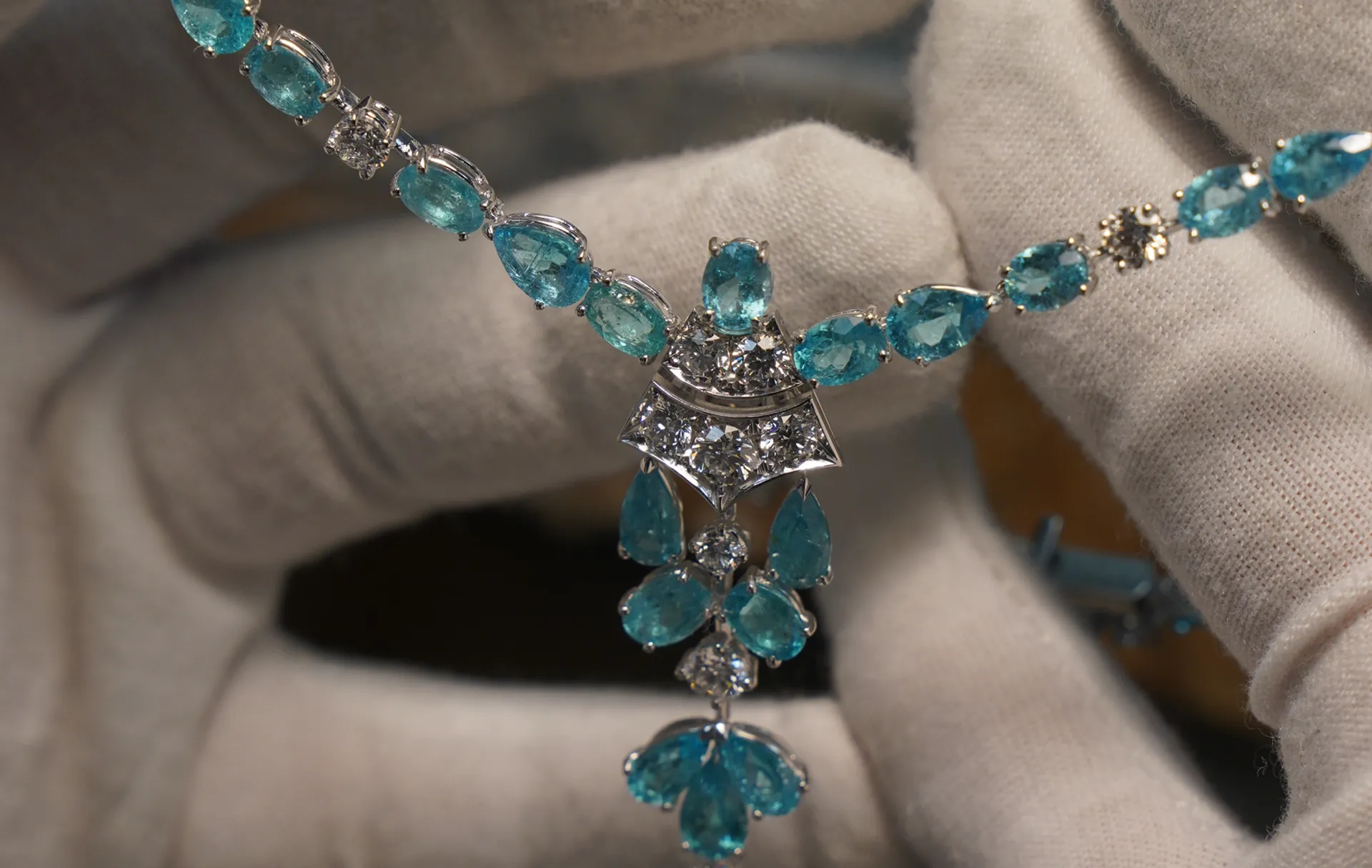
A GIA report is worthwhile for an engagement ring as soon as the diamond accounts for a significant part of the value. It records weight, color, clarity, and cut from an independent source and makes stones comparable. It is not an appraisal and does not replace looking at the stone. GIA does not issue this report for diamonds under 0.15 carat.
At a glance
- Issuer
- Gemological Institute of America (GIA), independent laboratory
- Subject
- The individual, loose diamond, not the ring
- Diamond Grading Report
- For natural diamonds in the D to Z color range from 0.15 carat
- Diamond Dossier
- For 0.15 to 1.99 carats, with laser inscription of the report number
- Cut grade
- Only for round brilliants in the D to Z color range
- Not included
- Monetary value, beauty, quality of the goldsmithing
What a GIA report records
A GIA report describes an individual diamond according to fixed rules. The Diamond Grading Report of the Gemological Institute of America applies to loose, natural diamonds in the D to Z color range from 0.15 carat. It contains the complete grading according to the 4Cs, meaning weight, color, clarity, and cut, and a plotting diagram in which the clarity characteristics are marked.
For stones of 0.15 to 1.99 carats, there is also the more compact Diamond Dossier. It includes a laser inscription of the report number. The inscription is not visible to the naked eye and links the stone to its document. GIA grades diamonds only unmounted. A stone that already sits in a ring must be removed from the setting for the examination. The glossary entry on the GIA report explains what the individual details mean.
Which report type suits which stone
GIA issues several report types for natural, loose diamonds. All contain the complete 4Cs grading. They differ in the scope of documentation, not in the rigor of the grading. For the center stone of an engagement ring, the full report with plotted clarity characteristics provides the most points of reference. For smaller stones, a compact version can suffice if the report number is on the stone.
| Report type | Weight | Special feature |
|---|---|---|
| Diamond Grading Report | from 0.15 carat | 4Cs with plotting diagram of clarity characteristics |
| Diamond Dossier | 0.15 to 1.99 carats | 4Cs, report number laser-inscribed on the stone |
| Diamond eReport | 0.15 to 2.99 carats | Digital only, with a face-up image of the stone |
| Diamond Focus Report | selected stones under 0.40 carat | Digital only, with laser inscription |
| Diamond Origin Report | from 0.15 carat | Like the Grading Report, plus origin, only after analysis as a rough stone |
GIA report types for natural, loose diamonds, according to the institute. As of November 2026.
For a proposal, the laser inscription has a practical advantage. It links the stone to its document even after setting. A goldsmith reads the number under the loupe on the girdle, the narrow edge that runs around the stone, and compares it with the report. With the full report without inscription, the plotting diagram takes on this task: the position and type of inclusions are marked there and can be found again on the stone.
What the report does not state
A laboratory report is a description, not a judgment of value. It names no monetary amount and does not say whether a stone is beautiful. Two diamonds with the same details can look different. The report also applies to the loose stone. The setting, alloy, and workmanship of the ring do not appear in it.
The report also has limits regarding cut. GIA assigns a cut grade from Excellent to Poor only for round brilliants in the D to Z color range. For oval, emerald cut, and other shapes, this overall grade is absent. For them, the effect must be judged on the stone itself. More on this in the guide on the cut for an engagement ring.
Good to know
Colored diamonds lie outside the D to Z scale and receive their own reports. For colored gemstones such as tourmaline or emerald, GIA issues identification reports that list detectable treatments.
When the report is worthwhile
The report is worthwhile when a single stone carries the ring. The greater its share of the value, the more important an independent description becomes. In rings whose effect comes from many small stones, the weight shifts to the workmanship. Three examples show the range.
- Solitaire with a diamond as center stone: the stone accounts for most of the value. Here a report is the basis of any comparison.
- Ring with center stone and small accent stones: the report applies to the center stone. The small stones on the shank are usually below the weight threshold.
- Ring with a colored gemstone and diamonds: for the colored gemstone, a report on identity and treatment counts; for the diamonds, the same applies as above.
Above all, the report protects against vagueness. Without it, details such as color and clarity stand as the seller's statement. With it, they can be measured against a fixed scale. This applies especially when clarity and carat are weighed against each other.
How to read the report
- Check the report number. GIA offers Report Check, an online lookup with which the number can be verified.
- Look at weight and measurements. The measurements in millimeters show how large the stone appears face-up.
- Place color and clarity. The color scale runs from D for colorless to Z, and the clarity scale has eleven grades.
- Read cut, polish, and symmetry. For round brilliants, the cut grade appears here.
- Compare the plotting diagram of the clarity characteristics with the stone, if the report contains it.
Common mistakes in handling the report
- Mistaking the report for an appraisal. It describes the quality and names no amount.
- Paying attention only to color and clarity and overlooking the cut, even though it shapes the effect on the finger.
- Expecting a cut grade for an oval or emerald cut. There, polish and symmetry provide the clues.
- Not looking up the report number in the GIA database and not matching it with the stone.
- Reading the report only once the ring is finished. The stone is best examined unmounted.
Another mistake lies in assuming that a report makes every ring comparable. It makes the diamond comparable. Whether the prongs sit cleanly, the shank is evenly finished, and the stone stands straight in the setting appears in no laboratory report. You examine this work on the finished ring, in daylight and ideally with a loupe. The glossary explains under prong setting how good setting work shows.
After the proposal: the report as a document
After the engagement, the report becomes a document to keep. For insurance, an appraiser determines the monetary value in a separate appraisal. GIA describes the difference clearly: the appraisal estimates the value according to current market conditions, while the report records the quality. The value of a diamond can rise or fall over time. According to the institute, its properties generally do not change.
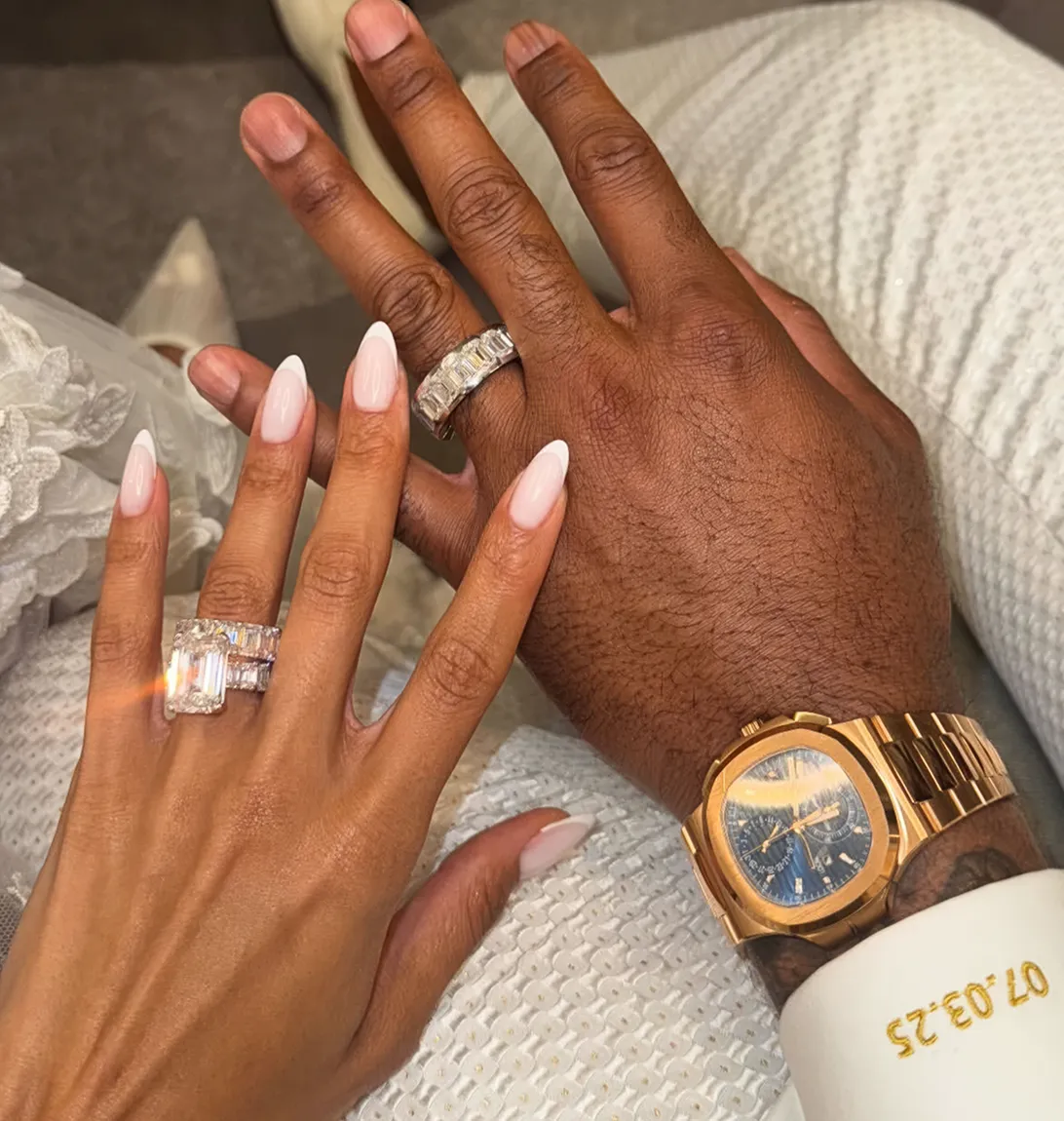
Keep the report separate from the ring and note the report number in a second place. If the ring is lost or damaged, the number quickly leads to the stone's data. If the diamond is reset years later, for example when reworked into a wedding ring set, the report and inscription make it possible to verify that the same stone comes back.
The report in the design of a ring
At Vikar Ahmed, engagement rings are individually designed and made in Germany. Each diamond can be matched to your own ideas. In this process, the report is the basis on which stones are compared before the setting and shank take shape in the design and three-dimensional visualization. For diamonds, Vikar Ahmed works almost exclusively with GIA, in exceptional cases with HRD Antwerp. Every diamond center stone from 0.50 carats comes with an independent original certificate. You can look up a GIA report online yourself using that number.
Frequently asked questions
Is a GIA report worth the extra cost for an engagement ring?
Yes, if the diamond determines the value of the ring. The report documents weight, color, clarity, and cut on a fixed scale and makes the stone comparable. For very small stones, the question does not arise, because GIA issues the Diamond Grading Report only from 0.15 carat.
Who makes an individual engagement ring with a GIA report for the diamond in Bad Kreuznach?
The report does not depend on where the workshop is located but on the stone: the laboratory issues it for the individual, unmounted diamond. Make sure that the report number and the stone belong together. Vikar Ahmed has no location in Bad Kreuznach. The house's atelier is in Idar-Oberstein and designs engagement rings individually.
Does a GIA report also grade the ring or only the diamond?
Only the diamond. The Diamond Grading Report applies to the loose stone. It does not describe gold, setting, or workmanship. The quality of the goldsmithing can only be judged on the ring itself, for example by the setting, the edges, and the polish.
Is a GIA report an appraisal?
No. The report describes the properties of the stone and names no monetary value. For insurance, a separate appraisal by an expert is usually required. The laboratory report is the basis for it, because it records the quality of the stone independently.
Can a diamond that is already set receive a GIA report?
Only after it is removed from the setting. GIA grades diamonds exclusively unmounted. If a stone from an existing ring is to be examined later, a goldsmith removes it from the setting and resets it afterward. With a new ring, it is simpler to read the report before production.
Which report type makes sense for an engagement ring?
For a center stone of about one carat or more, the Diamond Grading Report with the plotting diagram of clarity characteristics provides the most information. For stones up to 1.99 carats, the Diamond Dossier is a compact alternative in which the report number is laser-inscribed on the stone. In both cases, grading follows the same 4Cs.
Private consultation
Which details of a report matter for your ring is best clarified with the stone in hand. Vikar Ahmed takes time for this in the house's showroom in Idar-Oberstein, by appointment and virtually on request. Request an appointment for a private consultation.
Further reading
- Authenticity, origin, and certificates
- Glossary: GIA report
- Glossary: 4Cs
- Clarity or carat in a diamond
- Which cut for the engagement ring?
- Diamond ring with a GIA report
Sources
- GIA: Diamond Grading Reports, Diamond Dossier, eReport, Focus und Origin Report, accessed 2026-11-17
- GIA: What is a GIA Diamond? Unabhängigkeit, Report Check, ungefasste Steine, accessed 2026-11-17
- GIA: Difference Between a Diamond Grading Report and an Appraisal, accessed 2026-11-17
- GIA 4Cs: Diamond Clarity, Reinheitsskala, accessed 2026-11-17
- GIA 4Cs: Diamond Color, Farbskala D bis Z, accessed 2026-11-17
- GIA: Expert Tips for Buying Fancy Shaped Diamonds, Politur und Symmetrie, accessed 2026-11-17
- GIA: Colored Stone Reports & Services, accessed 2026-11-17
- GIA: 4Cs Cut, Schliffbewertung, accessed 2026-11-16
- Vikar Ahmed: Verlobungsringe und Engagement, accessed 2026-11-16
A personal conversation starts here.
At the showroom in Idar-Oberstein or by video. Vikar Ahmed discusses your ideas, stones and designs with you and answers your questions calmly and in confidence.





Thank you for your request.
Your request will be handled with the utmost attention and discretion. Vikar Ahmed will get back to you.
Your details
Request
–
Occasion
–
Consultation
–
Contact
–
In the meantime
Insights: What is a Paraíba tourmaline? · Engagement ring to your own design: how does it work?
Confidential and without obligation
Back to the pagePrivate consultation
A personal conversation starts here.
- Time for your questions, wishes and ideas
- In the showroom in Idar-Oberstein or by video
- Confidential, discreet and without obligation
Vikar Ahmed · Hauptstraße 111 · 55743 Idar-Oberstein, Germany