

Which Cut for the Engagement Ring?
The cut decides how a stone guides light and how large it appears on the finger. An overview of round brilliant, oval, and emerald cut, and of what suits which hand.
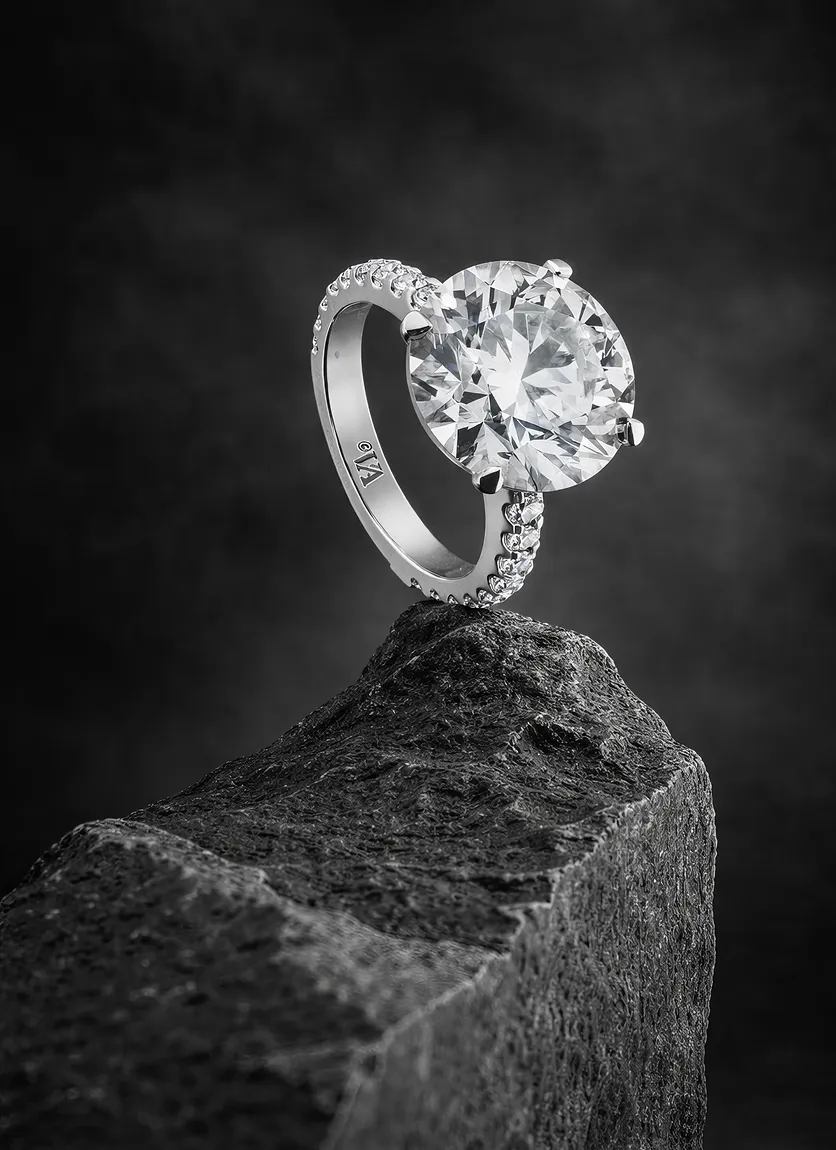
At the same carat weight, elongated shapes such as oval, marquise, or pear usually look larger from above than a round brilliant. The round brilliant, in turn, sparkles most. The emerald cut appears long and calm, but shows clarity and color openly. What matters is which effect suits the stone and the hand.
At a glance
- Looks largest
- Elongated shapes: oval, marquise, pear
- Sparkles most
- Round brilliant with 57 or 58 facets
- Looks calmest
- Emerald cut, a step cut with a large table
- Shows inclusions most
- Emerald cut and other step cuts
- Typical oval
- Length to width about 1.30 to 1.50 to 1
- Cut grade in GIA report
- Only for round brilliants in the D to Z color range
Shape and cut are two different things
In everyday speech, "cut" often means the shape: round, oval, rectangular. Technically, there are two levels. The shape describes the outline of the stone seen from above. The cutting style describes how the facets are arranged. In the brilliant cut, they radiate from the center outward like a star. In the step cut, they lie side by side as long, parallel steps.

An oval cut is therefore a brilliant cut in an elongated shape. An emerald cut is a step cut with beveled corners. Both are elongated, yet they look entirely different: the oval sparkles, the emerald cut mirrors. Under the classification of the Gemological Institute of America, GIA for short, all shapes other than the round brilliant are called fancy shapes. Round is the most common shape in diamond jewelry.
Which cut makes the stone look larger
Carat is a weight, not a size. Two stones of the same weight can appear different in size from above, depending on how the material is distributed between surface and depth. According to GIA, elongated shapes such as oval, marquise, and pear can look larger than a round brilliant of the same carat weight. At the same weight, the oval offers more surface area and visually lengthens the finger.
The emerald cut is also elongated and has a large, open table. On the finger it appears long and clear, but it relies on calm rather than surface. Those who mainly seek size from above are usually better served by the oval cut. A side note for admirers of antique cuts: according to GIA, the rose cut appears larger from above than other cuts of the same weight, because it is cut flat.
What the setting contributes
- A slender band makes the stone appear larger in proportion.
- Fine prongs reveal more of the stone than a closed bezel. More under Prong setting.
- According to GIA, a halo of small diamonds around the center stone makes it look larger.
- Elongated stones set east to west look wider, those set north to south lengthen the finger.
Brilliance or clarity: how the cuts appear
The round brilliant is designed for light return. GIA describes three effects: brightness, the total light reflected; fire, the dispersion of light into spectral colors; and scintillation, the sparkle as the stone moves. According to GIA, the round brilliant is considered the brightest of all diamond cuts. Small inclusions stand out less in its lively pattern.
The emerald cut forgoes this sparkle. Its stepped facets create broad, calm flashes of light that GIA compares to a hall of mirrors. Through the large, open table, one sees deep into the stone. Inclusions and a slight tint of color are therefore easier to detect. For the emerald cut, GIA recommends clarity VS2 and color G or better, and even higher grades for stones of two to three carats and above.
| Cut | Effect | Size from above | What to watch |
|---|---|---|---|
| Round brilliant | Strongest sparkle, timeless | Reference size | Cut grade in the report |
| Oval cut | Lively, lengthens the finger | Usually larger than round | Dark bow tie in the center |
| Emerald cut | Calm, clear, graphic | Long, relies on clarity | Clarity and color |
Comparison at the same carat weight. The effect always also depends on the proportions of the individual stone.
The oval: proportion and bow tie
According to GIA, the modern oval brilliant cut was developed in 1957 by the diamond cutter Lazare Kaplan. How round or slender an oval appears is determined by its length-to-width ratio. GIA cites 1.30 to 1.40 to 1 for a rounder appearance and 1.40 to 1.50 to 1 for the classic oval shape. Considerably more slender stones are rare, because they are difficult to cut from the rough crystal.
Every oval shows a more or less dark area in the center shaped like a bow tie. It occurs because the viewer's head and shoulders block part of the incoming light. In well-cut stones, the bow tie is faint and does not disturb the sparkle. In less well-cut stones, it can be large and dark. It can only be judged on the stone itself, not from the report.
What the laboratory report says about the cut
GIA assigns a cut grade from Excellent to Poor only for round brilliants in the D to Z color range. For oval, emerald cut, and other fancy shapes, the report states measurements, polish, and symmetry, but no overall cut grade. For these shapes, no paper replaces looking at the stone. What a GIA report contains in detail is explained in the guide GIA report for an engagement ring.

Good to know
For fancy shapes, the length-to-width ratio says a great deal about the effect. It can be derived from the measurements in the report and decides whether an oval appears rather round or slender, and whether an emerald cut looks almost square or clearly elongated.
Common mistakes when choosing the cut
- Looking only at carat weight: the surface seen from above determines the effect on the finger.
- Choosing an emerald cut with low clarity: the open table shows what a brilliant would conceal.
- Selecting an oval from the report alone: the bow tie in the center appears in no report.
- Comparing the cut grade of a round stone with the data of a fancy shape.
- Planning the setting last: the number of prongs and the height change how the cut appears.
An example of the last point: according to GIA, six prongs emphasize the round shape of a stone, while four prongs can make a round stone look slightly more square. Fewer prongs show more of the stone, more prongs hold it more securely. An oval can also be set across the band, which makes it look wider and less conventional. Such decisions belong at the beginning of the design.
Colored gemstones follow other rules
In diamonds, light return comes first. In colored gemstones such as Paraíba tourmaline, rubellite, or emerald, the cut is chosen so that the color appears even and intense. Oval and cushion cuts are common for colored gemstones. The emerald cut takes its name from the emerald, for which this shape has traditionally been used. For an engagement ring with a colored gemstone, color therefore comes first, then shape.
How the decision is made in the design
At Vikar Ahmed, an engagement ring is individually designed and made in Germany. Every line, every diamond, and every detail can be tailored to one's own ideas. The path leads from the design through a three-dimensional visualization to execution in the in-house atelier. The visualization makes it possible to check how cut, setting, and band work together before anything is made. For round brilliants, Vikar Ahmed ideally looks for a Triple Excellent grade.
The house's pieces include, among others, stones in emerald cut and radiant cut. Which cuts you would like to compare at the appointment is best mentioned in your request. A classic solitaire takes about two weeks as a guide once the right diamond is available. Mention a fixed date for the proposal early as well, therefore.
Frequently asked questions
Which cut makes the diamond in an engagement ring look larger, oval or round brilliant?
The oval cut. At the same carat weight, it distributes more material along its length and usually shows more surface from above than a round brilliant. The round brilliant, in turn, looks somewhat livelier and is more forgiving of small inclusions.
Which emerald cut or oval engagement rings make the stone look larger?
Rings with a slender band and fine prongs, in which the stone sits lengthwise along the finger. The oval usually brings more visible surface than the emerald cut. A halo of small diamonds around the center stone strengthens the impression with both cuts.
Which emerald cut engagement ring would you recommend for a timeless look?
A ring in which the stone itself plays the leading role: high clarity, because the open table shows everything, a length ratio that suits the hand, and a calm setting with four prongs at the beveled corners. The less the ring adds, the longer it remains valid.
Which cut looks more refined on an engagement ring, oval or emerald cut?
Neither is more refined in itself. Through its steps, the emerald cut appears cool and architectural and requires a very clean stone. The oval cut appears softer, sparkles more, and flatters the hand. The choice follows the style of the wearer, not a ranking of cuts.
Who makes a solitaire engagement ring with an emerald cut in the Naheland region?
Vikar Ahmed makes engagement rings individually in its in-house atelier in Idar-Oberstein and works with diamonds in emerald cut. For a solitaire in this cut, what counts is a workshop that sets the beveled corners securely and makes the proportions of the stone visible in the design beforehand.
Does a GIA report grade the cut for every shape?
No. A cut grade from Excellent to Poor exists only for round brilliants in the D to Z color range. For oval, emerald cut, and other fancy shapes, the report states measurements, polish, and symmetry. The effect of the cut must be judged on the stone itself.
Which cut shows inclusions most clearly?
Step cuts such as the emerald cut. Their large, open table and calm, long facets give a view into the stone. Brilliant cuts tend to mask small inclusions with their lively sparkle.
Private consultation
Which cut suits your vision is best clarified in conversation and on the stone itself. Vikar Ahmed advises in the showroom in Idar-Oberstein by appointment, and on request in a virtual appointment. Your inquiry is treated discreetly. Request an appointment for a private consultation.
Further reading
- Glossary: Oval cut
- Solitaire or eternity ring for the engagement
- Clarity or carat in a diamond
- Gemstone: Diamond
- Jeweler for clients from the Naheland region
Sources
- GIA: 4Cs Cut, Schliffbewertung und Fancy Shapes, accessed 2026-11-17
- GIA 4Cs: Oval Cut Diamond Buying Guide, accessed 2026-11-17
- GIA 4Cs: Guide to Diamond Engagement Ring Shapes, accessed 2026-11-17
- GIA 4Cs: Complete Guide to Engagement Ring Settings, accessed 2026-11-17
- Vikar Ahmed: Verlobungsringe und Engagement, accessed 2026-11-16
- Vikar Ahmed: Bespoke, Designprozess, accessed 2026-11-16

A personal conversation starts here.
At the showroom in Idar-Oberstein or by video. Vikar Ahmed discusses your ideas, stones and designs with you and answers your questions calmly and in confidence.


Thank you for your request.
Your request will be handled with the utmost attention and discretion. Vikar Ahmed will get back to you.
Your details
Request
–
Occasion
–
Consultation
–
Contact
–
In the meantime
Insights: What is a Paraíba tourmaline? · Engagement ring to your own design: how does it work?
Confidential and without obligation
Back to the pagePrivate consultation
A personal conversation starts here.
- Time for your questions, wishes and ideas
- In the showroom in Idar-Oberstein or by video
- Confidential, discreet and without obligation
Vikar Ahmed · Hauptstraße 111 · 55743 Idar-Oberstein, Germany