

Diamond Masterpieces for a Collection
Not every piece set with many diamonds is a masterpiece. For a collection, what counts is rarity, execution, and documentation that will still hold decades from now.
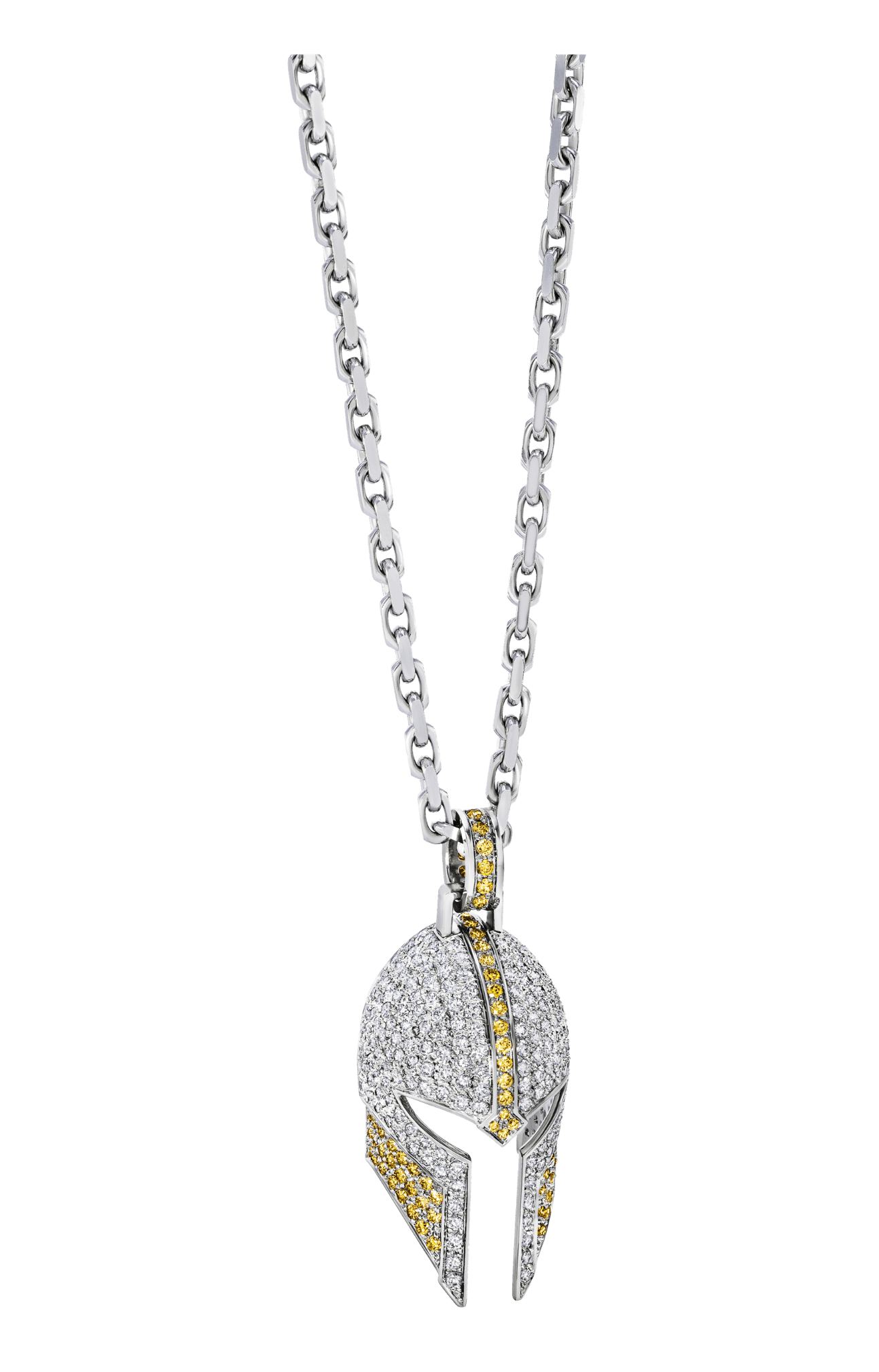
A diamond masterpiece combines rare diamonds with an original design and setting work of the highest standard. It becomes interesting for collectors when the principal stones are documented by independent laboratory reports, the remaining stones are evenly matched, and the piece was made as a one-of-a-kind piece or in very small numbers. Carat weight alone does not make a masterpiece.
At a glance
- Masterpiece
- Single piece with rare stones, its own design, and elaborate handwork
- Diamond color scale
- D to Z, D stands for colorless
- Clarity scale
- 11 grades from Flawless to Included, assessed under 10x magnification
- Cut grade
- Excellent to Poor, only for round brilliants in the D to Z range
- Colored diamonds
- Color is the decisive value factor, clarity is secondary
- Laboratory report
- Describes quality, states no monetary value
What defines a diamond masterpiece
The term masterpiece is not protected. In High Jewelry, it describes a piece in which three things come together: diamonds that are rare in quality and weight, a design with its own signature, and an execution that can be examined down to the smallest detail. If one of these is missing, it remains a beautiful piece of jewelry, but not a masterpiece in the true sense.

For collectors, a fourth level is added: documentation. A piece whose principal stones are described by an independent laboratory can still be assessed, passed on, and insured decades later. Without these documents, any later assessment depends on visual inspection alone. What such a report contains and how to read it is explained in the glossary under GIA report.
The diamonds: quality and rarity
Colorless diamonds are described by the 4Cs. According to GIA, color ranges from D for colorless to Z for light yellow, light brown, or light gray and is determined under controlled lighting with master stones. Clarity is graded at tenfold magnification on a scale of eleven grades, from Flawless to Included. GIA assigns the cut grade from Excellent to Poor only to round brilliants in the D to Z color range.
The top grade of both scales combined is called D Flawless: no color, no inclusions, and no surface features under a tenfold loupe. Such stones are rare. For colored diamonds, the fancy color diamonds, a different logic applies. Here, according to GIA, color determines value, and strong, vivid tones are the rarest. Strong pink, blue, and green are among the rarest colors of all.
| Feature | Colorless diamond | Colored diamond |
|---|---|---|
| Most important criterion | Interplay of color, clarity, cut | Hue, tone, and saturation |
| Rarity increases with | Higher color and clarity grade | Stronger, purer color |
| Role of clarity | Important, especially in large stones | Secondary to color |
| Documentation | Laboratory report with the 4Cs | Laboratory report with a description of the color |
Colorless and colored diamonds follow different standards.
Design, metal, and setting work
A masterpiece differs from a collection piece above all in its design. The form follows the stones: a large center stone determines proportions and lines, while smaller diamonds frame, accompany, or connect. In 18k (750) white gold, the metal recedes behind the stones. GIA describes how white gold creates colorless reflections and emphasizes the colorlessness of diamonds in grades D to J. For a piece of colorless diamonds, that is a natural choice.
The setting work decides whether the stones unfold their light and sit securely. In masterpieces, a great many small diamonds are often set individually. Each stone must sit straight, the height must be even, and as little metal as possible should be visible. Anyone examining a piece should also look at it from the side and from below. A clean underside shows that the work was done with care, even where it cannot be seen when worn.
Finished masterpiece or bespoke one-of-a-kind piece
A finished masterpiece has an advantage no design can replace: you see it before you decide. Stones, effect when worn, and execution can be examined directly. A one-of-a-kind piece made to your wishes, by contrast, has yet to be created. It can, however, place exactly the stone you have selected at its center and set proportions, metal, and form according to your own ideas.

For collectors, the finished piece offers certainty, the one-of-a-kind piece offers individuality. A piece that exists only once and was designed around a documented stone has a clear story. At Vikar Ahmed, a one-of-a-kind piece is created in three steps: design, visualization in a 3D model, and production in the in-house atelier. The guide Masterpiece or one-of-a-kind piece offers a detailed comparison of both paths.
Masterpiece or classic diamond bracelet
A classic diamond bracelet, such as a line of equally sized brilliants, is a proven type. Its value lies in the quality and uniformity of the stones. A masterpiece, by contrast, is a single case with its own design. Both can make sense for a collection: the bracelet as a timeless foundation, the masterpiece as a piece with character. How to assess a diamond bracelet by uniformity, setting, and clasp is shown in the guide Diamond bracelets.
As a collector's piece, the more interesting one is usually the piece that is rarer and better documented. A bracelet of many medium-sized stones of good quality is less rare than a masterpiece with a large principal stone of high color and clarity grade. Conversely, a bracelet gains standing when every stone is documented and the line is carefully matched. There is therefore no general ranking.
How to examine a diamond masterpiece
- Have the principal stones specifiedWeight, color, clarity, and cut in writing, with laboratory and report number.
- Match the reportCheck whether the dimensions and weight in the report match the set stone.
- Ask about the side stonesHave the total weight and quality range of the smaller diamonds stated.
- Examine the executionLook at the settings, underside, and clasp under the loupe.
- Collect the documentsKeep reports, description, and details of the metal together.
A laboratory report states no monetary value. GIA makes clear that a diamond report is neither a valuation nor a guarantee. Anyone who needs a value for insurance or an estate has an appraisal prepared, based on the details of the report and the market situation. How to assess high carat weight in a valuation is explained in the guide Carat weight in a diamond ring.
Viewing masterpieces in the showroom
Diamonds look different under every light. A masterpiece should therefore be viewed calmly and under different lighting, ideally in comparison with other pieces. Vikar Ahmed receives clients in the house's showroom in Idar-Oberstein by appointment and describes it as a place of selection, not a sales floor. On request, he sends photos or short videos in daylight in advance. It is best to say what you would like to see when you make your request, for example whether colorless or colored diamonds are the focus. How a visit proceeds is described on the Showroom page.
A little preparation helps for the appointment. Note which pieces your collection already contains and what is missing, such as a piece of colorless diamonds alongside colored stones. Look at each piece in daylight and in warm artificial light, on the body and on a neutral cloth. This shows whether the stones appear even and whether the piece suits the way you wear jewelry.
Frequently asked questions
Finished diamond masterpiece or bespoke one-of-a-kind piece: which is the better choice for collectors?
Both can be right. A finished masterpiece can be viewed and examined before the decision. A one-of-a-kind piece places a selected stone at its center and follows your own ideas entirely. For a collection, what counts in both cases is rare stones, an original design, and complete documentation for the principal stones.
Is a diamond masterpiece or a classic diamond bracelet more interesting as a collector's piece?
Usually the piece that is rarer and better documented. A classic bracelet convinces through uniformity and timeless form, a masterpiece through design and exceptional stones. A bracelet with documented stones of the highest quality can surpass a masterpiece with medium stones. What decides is stone quality, execution, and documentation.
Which diamond masterpieces in 18k (750) white gold are particularly interesting for my collection?
Interesting are pieces whose principal stones are graded high in color and clarity and documented by a laboratory report, and whose design is original. White gold makes colorless diamonds appear particularly clear. Also pay attention to the uniformity of the side stones, clean setting work, and whether the piece is one-of-a-kind.
How can I tell that a piece is truly a masterpiece?
By the combination of rare, documented stones, a design with its own signature, and setting work without weaknesses. The term itself is not protected. Have the stones described in writing, look at the piece from all sides, and ask whether it is a single piece. At Vikar Ahmed, diamond reports come almost exclusively from GIA, and in exceptional cases from HRD Antwerp.
Does every diamond in a masterpiece need its own report?
No. It is customary to have a separate laboratory report for the principal stones that carry the value. For the many small stones, the total weight and quality range are usually stated. What matters is that each report can be clearly matched to a set stone, for example by weight and dimensions.
How should I keep the documents for a masterpiece?
Keep laboratory reports, the description of the piece, and details of the metal together and separate from the jewelry, ideally with a copy in a second location. These documents make the piece traceable later, for example for insurance, an appraisal, or passing it on within the family.
Private consultation
A masterpiece deserves an unhurried look. In a personal appointment in Idar-Oberstein or virtually, you discuss with Vikar Ahmed which diamonds and which design suit your collection. You submit your request via the Contact page, and it is treated discreetly.
Further reading
- Masterpiece or one-of-a-kind piece
- High Jewelry diamond rings with high carat weight
- Assessing diamond bracelets correctly
- High carat weight in a diamond ring
- Glossary: D Flawless
Sources
- GIA 4Cs: Diamond Color, accessed 2026-11-17
- GIA 4Cs: Diamond Clarity, accessed 2026-11-17
- GIA: 4Cs Cut, accessed 2026-11-17
- GIA: Fancy Color Diamond Quality Factors, accessed 2026-11-17
- GIA: Guide to White, Yellow, and Rose Gold Engagement Rings, accessed 2026-11-17
- GIA: Difference Between a Diamond Grading Report and an Appraisal, accessed 2026-11-17
- Vikar Ahmed: Über uns, Showroom in Idar-Oberstein, accessed 2026-11-17
- Vikar Ahmed: Bespoke, accessed 2026-11-17

A personal conversation starts here.
At the showroom in Idar-Oberstein or by video. Vikar Ahmed discusses your ideas, stones and designs with you and answers your questions calmly and in confidence.


Thank you for your request.
Your request will be handled with the utmost attention and discretion. Vikar Ahmed will get back to you.
Your details
Request
–
Occasion
–
Consultation
–
Contact
–
In the meantime
Insights: What is a Paraíba tourmaline? · Engagement ring to your own design: how does it work?
Confidential and without obligation
Back to the pagePrivate consultation
A personal conversation starts here.
- Time for your questions, wishes and ideas
- In the showroom in Idar-Oberstein or by video
- Confidential, discreet and without obligation
Vikar Ahmed · Hauptstraße 111 · 55743 Idar-Oberstein, Germany