

How to Recognize High-Quality Diamond Earrings
Earrings are seen from a distance, worn as a pair, and constantly in motion. This results in rules of their own for stones, setting, and back.
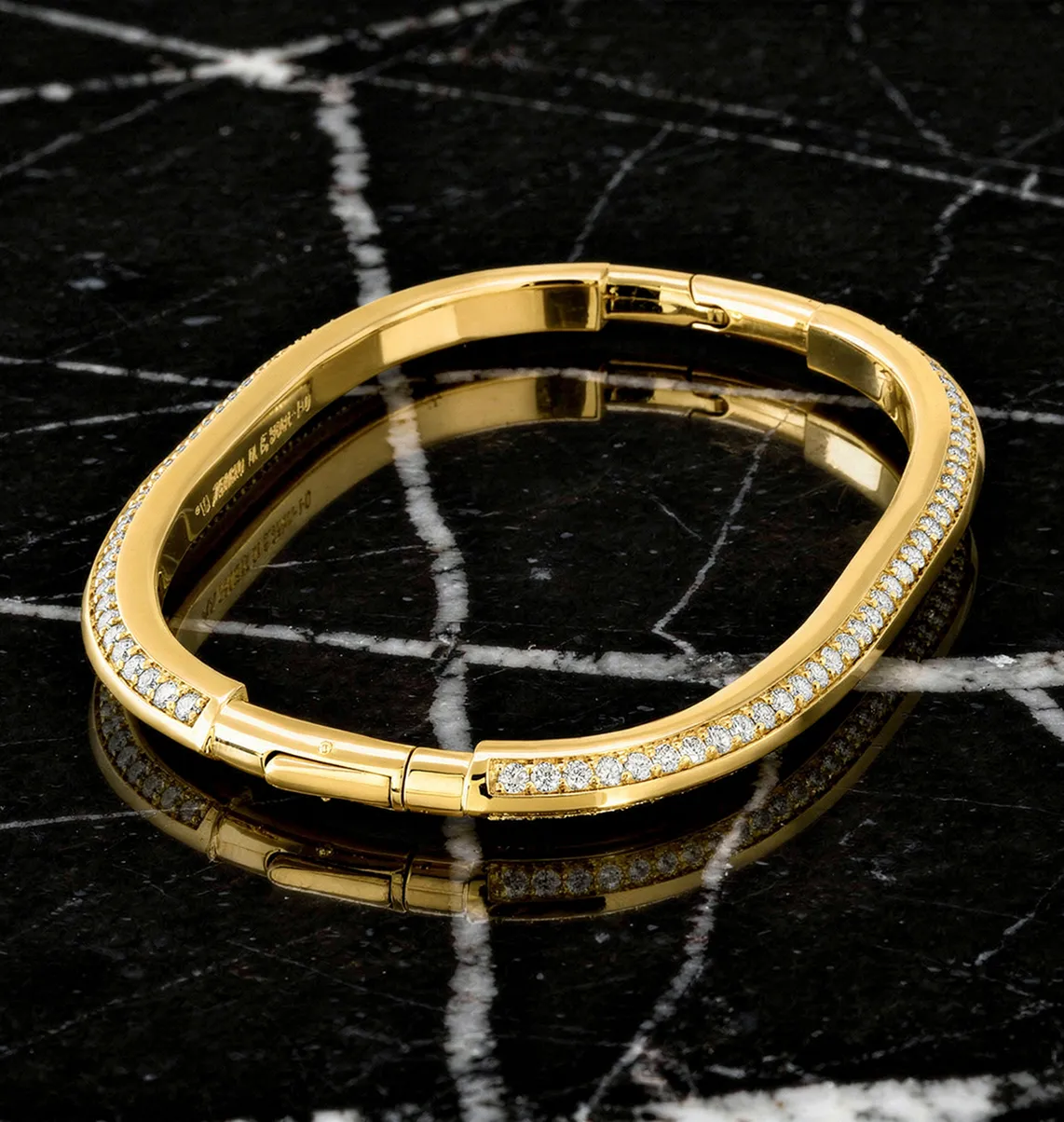
High-quality diamond earrings can be recognized by a well-matched pair: the same shape, the same cutting style, similar weight, and matching color and clarity. Added to this are a setting that holds the stone securely and a back that suits the weight. Because earrings are seen from a distance, clarity may be slightly lower than in a ring.
At a glance
- Most important feature
- Two stones that match in shape, cut, weight, color, and clarity
- Cut grade for brilliants
- Excellent or Very Good according to GIA for strong sparkle
- Clarity
- More latitude than in a ring, as earrings are seen from a distance
- Most secure backs
- Screw backs and locking safety backs
- Most protective setting
- Bezel setting, which encloses the stone with a metal rim
- Typical forms
- Studs, drops, hoops, chandeliers
A pair is more than two individual stones
A ring carries one stone, an earring never stands alone. Because two stones are seen side by side, they must match each other. The Gemological Institute of America, GIA for short, points out that the 4Cs of both stones in a pair should match. For fancy shapes, GIA advises comparing only stones of the same shape, the same cutting style, and similar weight, and laying the laboratory reports side by side. A pair is therefore a work of selection, not an addition.
How well a pair is matched can be seen in the finished piece above all from the front. If one stone differs in color, one ear appears warmer than the other. If it differs in proportions, one side sparkles more brightly. With pears and marquises, mirror symmetry is added: the points should face the same direction and the halves should be symmetrical. The glossary explains what the 4Cs describe in detail.
Weighting the 4Cs differently for earrings
Earrings are rarely seen up close. GIA therefore describes more latitude than for a solitaire ring. For clarity, according to GIA, the grades SI1 and SI2 can also be a good choice, because inclusions there are rarely visible without a tenfold loupe. The GIA clarity scale comprises eleven grades from Flawless to I3. Very low grades can make the stone appear darker or cloudier.

With color, much depends on the metal. According to GIA, white metal emphasizes the colorlessness of stones in the D to J range. For stones in the M to Z range, yellow or rose gold harmonizes, while white metal creates a contrast there. For K and L, both work. With the cut, there is no latitude: for round brilliants, GIA recommends the cut grades Excellent or Very Good, because a weak cut costs brightness and fire.
| Characteristic | In earrings | Why |
|---|---|---|
| Cut | No compromises for brilliants | Sparkle carries the effect from a distance |
| Color | Match to the metal | White metal emphasizes colorlessness, rose gold adds warmth |
| Clarity | Somewhat more latitude than in a ring | Inclusions are hardly visible from a distance |
| Weight | Both stones of similar weight | Unequal size is immediately noticeable from the front |
Weighting of the 4Cs for diamond earrings according to GIA guidance. Step cuts such as the emerald cut require higher clarity.
Studs, drops, hoops, chandeliers
The form determines how much movement an earring has and how strongly it frames the face. The stud sits directly on the earlobe and shows the stone without distraction. The drop sets it in motion, so it flashes in the light more often. The hoop is a ring that can be set with diamonds. The chandelier, named after the French word for a hanging light fixture with many arms, branches into several levels and is the most elaborate form.
- Stud: calm, suitable for everyday wear, the stone is the focus.
- Drop: more movement, a single drop or a small row below the ear.
- Hoop: stones run around an arc, looks understated or prominent depending on size.
- Chandelier: several levels, many small stones, a form for evenings and occasions.
A chandelier looks timeless when its construction remains clear. A symmetrical structure, a recognizable main line, and a few well-chosen stone shapes age more slowly than densely ornamented designs. The more parts move, the more important the joints and loops become. More on this form can be found in the guide Chandelier earrings.
Setting and back hold the stone
According to GIA, a setting with three or four prongs shows the most of the stone and makes it appear larger. The prong setting gives light ample access but protects the edge less. The bezel setting encloses the stone with a metal rim and, according to GIA, offers the greatest protection. A ring of small diamonds around a center stone, called a halo in the trade, can show smaller stones to greater effect.
For backs, GIA names screw backs and locking safety backs as the most secure. Simple push backs that hold only by friction protect less against loss. Screw posts are somewhat thicker and can be less comfortable to wear. The size of the back also matters: it must carry the weight of the earring, otherwise the stud tilts forward.
Good to know
According to GIA, a diamond that sits loosely in its setting can wear through a prong over time. Earrings are often touched when they are put on and taken off. A regular look at the prongs is therefore worthwhile.
Proportion to the face and weight on the ear
An earring works in relation to the face, not on its own. Short hair and a narrow face make large studs appear more prominent. Long drops visually lengthen the neck. With chandeliers and heavy drops, weight decides wearing comfort. The earlobe carries everything that hangs below it. A design that distributes the weight onto a stable post and a suitable back can be worn through a long evening.
An example without reference to a product: two brilliants of half a carat each in studs sit calmly and can be worn every day. The same amount of stone as a cascade of small stones in a drop appears larger and more mobile, but demands more setting work and more care. Carat is a weight, not a size. How much surface a stone shows from above depends on cut and shape, more on this under carat.
Typical mistakes with diamond earrings
- Comparing only the total carat weight: it says nothing about whether both stones match.
- Saving on the cut: a poorly cut brilliant is the first to lose its sparkle from a distance.
- Choosing step cuts with low clarity: emerald cut and carré openly reveal inclusions.
- Overlooking the back: a friction back that is too small is the most common weak point.
- Deciding color and metal separately: rose gold tints a colorless stone differently than white gold.
A further mistake concerns the reports. A laboratory report describes the quality of a single stone and says nothing about market value. GIA stresses that its report is not a certificate, not a guarantee, and states no monetary value. For a pair, two reports make sense, compared line by line. The glossary explains what a GIA report contains in detail.

Care: what earrings need
According to GIA, diamonds can be cleaned safely with lint-free cloths, commercial jewelry cleaners, and mild household cleaners. Ultrasonic and steam devices are not recommended for use at home, because they can loosen stones in the setting. Only a diamond can scratch a diamond. Earrings should therefore be stored separately from other diamond pieces so that the stones do not touch. With drops and chandeliers, loops and joints are part of the check.
Diamond earrings as a one-of-a-kind piece
At Vikar Ahmed, jewelry is created in three steps: design, visualization, and execution. In-house designers develop the design, and a three-dimensional CAD rendering makes the piece visible before crafting. For earrings, this is helpful because length, proportion to the face, and the position of the stones can be checked in advance. Each piece is crafted as a one-of-a-kind piece in the in-house atelier in Idar-Oberstein, with gemstone setting and polishing by hand.
The house's pieces include colorless diamonds as well as natural fancy color diamonds, set in 18k (750) white and rose gold. If you would like to compare colorless and colored stones for earrings directly, it is best to say so when requesting the appointment. For the overall framework of a pair to your own design, the process described on the Bespoke page applies.
Frequently asked questions
Which chandelier-style diamond earrings still look timeless?
Those with a clear, symmetrical construction and few stone shapes. A recognizable main line, a calm upper part at the earlobe, and a cleanly set lower level age more slowly than densely ornamented designs. Well-made joints ensure that the stones swing freely and catch the light.
How do you recognize a jeweler for high-quality diamond earrings?
Check every pair by the same points: match of both stones, cut grade, setting, back, and laboratory reports. Vikar Ahmed has no location in Morbach, and consultations take place in Idar-Oberstein or virtually. Notes on the journey can be found under Jeweler for clients from Morbach.
How large should the diamonds in stud earrings be?
That depends on the face and the occasion, not on a norm. GIA names half a carat per stone as the size from which studs make a clear impression. Stones just below round weight thresholds hardly look smaller. More important than size is that both stones look the same.
Which back is most secure for diamond stud earrings?
Screw backs and locking safety backs. They hold the stud more firmly than simple friction backs. The back should be large enough for the weight of the stone so that the stud does not tilt forward. With heavy drops, the shape of the post also helps carry the load.
Do diamonds in earrings need the same clarity as in a ring?
No. Earrings are seen from a greater distance, where inclusions are less noticeable. According to GIA, grades such as SI1 and SI2 can also be suitable. Exceptions are step cuts such as the emerald cut, whose open table shows inclusions more clearly.
Do colorless diamonds suit rose gold earrings?
Yes. GIA describes diamonds of color grades D to L as showing well against rose gold. The metal does, however, cast pink reflections into the stone. Anyone wishing to see the stone as cool and colorless as possible chooses a white gold setting within a rose gold earring.
Private consultation
Stud, drop, or chandelier: how a pair looks on the ear is best clarified in conversation. Vikar Ahmed offers consultations in the showroom in Idar-Oberstein by appointment or in a virtual appointment. Your inquiry is treated discreetly. Request an appointment for a private consultation.
Further reading
- Chandelier earrings
- Colored gemstone earrings
- Gemstone: Diamond
- Glossary: Prong setting
- Glossary: GIA report
Sources
- GIA 4Cs: How to Choose Diamond Stud Earrings, accessed 2026-11-17
- GIA 4Cs: Purchasing Fancy Shaped Diamonds, accessed 2026-11-17
- GIA: 4Cs Clarity, accessed 2026-11-17
- GIA: Diamond Care and Cleaning, accessed 2026-11-17
- GIA 4Cs: Grading Report und Appraisal, accessed 2026-11-17
- GIA 4Cs: White, Yellow and Rose Gold, accessed 2026-11-17
- Vikar Ahmed: Bespoke, Designprozess, accessed 2026-11-16
- Vikar Ahmed: Kollektionen, accessed 2026-11-16

A personal conversation starts here.
At the showroom in Idar-Oberstein or by video. Vikar Ahmed discusses your ideas, stones and designs with you and answers your questions calmly and in confidence.


Thank you for your request.
Your request will be handled with the utmost attention and discretion. Vikar Ahmed will get back to you.
Your details
Request
–
Occasion
–
Consultation
–
Contact
–
In the meantime
Insights: What is a Paraíba tourmaline? · Engagement ring to your own design: how does it work?
Confidential and without obligation
Back to the pagePrivate consultation
A personal conversation starts here.
- Time for your questions, wishes and ideas
- In the showroom in Idar-Oberstein or by video
- Confidential, discreet and without obligation
Vikar Ahmed · Hauptstraße 111 · 55743 Idar-Oberstein, Germany