

What Makes Good Chandelier Earrings
The chandelier is the most opulent form of earring. Whether it looks light in the evening or pulls heavily is decided by construction, choice of stones, and weight.
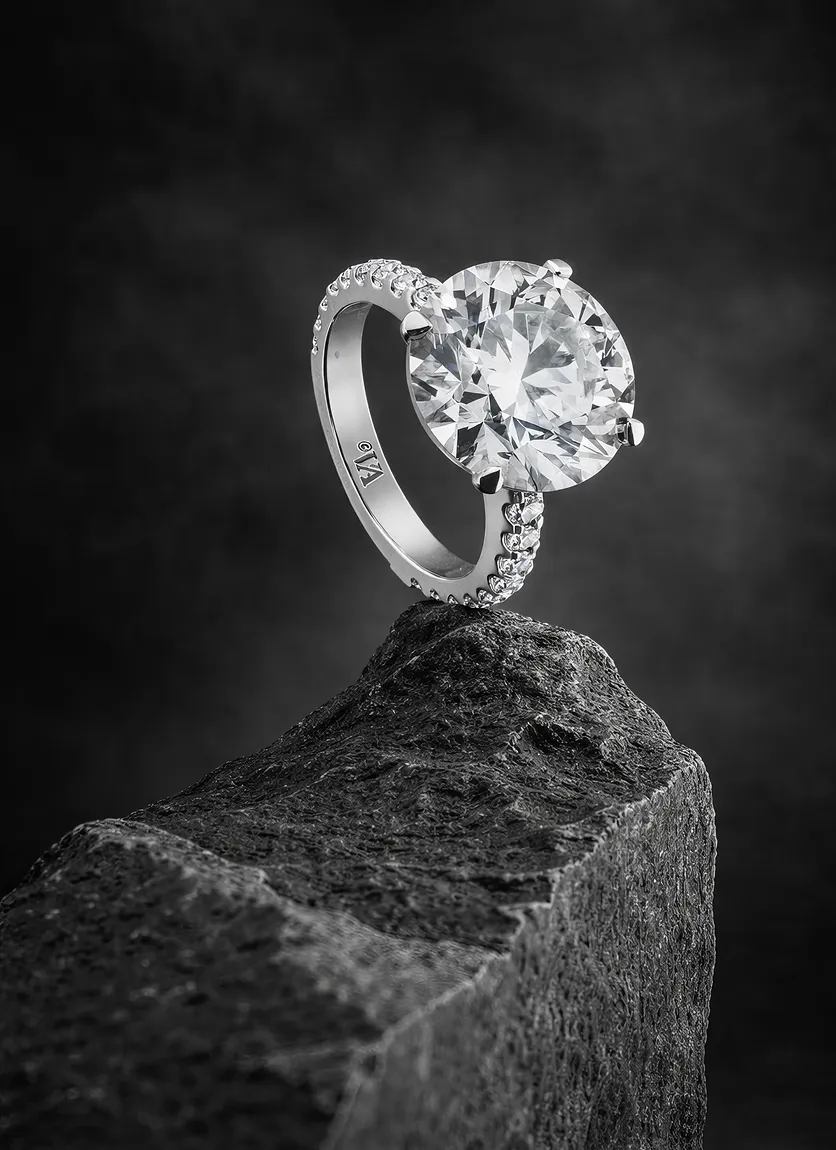
Good chandelier earrings are recognized by a clear construction: a secure ear post, a load-bearing center section, and several movable drops with cleanly worked loops. The stones are matched as mirror images within the pair, and the weight stays low enough that the earlobe does not tilt forward. With their range of colors and elongated shapes, tourmalines are well suited to the drops.
At a glance
- Definition
- Three or more drops hanging from a common element
- Name
- Since the 1920s, after the chandelier. Formerly called girandole
- Most important checkpoint
- Joints and loops between the movable parts
- Tourmaline, hardness
- 7 to 7.5 on the Mohs scale, toughness fair according to GIA
- Diamond, hardness
- 10 on the Mohs scale
- Paraíba tourmaline
- Color from copper, rare above one carat
An earring that branches out
According to the description of the Gemological Institute of America, GIA for short, a chandelier earring typically has three or more drops hanging from a common element. Such earrings have carried the name since the 1920s, because they are reminiscent of chandeliers. Before that, they were often called girandoles. According to GIA, they can be seen in European portraits from the middle of the 16th century. The form is therefore old, but has been redrawn again and again.

The chandelier differs from a simple drop earring through its branching. A drop earring leads one stone or a row downward in a single line. The chandelier opens out in width, usually in the form of a fan, an arch, or several tiers. As a result, it frames the face more strongly than any other earring form. An overview of studs, drops, and hoops with diamonds is given in the guide Diamond earrings.
The structure decides the effect
Every chandelier consists of three levels. At the top sits the ear post or hook, often with a set stone as a finish at the earlobe. Below follows the center section, which carries the load and distributes the drops. At the bottom hang the movable elements that make the earring shine. How these levels are connected determines whether the piece swings freely or looks stiff.
What matters at the connections
- Loops and hinges are closed and soldered so that no drop can come loose.
- Movable parts swing freely without rubbing against each other or touching the stones.
- The back is worked open so that light falls into the stones from behind.
- The closure is designed for the weight and has a safety catch.
- Both earrings hang as mirror images, even when each is viewed individually from the side.
According to GIA's observation, modern designs increasingly work with lighter materials and smaller stones without giving up a strong effect. Openwork forms and deliberately placed spaces make a chandelier airier. A design that relies on mass, by contrast, quickly looks heavy, even if it is well made.
Weight and wearing comfort
The earlobe carries everything that hangs below it. If the center of gravity lies far down or in front of the post, the earring tilts forward and stretches the lobe. A well-constructed chandelier keeps the center of gravity close to the axis of the post. Larger stones tend to sit in the upper part, and the drops remain light. A wide post or a hook distributes the load over a larger area.
How heavy an earring may be cannot be stated in general terms. It depends on the earlobe, on how long it is worn, and on the occasion. A pair for a long evening should be checked for length and weight in the design before production. Anyone wearing chandeliers for the first time usually notices the difference between a light and a heavy pair after the first hour, not when trying them on.
Tourmaline, Paraíba, or diamond in the drops
According to GIA, tourmaline has one of the widest color ranges of all gemstones. For chandeliers, it brings a second advantage: because of their elongated crystals, many tourmalines are cut as narrow rectangles, so there are numerous elongated shapes in unusual dimensions. Such stones fit well into drops that run downward. GIA gives the Mohs value as 7 to 7.5 and the toughness as fair.
Paraíba tourmaline owes its glowing color to copper, which according to GIA acts as a coloring agent in no other tourmaline. According to GIA, stones over one carat are rare. For a chandelier, this means: Paraíba is suitable as a smaller accent stone or as a matched row; large pairs are the exception. Rubellite, the pink to red variety, is easier to find in larger sizes.
| Stone | Effect in a chandelier | What to look for |
|---|---|---|
| Paraíba tourmaline | Glowing blue to green, even in small stones | Match the pair in color, size usually limited |
| Rubellite | Warm pink to red, also as a large drop | Visible inclusions are customary with strong color |
| Lagoon and other tourmalines | Green and blue tones, many elongated shapes | Depth of color depends on viewing direction |
| Diamond | Sparkle and light, often as a frame | Matching of the many small stones |
The stones can be combined: diamonds as a frame and colored stones as drops is a common arrangement.
Matching color within the pair
With colored stones, the pair is harder to match than with diamonds. Tourmaline is strongly pleochroic, meaning it shows different hues or depths of color depending on the viewing direction. According to GIA, the cutter deliberately chooses the position of the table in order to control the depth of color of the finished stone. Two stones from different crystals can therefore look visibly different despite the same designation, especially in a movable drop.

A matched pair begins with the selection of the stones, not with the metal. Ideally, all stones of a pair are compared side by side under daylight and under warm evening light. For rubellite, according to GIA, the trade accepts visible inclusions when the color is strong. For green tourmalines, stones without inclusions visible to the naked eye are expected. These standards also apply to every stone in the drops.
Chandelier or solitaire in the evening
Chandelier and solitaire earrings follow opposing ideas. The solitaire relies on one stone per ear, sits calmly, and can be worn with almost anything. The chandelier is itself the main piece of the evening. It does not tolerate a large necklace beside it and is most effective with an open neckline and hair worn up or short. GIA explicitly links the return of the form to short hairstyles.
For a long evening with many conversations, a light chandelier with a clear line is often more comfortable than a heavy piece with many tiers. If you like to wear a necklace, you are better served by a solitaire or a short drop earring. How to choose and combine a colored stone necklace is described in a separate guide.
Common mistakes with chandelier earrings
- Paying attention only to the effect in the mirror: comfort only becomes apparent after hours.
- Overlooking the center of gravity: an earring that tilts forward never looks elegant.
- Choosing colored stones individually instead of as a pair: differences are more noticeable in the drops.
- Placing delicate stones where drops knock against each other.
- Using ultrasound or steam for cleaning: GIA advises against this for tourmaline.
For care, GIA recommends warm soapy water for tourmaline. Heat can damage the stone, and rapid changes in temperature can cause it to fracture. With a chandelier, there is also the fact that dirt collects in loops and settings. A soft brush reaches these spots. Joints and closure should occasionally be checked in the workshop before a drop loosens.
A pair to your own design
At Vikar Ahmed, one-of-a-kind pieces are created in three steps: design, visualization, and execution in the in-house atelier in Idar-Oberstein. For a chandelier, three-dimensional representation with CAD is particularly useful, because length, width, and the position of the drops can be checked before production. The house's pieces include, among others, Paraíba tourmalines, Lagoon tourmalines, rubellites, and diamonds, set in 18k (750) white and rose gold. Stones are set under the microscope, including as pavé and micro-pavé.
Frequently asked questions
Chandelier earrings or simple solitaire earrings: which wears better at evening occasions?
That depends on the rest of the jewelry. Chandeliers are themselves the main piece and work best without a large necklace, with an open neckline and short hair or hair worn up. Solitaires are lighter, calmer, and can be combined with any necklace. For very long evenings, a light chandelier with few tiers is more comfortable.
Paraíba or another tourmaline for striking chandelier earrings?
Paraíba tourmaline glows particularly strongly because of its copper content, but is rare above one carat. It is therefore better suited to smaller, finely matched drops. Rubellite and other tourmalines are more often available in larger and elongated shapes. If you want large drops, you will find more choice there. In both cases, a pair matched in color is decisive.
With whom can I discuss a design for opulent chandelier earrings in Birkenfeld?
Vikar Ahmed has no location in Birkenfeld, but advises in the showroom in Idar-Oberstein by appointment or virtually. For a chandelier, a workshop that shows the design three-dimensionally in advance and selects the stones as a pair is worthwhile. More on consultation for clients from the region under Jeweler for Birkenfeld.
How heavy may chandelier earrings be?
There is no fixed limit. What matters is where the center of gravity lies. If the weight hangs close to the axis of the post and the earring does not tilt forward, even a larger pair can be worn for hours. Heavy stones belong in the upper part; the drops should remain light.
Where does the name chandelier come from?
Chandelier is the French and English word for a chandelier light fixture. According to GIA, the earrings have carried the name since the 1920s, because their branching drops are reminiscent of chandeliers. Before that, they were often called girandoles. The form itself is considerably older and can be seen in European portraits from the 16th century.
How do you clean chandelier earrings with tourmalines?
With warm soapy water and a soft brush that also reaches loops and settings. GIA does not recommend ultrasonic and steam devices for tourmaline, because heat and rapid changes in temperature can damage the stone. Then let them dry well and have the joints checked in the workshop from time to time.
Private consultation
Whether a chandelier suits you is best seen when length, stones, and weight are considered together. Vikar Ahmed advises in the house's showroom in Idar-Oberstein by appointment, and on request also in a virtual appointment. Your inquiry is treated discreetly. Request an appointment for a private consultation.
Further reading
- How to recognize high-quality diamond earrings
- Choosing colored stone earrings
- Gemstone: Tourmaline
- Glossary: Paraíba tourmaline
- Bespoke: the path to a one-of-a-kind piece
Sources
- GIA 4Cs: The Classic Chandelier Earring, accessed 2026-11-17
- GIA: Tourmaline Quality Factors, accessed 2026-11-17
- GIA: Tourmaline Description, accessed 2026-11-17
- GIA: Tourmaline Care and Cleaning, accessed 2026-11-17
- GIA 4Cs: Mohs Scale of Hardness, accessed 2026-11-17
- Vikar Ahmed: Bespoke, Designprozess, accessed 2026-11-16
- Vikar Ahmed: Collections, accessed 2026-11-16

A personal conversation starts here.
At the showroom in Idar-Oberstein or by video. Vikar Ahmed discusses your ideas, stones and designs with you and answers your questions calmly and in confidence.


Thank you for your request.
Your request will be handled with the utmost attention and discretion. Vikar Ahmed will get back to you.
Your details
Request
–
Occasion
–
Consultation
–
Contact
–
In the meantime
Insights: What is a Paraíba tourmaline? · Engagement ring to your own design: how does it work?
Confidential and without obligation
Back to the pagePrivate consultation
A personal conversation starts here.
- Time for your questions, wishes and ideas
- In the showroom in Idar-Oberstein or by video
- Confidential, discreet and without obligation
Vikar Ahmed · Hauptstraße 111 · 55743 Idar-Oberstein, Germany