

Bracelet with Orange Fancy Color Diamonds
Orange is among the rarest colors in diamonds. In a bracelet, many such stones sit side by side, and every small difference in hue becomes visible.
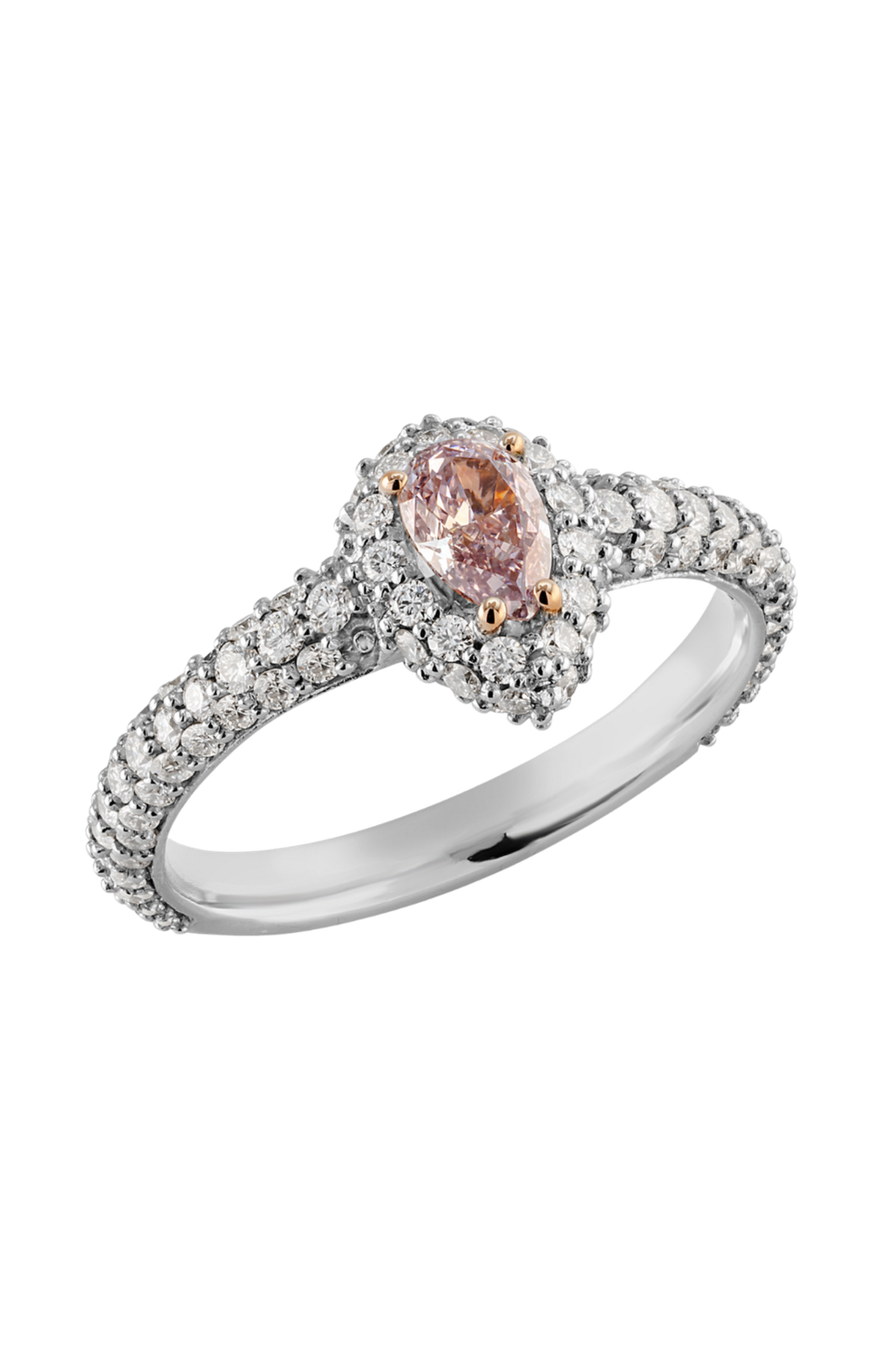
A bracelet with natural orange diamonds is judged above all by color: hue, tone and saturation, and how evenly the stones read next to each other. Pure orange stones are very rare, most carry a yellow or brown modifier. A laboratory report establishes whether the color is natural. Rose gold strengthens warm tones.
At a glance
- Main value factor
- Color, not clarity
- Color description
- Hue, tone and saturation, per GIA one of 27 hues
- Rarity of pure orange
- Under 0.1 percent of the stones examined in a GIA study
- More common
- Orange with a yellow or brown modifier
- Color origin
- Natural or treated, stated on the GIA colored diamond report
- Metal
- Rose gold, gold alloyed with copper, emphasizes warm colors
In colored diamonds, color comes first
A fancy color diamond is assessed differently from a colorless diamond. According to GIA, color is the dominant value factor in colored diamonds. Even stones with many inclusions and low clarity are valued by connoisseurs when their color is convincing in the face-up position. Inclusions that threaten durability still reduce value considerably. For a bracelet this matters, because the stones are exposed to knocks.
GIA describes color with three parameters. Hue is the color itself, tone describes how light or dark it appears, and saturation its strength. Under controlled conditions, one of 27 hues is determined. GIA combines tone and saturation into terms such as Fancy Light, Fancy Intense or Fancy Vivid. The more saturated and clear the color, the higher the grade.
Why pure orange is so rare
GIA has evaluated yellow and orange diamonds submitted to its laboratory. Stones of pure orange without a modifier made up less than one tenth of one percent of the stones examined. By its own account, the laboratory saw fewer than 200 pure orange diamonds in a decade. More common are stones in which orange is mixed with yellow or brown, such as yellowish orange or brownish orange. The most frequent saturation grade among orange stones is Fancy.

For a bracelet, this leads to a sober expectation. A full row of pure orange stones is exceptionally rare. More realistic, and often more harmonious, are bracelets that combine orange with modifying tones or alternate orange stones with colorless diamonds. The modifier is not a flaw, it only changes the character: yellowish orange appears lighter and sunnier, brownish orange warmer and more subdued. The guide Orange diamonds covers the color itself in more detail.
Matching many colored stones in one row
In colorless diamonds, small color differences are barely noticeable. In colored diamonds the opposite is true: a stone with slightly more brown or slightly less saturation interrupts the row at once. Matching a bracelet of colored diamonds is therefore a task of its own, often over a long period. The rarer the color, the harder it becomes to assemble enough stones of the same hue, size and cut.
The cut also influences color. According to GIA, larger stones and those with a deeper pavilion can show a more saturated color, and certain cuts such as the radiant intensify yellow tones, for example. In a bracelet with stones of different cuts, the same color therefore does not look the same everywhere. Anyone seeking consistency chooses a single cut shape. The basics of links and settings are covered in the guide Diamond bracelets.
| Layout | Effect | Demands on the stones |
|---|---|---|
| Continuous row in orange | Strong, uniformly warm | Very high, every stone must match |
| Orange alternating with colorless | Rhythmic, color as an accent | Medium, the orange stones must match each other |
| Gradient from yellow to orange | Lively, deliberately uneven | High, the transition must be right |
| A central motif in orange | Focus on one stone | Center stone with its own report |
Possible layouts for a bracelet with orange diamonds. The more colored stones the row carries, the harder the matching.
Natural, treated or laboratory-grown
Orange can also be produced artificially. According to GIA, diamonds grown in the laboratory by the HPHT method can be yellow to orange, and occasionally CVD diamonds as well. Irradiation followed by heating, and high-pressure, high-temperature treatment of natural diamonds, can also create orange tones. Many of these treatments are difficult to detect by simple means. GIA therefore recommends submitting all colored diamonds to a laboratory to determine the origin of color.
Alongside color grade, weight and clarity, the GIA colored diamond report explicitly states the origin of color, that is, whether the color is natural or treated. For a bracelet with many small stones, there is rarely a separate report for each stone. This makes a written statement from the maker on the natural origin and color origin of the entire set of stones all the more important. What such reports provide is explained in the section Authenticity and certificates.
Good to know
In many yellow and orange diamonds, the color is caused by an absorption band at 480 nanometers. According to GIA, gentle heating to about 400 to 500 degrees Celsius temporarily shifts the color of such stones toward orange. Assessment is therefore made at room temperature.
Rose gold and orange stones
According to the World Gold Council, rose gold is created by copper in the alloy, which gives the metal its pink tone. GIA describes how a rose gold setting casts pink reflections into a stone and complements warm gemstones well. For orange diamonds, this means rose gold strengthens the warmth of the stones and makes brown modifiers appear softer. In white gold, by contrast, orange appears with more contrast and in a cooler frame.

Anyone combining colorless and orange diamonds in one bracelet can set the colorless stones in white gold and the colored ones in rose gold. Each stone then keeps the surroundings that serve it best. 18k (750) rose gold contains 75 percent fine gold and corresponds to 18 karats, details under 18k (750) gold. The alloy determines the color, not the gold content. To let the color of the stones speak above all, keep the metal narrow and the prongs fine.
Common mistakes and care
- Judging colored diamonds by the rules for colorless stones and overrating clarity.
- Deciding without a statement on the origin of color: natural and treated orange look similar.
- Comparing stones under different light: orange changes with the light source.
- Mixing different cuts and then expecting the same color.
- Wearing a bracelet without a second safety catch on the clasp.
Care follows the rules for diamond jewelry. GIA recommends lint-free cloths, jewelry cleaners or mild household cleaners, and advises against ultrasonic and steam devices at home because they can loosen stones. With treated colored diamonds, the cleaning method may matter as well. It should therefore be known whether and how the stones are treated before a bracelet is professionally cleaned.
Colored diamonds at Vikar Ahmed
The pieces shown by Vikar Ahmed include natural fancy color diamonds in Yellow, Pink, Purplish Pink and Orangy-Brown, set in 18k (750) white and rose gold. Among them is a rose gold bangle with a double row of hand-set diamonds. Each is made as a one-of-a-kind piece in its in-house atelier in Idar-Oberstein, from the design through three-dimensional rendering in CAD to setting the stones by hand. For diamonds, the house works almost exclusively with GIA, in exceptional cases with HRD Antwerp.
Under CIBJO rules, a treatment must be disclosed, and with colored diamonds this concerns above all an artificially induced color. Ask for the color origin and any treatment in writing. Whether a bracelet with orange diamonds should be a continuous row or alternate with colorless stones can be compared in the visualization before a single stone is set. More on the process under Bespoke.
Frequently asked questions
Where can I see a bracelet with natural orange diamonds near Birkenfeld?
Vikar Ahmed has no location in Birkenfeld and advises in its showroom in Idar-Oberstein by appointment. When viewing, what counts is the hue, the consistency of the row and a written statement on the origin of color. Travel information under Jeweler for clients from Birkenfeld.
How rare are natural orange diamonds?
Very rare, especially in pure orange. In a GIA evaluation, less than one tenth of one percent of the yellow and orange stones examined showed a pure orange hue. Stones with a yellow or brown modifier are more common and correspondingly easier to find.
How is the color of an orange diamond assessed?
By hue, tone and saturation. GIA determines the hue from 27 possibilities and combines tone and saturation into terms such as Fancy, Fancy Intense or Fancy Vivid. The more saturated and clear the color, the higher the grade.
How can you tell whether an orange diamond is naturally colored?
Only in a laboratory. Laboratory-grown and treated diamonds can show similar orange tones, and many treatments cannot be detected without specialized equipment. The GIA colored diamond report explicitly states the origin of color as natural or treated.
Does rose gold suit orange diamonds?
Yes, rose gold underlines their warmth. The copper in the alloy gives the metal a pink tone that complements warm stones and makes brownish modifiers appear softer. White gold, by contrast, frames orange in a cooler, higher-contrast way.
Does clarity matter in fancy color diamonds?
Less than in colorless stones. According to GIA, color is the dominant value factor in colored diamonds, and stones with low clarity are valued as well. Inclusions that threaten durability, however, reduce value considerably, which matters particularly in a bracelet.
Private consultation
Colored diamonds only reveal themselves in direct comparison under good light. Whether orange works as a row or as an accent becomes clear in conversation. Vikar Ahmed advises in its showroom in Idar-Oberstein by appointment or virtually, discreetly and without haste. Request an appointment for a private consultation.
Further reading
- Orange diamonds
- Judging diamond bracelets
- Gemstone: Fancy color diamond
- Glossary: Fancy color diamond
- Glossary: Bangle
Sources
- GIA Gems & Gemology: Naturally Colored Yellow and Orange Diamonds (Summer 2020), accessed 2026-11-17
- GIA 4Cs: Colored Diamond Grading, accessed 2026-11-17
- GIA: Fancy Color Diamond Quality Factors, accessed 2026-11-17
- GIA 4Cs: White, Yellow and Rose Gold, accessed 2026-11-17
- GIA: Diamond Care and Cleaning, accessed 2026-11-17
- World Gold Council: About gold jewellery, accessed 2026-11-17
- Vikar Ahmed: Kollektionen, accessed 2026-11-16
- CIBJO: Introduction to the Blue Books, accessed 2026-11-17

A personal conversation starts here.
At the showroom in Idar-Oberstein or by video. Vikar Ahmed discusses your ideas, stones and designs with you and answers your questions calmly and in confidence.


Thank you for your request.
Your request will be handled with the utmost attention and discretion. Vikar Ahmed will get back to you.
Your details
Request
–
Occasion
–
Consultation
–
Contact
–
In the meantime
Insights: What is a Paraíba tourmaline? · Engagement ring to your own design: how does it work?
Confidential and without obligation
Back to the pagePrivate consultation
A personal conversation starts here.
- Time for your questions, wishes and ideas
- In the showroom in Idar-Oberstein or by video
- Confidential, discreet and without obligation
Vikar Ahmed · Hauptstraße 111 · 55743 Idar-Oberstein, Germany