

Engagement Ring Without a Stone and Other Alternatives to the Solitaire
Not every hand wants to wear a raised stone. Between the plain band and the solitaire lie several forms that make a quieter appearance.
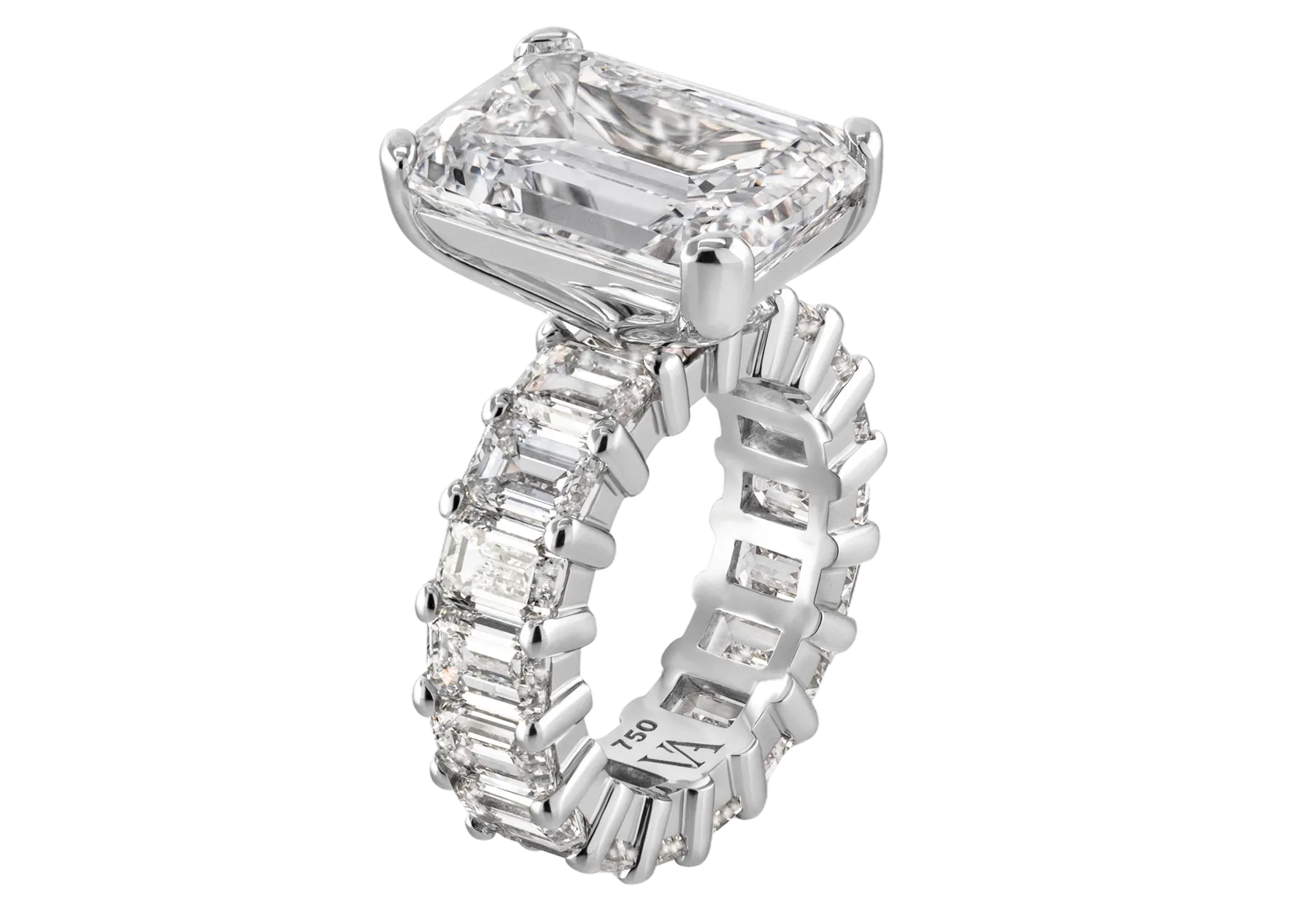
Yes. An engagement ring without a stone is a full alternative to the solitaire. It sits flat, catches on nothing, and requires little care. Its effect comes from metal, profile, and surface rather than from a stone. Those who want an accent choose a flush-set diamond or a slender band set with stones.
At a glance
- Ring without a stone
- Effect through metal, profile, and surface
- Advantage
- Flat, robust, little care
- Understated accent
- Flush-set diamond, very durable according to GIA
- Metals for daily wear
- 14k or 18k gold, platinum
- 18 karat
- 75 percent gold, hallmark 750
- To consider
- Scratches are more visible on smooth surfaces
Why a ring without a stone works
An engagement ring does not need a stone to be one. Its meaning comes from the occasion. The plain band is not a makeshift solution. It suits people who work with their hands, who generally wear jewelry in a simple way, or for whom a raised stone would be in the way in daily life. For them, it is the ring that is actually worn.
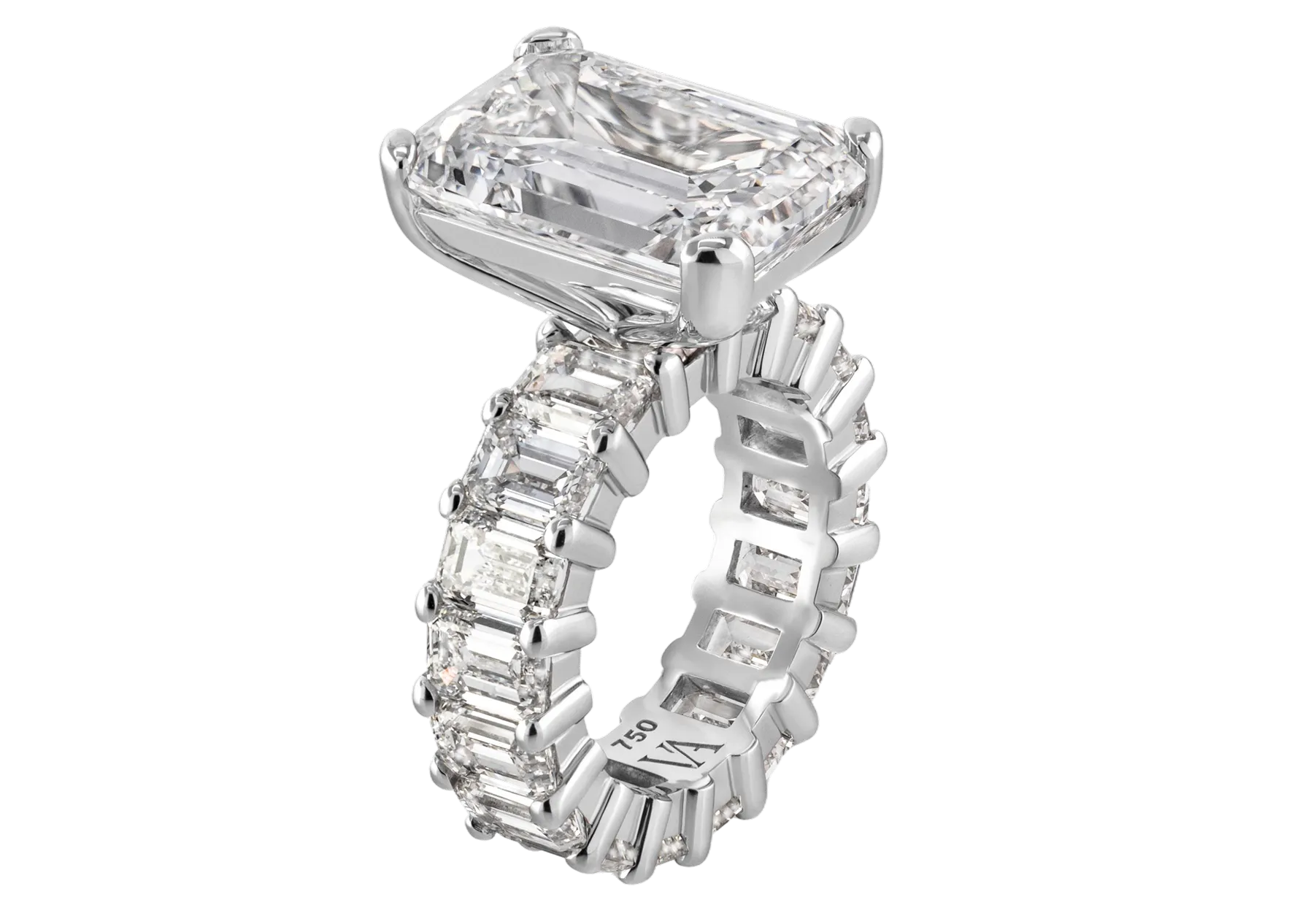
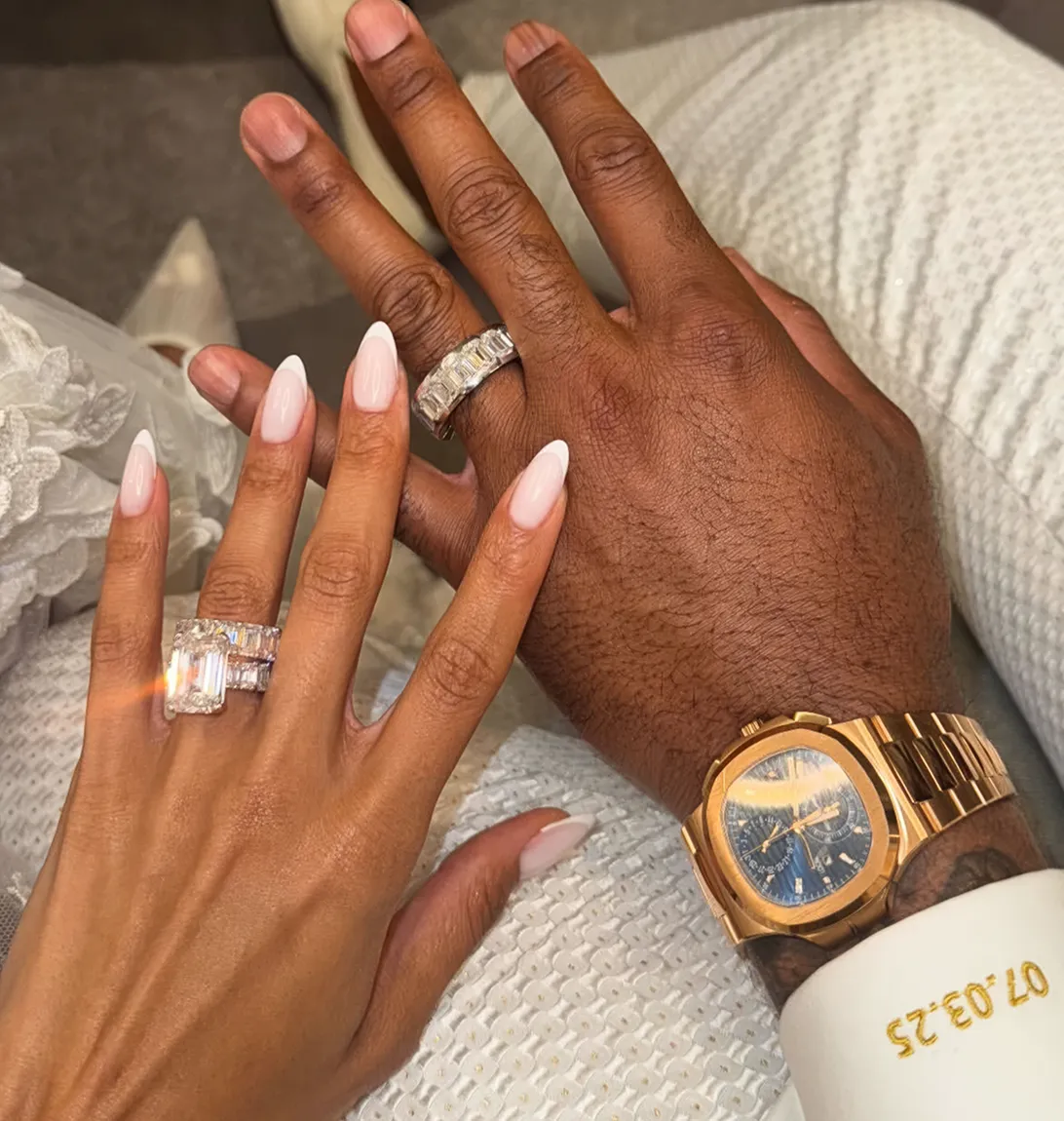
The difference from the solitaire lies in its language. The solitaire shows a stone and is immediately recognized as an engagement ring. The ring without a stone is more reserved and is easily mistaken for a wedding band. Those for whom the outward sign matters should consider this. Those who care about how it feels to wear will find the more honest form here.
What carries the ring: metal, profile, surface
Without a stone, the metal takes on the entire effect. For daily wear, the Gemological Institute of America, GIA for short, names 14k and 18k gold, which is made stronger by other metals, as well as platinum. Pure 24k gold, by contrast, is more prone to scratches and dents. According to GIA, platinum is highly resistant to wear and develops a patina over time that can be polished away again.
Profile and surface
- The profile determines how the ring feels: rounded on the inside for comfort, flat on the outside for a crisp line or domed for a soft one.
- The width decides its presence. A slender ring looks delicate, a wide one like a statement.
- Polished surfaces shine strongly and show scratches more readily. Matte surfaces look calmer.
- An engraving on the inside gives the ring a personal layer known only to the wearer.
The gold alloy: what the numbers mean
According to the World Gold Council, 18k gold consists of 75 percent gold and 25 percent other metals, often copper or silver. This corresponds to the hallmark 750, meaning 750 parts gold per 1,000. Mathematically, 14k gold would be 583 parts per thousand. Following European practice, most manufacturers alloy it slightly higher, which is why it usually bears the hallmark 585. More on this under 18k (750) gold.
The color is also created in the alloy. Copper gives rose gold its pink tone. According to the World Gold Council, white gold is alloyed with white metals such as palladium or silver and is usually rhodium plated so that the surface is harder and brighter. According to GIA, this layer wears off and must be renewed from time to time. Yellow and rose gold need care less often. In Germany, gold jewelry may be hallmarked in any fineness, which must then be stated in parts per thousand.
For a ring without a stone, this means: the choice of alloy is more visible here than in any other ring, because no stone color distracts from the metal. Rose gold looks warm and soft, white gold cool and bright, platinum naturally white and heavy. How platinum and white gold differ in daily wear is explained in the guide Platinum or 18k (750) white gold.
Forms between the plain band and the solitaire
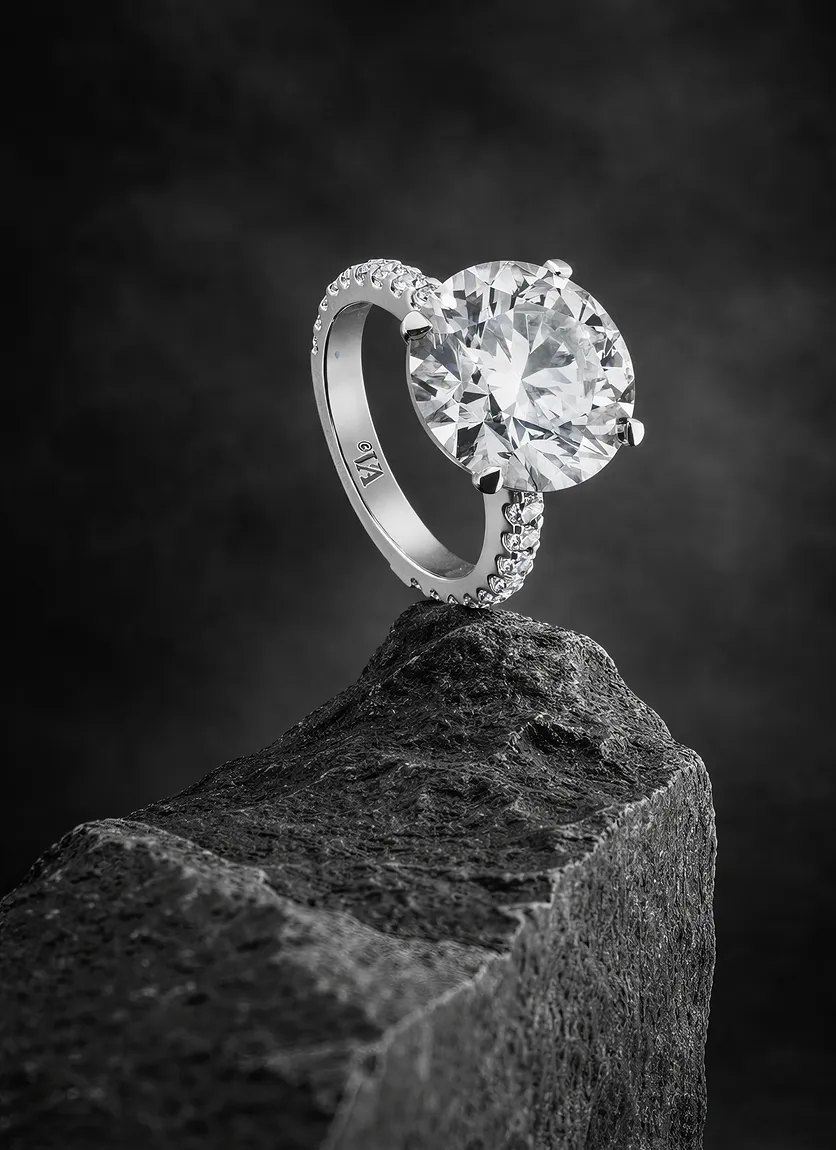
Between the ring with no stone at all and the classic solitaire lie several forms. They differ in how much stone they show and how flat they stay on the finger. The following overview arranges them from the quietest to the most conspicuous form and names what each brings to daily life.
| Form | Effect | In daily life |
|---|---|---|
| Plain band without a stone | Pure form, very reserved | Least sensitive, scratches can be polished out |
| Ring with a flush-set diamond | A point of light, flush in the band | Flat, rarely catches according to GIA |
| Slender band set with stones | Fine sparkle along the band | Flat, difficult to resize later |
| Ring with a small colored gemstone | Color instead of brilliance | Depends on the hardness of the stone |
| Solitaire | One stone at the center | Raised stone can knock against things |
Classification of the basic forms. The transitions are fluid and can be combined in the design.
For many, the flush-set diamond is the best compromise. The stone sits in the band, its table level with the metal. GIA describes this setting as very durable and hardly prone to catching anywhere. The ring stays flat and still shows that it is more than a band. A band set with stones goes one step further. More on this in the comparison Solitaire or eternity ring.
What you should consider when choosing
- Ring size matters especially here. According to GIA, wide rings fit more snugly and usually need to be chosen slightly larger.
- Fingers swell in warmth and become slimmer in cold. Do not measure on a cold morning.
- Think of the wedding band. Two plain rings side by side need a difference in width, color, or surface.
- If a stone is to be added later, say so in the design. The band needs sufficient material thickness for it.
- Rings with stones set all around can hardly be resized.
A comparison on your own finger helps. A ring two millimeters wide looks different on a slender hand than on a strong one, and a flat profile different from a domed one. Wearing two or three widths one after another quickly reveals which feels like one's own ring and which like a borrowed one.
Common mistakes with plain rings
A frequent mistake is choosing a material that cannot be adjusted later. According to GIA, tungsten is very scratch resistant, but brittle: a hard blow can crack or shatter the ring, and resizing is not possible. According to GIA, titanium can only be altered by about half a size. For a ring meant to last for decades, gold and platinum are therefore the more reliable foundation.
A second mistake concerns how the ring works with other rings. Rings worn side by side rub against each other. GIA points out that softer gold can wear down faster next to platinum. Anyone who later combines a plain engagement ring with a wedding band in a different metal should consider this when choosing the alloy. A third mistake is choosing the width from a picture alone instead of trying the ring on the finger.
A plain ring as a design
A plain ring in particular forgives no imprecision. Where no stone distracts, every edge and every proportion is visible. At Vikar Ahmed, engagement rings are individually designed and made in Germany, and every line and every detail can be tailored. The three-dimensional visualization shows profile and width before making. The house works with 18k (750) gold in white, rose, and yellow as well as platinum 950, and 14k (585) gold on request. Polishing is done by hand, followed by rhodium plating for white gold.
Frequently asked questions
Is an understated engagement ring without a stone a real alternative to the solitaire?
Yes. A ring without a stone is flat, robust, and easy to care for, and it suits people who wear jewelry simply or work a lot with their hands. It is, however, more easily mistaken for a wedding band. Those who want a visible sign choose a flush-set diamond as an accent.
Which metal is suitable for an engagement ring without a stone?
14k or 18k gold and platinum are suitable for daily wear. Platinum is highly resistant to wear and develops a matte patina. White gold is usually rhodium plated and needs this layer renewed from time to time. Rose gold and yellow gold keep their color without plating.
Can a ring without a stone receive a stone later?
That depends on the band. For a flush-set stone, it needs sufficient width and material thickness. If you would like to keep this option open, mention it in the design. The ring is then laid out so that a stone can be set afterward.
How do I care for an engagement ring without a stone?
With little effort. Warm water, a little mild soap, and a soft cloth are enough for cleaning. Fine scratches on polished surfaces are normal and can be removed during refinishing. With rhodium-plated white gold, the plating is renewed at the same time.
What does the hallmark 750 or 585 in the ring mean?
It states the gold content in parts per thousand. 750 stands for 18 karat, meaning 75 percent gold. 585 is the usual hallmark for 14 karat, which mathematically would be 583 parts per thousand and is usually alloyed slightly higher. The rest of the alloy determines color and strength.
Why does a wide ring feel tighter than a narrow one?
Because it encloses more of the finger's surface. GIA advises usually choosing a slightly larger size for wide rings than for narrow ones. Measure therefore with a sizing ring in the planned width, and not on a cold morning when the fingers are slimmer.
Private consultation
A plain ring results from a few precise decisions. Which width, which profile, and which metal suit your hand is clarified in a conversation in the showroom in Idar-Oberstein. Vikar Ahmed advises by appointment, also virtually. Request a consultation.
Further reading
- Glossary: Platinum 950
- Solitaire or eternity ring for the engagement
- Plain gold engagement rings
- 18k (750) or 14k (585) gold for the engagement ring
- Engraving in the engagement ring
Sources
- GIA 4Cs: Best Ring Material for Everyday Wear, accessed 2026-11-17
- GIA 4Cs: Ring Size Guide, accessed 2026-11-17
- GIA 4Cs: Complete Guide to Engagement Ring Settings, accessed 2026-11-17
- GIA 4Cs: Ring Stacking Guide, accessed 2026-11-17
- World Gold Council: Gold Jewellery, Colour, Carat & Purity, accessed 2026-11-17
- Gesetz über den Feingehalt der Gold- und Silberwaren, accessed 2026-11-17
- Vikar Ahmed: Bespoke, Designprozess, accessed 2026-11-16
- Vikar Ahmed: Collections, accessed 2026-11-16
A personal conversation starts here.
At the showroom in Idar-Oberstein or by video. Vikar Ahmed discusses your ideas, stones and designs with you and answers your questions calmly and in confidence.





Thank you for your request.
Your request will be handled with the utmost attention and discretion. Vikar Ahmed will get back to you.
Your details
Request
–
Occasion
–
Consultation
–
Contact
–
In the meantime
Insights: What is a Paraíba tourmaline? · Engagement ring to your own design: how does it work?
Confidential and without obligation
Back to the pagePrivate consultation
A personal conversation starts here.
- Time for your questions, wishes and ideas
- In the showroom in Idar-Oberstein or by video
- Confidential, discreet and without obligation
Vikar Ahmed · Hauptstraße 111 · 55743 Idar-Oberstein, Germany