

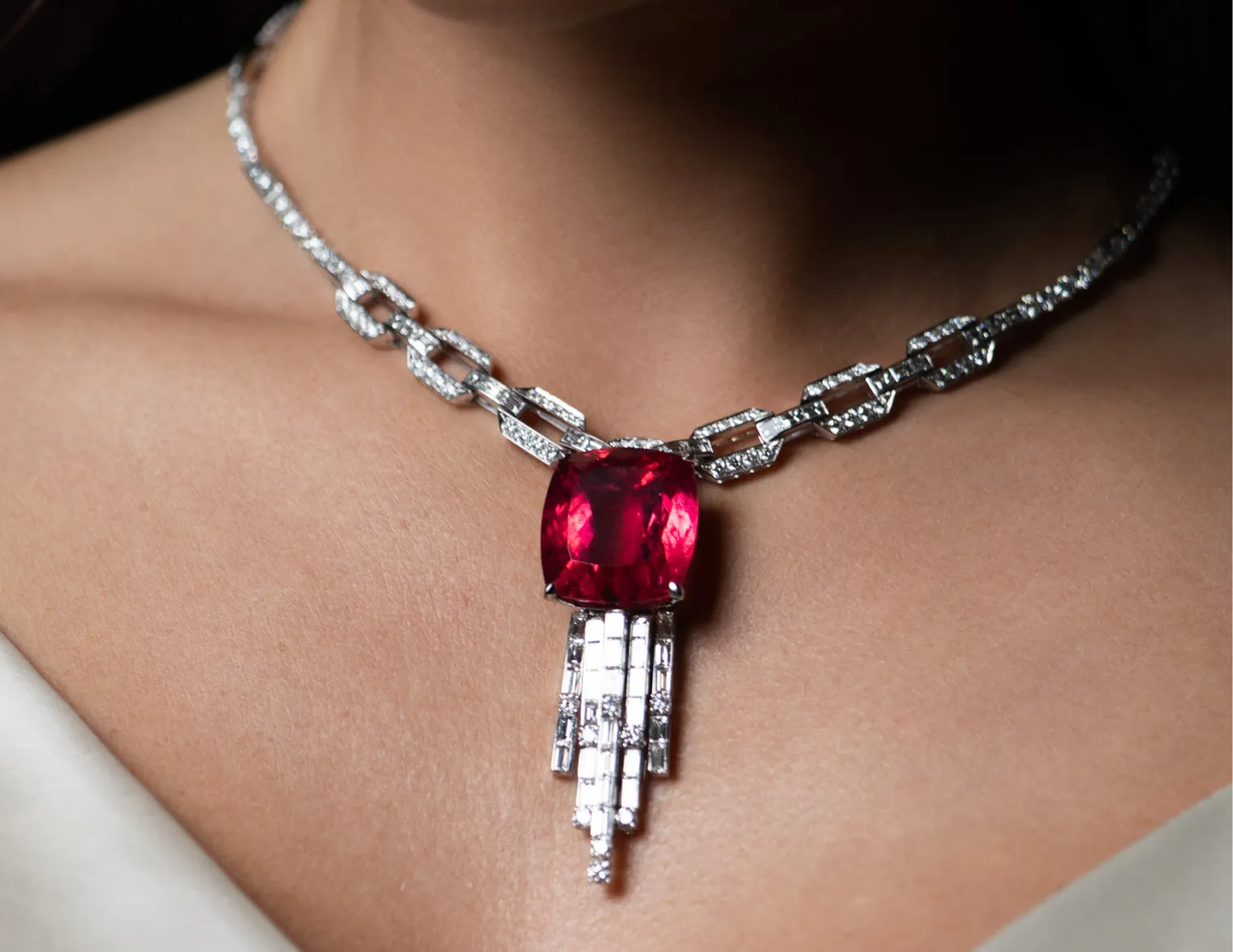
Your own sketch can be realized well as a pendant if it is drawn at actual size, shows a front and side view, and marks the stone, bail, and reverse side. The workshop transfers it into a three-dimensional model and suggests changes where metal must bear load. Check in the model whether the character of your line is preserved.
At a glance
- Scale
- Ideally at actual size, otherwise note the dimensions
- Views
- Front, side, and if possible the reverse
- Mark
- Stone, bail, openwork, desired surface
- Next step
- Transfer into a three-dimensional CAD model
- Possible intermediate step
- 3D-printed prototype to hold in your hand
- Your task in the review
- Is the character of the sketch preserved in the model?
Your sketch is a full-fledged beginning
Your own drawing does not have to be professional to be realized. It shows what matters to you: a line, a proportion, a mood. It is precisely the particularities of a line that make a piece personal. The workshop's task is to recognize and preserve these particularities while translating the drawing into a wearable object. The more your sketch reveals about size and structure, the less has to be interpreted along the way.

Jewelry designers learn drawing as a craft. In its jewelry design course, GIA names traditional drawing techniques with drafting tools and rendering with graphite, colored pencil, and watercolor as learning objectives. Your sketch does not need to reach this level. It helps, however, to add some details that a designer would naturally include in the drawing. The following sections show which ones.
What the drawing should contain
The most important detail is size. If possible, draw the pendant at actual size, or write the height and width in millimeters next to it. A sketch without scale leaves open whether a piece should be delicate or bold, and that is exactly what changes the entire construction. Hold the drawing against your neck as a test to see whether the size is right. A mirror helps more with this than any number.
- Actual size or dimensions in millimeters for height, width, and depth.
- A side view showing how thick or domed the piece should be.
- The position of the stone with the desired shape and color.
- The bail: visible, concealed, or part of the form.
- Open areas and openwork, clearly distinguished from hatching or shadow.
- Wishes regarding the surface, such as polished, matte, or textured.
Also note how the piece is to be worn. A pendant for every day requires a more robust construction than a piece for special evenings. The desired chain length also belongs on the sheet, because it determines where the pendant lies and how large it may look there. If you have a gold color in mind, write it down too. White gold, rose gold, and yellow gold change the effect of a stone noticeably.
One view is rarely enough
Most sketches show only the front. A pendant, however, is a body with depth. Whether it should be flat like a small plate or domed like a pebble changes its weight, how it falls at the neck, and the way light rests on it. A second drawing from the side answers these questions in a few strokes. If you like, also draw the reverse side, which rests on the skin.
What is often unclear on a sketch is what is surface and what is shadow. Hatching can mean a recess, a matte surface, or merely light and dark. Write it down. The same applies to lines that cross: do they lie on top of each other, do they join, or is there air between them? For the workshop, such notes are more valuable than a particularly beautiful drawing, because they replace guesswork.
From sketch to model
In the workshop, the sketch is transferred into a three-dimensional model. In its jewelry design and technology program, GIA describes how jewelry is modeled in 3D with CAD software, rendered photorealistically, and printed as a prototype. Such a 3D-printed prototype makes the piece tangible before production. You can hold it up and see whether size and curvature are right. More on the term under 3D design.

The metal piece is created from the model. GIA names casting and die striking as manufacturing methods that belong to an understanding of the jewelry craft. For a one-of-a-kind piece, the casting is followed by setting, grinding, and polishing by hand. Each of these stages can sharpen or soften a line from your sketch. How sketch, watercolor, and CAD complement each other as forms of representation is explained in Sketch, watercolor, or CAD.
What changes in the transfer
A pencil line has no thickness, a metal bar does. Very fine lines must become strong enough in metal that they do not bend in everyday wear. Small openings can close up during casting if they are too narrow. A stone needs a setting, which is often missing on the drawing. Regarding small stones, GIA points out that removing too much metal can weaken a poorly constructed piece. The workshop therefore slightly changes some proportions.
What matters is that such changes are discussed openly. A good model shows your sketch alongside so that you can compare. Check whether the line still has your sweep and whether the parts relate to each other correctly. If something is lost, say so. Variants in the model are easy, changes to finished metal are not. What else needs to be clarified before the commission is described in Pendant from your own design.
| On the sketch | The workshop's question | Possible solution |
|---|---|---|
| Very fine line | Will it hold in metal? | Bar somewhat stronger, line remains visible |
| Small opening | Will it close up during casting? | Enlarge the opening slightly |
| Stone as a surface | How deep is the stone? | Add setting and curvature |
| No bail | Where does the piece hang? | Bail at the center of gravity or concealed |
| Hatching | Recess, texture, or shadow? | Define the surface in conversation |
The solutions are examples. Only the model shows which one fits.
Common mistakes with your own sketches
- Drawing without size: the same shape looks entirely different at 15 and at 40 millimeters.
- Showing only the front: depth, curvature, and reverse side remain open.
- Forgetting the bail: it decides how the pendant lies at the neck.
- Viewing the model only on screen: a prototype shows size and weight better.
- Accepting changes that alter the character: say so while it is still a model.
A final note concerns the stone. Choose it early, because its dimensions determine how much room the setting needs. A colored stone with strong color can carry a simple line, while a large colorless stone often calls for a calmer form. If you already own a special stone, you will find further guidance in the guide Designing around your own stone.
Sketches and designs at Vikar Ahmed
At Vikar Ahmed, every piece begins with the design: in-house designers develop concepts in sketches, into which personal wishes flow. Your sketch becomes a 3D CAD design with a photorealistic view, in which details can still be changed before production. This is followed by 3D wax printing, investment casting, and execution as a one-of-a-kind piece in the in-house atelier. The house has no location in Kaiserslautern; consultations take place in Idar-Oberstein, more under Jeweler for Kaiserslautern.
Frequently asked questions
I have my own sketch for a pendant and would like to have it made. Which goldsmiths in Kaiserslautern work from drawings that clients bring in?
Vikar Ahmed has no location in Kaiserslautern, but in Idar-Oberstein incorporates personal wishes into the design and reviews the piece in advance as a CAD model. With any workshop, make sure it transfers your sketch into a model and discusses changes with you.
Does my sketch have to be true to scale?
It does not have to be exact, but the size should be recognizable. The simplest way is to draw at actual size or to note height and width in millimeters. Without this information, the workshop cannot judge whether a delicate or a bold piece is meant.
Can I bring a digital drawing instead of a paper sketch?
Yes. Digital drawings can often be used directly as a template for the CAD model. The same details as on paper are important: size, side view, position of the stone and of the bail. A photo of the drawing is sufficient if the scale is recognizable.
What is a 3D-printed prototype?
A printed model of the pendant at actual size. Before production, it shows how large and domed the piece will be and how it lies at the neck. Changes are still easy at this stage, because no metal has yet been worked.
Why does my fine line become thicker in the model?
Because metal needs a minimum thickness so as not to bend or break in everyday wear, and because openings that are too narrow can close up during casting. A good workshop reinforces only as much as necessary and shows you the comparison with the sketch.
Who decides which changes are made to my sketch?
In the end, you do. The workshop suggests changes and justifies them technically. You approve the model before production. If a change alters the character of your drawing too much, another solution can usually be found.
Private consultation
Bring your sketch to the conversation or send it in advance. Vikar Ahmed advises by appointment in the showroom in Idar-Oberstein or in a virtual appointment. Your inquiry is treated discreetly. Request an appointment for a private consultation.
Further reading
- Pendant from your own design
- Sketch, watercolor, or CAD
- Jewelry from a sketch
- Glossary: 3D design
- Jeweler for Kaiserslautern
Sources
- GIA Hong Kong: Jewelry Design Certificate, accessed 2026-11-17
- GIA: Jewelry Design and Technology Program, accessed 2026-11-17
- GIA: Jewelry Design CAD/CAM Program, accessed 2026-11-17
- GIA: Melee, Building Blocks of Contemporary Design, accessed 2026-11-17
- Vikar Ahmed: Bespoke, Designprozess, accessed 2026-11-16

A personal conversation starts here.
At the showroom in Idar-Oberstein or by video. Vikar Ahmed discusses your ideas, stones and designs with you and answers your questions calmly and in confidence.


Thank you for your request.
Your request will be handled with the utmost attention and discretion. Vikar Ahmed will get back to you.
Your details
Request
–
Occasion
–
Consultation
–
Contact
–
In the meantime
Insights: What is a Paraíba tourmaline? · Engagement ring to your own design: how does it work?
Confidential and without obligation
Back to the pagePrivate consultation
A personal conversation starts here.
- Time for your questions, wishes and ideas
- In the showroom in Idar-Oberstein or by video
- Confidential, discreet and without obligation
Vikar Ahmed · Hauptstraße 111 · 55743 Idar-Oberstein, Germany