

Gold Fineness in a One-of-a-Kind Piece: Recognizing a Clear Statement
A one-of-a-kind piece has no data sheet from a series. That makes it all the more important for fineness, alloy, and plating to be stated in black and white, on the piece and in the written quote.
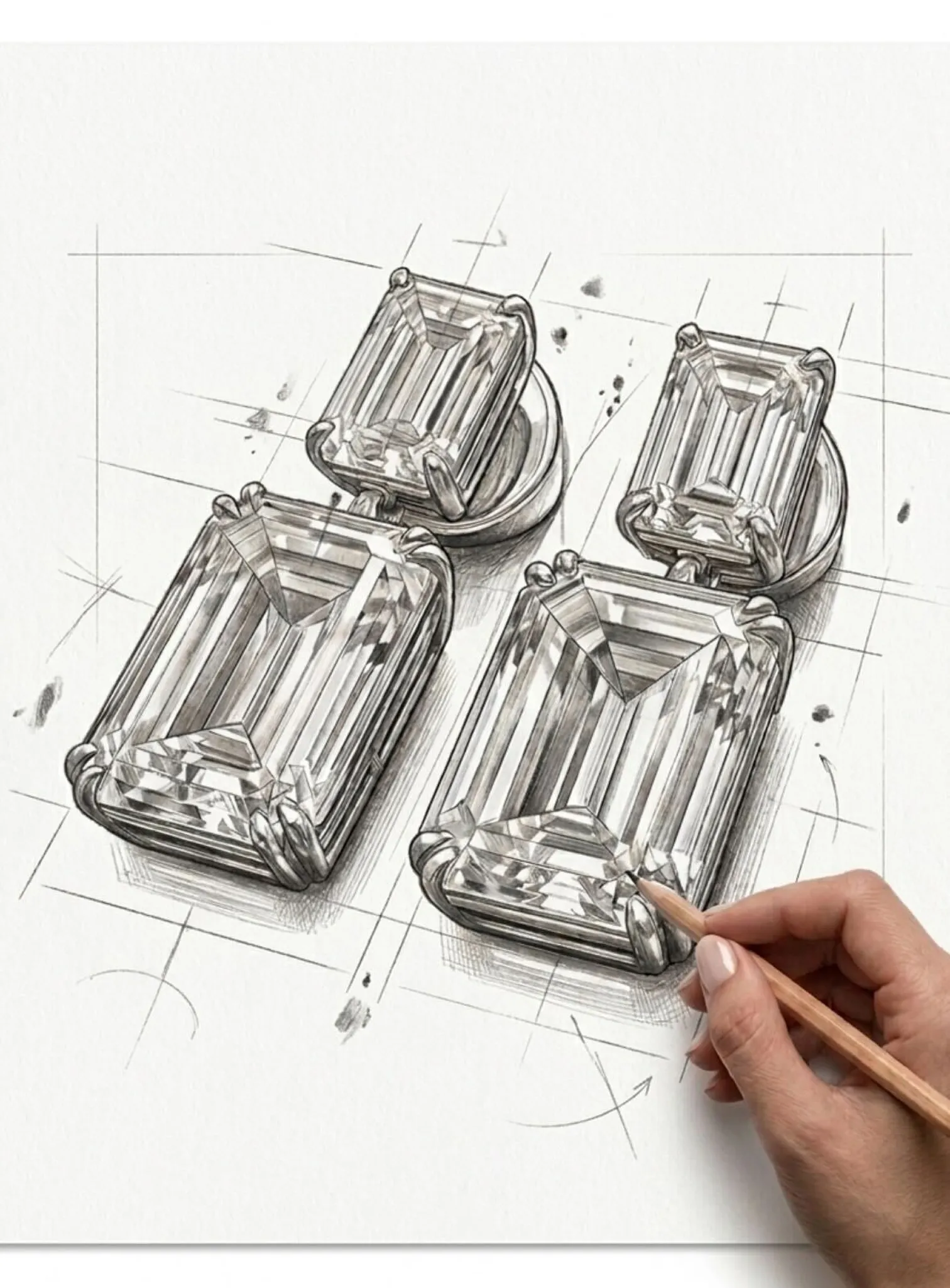
Fineness is clearly stated when every precious metal used is named with its figure in parts per thousand, such as 750 for 18 karat gold, and the hallmark on the piece bears the same figure. This includes details on the alloy color, platings such as rhodium, and parts made of other metals, such as springs in clasps.
At a glance
- Fineness
- Share of fine gold in the alloy, in parts per thousand
- 750
- 18 karat, 75 percent gold
- 585
- 14 karat, usually alloyed slightly above 14/24
- Hallmark on jewelry
- Figure in parts per thousand, under § 5 FeinGehG
- Tolerance for jewelry
- At most 10 parts per thousand, entire piece melted down
- Scope of the FeinGehG
- Gold and silver articles, not platinum
- White gold
- Gold with palladium or silver, usually rhodium-plated
What a clear statement contains
A clear statement names the figure in parts per thousand for every precious metal in the piece, not just a word such as "gold" or "real gold". For a one-of-a-kind piece in two gold colors, each color is included with its fineness. The statement appears in two places: in the written quote or on the invoice, and as a hallmark on the finished piece. The two should match.

- Fineness of each metal in parts per thousand, for example 750.
- Alloy color: yellow, white, or rose gold.
- Platings such as rhodium, with a note that they wear off.
- Parts made of other metals, such as steel springs in clasps.
- A hallmark on the piece with the same figure as in the written quote.
If one of these details is missing, that alone is no proof of a problem. It is worth asking, however, before production begins. A one-of-a-kind piece is made for one person, and unlike a series ring, there is no comparison piece in the shop window. The written description is therefore the standard against which the finished piece can be measured.
What the Fineness Act covers and what it does not
The German Hallmarking Act (Feingehaltsgesetz) does not oblige anyone to apply a hallmark. It governs what a statement must look like if one is made. A separate provision applies to jewelry: it may be hallmarked in any fineness, and the figure is then given in parts per thousand. The official hallmark symbol under § 3, by contrast, may not be applied to jewelry.
For gold articles other than jewelry, the law is stricter. Under § 2, they may only be hallmarked from 585 parts per thousand, and the tolerance may be no more than five parts per thousand. For jewelry, § 5 permits up to ten parts per thousand when the entire piece is melted down. The exact legal position on hallmarks for engagement rings is explained in the guide 18k (750) gold in an engagement ring.
Good to know
The Fineness Act covers only gold and silver. It contains no rule for platinum. A platinum statement such as 950 therefore does not fall under this law. With platinum, the description in the written quote is all the more important. What the figure means is explained in the glossary under platinum 950.
Solder, mechanics, and other metals
A one-of-a-kind piece rarely consists of a single piece of metal. Shank, setting, and gallery are soldered, and earrings and necklaces have clasps. The law explicitly includes the solder: for gold articles under § 2, the fineness counts including the soldering, and for jewelry under § 5, the average when the entire piece is melted down. A careful atelier therefore uses solder of matching fineness.
Under § 8, a piece filled with other metals may not bear a fineness hallmark. The same applies if reinforcements made of another metal are firmly joined to the precious metal. Visibly distinct parts made of other metals are disregarded in the determination if they serve as ornament, for the mechanics, or as unsoldered reinforcement. A steel spring in a clasp is therefore permitted, but should be named.
White gold, rose gold, and platings
The color says nothing about the fineness. According to the World Gold Council, white gold is created by alloying fine gold with white metals such as palladium or silver. It is usually rhodium-plated, meaning coated with a thin layer of rhodium that is harder and brighter. Rose gold owes its tone to the copper in the alloy. In 18k (750) white gold, palladium or platinum makes up the rest of the alloy.

Rhodium plating is not a statement of fineness and not part of the parts per thousand. It wears off over time and can be renewed. A clear description nonetheless names it, because it determines how the piece looks after a few years. Whether a white gold alloy is nickel-free also belongs in the details if skin tolerance plays a role. More on the color difference in the guide rose gold or white gold.
A higher fineness does not automatically make a piece more durable. According to the GIA, the purer gold is, the softer and more prone to scratches and dents it becomes. For jewelry worn every day, the GIA names 14 and 18 karat as suitable, because the added metals strengthen the alloy. In a one-of-a-kind piece, fineness is therefore a balance between gold content, color, and everyday stress.
Karats, parts per thousand, and statements from abroad
Karats and parts per thousand describe the same thing in two ways. 24 karat is pure gold. The World Gold Council lists the usual equivalents as 375 for 9 karat, 585 for 14 karat, 750 for 18 karat, and 999 for 24 karat. In practice, 14 karat is usually alloyed slightly above the calculated share and is therefore hallmarked 585. On hallmarks, the decimal point is generally omitted.
| Karat | Parts per thousand | Gold content |
|---|---|---|
| 9 karat | 375 | 37.5 percent |
| 14 karat | 585 | 58.5 percent |
| 18 karat | 750 | 75 percent |
| 24 karat | 999 | Pure gold |
Equivalents according to the World Gold Council. For the statement on jewelry in Germany, parts per thousand are decisive.
If you commission a one-of-a-kind piece for someone abroad, you will encounter other rules. According to the World Gold Council, the legal minimum for describing an item as gold is 10 karat in the USA, and 9 karat in France, the United Kingdom, Austria, Portugal, and Ireland. A German piece in 750 lies well above this everywhere. Under § 6, imported goods with a differing statement additionally require a hallmark under German law.
How to check the details before production
- Ask for the fineness of each metal in parts per thousand in the written quote.
- Clarify whether prongs or setting are made of a different metal than the shank.
- Ask about platings such as rhodium and their care.
- Have parts made of other metals, such as springs or pins, named.
- At handover, compare the hallmark with the quote.
- Keep the invoice with the description of the metals.
Under § 7, whoever offers the goods is liable for the accuracy of the hallmark. A written description protects both sides: the client, because they know what they will receive, and the atelier, because the agreement is on record. How quotes for a one-of-a-kind piece can be compared as a whole is shown in the guide comparing bespoke quotes fairly.
Fineness at Vikar Ahmed
Vikar Ahmed works with 750 gold, that is 18 karat, in white, rose, and yellow, as well as platinum 950. 585 gold with 14 karat is possible in all three colors on request. The house decides on metal and alloy together with you in the consultation. Every one-of-a-kind piece is made in the in-house atelier in Idar-Oberstein. Have the agreed fineness recorded in writing. The glossary entry 750 gold summarizes what defines 750 gold.
Frequently asked questions
How can you tell whether a jeweler clearly states the gold fineness of a one-of-a-kind piece?
You can tell by three questions: Is the fineness of each metal stated in parts per thousand in the written quote, does the piece bear a matching hallmark, and are rhodium and parts made of other metals named? Vikar Ahmed has no location in Birkenfeld, but offers consultations in Idar-Oberstein.
Does a gold ring have to be hallmarked in Germany?
No. The Fineness Act does not require a hallmark; it only governs what a statement must look like if one is made. For jewelry, the fineness is then given in parts per thousand. For a one-of-a-kind piece, a hallmark is nonetheless customary and sensible, because it records the statement permanently on the piece.
Does the solder count toward the fineness?
Yes. For jewelry, the stated fineness must be reached when the entire piece is melted down, less at most ten parts per thousand. Solder is part of the piece. An atelier that works with solder of matching fineness maintains the stated value at the soldered joints as well.
Is rhodium-plated white gold worth less than unplated?
No, the plating does not change the fineness. Rhodium is a thin layer that makes white gold brighter and more scratch-resistant. It wears off over time and can be renewed. The gold content of the alloy beneath remains the same and is described by the hallmark.
Does the Fineness Act also apply to platinum?
No. The law concerns only gold and silver articles. It contains no hallmarking provision for platinum. If you are planning a one-of-a-kind piece in platinum, you should therefore have the fineness, such as 950, confirmed especially clearly in the written quote.
What does 18K mean on a ring from abroad?
18K stands for 18 of 24 parts gold, meaning 750 parts per thousand. In Germany, the statement in parts per thousand is the intended form for jewelry. Under the Fineness Act, imported rings with a differing designation additionally require a hallmark that complies with German law.
Private consultation
Which metal and which fineness suit your design is best discussed with samples and the stone at hand. Vikar Ahmed offers consultations by appointment in the showroom in Idar-Oberstein, and virtually on request. Request an appointment for a private consultation.
Further reading
- 18k (750) gold in an engagement ring
- Glossary: Carat
- One-of-a-kind piece from the in-house atelier
- Jeweler for Birkenfeld
- Comparing bespoke quotes fairly
Sources
- Gesetz über den Feingehalt der Gold- und Silberwaren (FeinGehG), accessed 2026-11-17
- World Gold Council: About Gold Jewellery, Karat und Legierungen, accessed 2026-11-17
- GIA: Best Ring Material for Everyday Wear, accessed 2026-11-17
- Vikar Ahmed: Collections, accessed 2026-11-16
- Vikar Ahmed: Paraíba, accessed 2026-11-16

A personal conversation starts here.
At the showroom in Idar-Oberstein or by video. Vikar Ahmed discusses your ideas, stones and designs with you and answers your questions calmly and in confidence.


Thank you for your request.
Your request will be handled with the utmost attention and discretion. Vikar Ahmed will get back to you.
Your details
Request
–
Occasion
–
Consultation
–
Contact
–
In the meantime
Insights: What is a Paraíba tourmaline? · Engagement ring to your own design: how does it work?
Confidential and without obligation
Back to the pagePrivate consultation
A personal conversation starts here.
- Time for your questions, wishes and ideas
- In the showroom in Idar-Oberstein or by video
- Confidential, discreet and without obligation
Vikar Ahmed · Hauptstraße 111 · 55743 Idar-Oberstein, Germany