

How to Recognize a Distinguished Luxury Jewelry House
Rankings of jewelry brands mostly reflect recognition and revenue. For the individual piece, other things count, and those can be verified.
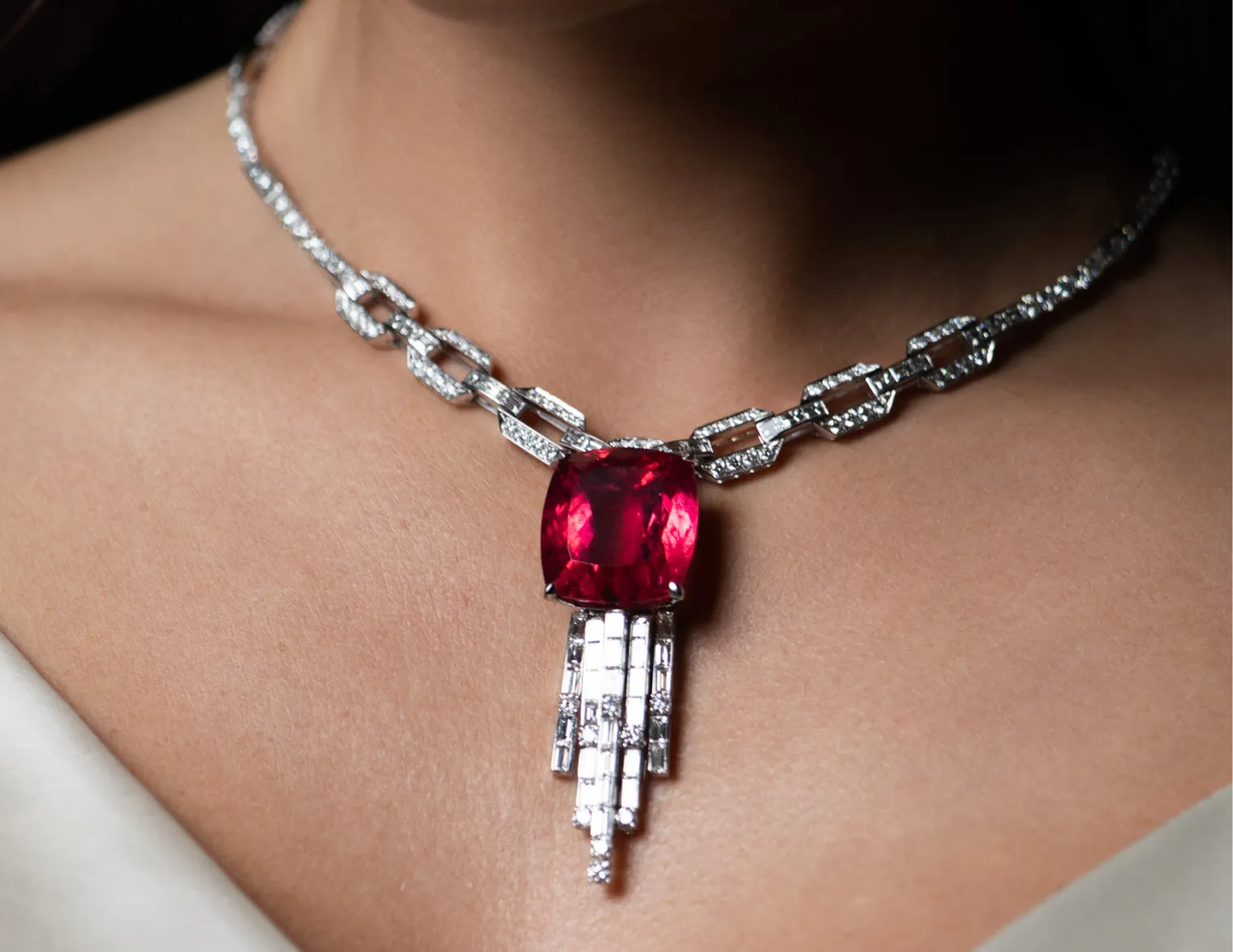
A distinguished luxury jewelry house is recognized not by a ranking but by verifiable features: stones with an independent laboratory report, fully disclosed treatments, correctly hallmarked precious metal, an original design, traceable craftsmanship and information on the supply chain. A well-known name can stand for all of this. It cannot replace it.
At a glance
- Ranking
- Reflects recognition, says little about the individual piece
- Stones
- Independent laboratory report, treatments disclosed in writing
- Precious metal
- Hallmark with fineness in parts per thousand
- Manufacturing
- In-house atelier or purchased components, worth asking
- Goldsmithing trade
- Unrestricted in Germany, master title not mandatory
- Supply chain
- Standards such as the RJC Code of Practices, mandatory for members
Rankings measure recognition, not quality
Lists of the largest or most prestigious jewelry brands are mostly based on revenue, brand value or media presence. These are legitimate measures for investors and marketing. They say nothing about the stone in a particular ring, the quality of a setting or the disclosure of a treatment. Large houses, too, carry pieces of very different quality, from series jewelry to the single piece. Anyone wanting to judge a piece therefore needs criteria that apply to the piece itself.
This guide therefore names no names and no order. It shows how the standing of a house can be read from its pieces and documents. The criteria apply to well-known maisons just as they do to small ateliers. How price and value can be put into perspective for luxury jewelry is covered in the guide Luxury jewelry: price and value.
Brand, maison, atelier: what the terms mean
A brand is first of all a name that stands for a style and a promise. Maison, French for house, traditionally denotes a jewelry house with its own history and its own signature. Manufaktur, the German term for an atelier, means production in which handwork forms the core. None of these terms is legally protected. The same applies to High Jewelry and Haute Joaillerie: they describe an aspiration, not a verified category.

A house can be a brand and an atelier at the same time. Many large brands have parts of their collections made by suppliers, while other houses work exclusively in their own workshops. For the client, what matters is whether the information on where a piece was made is accurate and whether it is stated openly. The differences between the two models are explored in the guide Atelier or luxury brand.
Six criteria that can be verified
| Criterion | How to verify | Question for the house |
|---|---|---|
| Stones | Laboratory report from an independent laboratory | Which laboratory, is the report available in writing? |
| Treatment | Written statement for each significant stone | Is the stone treated, and how? |
| Precious metal | Hallmark with fineness in parts per thousand | Which alloy, who applied the hallmark? |
| Design | Own signature instead of a catalog shape | Who designed the piece? |
| Manufacturing | Workshop, setting work, reverse side | Where and by whom was it made? |
| Supply chain | Memberships, standards, evidence | Where do the stones and metal come from? |
Verifiable criteria for jewelry houses. They apply to every piece, regardless of the size and recognition of the house.
A distinguished house answers these questions directly and in writing. Evasive answers such as certified quality or the finest stones are no proof. Conversely, a house is not weaker because it is little known. Anyone applying the six criteria to two pieces from different houses side by side will see differences faster than through any list. How to examine a center stone for a bespoke ring is shown in a separate guide.
Stones and disclosure
In luxury jewelry, the stone usually accounts for the largest share of value. GIA describes diamonds by the 4Cs and, for colored stones, identifies the species and detectable treatments. Such a report describes quality and states no monetary value, as GIA expressly emphasizes. Estimating value is the task of an appraisal. Distinguished houses keep the two documents clearly separate and disclose the report itself, not only a summary.
Treatments such as heating or filling fractures are widespread in colored stones. According to GIA, anyone who sells a stone must disclose a treatment. Associations such as CIBJO, the AGTA and the ICA set rules on this for their members. With its Blue Books, CIBJO publishes standards and nomenclature whose use is voluntary. What a declaration under these rules means is explained in the glossary under World Jewellery Confederation (CIBJO).
Precious metal and hallmarks
In Germany, the German Hallmarking Act (Feingehaltsgesetz) governs how gold content is stated. Jewelry may be made in any fineness, and the fineness is stated in parts per thousand. The mark with company identification under Section 3 applies to articles such as cutlery, and under Section 5 it may not appear on jewelry. The seller is liable for its accuracy. 750 stands for 75 percent fine gold, which according to the World Gold Council is 18 karats. Whoever states the fineness vouches for the metal.
Craftsmanship and training
In Germany, the gold and silversmithing trade can be practiced without a master craftsman qualification. The German Crafts Code lists it in Annex B, Section 1, as it does gem cutters and engravers. A master title is therefore not required to found a business. It is a voluntary proof of qualification. Anyone wishing to know the training of a house's goldsmiths and setters asks about it. Distinguished houses name the people behind the work.

The quality of a craft shows in the piece. Clean, even prongs, a smoothly polished reverse side, straight rows of stones and clasps with a second safety catch are features anyone can check with a loupe. The back of a necklace or the inside of a ring also reveal a great deal. An original design that does not come from a catalog shows the signature of a house. More on this in the guide Luxury jewelry design.
Responsibility in the supply chain
Origin and conditions in the supply chain are gaining importance. With its Code of Practices, the Responsible Jewellery Council, RJC for short, has created a standard for the entire supply chain from mine to retail. It is mandatory for all members who handle diamonds, colored stones, gold, silver or platinum group metals. For colored stones, it was first piloted for ruby, emerald and sapphire. A membership is an indication, not a substitute for information on the individual stone.
Common errors of judgment
- Taking the name as proof: a well-known logo does not replace a laboratory report.
- Confusing report and value: a laboratory report states no monetary value.
- Taking terms such as High Jewelry as verified: they are not protected.
- Not asking about treatment because the house is well known.
- Ignoring manufacturing: where and by whom the work was done is part of quality.
Behind all five errors lies the same idea: prestige is mistaken for verification. Prestige is real and can stand for care. It is, however, an expectation, not a property of the piece. A distinguished house has no difficulty when clients ask questions and provides the answers of its own accord. How a jeweler for fine jewelry can be assessed in general is described in the guide High Jewelry jeweler.
Vikar Ahmed as a Maison
Vikar Ahmed is a High Jewelry Maison based in Idar-Oberstein, founded in 2004 and rooted in the goldsmithing tradition of the town. The house describes its work as Made in House and Made in Germany: design by in-house designers, three-dimensional rendering in CAD and production as a one-of-a-kind piece in the in-house atelier, with gemstone setting and polishing by hand. The house presents itself as “The German Jeweler.”
The house describes its showroom in Idar-Oberstein as a place of selection. Visits take place by appointment, alternatively in a virtual appointment. Custom jewelry projects are realized exclusively on request: the request is reviewed, and work begins only once it has been accepted. After handover, clients keep a fixed contact person, and the service covers checking the setting, cleaning, refurbishment, and resizing where the design allows it. More on this under Why Vikar Ahmed.
Frequently asked questions
How do I recognize a distinguished luxury jewelry house?
By verifiable features: independent laboratory reports on the stones, treatments disclosed in writing, correctly hallmarked precious metal, an original design and clear information on manufacturing. A distinguished house answers questions on these points directly and discloses the documents.
Are rankings of jewelry brands meaningful?
Hardly, for the quality of an individual piece. Rankings are mostly based on revenue, brand value or recognition. Large houses, too, carry pieces of very different quality. For an assessment, what counts is the stone, disclosure, metal and workmanship of the specific piece.
Is High Jewelry a protected term?
No. High Jewelry and Haute Joaillerie describe an aspiration regarding stone, design and workmanship, but not a verified category. Whether a piece meets this aspiration is shown by laboratory reports, the disclosure of treatments and the quality of the work.
Does a goldsmith in Germany need a master title?
No. The gold and silversmithing trade is listed in Annex B of the German Crafts Code among the trades that require no master qualification. A master title is a voluntary proof of qualification. Anyone who values it asks about the training of a house's goldsmiths.
What does the 750 hallmark say about a piece of jewelry?
It states that the gold contains 750 parts per thousand of fine gold, which is 18 karats. On jewelry, it is stated in parts per thousand under the German Hallmarking Act, and the official company mark under Section 3 is not permitted there. The seller is liable for its accuracy.
What role does the Responsible Jewellery Council play?
With its Code of Practices, the RJC has created a standard for the supply chain from mine to retail. It is mandatory for members who handle diamonds, colored stones or precious metals. A membership is an indication, but it does not replace information on the individual stone.
Private consultation
Anyone wishing to choose jewelry by criteria rather than by names is best served by asking the questions directly. Vikar Ahmed advises in its showroom in Idar-Oberstein by appointment or in a virtual appointment, discreetly and in detail. Request an appointment for a private consultation.
Further reading
- Atelier or luxury brand
- Luxury jewelry: price and value
- High Jewelry jeweler
- Glossary: High Jewelry
- Why Vikar Ahmed
Sources
- GIA: Gem Treatment, accessed 2026-11-17
- GIA 4Cs: Grading Report und Appraisal, accessed 2026-11-17
- CIBJO: The Blue Books, accessed 2026-11-17
- Gesetz über den Feingehalt der Gold- und Silberwaren (FeinGehG), accessed 2026-11-17
- Handwerksordnung, Anlage B, accessed 2026-11-17
- Responsible Jewellery Council: Code of Practices, accessed 2026-11-17
- World Gold Council: About gold jewellery, accessed 2026-11-17
- Vikar Ahmed: Über uns, accessed 2026-11-16
- Vikar Ahmed: Bespoke, Designprozess, accessed 2026-11-16

A personal conversation starts here.
At the showroom in Idar-Oberstein or by video. Vikar Ahmed discusses your ideas, stones and designs with you and answers your questions calmly and in confidence.


Thank you for your request.
Your request will be handled with the utmost attention and discretion. Vikar Ahmed will get back to you.
Your details
Request
–
Occasion
–
Consultation
–
Contact
–
In the meantime
Insights: What is a Paraíba tourmaline? · Engagement ring to your own design: how does it work?
Confidential and without obligation
Back to the pagePrivate consultation
A personal conversation starts here.
- Time for your questions, wishes and ideas
- In the showroom in Idar-Oberstein or by video
- Confidential, discreet and without obligation
Vikar Ahmed · Hauptstraße 111 · 55743 Idar-Oberstein, Germany