

Judging Price and Value in High Jewelry
A name says little about what a piece of jewelry contains. This guide breaks High Jewelry down into its components and shows which of them can be documented.
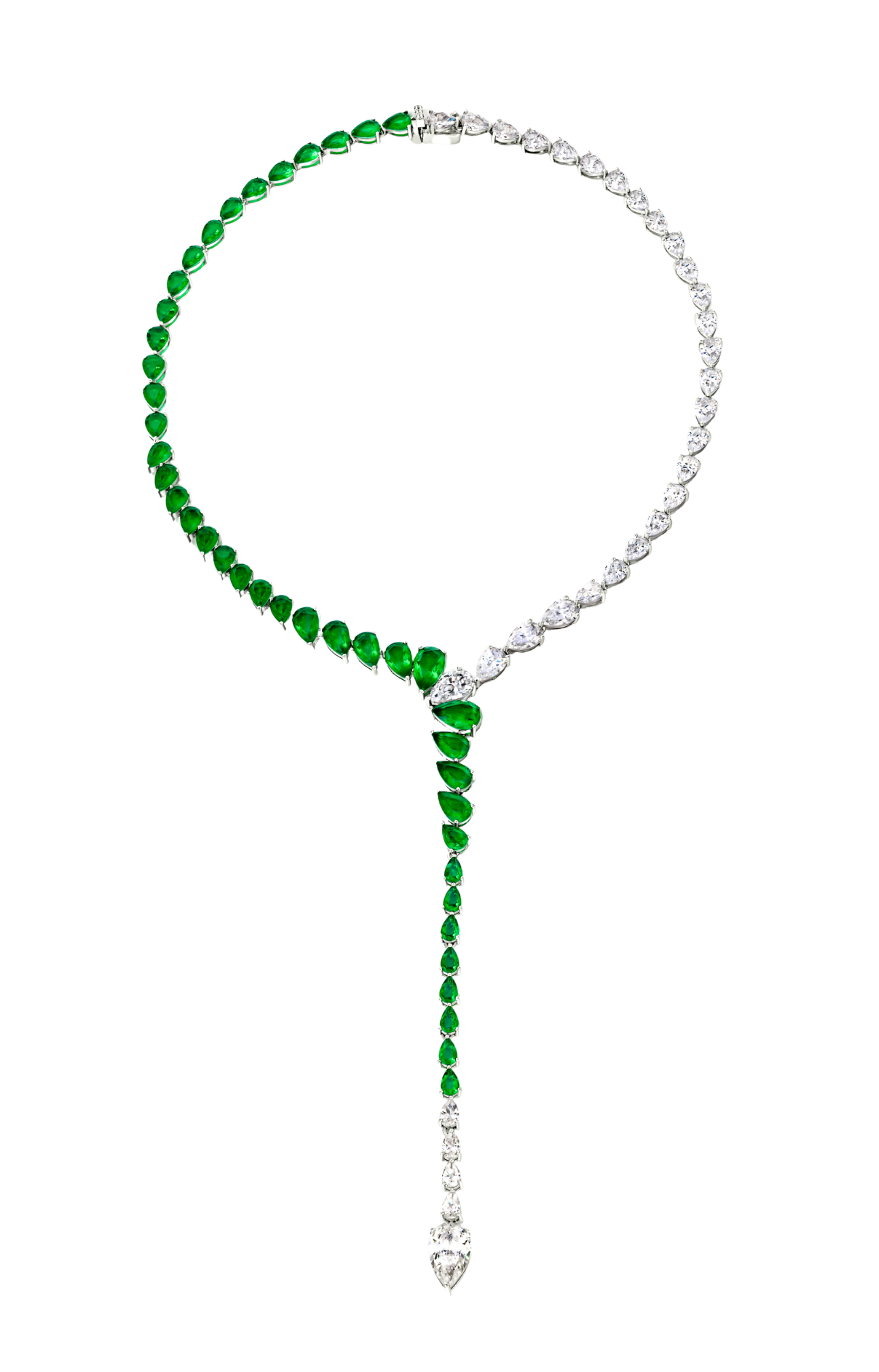
Value for money in High Jewelry depends less on the brand than on how much of the price goes into stone, metal and handwork. Good value shows in documented stone quality with an independent laboratory report, openly declared treatments, a hallmarked fineness and clean setting work. The name alone is not a performance that can be verified.
At a glance
- Largest value carrier
- Usually the center stone, assessed by quality and rarity
- Diamond
- Described by the 4Cs: weight, color, clarity, cut
- Colored stone
- Color is the most important value feature
- Metal
- 18k (750) gold contains 75 percent fine gold
- Laboratory report
- Describes quality but states no monetary value
- Appraisal
- Estimates value based on market and quality
- Not verifiable
- Recognition of a name, advertising, store location
Value for money means verifiable substance
In jewelry of the highest category, the relationship between price and value cannot be read from a single figure. It shows in how much of the price goes into components that can be measured, described and independently verified. These include the center stone, the accent stones, the metal and the work at the bench. What does not belong are advertising, rent in a prime location and the recognition of a name.
This does not mean a well-known name is worth nothing. It can stand for a style, a tradition or reliable service. It does not, however, replace information on the stone. Anyone comparing two pieces should therefore first set the documentable components side by side and only then ask what premium name, design and experience are worth to them. What separates High Jewelry from ordinary jewelry is in any case the standard applied to stone and workmanship.
What the price is made of
A piece of jewelry can be broken down into five building blocks. Their shares shift considerably from piece to piece: in a ring with a large center stone, the stone carries almost everything, while in a finely worked bangle with many small diamonds, the share of handwork rises. The table shows which building blocks can be documented and which documents support them.

| Building block | What determines it | How it can be documented |
|---|---|---|
| Center stone | Species, quality, weight, treatment, origin | Laboratory report from an independent laboratory |
| Accent stones | Number, consistency, quality range | Information on total weight and quality |
| Metal | Alloy, fineness, weight | Fineness hallmark in parts per thousand |
| Handwork | Setting, polishing, assembly, hours | Examining the piece, information from the workshop |
| Design and name | Originality, style, recognition | Not measurable, a personal judgment |
The larger the share of the upper rows in the price, the better the value can be verified.
The stone carries most of the value
For diamonds, the system of the 4Cs describes quality: weight in carats, color, clarity and cut. According to GIA, color is determined under controlled lighting by comparison with master stones, and clarity at tenfold magnification on a scale with eleven grades. Two diamonds of the same weight can therefore differ greatly in value. A price comparison without this information essentially compares weight alone.
For colored stones, a different order applies. For tourmaline, GIA names color as the most important feature, and for Paraíba tourmaline expressly ahead of size. In colored diamonds, color is likewise the decisive value factor, and clarity recedes. Rarity weighs heavily: the stronger and purer a rare color, the higher the stone ranks. Anyone wishing to assess the value of a colored stone will find the criteria in the guide Colored gemstones as an investment.
Putting metal and handwork in perspective
Metal is the easiest building block to verify. According to the World Gold Council, 18k (750) gold contains 75 percent fine gold, and the rest consists of other metals that determine hardness and color. Under the German Hallmarking Act (Feingehaltsgesetz), jewelry may be made in any fineness, but the fineness must then be stated in parts per thousand. Whoever sells the piece is liable for the accuracy of the statement. The hallmark is therefore a reliable statement.
Handwork is harder to pin down. It shows in the detail: do the stones sit straight and at the same height, are the prongs evenly shaped, is the underside worked as cleanly as the face. A piece with many hand-set stones takes many hours at the bench. This share of the price is justified when it shows in the execution, and with a loupe and some practice it can be judged by oneself.
A report and an appraisal are two different things
A laboratory report describes the quality of a stone. It does not state a monetary value. GIA emphasizes that a diamond report is neither a statement of value nor a guarantee. An appraisal, by contrast, estimates monetary value on the basis of current market conditions and the quality of the stone, often supported by such a report. Anyone wishing to judge price and value needs the report first, because only the report records the substance. More on this in the guide Gemstone report and in the glossary under GIA report.

For colored stones, the question of treatments is part of this. GIA states that treatments must be disclosed when a stone is sold. A concealed treatment makes a stone appear more valuable than it is, because its quality is taken to be natural. An identification report from a laboratory lists the detectable treatments. A price that would be appropriate for an untreated stone is too high for a treated one.
Common mistakes when comparing
- Comparing only carat weight and passing over color, clarity and cut.
- Equating an in-house certificate of authenticity with the report of an independent laboratory.
- Taking the laboratory report for an appraisal that confirms a monetary value.
- Not asking about treatments, although they strongly change the value of a colored stone.
- Treating a well-known logo as proof of quality without examining the stones.
- Not looking at the execution of the reverse side and the settings.
Many of these mistakes arise because pieces are shown in different surroundings. A stone in an elegant case under a spotlight looks different from the same stone on a white cloth in daylight. For a fair comparison, it helps to see stones side by side under the same light and to request all information in writing. It then quickly becomes clear whether a price difference stems from the stone or from the surroundings.
How to check the value step by step
- Clarify the center stoneHave species, weight and quality stated in writing, together with the laboratory and the report number.
- Ask about treatmentClarify whether the stone is treated and what the report states.
- Check the metalLook for the fineness hallmark and have the alloy named, for example 18k (750) white or rose gold.
- Examine the executionLook at the settings, reverse side and clasp with a loupe, not only the face.
- Weigh the premiumDecide last what design, name and service are personally worth to you.
With a one-of-a-kind piece to your own design, the calculation shifts. The share for advertising and inventory is smaller, while design and visualization are added. At Vikar Ahmed, a bespoke piece is created in three steps: design by in-house designers, visualization in a 3D model and production in the in-house atelier in Idar-Oberstein. Every diamond center stone from 0.50 carats and every high-quality, rare colored gemstone comes with an independent original certificate. What such a piece costs depends on stone, metal, and effort and can only be quantified for a specific design. How the path to a one-of-a-kind piece unfolds is shown on the page Bespoke.
Frequently asked questions
Is an expensive piece of jewelry automatically of higher quality?
No. A high price can stem from a rare stone and much handwork, but just as well from advertising, location and name. A piece is of high quality when its components can be documented: stone quality with a laboratory report, disclosed treatments, a hallmarked fineness and clean execution down to the reverse side.
Which part of the price can best be verified?
Stone and metal can be verified best. The stone through the report of an independent laboratory, the metal through the fineness hallmark, which in Germany is stated in parts per thousand. Handwork can be judged with a loupe. The value of a name, by contrast, cannot be measured by anyone and remains a personal judgment.
Does a laboratory report say anything about price?
No. A laboratory report describes the species and quality of a stone, such as color, clarity, weight and detectable treatments. It deliberately states no monetary value. Value is estimated by an appraisal, which relies on the information in the report and current market conditions. For comparing two pieces, the report is nevertheless the most important basis.
Why does a treatment change the value of a colored stone?
Because a treatment improves the visible quality without the stone having grown that way in nature. Heating can deepen the color, and a filling can make fractures less visible. An untreated stone of the same appearance is rarer. This is why a treatment must be disclosed, and why it belongs in every comparison.
How do I recognize good handwork in a piece of jewelry?
By consistency and care in the detail. The stones sit straight and at one height, the prongs are equally shaped and hold each stone securely. The reverse side is worked as cleanly as the front, edges are smooth, clasps close firmly. A loupe with tenfold magnification is enough for a first impression.
Is a one-of-a-kind piece worth it compared with a collection piece?
That depends on what matters to you. A one-of-a-kind piece is designed around a selected stone and your ideas, and design and visualization are part of the work. A collection piece can be viewed and tried on immediately. With a one-of-a-kind piece, it is worth checking whether most of the effort goes into stone and craftsmanship.
Private consultation
In a personal or virtual appointment in Idar-Oberstein, you discuss with Vikar Ahmed which stone and which design suit your ideas and what information you receive on each component. You submit your request via the Contact page, and it is treated discreetly.
Further reading
- Colored gemstones as an investment: what determines value?
- What a gemstone report states
- Atelier or large luxury brand
- Understanding gemstone treatment
- Glossary: 4Cs
Sources
- GIA 4Cs: Diamond Clarity, accessed 2026-11-17
- GIA 4Cs: Diamond Color, accessed 2026-11-17
- GIA: Difference Between a Diamond Grading Report and an Appraisal, accessed 2026-11-17
- GIA: Gem Treatment, accessed 2026-11-17
- GIA: Tourmaline Quality Factors, accessed 2026-11-17
- GIA: Fancy Color Diamond Quality Factors, accessed 2026-11-17
- World Gold Council: About gold jewellery, accessed 2026-11-17
- Gesetz über den Feingehalt der Gold- und Silberwaren (FeinGehG), accessed 2026-11-17
- Vikar Ahmed: Bespoke, accessed 2026-11-17

A personal conversation starts here.
At the showroom in Idar-Oberstein or by video. Vikar Ahmed discusses your ideas, stones and designs with you and answers your questions calmly and in confidence.


Thank you for your request.
Your request will be handled with the utmost attention and discretion. Vikar Ahmed will get back to you.
Your details
Request
–
Occasion
–
Consultation
–
Contact
–
In the meantime
Insights: What is a Paraíba tourmaline? · Engagement ring to your own design: how does it work?
Confidential and without obligation
Back to the pagePrivate consultation
A personal conversation starts here.
- Time for your questions, wishes and ideas
- In the showroom in Idar-Oberstein or by video
- Confidential, discreet and without obligation
Vikar Ahmed · Hauptstraße 111 · 55743 Idar-Oberstein, Germany