

What Determines the Value of a Colored Gemstone?
Large colored stones are often described as an investment. Anyone wanting to understand what a stone is worth should know the factors and the limits of this idea.
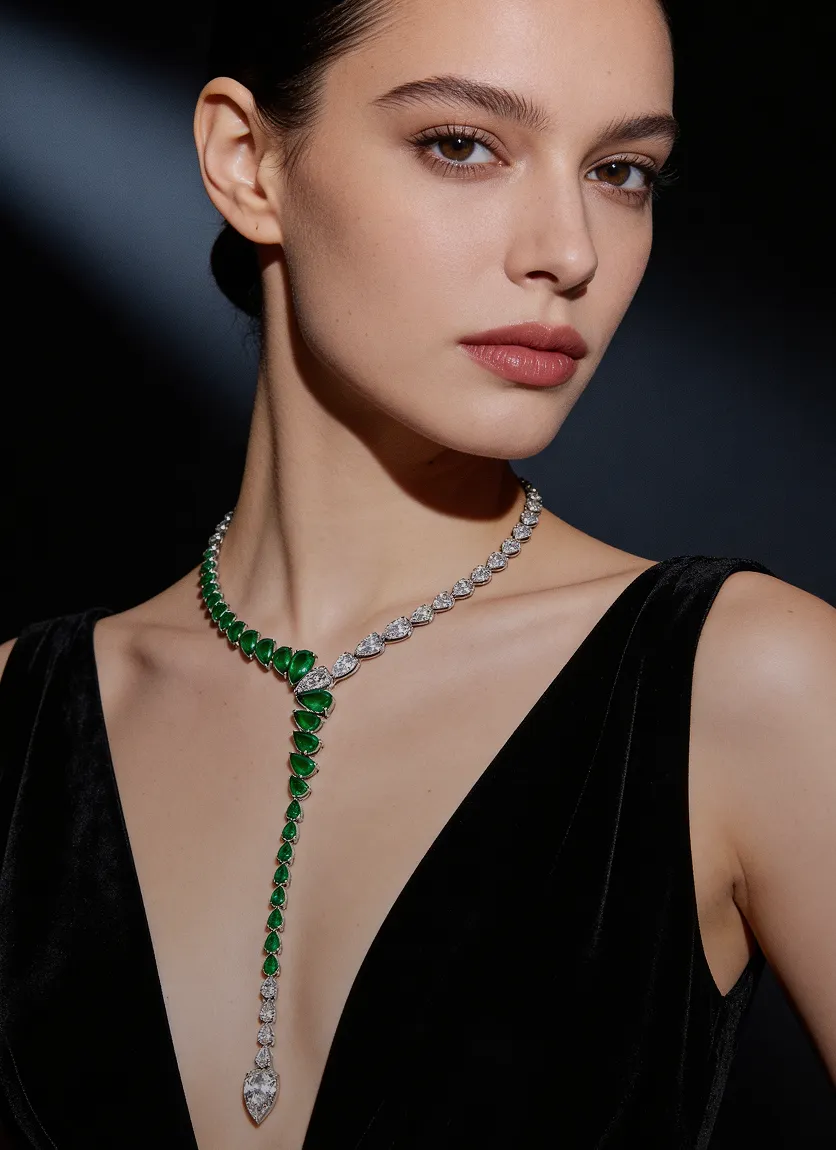
The value of a colored gemstone is determined above all by color, then by clarity, cut, and size, as well as treatment and, for some stones, origin. This is documented by an independent laboratory report. There is no guaranteed increase in value: colored stones yield no interest, are not traded on an exchange, and can often only be converted back into money at a discount.
At a glance
- Most important value factor
- Color: hue, saturation, and tone
- Size
- Price per carat rises with weight at the same quality, often in jumps
- Treatment
- Must be disclosed, untreated stones are generally rarer
- Origin
- Determinable at GIA for ruby, sapphire, emerald, and Paraíba, among others
- Ongoing income
- No interest, no dividends
- Laboratory report
- Describes quality, states no monetary value
Color is the first value factor
In colored stones, color determines value more strongly than any other feature. Three properties are meant: the hue, such as red, green, or blue, the saturation, meaning how strong the color is, and the tone. For emerald, the Gemological Institute of America, GIA for short, names bluish green to pure green stones with vivid saturation and a tone that is not too dark as the most desirable. If the hue deviates too far, the stone is considered a different variety and loses value.

How much color counts is shown by Paraíba tourmaline. GIA advises preferring, when in doubt, the smaller stone with more vivid color over the larger, paler one. The same applies to value: a large stone with mediocre color can be worth less than a smaller one with outstanding color. Because there is no globally uniform color scale for colored stones, this assessment is always also a matter of experience.
Clarity, cut, and size
How inclusions affect value depends on the species. In emerald, visible inclusions are common. If they reduce transparency, however, the value drops markedly according to GIA. Eye-clean emeralds are so rare that they are particularly valuable. In pink and red tourmalines, the trade accepts visible inclusions when the color is strong, while green tourmalines are expected to be eye-clean. An inclusion that endangers durability reduces the value of any stone.
The cut decides how the color is shown to advantage. According to GIA, a deep cut can make a light emerald look darker, and a shallow one can lighten a dark one. Mistakes in cutting cost weight and therefore value. Size does not have an even effect: for tourmaline, according to GIA, the price per carat rises markedly above all when stones of the same quality exceed the five-carat threshold. For emerald, it can rise sharply with size.
Good to know
Large stones are not automatically valuable. For tourmaline, GIA points out that very large specimens occur but are rare. A large stone only becomes rare when color and clarity are also at a high level. A 50-carat stone of medium quality is not a collector's piece.
Treatment and origin
Many colored stones are treated, for example by heating or by filling fractures. GIA states that a treatment must be disclosed when a stone is passed on, including between private individuals. An undisclosed treatment can create the impression that a stone is naturally of higher quality. Untreated stones of the same quality are generally rarer. For value, what counts is therefore not only how a stone looks, but also how it came to look that way.
For some stones, origin affects value. GIA offers origin reports for ruby, sapphire, emerald, Paraíba tourmaline, red spinel, and alexandrite, but points out that origin cannot be determined in every case. For Paraíba tourmaline, according to a GIA study, stones from Brazil generally achieve higher prices than stones from Africa, although top stones of all origins can be comparable in color.
What a laboratory report does and does not do
An independent laboratory report is the basis of any value assessment. For colored stones, it determines species and detectable treatments, and on request also origin. One distinction matters: a report describes quality, not price. For its diamond reports, GIA emphasizes that a report is neither a certificate nor a guarantee and states no monetary value. The monetary value is estimated by an appraiser in an appraisal based on the market situation.

For the nomenclature and description of colored stones, the World Jewellery Confederation CIBJO has published rules in the Blue Books, including a separate Gemstone Book. Their use is voluntary. For valuable stones, reports from laboratories with an international reputation are customary, such as GIA, SSEF, or Gübelin. More on this in the glossary under SSEF and Gübelin and Origin report.
The limits of an investment
A colored stone is not a security. The German consumer portal Finanztip points out that gemstones yield no ongoing income such as interest or dividends. There is no exchange trading through which a stone can be quickly converted into money. When acquired from a dealer, according to Finanztip, more than a third of the price can go to value-added tax and the trade margin. In addition, there is the risk that a stone is not in demand at the moment one wishes to part with it.
This is not a verdict against beautiful stones, but a sober expectation. Anyone acquiring a colored stone should regard it as an object that brings joy and retains its quality, not as an investment with a predictable return. No future development in value can be derived from any feature. What makes a stone rare helps in understanding its present value, not in making a forecast.
| Question | What it says about value |
|---|---|
| What is the color like? | Most important factor, determines the stone's rank |
| Is it treated? | Untreated is usually rarer, treatment must be disclosed |
| Is there a laboratory report? | Documents species and treatment, states no price |
| Is the origin documented? | Relevant to value for some stones, not always determinable |
| How could it be converted into money? | No exchange trading, usually only at a discount |
Five questions for a sober assessment of a colored stone. None of them allows a forecast.
Typical errors in reasoning
- Confusing weight with value: large stones of medium quality are not rare.
- Taking a laboratory report for a price guarantee.
- Not asking about treatment and assuming untreated prices for treated stones.
- Considering an origin name documented without an origin report.
- Equating the purchase price with the resale value.
- Projecting past price increases of individual species into the future.
A common misconception concerns set stones. A colored stone in a piece of jewelry is assessed not only by the stone, but also by design, metal, and execution. An original piece with a rare stone can mean more for a collection than the stone alone. Conversely, a weak setting can endanger a good stone. How to assess colored stones in jewelry is described in the guide Understanding colored stone jewelry.
Colored stones at Vikar Ahmed
Vikar Ahmed is based in Idar-Oberstein and uses Paraíba tourmaline, rubellite, Namibian tourmaline, and Colombian emerald, among other stones, in the house's pieces. The house makes High Jewelry as one-of-a-kind pieces in its in-house atelier and regards colored stones as part of a piece of jewelry. For high-quality colored gemstones it uses reports from Gübelin, SSEF, GRS, or the DGemG, with origin determination from 1 carat, and for Brazilian Paraíba often below that. Anyone wishing to have a rare stone set in a piece will find the process under Bespoke.
Frequently asked questions
Are colored gemstones a good investment?
For most private individuals, not in the sense of a financial investment. Colored stones yield no interest, are not traded on an exchange, and can often only be converted into money at a discount. A rare stone can hold its value, but an increase in value cannot be predicted. Anyone acquiring a stone should above all appreciate it.
Which factor determines the value of a colored gemstone most strongly?
Color. Hue, saturation, and tone decide a stone's rank more strongly than size or clarity. For Paraíba tourmaline, GIA even advises preferring the smaller stone with more vivid color over the larger, paler one. Clarity, cut, size, treatment, and, for some stones, origin follow.
Are large colored gemstones of 50 carats and above automatically rare?
No. Rarity only arises when size, color, and clarity come together. GIA describes very large tourmalines as occurring but rare. At the same quality, the price per carat rises with weight, often in jumps. A very large stone with pale color or many inclusions remains a stone of medium quality.
Does a treatment lower the value of a colored gemstone?
As a rule, yes, because untreated stones of the same quality are rarer. A treatment is not fraud, however, as long as it is disclosed. GIA points out that disclosure is required when a stone is passed on. How strongly a treatment affects value depends on its type, extent, and stability.
Does a laboratory report state the value of a stone?
No. A laboratory report describes species, treatment, and, if required, origin, but no monetary value. GIA emphasizes that its reports are neither a certificate nor a guarantee. The monetary value is estimated by an appraiser in an appraisal that is based on the report and takes the current market situation into account.
Why is a Brazilian Paraíba tourmaline often more expensive?
Because Brazil is the country of origin of Paraíba tourmaline, and stones from there, according to a GIA study, generally achieve higher prices than stones from Nigeria or Mozambique. The color of top stones can overlap. Origin can only be determined through laboratory analysis of trace elements, not by eye.
Private consultation
What makes a particular colored stone rare is best discussed with the stone and its report at hand. Vikar Ahmed offers consultations in the showroom in Idar-Oberstein by appointment, and on request also virtually. Your request is treated discreetly. Request an appointment for a private consultation.
Further reading
- Rare colored gemstones
- Choosing a colored gemstone: what matters
- Tourmalines and their treatment
- Glossary: Untreated
- Authenticity and certificates
Sources
- GIA: Emerald Quality Factors, accessed 2026-11-17
- GIA: Tourmaline Quality Factors, accessed 2026-11-17
- GIA: Gem Treatment, accessed 2026-11-17
- GIA: Colored Stone Reports, accessed 2026-11-17
- GIA: FAQ zu Herkunftsberichten für Edelsteine, accessed 2026-11-17
- GIA Gems & Gemology: Paraíba Tourmaline Geographic Origin Determination (Winter 2019), accessed 2026-11-17
- GIA 4Cs: Diamond Grading Report vs. Appraisal, accessed 2026-11-17
- CIBJO: The Blue Books, accessed 2026-11-17
- Finanztip: Diamanten als Geldanlage, accessed 2026-11-17
- Vikar Ahmed: Collections, accessed 2026-11-16

A personal conversation starts here.
At the showroom in Idar-Oberstein or by video. Vikar Ahmed discusses your ideas, stones and designs with you and answers your questions calmly and in confidence.


Thank you for your request.
Your request will be handled with the utmost attention and discretion. Vikar Ahmed will get back to you.
Your details
Request
–
Occasion
–
Consultation
–
Contact
–
In the meantime
Insights: What is a Paraíba tourmaline? · Engagement ring to your own design: how does it work?
Confidential and without obligation
Back to the pagePrivate consultation
A personal conversation starts here.
- Time for your questions, wishes and ideas
- In the showroom in Idar-Oberstein or by video
- Confidential, discreet and without obligation
Vikar Ahmed · Hauptstraße 111 · 55743 Idar-Oberstein, Germany