

Choosing a Colored Stone: What Matters
With diamonds, a fixed scale helps. With colored stones, you have to learn to see for yourself. An order of criteria makes the choice easier.
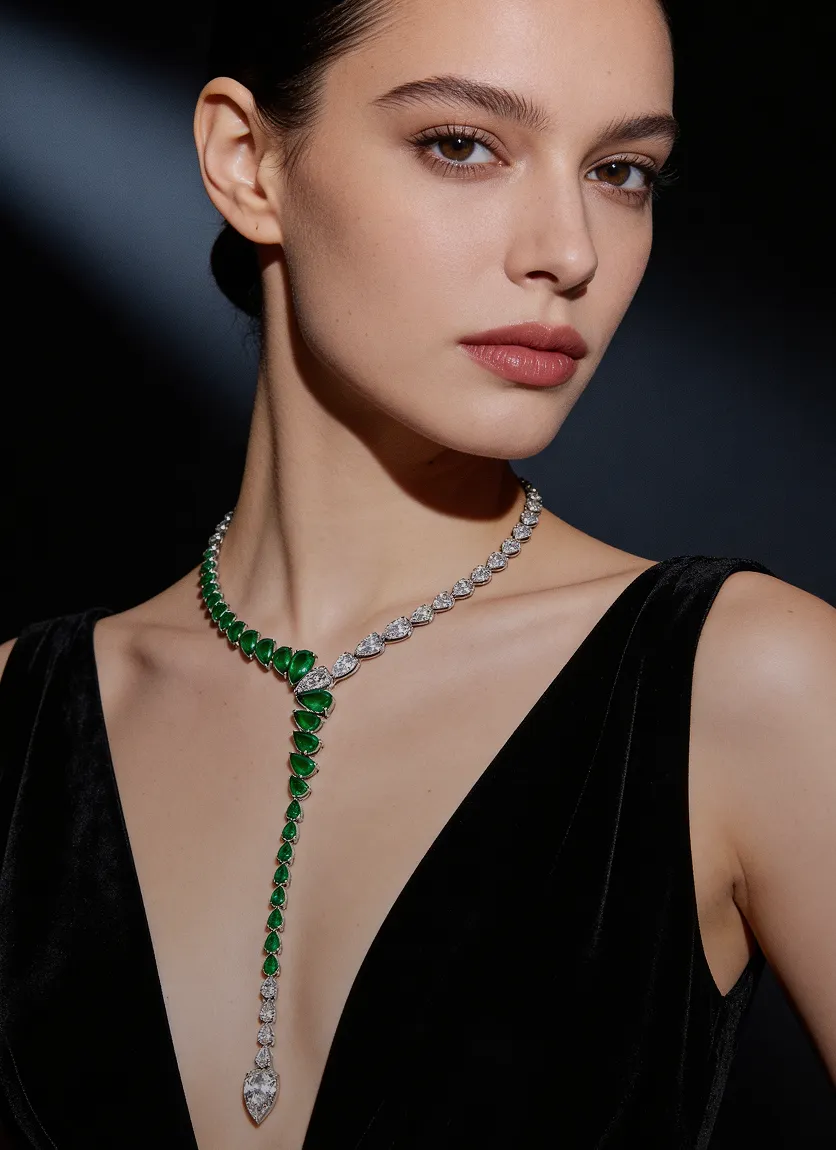
A colored stone is chosen first by its color: hue, tone, and saturation, examined under several types of light. Clarity by the standards of the respective gem species, cut, and size follow. Finally, you check whether hardness and toughness suit the planned piece of jewelry and whether a laboratory report documents the species and treatment of the stone.
At a glance
- Most important criterion
- Color: hue, tone, saturation
- Clarity
- Assessed with different strictness depending on the gem species
- Cut
- Should show the best color, not merely retain weight
- Hardness compared
- Diamond 10, corundum 9, emerald 7.5 to 8, tourmaline 7 to 7.5
- Treatment
- Must be disclosed when the stone is passed on
- Laboratory report
- Determines species and detectable treatments
Color comes first
With colored stones, color has the greatest influence on beauty and value. For sapphire, the Gemological Institute of America, GIA for short, writes that as a rule a stone is more valuable the stronger and more even its color. The same basic rule applies to tourmalines and emeralds. Anyone choosing a colored stone should therefore first learn to look at color closely, and only then consider weight or clarity.

Color can be broken down into three characteristics. Hue is the actual color, such as green with a hint of blue. Tone describes how light or dark the stone appears. Saturation describes how strong the color is, from pale or grayish to vivid. Usually sought are stones with strong saturation and medium tone. Stones that are too dark look heavy in jewelry; stones that are too light look pale.
Good to know
A colored stone is always viewed under several types of light: daylight, warm artificial light, and the light in which the piece will mostly be worn later. Some stones change their color noticeably in the process.
How to recognize a good color
For several gem species, GIA describes which colors are especially sought after. For emerald, these are bluish green to pure green stones with vivid saturation and a tone that is not too dark. Stones that are too yellowish or too bluish are considered other varieties of beryl. For blue sapphire, these are velvety blue to violetish blue stones in medium to medium-dark tone. Grayish, overly light, or overly dark stones are less in demand.
Besides the color itself, its distribution counts. A stone can have zones in which the color is stronger or weaker. Many colored stones are also pleochroic, meaning they show different colors in different viewing directions. According to GIA, this is especially pronounced in tourmaline; for sapphire, the cut should be oriented so that the stone shows its best color from above. The view that will later be seen in the jewelry is therefore always the one examined.
Clarity: each gem species has its own standards
With diamonds, clarity is assessed on a fixed scale. With colored stones, the judgment depends on the gem species. In emerald, inclusions visible to the naked eye are common and are accepted even in high-quality stones. This is called the jardin, French for garden. Eye-clean emeralds are rare. According to GIA, visible inclusions are likewise not unusual in pink and red tourmalines, as long as the color is strong.
In blue sapphire, by contrast, stones of very high clarity are rare, but inclusions generally reduce the value. It drops considerably when inclusions endanger durability. This leads to a simple rule for the choice: inclusions are judged by whether they are distracting, whether they reach the surface, and whether they lie at a point where the stone receives pressure or knocks in the jewelry. More in the guide Color or clarity in Paraíba.
Cut and size
With colored stones, the cut should above all bring out the color. A cutter weighs weight against effect. With tourmaline, the cutter deliberately orients the table relative to the long axis of the crystal: across it, a light stone becomes darker; parallel to it, a dark stone becomes lighter. Long rectangles save material but often result in unusual dimensions. GIA points out that many buyers prefer standard sizes because they are easier to set.

Size influences value strongly, but not evenly. For tourmaline, according to GIA, the price per carat rises considerably from about five carats with otherwise similar quality. For Paraíba tourmaline, even stones over one carat are rare, and color counts more than size. For emerald, stones of one to five carats are common as center stones. A large stone of medium color is therefore not automatically the better choice than a smaller one of very good color.
Hardness and toughness suited to the jewelry
A colored stone must suit the piece of jewelry in which it is worn. Two properties are important here. Hardness describes resistance to scratches and is stated on the Mohs scale, which was introduced in 1822. Toughness describes how well a stone withstands knocks. A hard stone can nevertheless be brittle. For a ring worn every day, both values count more than for earrings or a necklace.
| Stone | Mohs hardness | Toughness according to GIA | In jewelry |
|---|---|---|---|
| Diamond | 10 | Robust in everyday wear | For all types of jewelry |
| Ruby, sapphire (corundum) | 9 | More robust than emerald | Good for everyday rings |
| Emerald | 7.5 to 8 | Fair to good | Protective setting, gentle cleaning |
| Tourmaline | 7 to 7.5 | Fair | Protect the edges, no heat |
Hardness and toughness according to GIA. The intervals on the Mohs scale are not equal.
If you love a softer or less tough stone, you need not do without it. The setting compensates for a great deal: a bezel setting protects the edges, a deep setting prevents knocks. How setting and stone can be matched to each other is described in the guide Settings for colored stones.
Treatment and laboratory report
Many colored stones are treated. GIA names as common methods heating, filling fissures with oil, resin, or glass, irradiation, and diffusion. Under normal handling, heating is considered permanent; fillings can react to heat and chemicals. According to GIA, every treatment must be disclosed when a stone is passed on. The World Jewellery Confederation (CIBJO) sets out rules for nomenclature and disclosure in its Blue Books.
A laboratory report determines the material and names detectable treatments. For certain natural stones such as emerald, ruby, sapphire, and Paraíba tourmaline, GIA additionally offers an assessment of origin. For the choice, this means: a stone with a report can be compared with other stones; a stone without a report only by eye. What a report contains in detail is explained in the guide Gemstone report; the methods are described in Gemstone treatment.
An order for the choice
- Decide on the piece of jewelry: ring, earring, or necklace determines how robust the stone must be.
- Check the color: compare hue, tone, and saturation under several types of light.
- Assess clarity by gem species: is the inclusion distracting, does it reach the surface, is it exposed.
- Look at the cut: does the stone show its best color from above, is it evenly bright.
- Place the size in context: better color rather than more weight.
- Read the report: species, treatment, and where applicable origin must be documented.
A common mistake is to look at several stones one after another instead of side by side. The eye quickly adjusts to a color and then considers the next stone stronger or paler than it is. Colored stones are therefore always assessed in direct comparison under the same light. If you are looking for a stone for a one-of-a-kind piece, you should also picture it in the metal: white gold and rose gold change the effect. More under Understanding colored stone jewelry.
Colored stones at Vikar Ahmed
In the house's pieces, Vikar Ahmed works with Brazilian Paraíba tourmaline, Lagoon tourmaline, Namibian tourmaline, rubellite, and Colombian emerald, among others. Sapphire, ruby, aquamarine, tanzanite, morganite, and spinel are also used regularly. The stones are set in the in-house atelier in Idar-Oberstein. Showroom visits take place by appointment, and on request Vikar Ahmed sends photos or short videos of the stones in daylight in advance. It is best to state in your inquiry which colors or types of stone you would like to compare.
Frequently asked questions
What matters more in a colored stone, color or clarity?
As a rule, color. With colored stones, it has the greatest influence on beauty and value. Inclusions are assessed with different strictness depending on the gem species and only become a problem when they are distracting, reach the surface, or endanger durability.
How do you properly check the color of a gemstone?
In direct comparison with other stones, under daylight and under warm artificial light. Pay attention to hue, tone, and saturation, and to whether the color is evenly distributed. The stone is viewed from above, as it will later sit in the jewelry.
Are treated colored stones inferior to untreated ones?
Not fundamentally. Treatments such as heating are widespread and often permanent. What matters is that they are disclosed and that you know how to care for the stone. Untreated stones of the same quality are rarer. More under Untreated colored gemstone.
Which colored stone is suitable for a ring worn every day?
Stones with high hardness and good toughness, above all ruby and sapphire at 9 on the Mohs scale. Emerald and tourmaline are also possible, but need a setting that protects the edges and more care in wear and cleaning.
Does every colored stone need a laboratory report?
Not every one, but every valuable one. A report identifies the stone, names detectable treatments, and makes it comparable with others. For stones whose origin shapes the value, such as emerald or Paraíba tourmaline, an origin report can additionally be useful.
Why does the same colored stone look different from different directions?
Because many colored stones are pleochroic. They show a different color depending on the viewing direction, and one direction is often darker. This is especially strong in tourmaline. The cutter therefore orients the stone so that it shows its best color from above.
Private consultation
Which colored stone suits your plans becomes clearest in direct comparison under good light. Vikar Ahmed advises in the house's showroom in Idar-Oberstein by appointment or virtually; inquiries are treated discreetly. Request an appointment for a private consultation.
Further reading
- Understanding colored stone jewelry
- Rare colored gemstones
- Colored stones as an investment
- Glossary: Treatment
- Gemstone: Sapphire
Sources
- GIA: Sapphire Quality Factors, accessed 2026-11-17
- GIA: Emerald Quality Factors, accessed 2026-11-17
- GIA: Tourmaline Quality Factors, accessed 2026-11-17
- GIA: Emerald Care and Cleaning, accessed 2026-11-17
- GIA: Tourmaline Care and Cleaning, accessed 2026-11-17
- GIA 4Cs: The Mohs Scale, accessed 2026-11-17
- GIA: Gem Treatments, accessed 2026-11-17
- GIA: Colored Stone Reports, accessed 2026-11-17
- CIBJO: The Blue Books, accessed 2026-11-17
- Vikar Ahmed: Collections, accessed 2026-11-16
- Vikar Ahmed: Über uns, accessed 2026-11-16

A personal conversation starts here.
At the showroom in Idar-Oberstein or by video. Vikar Ahmed discusses your ideas, stones and designs with you and answers your questions calmly and in confidence.


Thank you for your request.
Your request will be handled with the utmost attention and discretion. Vikar Ahmed will get back to you.
Your details
Request
–
Occasion
–
Consultation
–
Contact
–
In the meantime
Insights: What is a Paraíba tourmaline? · Engagement ring to your own design: how does it work?
Confidential and without obligation
Back to the pagePrivate consultation
A personal conversation starts here.
- Time for your questions, wishes and ideas
- In the showroom in Idar-Oberstein or by video
- Confidential, discreet and without obligation
Vikar Ahmed · Hauptstraße 111 · 55743 Idar-Oberstein, Germany