

Which Colored Gemstones Are Truly Rare in High Jewelry
For a collection that so far consists of diamonds, the first colored stone is a question of principle. An overview of what rarity means in colored stones and how it can be documented.
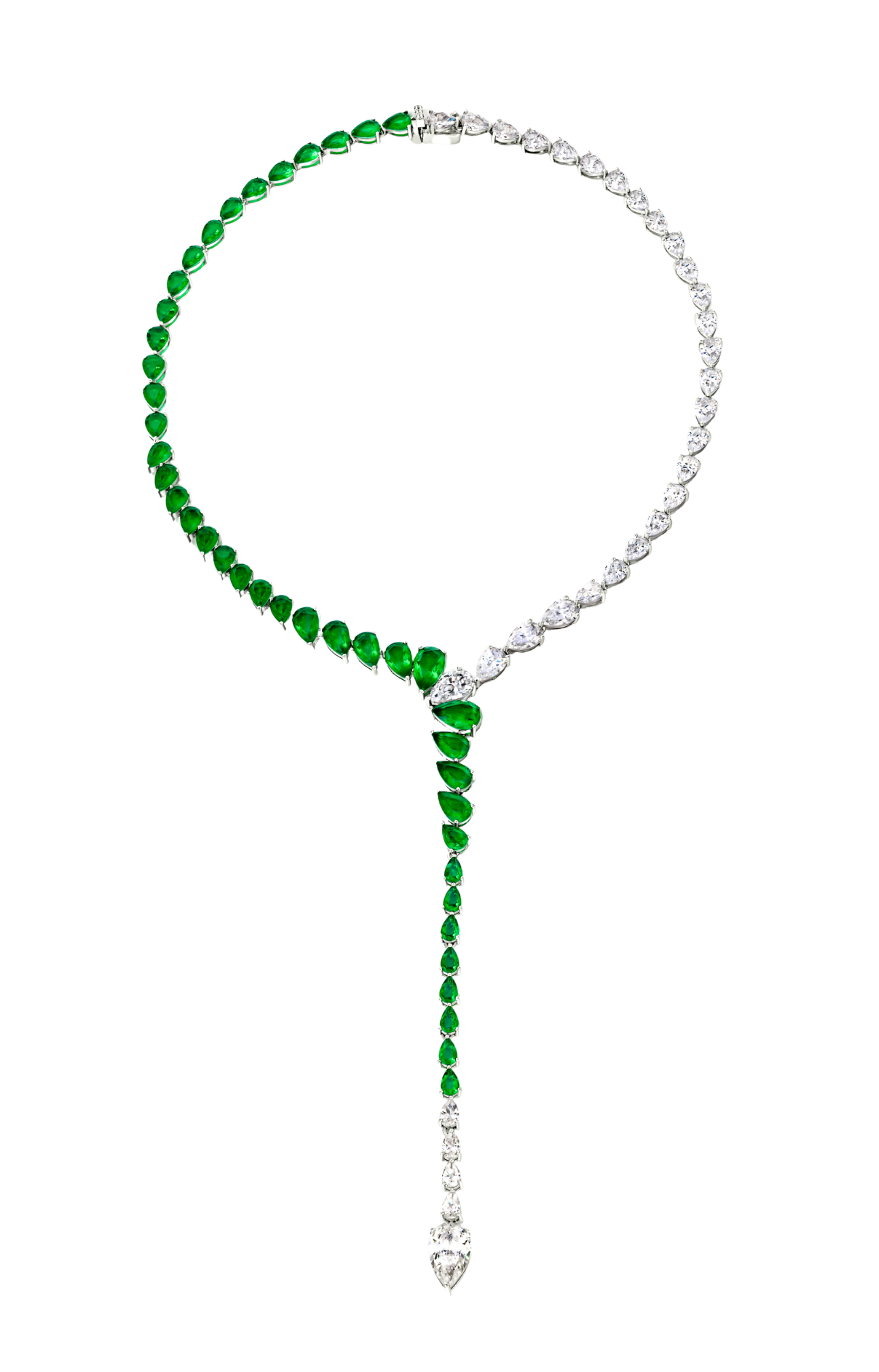
Ruby, padparadscha sapphire, emerald, Paraíba tourmaline, red spinel, and alexandrite are considered particularly rare, each in fine color and larger sizes. Rarity never lies in the species alone, but in the combination of color, size, no or minor treatment, and documented origin. Only an independent laboratory report makes this rarity verifiable.
At a glance
- GIA origin reports
- Ruby, sapphire, emerald, Paraíba tourmaline, red spinel, alexandrite
- Ruby
- Fine quality over one carat very rare according to GIA
- Paraíba tourmaline
- Cut stones rarely exceed one carat according to GIA
- Emerald
- Untreated very rare according to CIBJO, eye-clean stones especially sought after according to GIA
- Padparadscha
- Pinkish orange sapphire variety, extremely rare according to GIA
- Documenting rarity
- Laboratory report on species, treatment and, where possible, origin
Rarity is a quality, not a species
A ruby is not automatically rare. According to the Gemological Institute of America, GIA for short, small rubies of commercial quality exist in many sizes. A stone becomes rare only when several characteristics come together: a color at the top of its scale, a size that nature yields only by exception, a clarity appropriate to the species, and as little intervention as possible after mining. Anyone wishing to extend a diamond collection with a colored stone is therefore better advised to ask about rare qualities than about rare stones.
A useful reference point is the list of stones for which GIA issues an origin report: ruby, sapphire, emerald, Paraíba tourmaline, red spinel, and alexandrite. Laboratories offer this elaborate examination where origin matters to the market. The list is not a ranking. It does show, however, which colored stones collectors and the trade take so seriously that the question of the source is worth asking. What such a report provides is explained in the glossary under Origin report.
The stones collectors ask about
Each of the following stones is rare in its own way. With ruby, it is size in fine color; with emerald, clarity without filling; with Paraíba tourmaline, size combined with vivid color. Padparadscha sapphire is scarce even as a variety, and alexandrite as a color-change stone mainly in larger sizes. With spinel, according to GIA, demand for fine stones exceeds supply. The table summarizes what matters for each stone.

| Stone | What makes it rare | What to look for |
|---|---|---|
| Ruby | Fine color over one carat, practically never without inclusions | Heating, transparency, origin |
| Padparadscha sapphire | Rare blend of pink and orange | Color on the report, treatment |
| Emerald | Eye-clean, barely filled stones | Amount of filling on the report |
| Paraíba tourmaline | Vivid color from copper, rarely over one carat | Heating, filling, origin |
| Red spinel | Fine stones over five carats hardly available | Hue, matching in pairs |
| Alexandrite | Distinct color change, especially in larger stones | Strength of the change, rule out synthetics |
Information according to GIA, SSEF, and CIBJO. Rarity applies in each case to fine qualities, not to every stone of the species.
Color first: where nature is sparing
In colored stones, color decides more than any other characteristic. Padparadscha sapphire shows a pinkish orange that some compare to salmon or a sunset. According to GIA, its name goes back to the Sanskrit word for the color of a lotus blossom. Alexandrite, a variety of chrysoberyl, changes color depending on the light, for instance from bluish green in daylight to reddish purple under incandescent light. In Paraíba tourmaline, discovered in Brazil in the late 1980s, the vivid blue and green are caused by copper and manganese.
Among fancy color diamonds, according to GIA red, green, purple, and orange are considered the rarest, followed by pink and blue. For a collection, this is a useful comparison: a Fancy Color Diamond in strong color and a fine colored gemstone speak the same language, because in both, color carries the value. A large stone in pale color, by contrast, is rare in no species. It is merely large.
Size: where it becomes scarce
With almost all colored stones, the price per carat rises with size, often in leaps. GIA calls rubies of fine quality over one carat very rare. According to its description, Paraíba tourmalines rarely exceed one carat, with a more vivid color preferred over a larger, paler stone. With spinel, the availability of fine red, pink, and blue stones drops markedly above five carats. With sapphire, large stones of fine quality are also rare, but easier to find than comparable rubies.
For High Jewelry, this means: a center stone of a few carats in top color can be rarer than a considerably larger stone of medium quality. With pairs and lines, a second hurdle is added. GIA describes matched sets of large, well-cut spinels as very rare. The same principle applies to earrings or colliers with several main stones of any species: two matching stones are harder to find than a single one.
Untreated is a form of rarity of its own
Many colored stones are treated after mining to improve color or clarity. This is accepted, but must be disclosed. In the Gemstone Blue Book, the World Jewellery Confederation (CIBJO) lists for each species how frequently which treatment occurs. Emeralds without any treatment are listed there as very rare, untreated Paraíba tourmalines and rubellites as rare. Heated rubies are considered common. Spinel and alexandrite, by contrast, are often untreated, and their rarity lies in color and size.

An untreated stone is rarer than a treated one of the same appearance. This applies only, however, when the finding is documented. The Swiss laboratory SSEF calls high-quality untreated emeralds without fissures very rare. According to estimates cited by GIA, 90 percent or more of emeralds are filled. With an emerald, the amount of filling on the report is therefore what counts. How laboratories grade it is explained in the guide Emerald treatment, and the term itself in the glossary under untreated.
Origin and report make rarity verifiable
Rarity that is not documented remains a claim. An identification report states the species, rules out a synthetic, and lists detectable treatments. For the six stones mentioned, the origin can also be determined, as an expert opinion based on inclusions, trace elements, and reference material. GIA points out that an origin determination is not possible in every case. With alexandrite, the report is especially worthwhile because, according to CIBJO, it exists in many synthetic variants.
With Paraíba tourmaline, even the name depends on the origin. SSEF writes Paraíba tourmaline on the report only for stones from Brazil. Copper-bearing tourmalines from Mozambique or Nigeria that meet the same criteria are called tourmaline there, with the addition that they are also called Paraíba in the trade. How differently laboratories phrase origin and color is shown in the guide Origin statement for colored stones.
Typical misconceptions about rare colored stones
- Taking the species for the rarity: a ruby of commercial quality is not a rare stone.
- Placing size above color: a large, pale stone is not a rarity in any species.
- Believing untreated without reading it: without a report, the statement cannot be verified.
- Confusing trade names with laboratory terms: laboratories usually describe colors without trade designations.
- Considering rubellite as rare as ruby: GIA counts red among the readily available tourmaline colors.
The last point shows that rarity and beauty are two different standards. A rubellite in strong red can be more convincing in a piece than a rare stone in mediocre color. For a collection, both count, but assessed separately. How the two red stones differ is explained in the guide Rubellite or ruby. What determines the value of a colored stone overall is covered under What determines the value of a colored stone?.
Rare colored stones at Vikar Ahmed
At Vikar Ahmed, Paraíba tourmaline is at the heart of the Maison. The pieces shown also include lagoon tourmaline, Namibian tourmaline, rubellite, Colombian emerald, and natural fancy color diamonds in yellow, pink, and other tones. New pieces are created as one-of-a-kind pieces in the in-house atelier in Idar-Oberstein, from design through three-dimensional visualization to realization. Every high-quality, rare colored gemstone comes with an independent original certificate there, for example from Gübelin, SSEF, GRS, or the DGemG. More on the house's most important stone in the guide Paraíba tourmaline.
Frequently asked questions
Which colored gemstones are considered particularly rare in High Jewelry?
Above all ruby, padparadscha sapphire, emerald, Paraíba tourmaline, red spinel, and alexandrite, each in fine color. For exactly these stones, GIA offers an origin report, padparadscha included as a sapphire variety. They are rare, however, only in top quality, in larger sizes, and with documented treatment status, not in every quality.
I already own several diamond pieces and want to extend my collection with a colored stone. Which colored stones in High Jewelry are genuinely hard to obtain right now?
Hard to find are fine rubies over one carat, Paraíba tourmalines over one carat in vivid color, barely filled emeralds, and spinels over five carats in strong red. Alongside a diamond collection, such a stone has the greatest effect when its color complements the diamonds and a report records species and treatment.
Is an untreated colored stone always rarer than a treated one?
With the same color and size, yes, because most stones of many species are treated. Spinel and alexandrite, by contrast, are often untreated. What matters is proof: only a laboratory report without indications of treatment makes the rarity verifiable.
Why is a large stone not automatically rare?
Because size counts only in combination with color. Large stones in pale or dull color occur in most species. A rare stone combines both: a size that nature produces only by exception, and a color at the top of the scale.
What role does origin play in rarity?
For some stones, a major one. With Paraíba tourmaline, according to SSEF even the name on the report depends on origin in Brazil. Origin, however, is an expert opinion and cannot always be determined. It complements the assessment of color and treatment rather than replacing it.
How can I tell whether a rare colored stone is synthetic?
As a rule, not with the naked eye. According to CIBJO, synthetic variants exist for alexandrite, ruby, sapphire, and emerald, among others. An identification report from an independent laboratory determines whether a stone formed naturally, and belongs with every valuable colored stone.
Private consultation
Which colored stone meaningfully complements your collection is best discussed with the stone and the documents at hand. Vikar Ahmed advises in the showroom in Idar-Oberstein by appointment, and in a virtual appointment on request. Your inquiry is treated discreetly. Request an appointment for a private consultation.
Further reading
- Assessing masterpieces with colored gemstones
- Understanding High Jewelry with colored gemstones
- Gemstone: Ruby
- Glossary: Paraíba tourmaline
- Untreated Paraíba tourmaline
Sources
- GIA: FAQ zum Colored Stone Identification and Origin Report, accessed 2026-11-17
- GIA: Ruby Quality Factors, accessed 2026-11-17
- GIA: Sapphire Quality Factors (Padparadscha), accessed 2026-11-17
- GIA: Spinel Quality Factors, accessed 2026-11-17
- GIA: Alexandrite Description, accessed 2026-11-17
- GIA: Tourmaline Quality Factors, accessed 2026-11-17
- GIA: Emerald Care and Cleaning Guide, accessed 2026-11-17
- GIA: Fancy Color Diamond Description, accessed 2026-11-17
- SSEF: Emerald, accessed 2026-11-17
- SSEF: Paraiba Tourmaline, accessed 2026-11-17
- CIBJO: The Gemstone Blue Book 2026, accessed 2026-11-17
- Vikar Ahmed: Collections, accessed 2026-11-16

A personal conversation starts here.
At the showroom in Idar-Oberstein or by video. Vikar Ahmed discusses your ideas, stones and designs with you and answers your questions calmly and in confidence.


Thank you for your request.
Your request will be handled with the utmost attention and discretion. Vikar Ahmed will get back to you.
Your details
Request
–
Occasion
–
Consultation
–
Contact
–
In the meantime
Insights: What is a Paraíba tourmaline? · Engagement ring to your own design: how does it work?
Confidential and without obligation
Back to the pagePrivate consultation
A personal conversation starts here.
- Time for your questions, wishes and ideas
- In the showroom in Idar-Oberstein or by video
- Confidential, discreet and without obligation
Vikar Ahmed · Hauptstraße 111 · 55743 Idar-Oberstein, Germany