

How Emeralds Are Treated and What the Report Says
With emerald, filling fine fissures is the rule, not the exception. What matters is how much of it is in the stone and whether it is openly disclosed.
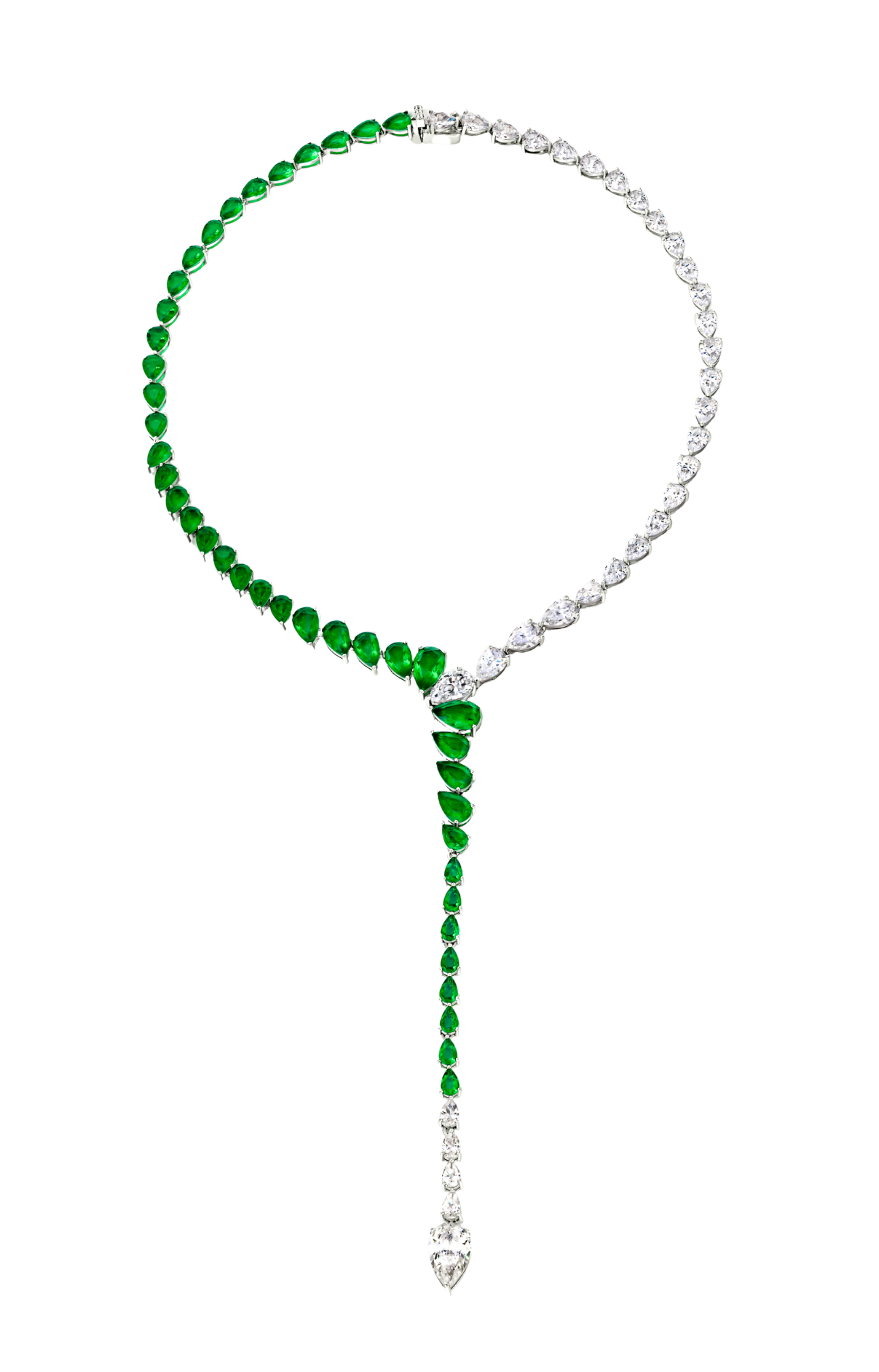
Most emeralds are treated: fine fissures that reach the surface are filled with oil, wax, or artificial resin so that they are less visible. This is accepted, but it must be disclosed. A laboratory report states the amount of filling from minor to significant and applies only to the time of examination.
At a glance
- Most common treatment
- Filling surface-reaching fissures with oil, wax, or artificial resin
- Prevalence
- By estimates, 90 percent or more of all emeralds (GIA)
- Grades in the report
- None, minor, moderate, significant (F1, F2, F3 according to LMHC)
- Validity of the statement
- Only at the time of examination, filling is reversible
- Hardness
- 7.5 to 8 on the Mohs scale, toughness fair to good
- Cleaning
- Lukewarm soapy water, no ultrasonic, no steam
Filled fissures are the rule with emerald
An emerald is a green beryl, colored mainly by chromium and vanadium. It almost always grows with inclusions and fine fissures. Many of these reach the surface. The Gemological Institute of America, GIA for short, cites estimates according to which 90 percent or more of all emeralds have filled fissures. The Swiss laboratory SSEF describes high-quality, untreated emeralds without fissures as very rare.

The filling does not change the identity of the stone. A filled emerald remains a natural emerald. The filling does, however, change how clear it appears. A fissure filled with air refracts light and appears as a bright line. If a substance with similar refraction fills the gap, the line recedes. The stone looks cleaner than it is. That is why the filling belongs in every description of the stone.
Disclosure is not a courtesy. GIA states that anyone who passes on a gemstone must disclose a treatment, even between private individuals. Concealing the filling creates the impression that the stone is naturally clearer. What a treatment generally involves and which processes exist for other stones is explained in the guide on gemstone treatment.
Which fillers exist and how stable they are
GIA names essential oils, other oils, waxes, and artificial resins as fillers. SSEF additionally lists natural resins such as Canada balsam. The substances differ in durability. According to GIA, they vary in stability in treated emeralds. Light and chemicals can alter or break down oils, resins, and polymers in the fissures. A stone can therefore appear cloudier over the years without having been damaged.
- Oils: penetrate easily, but can dry out or seep out with heat.
- Waxes: less common, also not permanent.
- Artificial resins: partly harden, can become cloudy over time.
- Natural resins such as Canada balsam: explicitly named by SSEF as fillers.
- Colored fillers: additionally change the color and are named separately.
The Laboratory Manual Harmonisation Committee (LMHC), in which GIA, SSEF, Gübelin, and the German DSEF, among others, align their report language, states: oil and resin fillings can be unstable at elevated temperatures and when exposed to chemicals. It recommends removing such stones from the setting before the piece of jewelry is repaired. For everyday wear, this means the filling is not a defect, but it does call for careful handling.
How laboratories grade the filling
Since 2000, GIA has graded the filling of emeralds. The members of the LMHC use a common language for this. A report states whether there are indications of filling and quantifies the amount in three grades: minor, moderate, and significant. Instead of the words, the report may use the abbreviations F1, F2, and F3. Under the LMHC guidelines, an insignificant amount is not mentioned. The type of filler may also be stated, but this is not required.
| Statement in the report | Abbreviation | Wording at SSEF (English) |
|---|---|---|
| No indications of filling | none | No indications of clarity modification |
| Minor amount in fissures | F1 | Minor amount of oil (or artificial resin etc.) in fissures |
| Moderate amount in fissures | F2 | Moderate amount of oil (or artificial resin etc.) in fissures |
| Significant amount in fissures | F3 | Significant amount of oil (or artificial resin etc.) in fissures |
| Filling in cavities | C1 to C3 | Minor, moderate or significant amount of resin / wax in cavities |
Grades according to LMHC Information Sheet 5 (May 2025 version), wording according to SSEF and LMHC. Each with the addition: at the time of examination.
One sentence the LMHC provides for filled emeralds is important: the filling is generally reversible and can be repeated at any time, and the report describes only the condition at the time of examination. A report from ten years ago therefore says little about what is in the stone today. Anyone considering an emerald with an older report should have it examined again. More on the structure of such documents in the guide on the gemstone report.
Special cases that are named differently
Not every filling is colorless. If the substance contains so much color that it is visible in the thin fissure, the LMHC speaks of a modification of clarity and color. The report then names a colored filler. This is a considerably more serious intervention, because the stone looks greener than it is. A second category concerns wide gaps and cavities filled with resin or wax. It is graded separately from the fissures.
Good to know
The LMHC uses the term "emerald with resin". It refers to a heavily fractured rough stone that was impregnated with resin and then cut. Without the resin, it would fall apart into at least two pieces. Such stones are considered a manufactured product, not an emerald with filling.
Conversely, not everything in a fissure has to be mentioned. According to the LMHC, substances that entered naturally do not count as treatment. Cloudy residues of oil or resin that remain after cleaning or through drying out are not considered filling either. A report may mention them in a comment. If you read "residues present", the stone has not been newly filled, but it once was.
Untreated or minor filling: what makes the difference
According to SSEF, an emerald without indications of filling is very rare if it is also of high quality. The LMHC provides two wordings for it. If the stone has no fissures, the report can simply state "none". If it has fissures without filling, the report notes that they could be filled at any time. This addition is honest: an untreated stone remains untreated only as long as no one fills the fissures.

For the effect on the hand, what counts most is how much filling is needed for the stone to appear clear. An emerald with minor filling looks almost unchanged even after years. With significant filling, its appearance depends more on the condition of the substance. For a ring worn every day, a minor grade is therefore often more important than the question of complete absence of treatment. When the premium for untreated colored gemstones is generally justified is explained in the guide Untreated colored gemstone.
Besides treatment, color, clarity, cut, and weight determine the rank of an emerald. According to GIA, bluish green to pure green tones with strong saturation are the most sought after. Emeralds are only very rarely eye-clean, that is, without inclusions visible to the naked eye. Inclusions that reduce transparency lower the value considerably. Treatment is thus one criterion among several, but one that cannot be clarified without a laboratory.
Care and repair of a filled emerald
Emerald reaches 7.5 to 8 on the Mohs scale, but is less tough than ruby or sapphire. GIA recommends cleaning it with lukewarm soapy water and a soft brush. Ultrasonic cleaning can weaken stones that are already fractured, and hot steam can drive oil or uncured resin out of the fissures. Hot dishwater can also harm filled emeralds. Heat can, in addition, extend existing fissures.
- Take the ring off when washing dishes, using cleaning agents, and in the sauna.
- Clean only with lukewarm soapy water, never in an ultrasonic bath.
- Before any work on the piece, inform the goldsmith about the filling.
- For resizing or soldering, have the stone removed from its setting first.
- If the stone looks cloudier, have it checked whether the filling has deteriorated.
A setting that protects the stone also helps. GIA points out that the emerald cut bevels the vulnerable corners and gives the prongs a comparatively secure hold. How an emerald is set safely and what to consider is described in the guide Having an emerald set.
Common mistakes when assessing treatment
- Assuming a clear-looking emerald is untreated because no fissures are visible.
- Reading an undated report or one with an old date as a current finding.
- Equating "treated" with "emerald with resin": the latter is a manufactured product.
- Asking only whether it is untreated instead of asking for the grade from minor to significant.
- Raising the topic of care only after the filling first fades.
Behind all five mistakes lies the same assumption: that looking at the stone is enough. With emerald, it is not. Whether and how heavily a stone was filled can often be recognized under the loupe by a trained gemologist, but grading the amount reliably is a matter for a laboratory. Asking early for a current report spares you later surprises in wear and care.
Emeralds in one-of-a-kind pieces by Vikar Ahmed
Vikar Ahmed works with emeralds mainly from Colombia, supplemented by Zambia. Each one-of-a-kind piece is created in three steps: design by the in-house designers, three-dimensional visualization, and execution in the in-house atelier in Idar-Oberstein. Only light colorless oiling is accepted, usually with cedarwood oil, ideally at a degree of none to minor. The house rejects artificial resins and colored oil. Clients are always told whether and how strongly a stone has been oiled, with an independent certificate for high-quality stones. What distinguishes Colombian stones is covered in the guide on Colombian emeralds.
Frequently asked questions
Which jewelers disclose the treatment of emeralds for engagement rings in a traceable way?
Disclosure is traceable when a current report from an independent laboratory is available for the individual stone and grades the filling as minor, moderate, or significant. A verbal statement or a note such as "customarily treated" is not sufficient. Ask for the date of the report, because the filling can be changed at any time.
Is an untreated loose emerald worth the premium over a treated one?
Only if a laboratory report confirms the finding of no filling and the stone is convincing in color and clarity even without intervention. An emerald of good color with minor filling can be the more sensible choice in jewelry. Bear in mind that an untreated stone with fissures can be filled at any time and should be re-examined regularly.
What do F1, F2, and F3 mean in an emerald report?
The abbreviations stand for the amount of filling in fissures: F1 for minor, F2 for moderate, F3 for significant. They follow the common report language of the laboratory committee LMHC. An insignificant amount is not mentioned. The LMHC grades fillings in wide cavities separately, as C1 to C3.
Can an emerald look different after years than when it was handed over?
Yes. Oils and resins in the fissures can dry out or become cloudy through light, heat, and cleaning agents. The stone then appears less clear without being damaged. A specialist can check whether the filling has deteriorated. The original report describes only the condition at the time of that examination.
Can a filled emerald go into an ultrasonic bath?
No. GIA advises against ultrasonic and steam cleaning for emeralds. The vibrations can weaken existing fissures, and hot steam can drive oil or soft resin out of the fissures. The safest method is lukewarm soapy water with a soft brush. Before soldering, the stone should be removed from its setting.
Is an emerald with resin the same as a treated emerald?
No. A treated emerald is a natural stone whose fissures have been filled. The LMHC uses the term emerald with resin for a stone that holds together only through the resin and would fall apart without it. It is considered a manufactured product and is explicitly named as such in the report.
Private consultation
Whether an emerald suits your plans also depends on how it is treated and how it is to be worn. Vikar Ahmed offers consultations in the showroom in Idar-Oberstein by appointment, and virtually on request. Your inquiry is treated with discretion. Request a private consultation.
Further reading
- Gemstone: Emerald
- Glossary: Treatment
- Colombian emeralds and their origin
- Glossary: SSEF and Gübelin
- Origin and treatment in colored gemstones
Sources
- GIA: Emerald Care and Cleaning Guide, accessed 2026-11-17
- GIA: Emerald Quality Factors, accessed 2026-11-17
- GIA: Gem Treatment, accessed 2026-11-17
- GIA: Emerald, Gem Encyclopedia, accessed 2026-11-17
- SSEF: Emerald, accessed 2026-11-17
- LMHC Information Sheet 5: Emerald, fissure filling and clarity enhancement (Mai 2025), accessed 2026-11-17
- Vikar Ahmed: Collections, accessed 2026-11-17
- Gübelin Gem Lab: Gemmological Report, accessed 2026-11-17

A personal conversation starts here.
At the showroom in Idar-Oberstein or by video. Vikar Ahmed discusses your ideas, stones and designs with you and answers your questions calmly and in confidence.


Thank you for your request.
Your request will be handled with the utmost attention and discretion. Vikar Ahmed will get back to you.
Your details
Request
–
Occasion
–
Consultation
–
Contact
–
In the meantime
Insights: What is a Paraíba tourmaline? · Engagement ring to your own design: how does it work?
Confidential and without obligation
Back to the pagePrivate consultation
A personal conversation starts here.
- Time for your questions, wishes and ideas
- In the showroom in Idar-Oberstein or by video
- Confidential, discreet and without obligation
Vikar Ahmed · Hauptstraße 111 · 55743 Idar-Oberstein, Germany