

Untreated Colored Gemstones: When the Premium Is Justified
Untreated sounds like the better choice. Whether that is true depends on the stone, on the type of treatment, and on what can be documented.
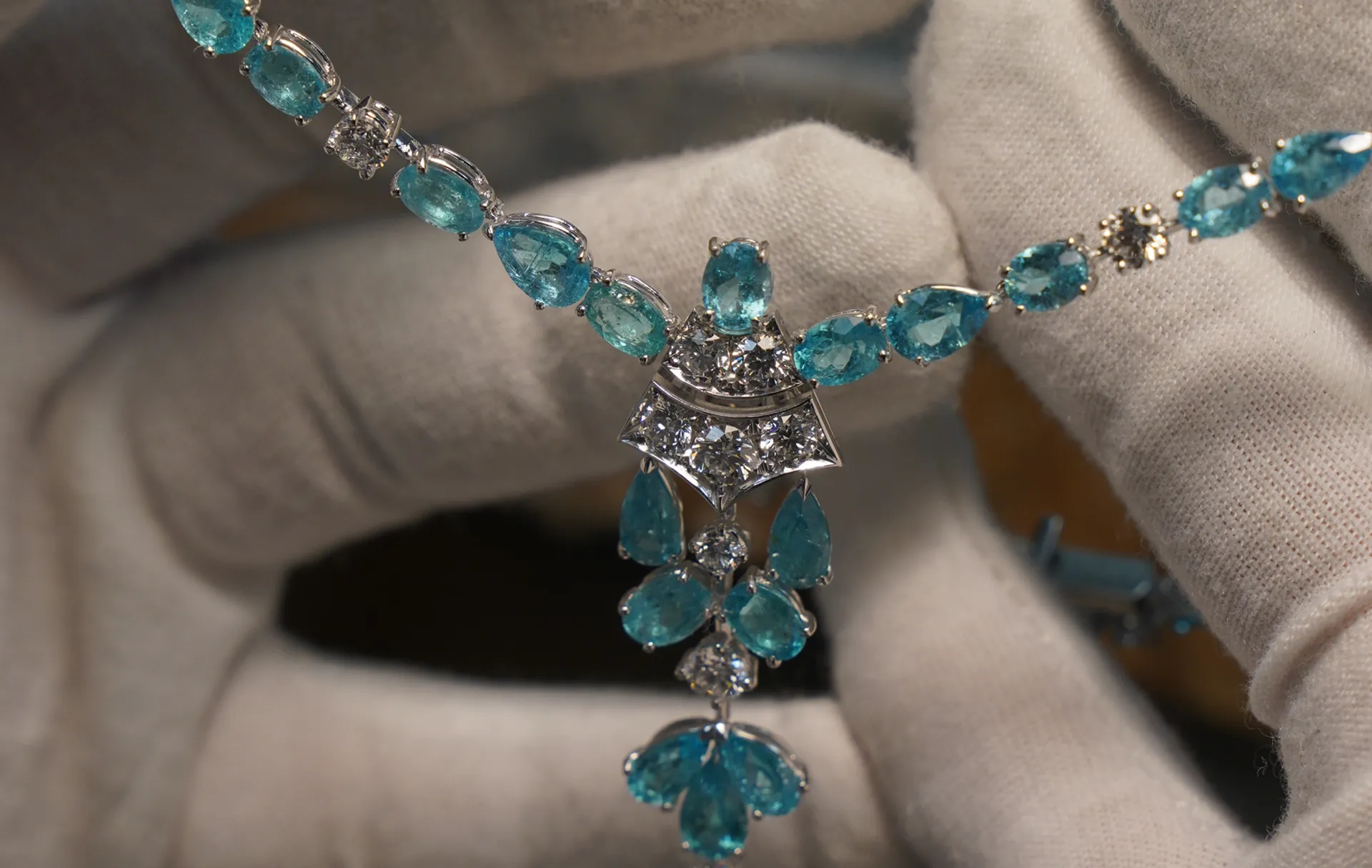
The premium for an untreated colored gemstone is justified when a laboratory report supports the finding and the stone convinces in color and clarity even without intervention. Untreated stones of good quality are rarer, but they are not more beautiful by default. A treated stone with an openly disclosed, stable treatment can be the more sensible choice for an engagement ring.
At a glance
- Untreated
- Only cut and polished after mining
- Most common treatment
- Heating, for example in ruby, sapphire, tanzanite, tourmaline, aquamarine
- Emerald
- Fissures are often filled with oil or resin
- Detection
- Laboratories name detectable treatments, not every one is detectable
- Disclosure
- Every known treatment must be disclosed
What untreated means
A stone is untreated if nothing about it was changed after mining except its shape. It was cut and polished, but neither heated nor irradiated, filled, or dyed. Its color and clarity are as they formed in nature. The glossary explains the terms Untreated and Treatment in detail.

The premium for such stones has a simple reason: they are rarer. Only a small part of the mined material shows, on its own, a color and clarity that need no intervention. The premium is therefore paid for rarity. It says nothing about whether the individual stone is more beautiful than a treated one. A pale untreated stone remains pale.
Which treatments are common
Treatments differ greatly in what they achieve and how stable they are. The Gemological Institute of America, GIA for short, describes the most important methods. For the question of the premium, the last column of the following overview matters most.
| Treatment | Typical stones | Stability |
|---|---|---|
| Heating | Ruby, sapphire, tanzanite, tourmaline, aquamarine | Considered permanent under normal wear |
| Fissure filling | Emerald, with oil, wax, or resin | Varies, filling can change |
| Irradiation | Tourmaline, topaz, diamond | Depends on the stone, some colors fade under light |
| Diffusion | Ruby and sapphire | Considered permanent, difficult to detect reliably |
| Dyeing | Porous or fissured stones | Some dyes fade in sunlight |
Overview according to GIA. The table gives examples and is not exhaustive.
How a report phrases untreated
Laboratory reports phrase the absence of a treatment cautiously. For emerald, SSEF states, for example, that at the time of testing no indications of clarity modification in the fissures were found. Two qualifications lie in this sentence: the point in time and the word indications. The report describes the finding; it does not guarantee a condition for all time.
| Grade in the report | Meaning |
|---|---|
| No indications | No filling found in the fissures at the time of testing |
| Minor | Minor amount of oil or resin in the fissures |
| Moderate | Moderate amount of oil or resin in the fissures |
| Significant | Significant amount of oil or resin in the fissures |
Grades of fissure filling in emerald according to SSEF. Trace amounts are not mentioned under LMHC guidelines.
The last line of the caption matters for the premium. Under the international guidelines of the Laboratory Manual Harmonisation Committee, LMHC for short, SSEF does not list the smallest traces of filling. An emerald without a statement is therefore, strictly speaking, a stone without significant filling. In practice, that is sufficient. If you pay a considerable premium for the word untreated, you should nevertheless know the exact wording of the report.
When the premium is justified
- A report from an independent laboratory supports the finding and verifiably belongs to this stone.
- The stone convinces in color and clarity even in comparison with treated stones.
- It is a species in which treatment is the rule, for example emerald, ruby, or sapphire.
- Rarity is important to you, for example for a stone that is meant to stay in the family.
The premium is less justified when it makes a visibly weaker stone more expensive than a more beautiful treated one. The same applies when the statement rests only on the seller's word. A heated stone with strong, stable color is often the more convincing solution for a ring that is worn daily. What matters is that the treatment is disclosed.
What a laboratory can and cannot document
A laboratory report lists detectable treatments. The limit lies in that word. Some interventions leave no reliable traces. GIA describes, for example, that heating in tourmaline is stable and not detectable. Diffusion in corundum is considered extremely difficult to detect reliably in many cases. Filled fissures, by contrast, can be recognized by a gemologist under magnification.

This has consequences for the premium. For emerald, ruby, and sapphire, a report can support the absence of a treatment well. For tourmaline, the statement untreated can hardly be documented; it remains information from the supply chain. A premium for this word alone should be viewed with caution for such stones. More on what can be documented in the guide Origin and treatment in colored gemstones.
Common mistakes regarding the premium
- Paying the premium even though the statement untreated comes only from the seller.
- Expecting certainty with tourmaline, even though heating cannot be detected there.
- Confusing no indications of treatment with a guarantee. The report reflects the finding at the time of testing.
- Preferring a pale untreated stone to a strong, stably heated one, only because of the word.
- Overlooking care: ultrasonic and steam are not suitable for emerald and tourmaline.
Most of these mistakes have the same cause. The word untreated is read as a mark of quality, although it is a statement about the history of the stone. Quality shows in color, clarity, and cut. Rarity shows in the documented absence of a treatment. Both together justify a premium. One alone only rarely does. The guide Gemstone treatment gives an overview of all methods.
Untreated stones in a one-of-a-kind piece
For a one-of-a-kind piece, the stone is usually selected before the design is created. That is the right moment to request and read the report. The stone is still loose, weight and measurements can be matched, and the decision for or against an untreated stone is made before the setting and proportions are fixed. The setting can then hold the stone so that it shows its color and is protected.
The type of stone also determines production. According to GIA, heat can damage emeralds, for example by causing existing fissures to expand. In tourmalines, high heat can alter the color and a sudden temperature change can cause fractures. For the goldsmithing, this means: work involving heat near such stones requires care, in later repairs as well as in the initial production. More on the process under Bespoke.
Wearing treated stones correctly
The type of treatment determines the care. Heated stones need no special consideration; according to GIA, great heat can at most make them somewhat more brittle. Filled emeralds call for more caution. Heat, chemicals, and even hot dishwater can attack the filling. Ultrasonic and steam are not suitable for emeralds. Warm soapy water is the safe way to clean them.
Good to know
According to estimates cited by GIA, 90 percent or more of emeralds have their fissures filled. An emerald without any filling is therefore an exception and should be documented by a report.
Disclosure at Vikar Ahmed
Vikar Ahmed works with colored gemstones such as Paraíba tourmaline, rubellite, and Colombian emerald and designs engagement rings individually. Each gemstone can be matched to your own ideas, including the question of whether an untreated stone is desired. The house works with both heated and unheated Paraíbas, and for emeralds it accepts only light colorless oiling. Every treatment is stated in the consultation and in writing on the certificate, expert opinion, and invoice. The CIBJO Blue Books require treatments to be disclosed and stones to be described in unambiguous terms.
Frequently asked questions
Which engagement rings with an untreated colored gemstone are worth the premium over treated stones?
Rings whose stone convinces in color and clarity even without treatment and whose finding is supported by a laboratory report. This applies above all to emerald, ruby, and sapphire. In tourmaline, heating cannot be detected, so a premium for the word untreated is difficult to justify there.
Can a laboratory detect every treatment?
No. Reports name detectable treatments. Filled fissures can be seen under magnification. Heating of tourmaline, by contrast, is considered undetectable, and diffusion in ruby and sapphire is often difficult to recognize reliably. A report without a finding is therefore not a guarantee.
Is a heated gemstone less durable?
As a rule, no. According to GIA, heating is considered permanent and stable under normal wear, and the color remains. The institute merely points out that stones can become somewhat more brittle as a result. More sensitive are stones with filled fissures and some irradiated stones, whose color can fade under heat or strong light.
Are most emeralds treated?
Yes. According to estimates cited by GIA, 90 percent or more of emeralds have their fissures filled with oil, resin, or similar substances. This is common and permissible, but must be disclosed. Untreated emeralds of good quality are correspondingly rare.
Is the premium for an untreated colored gemstone worth it in a one-of-a-kind piece?
Yes, if the stone convinces even without treatment and a report supports the finding. In a one-of-a-kind piece, the stone determines the design, so its rarity becomes part of the piece. For species whose treatment can hardly be detected, such as tourmaline, a premium for the word alone is difficult to justify.
Which atelier works with untreated colored gemstones for bespoke jewelry?
How to recognize such an atelier: it presents a laboratory report for every colored gemstone, discloses treatments openly, and explains what the report cannot document. Vikar Ahmed works with colored gemstones such as Paraíba tourmaline, rubellite, and Colombian emerald in one-of-a-kind pieces from its in-house atelier. The house states every treatment in writing on the certificate, expert opinion, and invoice.
Private consultation
Whether an untreated stone is the right choice for your ring can be decided on the stone and its report. Vikar Ahmed takes time for this in the house's showroom in Idar-Oberstein, by appointment and discreetly. Request a private consultation.
Further reading
- Authenticity, origin, and certificates
- Glossary: Untreated
- Glossary: Treatment
- Origin and treatment in colored gemstones
- Engagement ring with a colored gemstone
- Tourmalines and their treatment
Sources
- GIA: An Introduction to Gem Treatments, accessed 2026-11-17
- GIA: Emerald Care and Cleaning, accessed 2026-11-17
- GIA: Tourmaline Care and Cleaning, accessed 2026-11-17
- GIA: Colored Stone Reports & Services, accessed 2026-11-17
- SSEF: Emerald Reports, Stufen der Rissfüllung, accessed 2026-11-17
- SSEF: Gemstone Testing, Behandlungsnachweis, accessed 2026-11-17
- Vikar Ahmed: Collections, accessed 2026-11-16
- Vikar Ahmed: Verlobungsringe und Engagement, accessed 2026-11-16
- CIBJO: Introduction to the Blue Books, accessed 2026-11-17

A personal conversation starts here.
At the showroom in Idar-Oberstein or by video. Vikar Ahmed discusses your ideas, stones and designs with you and answers your questions calmly and in confidence.


Thank you for your request.
Your request will be handled with the utmost attention and discretion. Vikar Ahmed will get back to you.
Your details
Request
–
Occasion
–
Consultation
–
Contact
–
In the meantime
Insights: What is a Paraíba tourmaline? · Engagement ring to your own design: how does it work?
Confidential and without obligation
Back to the pagePrivate consultation
A personal conversation starts here.
- Time for your questions, wishes and ideas
- In the showroom in Idar-Oberstein or by video
- Confidential, discreet and without obligation
Vikar Ahmed · Hauptstraße 111 · 55743 Idar-Oberstein, Germany