

Understanding Colored Gemstone Jewelry: Stone, Treatment, Setting
Colored gemstones follow different rules from diamonds. There is no uniform scale, many stones are treated, and their durability varies widely.
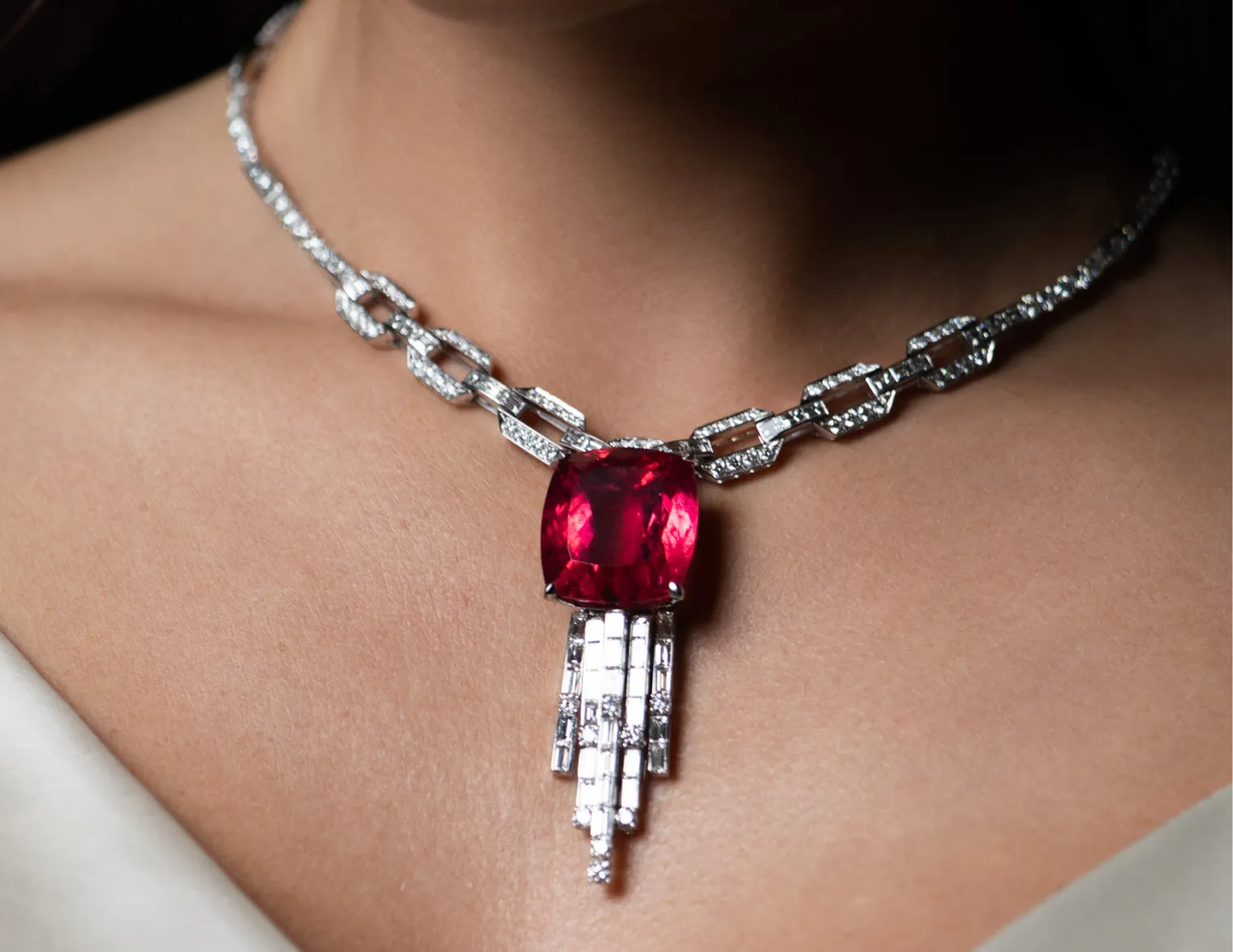
Good colored gemstone jewelry combines a stone with convincing color, a complete statement on the species and treatment of the stone, and a setting that matches its durability. Treatments such as heating or filling are widespread and not a flaw in themselves. They must, however, be disclosed. A laboratory report names the species and detectable treatments.
At a glance
- Most important feature
- Color: hue, saturation and tone
- Uniform grading
- Does not exist for colored stones as it does for diamonds
- Common treatments
- Heating, fracture filling, irradiation, diffusion, coating
- Disclosure
- Per GIA required of anyone who sells a stone, privately as well
- GIA laboratory report
- Identifies the species and names detectable treatments
- Industry rules
- CIBJO Blue Books for nomenclature and standards, voluntary
Colored gemstone jewelry is judged by color
Colored gemstone jewelry means jewelry in which a colored gemstone plays the leading role: emerald, ruby, sapphire, tourmaline and many others. Unlike with diamonds, there is no worldwide uniform scale that translates color and clarity into grades. Color is assessed first, that is, its hue, its saturation and its tone. Clarity, cut and size follow, weighted differently depending on the species.
One example: for emerald, GIA describes bluish green to pure green stones with vivid saturation and a tone that is not too dark as the most desirable. Visible inclusions are usual in emerald and are accepted even in fine stones. In a diamond of the same price range they would be a flaw. Anyone judging colored gemstone jewelry therefore needs knowledge of the particular species. How to select a stone is described in the guide Choosing a colored gemstone.
Which treatments exist
GIA defines a treatment as any process intended to change the color or clarity of a stone beyond cutting and polishing. Many colored stones in jewelry are treated. According to GIA, sapphire is often heated to intensify the blue, and ruby to reduce purple tones. Tanzanite is heated at low temperatures to remove a brownish component. In emeralds, fractures are often filled with oils, waxes or synthetic resins.

| Treatment | What happens | Stability according to GIA |
|---|---|---|
| Heating | Heat changes color or clarity | Permanent in the stones named |
| Fracture filling | Glass, resin, wax or oil in fractures | Depends on the filler, glass is harder |
| Irradiation | Artificial radiation changes the color | Varies from stone to stone |
| Lattice diffusion | Elements penetrate the crystal during heating | Permanent |
| Coating | Color layer or metal oxide film on the surface | Prone to scratches, color can fade |
Common treatments of colored gemstones based on the GIA overview. Stability determines how the stone is set and cared for in jewelry.
A treatment is not fraud. It becomes a problem when it is concealed. Untreated stones of the same color are generally rarer, which is why the difference is decisive for value. The glossary explains the terms under Treatment and Untreated. For tourmalines, which are rarely filled but occasionally heated, there is the guide Tourmaline treatment.
How treatments are disclosed
According to GIA, anyone who sells a gemstone must disclose a treatment, including between private individuals. The US Federal Trade Commission (FTC) publishes guidelines on this, and trade associations such as the AGTA, the ICA and CIBJO set rules for their members. With its Blue Books, the World Jewellery Confederation (CIBJO) publishes standards and nomenclature for diamonds, colored stones, pearls and precious metals. Their use is voluntary, and they address every stage of the jewelry trade.
In practice, disclosure means a written statement for every significant stone: species, whether natural or synthetic, and which treatment is present or whether none is detectable. A phrase such as colorfast or precious does not replace this statement. For emeralds, the degree of clarity enhancement belongs to it, which GIA classifies as minor, moderate or significant. If such a statement is missing, it is worth asking before any decision.
What a laboratory report provides for colored stones
GIA offers two reports for colored stones. The identification report identifies and describes the material and names detectable treatments, for loose and mounted stones. The report with origin adds the geographic origin, but only for certain stones, including emerald, ruby, sapphire and Paraíba tourmaline. GIA does not assign a quality grade to colored stones as it does for diamonds. The report therefore says what the stone is, not how good it is.
Besides GIA, other laboratories issue reports, in Switzerland for example SSEF and Gübelin, more on this in the glossary under SSEF and Gübelin. Which report makes sense depends on the stone. For an emerald or ruby, the origin determination is often significant for value, while for smaller accent stones the maker's written statement is usually sufficient.
The setting follows the durability of the stone
Colored stones differ in resistance. According to GIA, emeralds are more brittle than corundum, that is, ruby and sapphire, and often have fractures. This makes them more vulnerable during cutting, setting and wear. The emerald cut with its beveled corners protects the stone, because the prongs sit securely there. For a ring worn every day, a robust stone or a protective setting matters more than for earrings or a necklace.
Filled stones need particular consideration. According to GIA, glass fillings are harder and more stable than resins, oils or waxes. Ultrasound, steam and heat can damage fillings. It should therefore be known before every repair, every resizing and every professional cleaning whether and with what a stone has been treated. Otherwise the goldsmith may damage the stone without intending to.
- Ring for every day: a robust stone or a bezel setting that protects the edges.
- Earrings and necklaces: fewer knocks, more delicate stones are possible as well.
- Bracelet: much contact, the choice of stone should take this into account.
- Filled stones: no ultrasonic cleaning, state the treatment before repairs.
Considering metal and color together
The metal changes how a colored stone appears. GIA describes how rose gold complements warm and pink stones such as ruby, red spinel, pink sapphire or rubellite. White gold frames cool colors such as blue and green clearly and lets them glow. 18k (750) gold contains 75 percent fine gold, and the other metals determine the color of the alloy. Details are in the glossary under 18k (750) gold.

Common mistakes with colored gemstone jewelry
- Judging colored stones by the rules for diamonds and overrating inclusions.
- Seeing treatments as a flaw instead of asking about their type and disclosure.
- Deciding without a written statement on species and treatment.
- Having a delicate stone set in a ring for every day.
- Cleaning filled stones in an ultrasonic bath.
A further mistake concerns origin. Origin names such as Colombian or Brazilian are only worth as much as the evidence behind them. An origin report from a laboratory is the reliable proof, more on this in the glossary under Origin report. Without it, a statement of origin remains a description by the seller.
Colored stones at Vikar Ahmed
Vikar Ahmed is based in Idar-Oberstein. The pieces shown by the house include Brazilian Paraíba tourmaline, Lagoon tourmaline, Namibian tourmaline, rubellite and Colombian emerald. Paraíba tourmaline is regarded as the heart of the house. Each is made as a one-of-a-kind piece in the in-house atelier, from a design by in-house designers through three-dimensional rendering in CAD to setting and polishing by hand. The house states every treatment in the consultation and in writing on the certificate, expert opinion, and invoice. For colored gemstones, it works with Gübelin, SSEF, GRS, and the DGemG.
During the design stage, it can be checked whether the chosen setting suits the durability of the stone before it is set. Under CIBJO rules, treatments of colored stones must be disclosed, so ask for the statement on your stone in writing. Independent laboratories such as GIA or SSEF issue such reports. Ask for the laboratory and the report number. Anyone planning their own design with a colored stone will find the next steps in the guide Colored gemstone High Jewelry.
Frequently asked questions
Who offers colored gemstone jewelry in Trier with disclosed treatment of the stones?
Make sure that for every significant stone it is stated in writing what it is and whether it is treated, with a laboratory report for important stones. Vikar Ahmed has no location in Trier and advises in Idar-Oberstein or virtually. More under Jeweler for clients from Trier.
Is a treated colored stone worth less?
Generally yes, compared with an untreated stone of the same color and size, because untreated stones are rarer. A treated stone can still be beautiful and durable. What matters is that the treatment is known and disclosed.
Is there a scale for colored stones like the 4Cs for diamonds?
No, not a worldwide uniform one. Colored stones are assessed by color, clarity, cut and size, but weighted differently depending on the species. GIA does not assign a quality grade to colored stones, it identifies the species and detectable treatments.
Which colored stones are commonly heated?
According to GIA, among others sapphire to intensify the blue, ruby to reduce purple tones, and tanzanite to remove a brownish component. In the stones named, heating is considered permanent. It should nevertheless always be disclosed.
Why should the goldsmith know whether a stone is filled?
Because fillings of resin, oil or wax are less stable than the stone itself. Heat during soldering, ultrasound or steam can damage them. Stating the treatment before a repair or cleaning protects the stone.
What are the CIBJO Blue Books?
Collections of standards and nomenclature by CIBJO, the international jewelry confederation, for diamonds, colored stones, pearls, coral, precious metals and laboratories. They are drawn up by specialist commissions. Their use is voluntary and recommended for the entire supply chain.
Private consultation
Which colored stone suits a piece of jewelry and its wearer, and what is known about its treatment, becomes clear in conversation. Vikar Ahmed advises in its showroom in Idar-Oberstein by appointment or in a virtual appointment. Request an appointment for a private consultation.
Further reading
- Choosing a colored gemstone: what matters
- Colored gemstone High Jewelry
- Rare colored gemstones
- Glossary: Treatment
- Gemstone: Emerald
Sources
- GIA: Gem Treatment, accessed 2026-11-17
- GIA: Colored Stone Reports, accessed 2026-11-17
- GIA: Emerald Quality Factors, accessed 2026-11-17
- CIBJO: The Blue Books, accessed 2026-11-17
- GIA 4Cs: White, Yellow and Rose Gold, accessed 2026-11-17
- World Gold Council: About gold jewellery, accessed 2026-11-17
- Vikar Ahmed: Kollektionen, accessed 2026-11-16
- Vikar Ahmed: Startseite, accessed 2026-11-16
- SSEF Swiss Gemmological Institute, accessed 2026-11-17

A personal conversation starts here.
At the showroom in Idar-Oberstein or by video. Vikar Ahmed discusses your ideas, stones and designs with you and answers your questions calmly and in confidence.


Thank you for your request.
Your request will be handled with the utmost attention and discretion. Vikar Ahmed will get back to you.
Your details
Request
–
Occasion
–
Consultation
–
Contact
–
In the meantime
Insights: What is a Paraíba tourmaline? · Engagement ring to your own design: how does it work?
Confidential and without obligation
Back to the pagePrivate consultation
A personal conversation starts here.
- Time for your questions, wishes and ideas
- In the showroom in Idar-Oberstein or by video
- Confidential, discreet and without obligation
Vikar Ahmed · Hauptstraße 111 · 55743 Idar-Oberstein, Germany