

Color or Clarity in Paraíba Tourmaline?
A flawless Paraíba tourmaline in glowing color is rare. Usually intense color stands against high clarity, and the two qualities carry different weight.
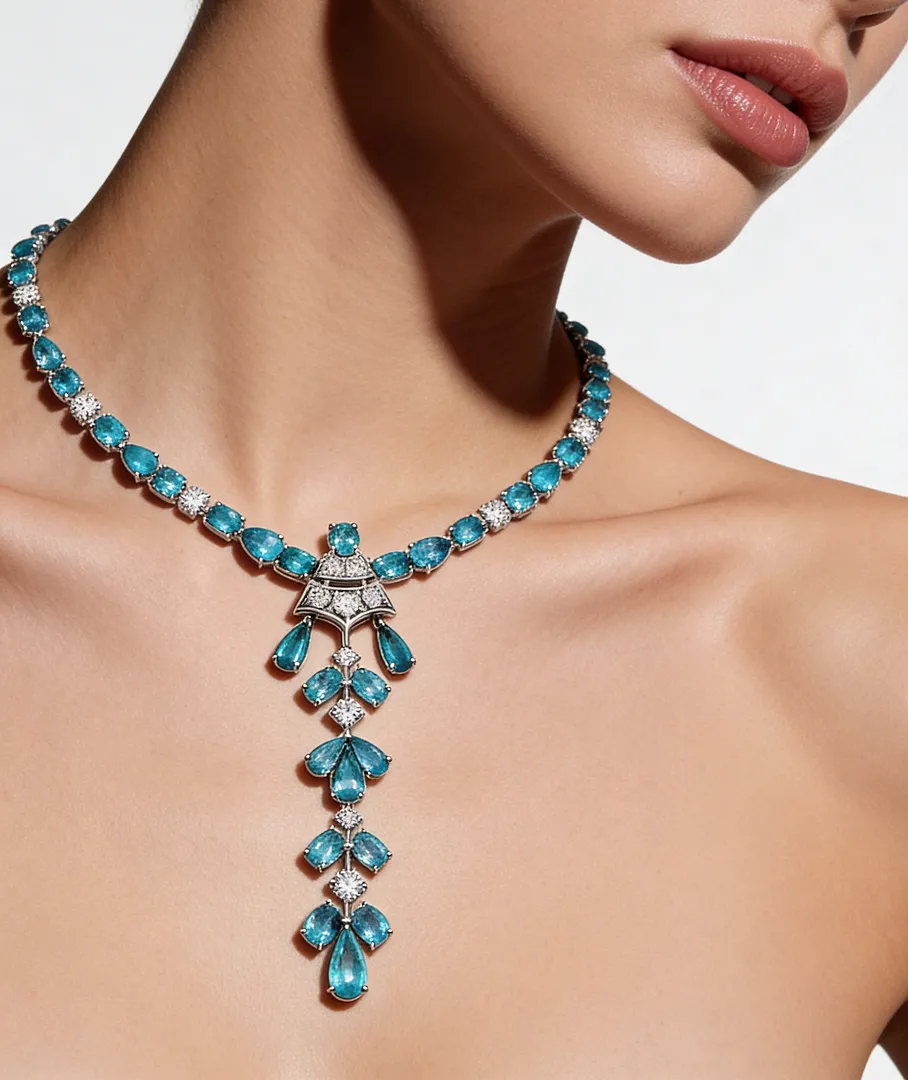
In Paraíba tourmaline, color usually tips the balance. An intensely saturated stone with slight, barely visible inclusions is generally considered more interesting than a light, very clean stone. GIA names color as the decisive factor in Paraíba. The limit lies where inclusions cloud the glow or weaken durability.
At a glance
- Most important factor
- Color, not size or clarity (GIA)
- Cause of color
- Mainly copper and manganese (definition of the laboratory association LMHC)
- When inclusions show
- Above all in light stones with low saturation
- Typical inclusions
- Fluid veils, fine growth tubes, three-phase inclusions
- Mohs hardness
- 7 to 7.5, toughness only fair according to GIA
- Fillings in the report
- SSEF names oil or resin in fissures, including the extent
Why color counts first in Paraíba
The Gemological Institute of America, GIA for short, states for Paraíba tourmaline that color is the decisive factor, not size. Under the definition of the laboratory association LMHC, this color is produced mainly by copper and manganese. It ranges from blue through bluish green to green and requires medium to high saturation. A stone that shows this glow is rare. A clean tourmaline without this color is more common. This leads to the usual weighting: color before clarity, as long as the inclusions do not impair the stone.

The LMHC expressly does not designate tourmalines with only traces of copper and weak saturation as Paraíba tourmaline. A very clean but pale stone may therefore lie in a borderline zone where even the designation is open. With an intensely colored stone with slight inclusions, this question does not arise. Anyone choosing between the two may be comparing two different designations in the laboratory report.
When inclusions show and when they do not
Whether an inclusion is disturbing depends strongly on the color. GIA describes that inclusions are far more visible in stones with a light tone and low saturation. A light Paraíba tourmaline must therefore be very clean to look calm. A richly colored stone can carry slight inclusions without their being noticeable to the naked eye. This is the real reason why the comparison usually favors color.
In tourmalines from São José da Batalha, the first locality in the Brazilian state of Paraíba, GIA researchers found the inclusions typical of tourmaline. Some Paraíba tourmalines also contain native copper, that is, almost pure metal. GIA describes that such inclusions can highlight the interior of the stone. An inclusion is therefore not automatically a flaw. It can even show where the color comes from.
- Fluid inclusions, often as veils or in patterns reminiscent of fingerprints.
- Fine growth tubes running parallel to the optic axis of the crystal.
- Three-phase inclusions, for example fluid, gas, and a crystal in one cavity.
- Native copper as metallic, lustrous specks or platelets.
Color and clarity compared directly
The table places two typical stones side by side, as they often come up for selection: an intensely colored Paraíba tourmaline with slight inclusions and a light, very clean stone. Both are considered by the same criteria. Which one convinces depends in the end on the individual stone, because the position and type of inclusions differ from stone to stone.
| Criterion | Intense, slightly included | Light, very clean |
|---|---|---|
| Color effect | Glowing, defines the entire piece of jewelry | Calm and delicate |
| Designation in the report | Clearly meets the Paraíba definition | May lie at the edge of the definition |
| Visibility of inclusions | Less noticeable in rich color | Every inclusion is more likely to show |
| Durability | Depends on position and type of inclusions | Fewer weak points in the stone |
| What to look for in the report | Fillings in fissures, statements on heating | Designation, note on copper in the comment |
Comparison of two typical stones. What decides remains the individual stone, seen with your own eyes.
Where the limit for inclusions lies
Slight inclusions are no reason to rule out a Paraíba tourmaline. They become a problem where they cloud the color or weaken the stone. The following checkpoints help to classify a stone with inclusions. They do not replace looking at the stone, but they give the conversation with a gemologist a clear direction.

- The inclusions are not visible, or barely visible, to the naked eye at normal reading distance.
- They do not lie directly beneath the table, where the eye falls first.
- No fissure reaches the surface, especially not at corners, edges, or points.
- The color looks clear, not milky or veiled in gray.
- The report does not name significant filling of fissures.
Tourmaline has a Mohs hardness of 7 to 7.5, and GIA rates its toughness as only fair. A fissure at the surface is therefore a real weak point, especially in a ring. GIA advises not to clean tourmaline in ultrasonic or steam cleaners and to protect it from sudden changes in temperature, because they can cause fractures. According to GIA, warm soapy water is the best method. For a stone with inclusions, these rules apply all the more strictly.
What the report says about inclusions and fillings
A clarity grade as for diamonds is not found on the report for a Paraíba tourmaline. The information the Swiss laboratory SSEF lists for its reports covers weight, shape, cut, dimensions, color, identity, treatment, and origin. How clean a stone looks therefore remains a matter of your own judgment. All the more important is what the report says about treatment, because that is where it shows whether the clarity is natural.
SSEF records fillings of fissures with oil or resin and grades their extent as minor, moderate, or significant. A stone that looks very clean may therefore appear clearer through a filling than it is. Paraíba tourmalines are also frequently heated, and according to SSEF it cannot always be determined whether a stone has been heated. How treatments are disclosed is explained in the guide Disclosing treatment in Paraíba.
Good to know
SSEF does not use trade terms such as neon blue or Electric Blue on its reports, but descriptive color statements. Whether a stone glows as such terms promise is something you judge in the stone itself. What the term means is explained in the glossary under neon quality.
Typical mistakes when weighing the two
- Choosing the cleaner stone even though the report does not designate it as Paraíba tourmaline.
- Judging inclusions only under the loupe instead of with the naked eye in the finished piece.
- Overlooking a filling of fissures because the stone looks strikingly clear.
- Viewing the color under only a single light source.
- Choosing a stone with a fissure at the edge for a ring worn every day.
The most common mistake is comparing on paper. Two reports with similar statements can belong to very different stones, because luminosity and the effect of inclusions are not recorded there. Whether a stone is genuine and what its designation means is explained in the guide How to recognize a genuine Paraíba tourmaline. Weighing color against clarity only succeeds when both stones lie side by side.
Which stone suits whom
For a collection that lives on color, the intense stone with slight inclusions is usually the more consistent choice. It shows what Paraíba tourmaline is known for. Anyone planning a ring for every day also makes sure that no inclusion endangers stability. The light, clean stone suits people looking for a delicate color who value a very calm stone. In that case, the report should clearly confirm the designation.
At Vikar Ahmed, Paraíba tourmaline is at the heart of the Maison. The house describes its showroom in Idar-Oberstein as a place of selection; visits take place by appointment. There, color and inclusions can be compared with your own eyes. For Vikar Ahmed, a luminous “Windex Blue” makes the perfect Paraíba, a stone that shines from within. Mention in your request whether color or clarity matters more to you, so the conversation can be focused on it.
Frequently asked questions
What is more interesting for my collection: an intensely colored Paraíba tourmaline with slight inclusions or a lighter, cleaner stone?
For a collection, as a rule, the intensely colored stone. In Paraíba tourmaline, color determines the rank, and slight inclusions are barely noticeable in a rich color. The precondition is that they do not cloud the luminosity and that no fissure reaches the surface.
A larger Paraíba tourmaline with slight inclusions or a smaller, very clean one: which is the wiser choice?
The color of the two stones decides. With the same color, the larger stone with inconspicuous inclusions is often the more interesting choice, because according to GIA Paraíba tourmalines over one carat are rare. If the small stone is clearly stronger in color, more speaks for it. More on this under A large Paraíba or intense neon blue?.
Does a laboratory report grade the clarity of a Paraíba tourmaline?
Not as a grade, as for diamonds. Reports for colored gemstones identify the stone, describe color, dimensions, and weight, and name treatments, and on request also the origin. SSEF records fillings in fissures together with their extent. How clean a stone looks is something you judge in the stone itself.
Are copper inclusions a flaw?
Not necessarily. Some Paraíba tourmalines contain native copper, that is, almost pure metal. GIA describes that such inclusions can accentuate the interior of the stone. Whether they are disturbing depends on their size and position, above all on whether they lie directly beneath the table.
Can a very clean Paraíba tourmaline be treated?
Yes. Fissures can be filled with oil or resin so that the stone looks clearer. SSEF names such fillings in the report and states their extent. Paraíba tourmalines are also frequently heated. This cannot be detected in every case. Vikar Ahmed states the treatment in the consultation and in writing on the certificate and invoice.
Private consultation
Color and clarity are best compared side by side and in changing light. Vikar Ahmed advises in the house's showroom in Idar-Oberstein by appointment, and on request also in a virtual appointment. Your inquiry is handled discreetly. Request an appointment for a private consultation.
Further reading
- Glossary: Paraíba tourmaline
- A large Paraíba or intense neon blue?
- Disclosing treatment in Paraíba
- How to recognize a genuine Paraíba tourmaline
- Gemstone: Paraíba tourmaline
Sources
- GIA: Tourmaline Quality Factors, accessed 2026-11-17
- GIA: Tourmaline Care and Cleaning Guide, accessed 2026-11-17
- SSEF: Paraiba Tourmaline, Erläuterung zum Bericht, accessed 2026-11-17
- LMHC Information Sheet 6: Paraiba Tourmaline (Version 8, 2023), accessed 2026-11-17
- GIA, Gems & Gemology: Gem-Quality Cuprian-Elbaite Tourmalines from São José da Batalha, accessed 2026-11-17
- Vikar Ahmed: Paraíba, accessed 2026-11-16

A personal conversation starts here.
At the showroom in Idar-Oberstein or by video. Vikar Ahmed discusses your ideas, stones and designs with you and answers your questions calmly and in confidence.


Thank you for your request.
Your request will be handled with the utmost attention and discretion. Vikar Ahmed will get back to you.
Your details
Request
–
Occasion
–
Consultation
–
Contact
–
In the meantime
Insights: What is a Paraíba tourmaline? · Engagement ring to your own design: how does it work?
Confidential and without obligation
Back to the pagePrivate consultation
A personal conversation starts here.
- Time for your questions, wishes and ideas
- In the showroom in Idar-Oberstein or by video
- Confidential, discreet and without obligation
Vikar Ahmed · Hauptstraße 111 · 55743 Idar-Oberstein, Germany