

An Emerald Engagement Ring: Is It Worth It?
The emerald is the classic green gemstone, but not a stone for every setting. What puts it at risk in daily life and how a ring protects it for decades.
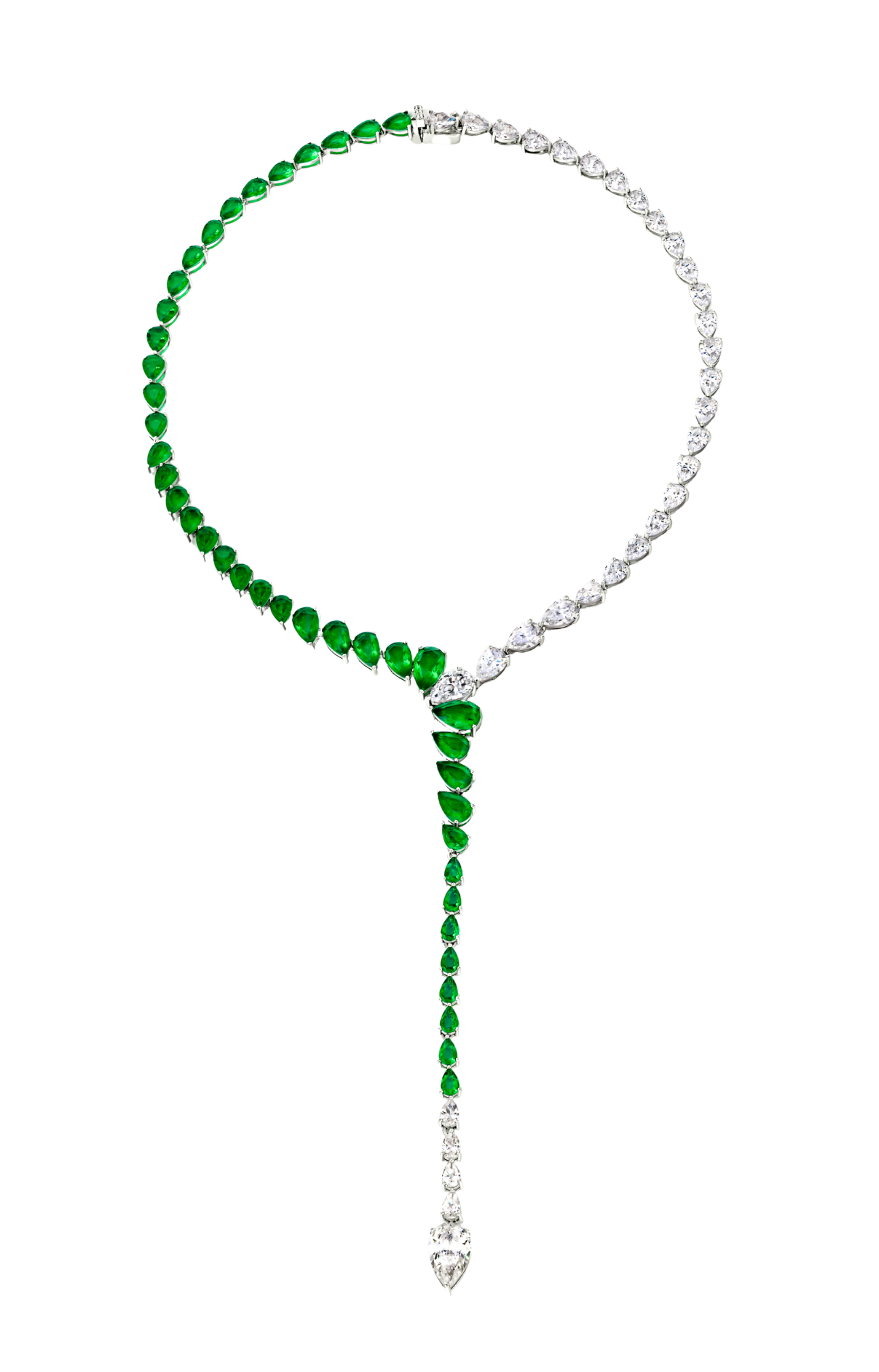
Yes, an emerald is worth it in an engagement ring if the setting and your wearing habits suit it. At 7.5 to 8 on the Mohs scale it is hard enough, but its toughness is rated only fair to good. Almost every emerald has fine fractures, which are usually filled. A protective setting and gentle cleaning keep it beautiful for a long time.
At a glance
- Mineral
- Beryl, green to bluish green variety
- Mohs hardness
- 7.5 to 8 (sapphire 9, diamond 10)
- Toughness according to GIA
- Fair to good, more delicate than ruby and sapphire
- Fracture filling
- By estimates, in 90 percent or more of emeralds
- Protective cut
- Emerald cut with beveled corners
- Cleaning
- Warm soapy water, no ultrasonic, no steam
An emerald lasts when the ring protects it
An emerald is suitable for an engagement ring. The Gemological Institute of America, GIA for short, considers emeralds suitable for all types of jewelry and writes that with proper care they can last for generations. It does, however, call for more care in wear than ruby or sapphire. The reason lies less in hardness than in structure: almost every emerald contains fine fractures and inclusions that make it vulnerable to a hard knock.
What matters for the decision is therefore less whether an emerald lasts than how it is worn. Anyone who works a lot with their hands, plays sports, or never takes the ring off needs a setting that encloses edges and corners. Anyone who removes the ring for rough work has more freedom in the design. The alternative with more reserves for daily life is the sapphire. The comparison Emerald or Sapphire sets both stones side by side.
Hardness and toughness: where the emerald is vulnerable
Hardness and toughness are two different properties. Mohs hardness describes how well a stone resists scratches. The emerald ranks at 7.5 to 8 and is therefore one of the hard gemstones. According to GIA, the scale is not evenly graduated: a diamond at 10 is many times harder than a corundum at 9. Toughness, by contrast, describes how well a stone withstands blows and knocks without chipping or breaking.

In the emerald, toughness is the weak point. GIA rates it fair to good, and that of ruby and sapphire excellent. The fine fractures in the stone act like predrawn break lines. A knock against the edge of a table can widen a fracture or chip off a corner. According to GIA, heat can also enlarge existing fractures. Anyone working on the ring, for example when resizing it, must therefore know that an emerald is set in it.
| Stone | Mohs hardness | Toughness according to GIA |
|---|---|---|
| Diamond | 10 | High, lower along the cleavage planes |
| Sapphire and ruby | 9 | Excellent, no cleavage |
| Spinel | 8 | Good |
| Emerald | 7.5 to 8 | Fair to good |
| Tourmaline, including Paraíba | 7 to 7.5 | Fair |
Data from GIA care guidance and its article on durability. Hardness protects against scratches, toughness against breaks.
How to recognize a fine emerald
With an emerald, color comes first. According to GIA, the most valued stones are bluish green to pure green with vivid saturation and a tone that is not too dark. If a stone looks too yellowish or too bluish, it counts as a different variety of beryl and loses value. If the green is too light, gemologists speak of green beryl rather than emerald. Exactly where this boundary lies is not uniformly defined, even among specialists.
Inclusions are judged differently in an emerald than in a diamond. Most emeralds show them even to the naked eye. According to GIA, eye-clean stones are especially rare. Inclusions only become critical when they visibly reduce transparency and clarity, and then the value drops considerably. For an engagement ring, a second question is worth asking: do larger fractures reach the surface? That is where fillings are applied, and that is where the stone is most at risk from a knock.
- Color: bluish green to pure green, strongly saturated, not too dark.
- Transparency: the stone should look lively, not cloudy or milky.
- Inclusions: visible ones are acceptable as long as they do not reduce clarity and glow.
- Size: according to GIA, emeralds of 1 to 5 carats are common as center stones.
- Report: type and extent of fracture filling, and origin on request.
Filled fractures are the rule
According to estimates cited by GIA, 90 percent or more of emeralds are fracture filled. Fine fractures that reach the surface are filled with a colorless substance so that they are less noticeable. The Swiss Gemmological Institute SSEF names oil, wax, natural resin, and artificial resin as fillers. The treatment is customary but must be disclosed. A treated stone is not a poor stone if the type and extent are known.
The laboratory report grades the filling. SSEF distinguishes none, minor, moderate, and significant amounts, each at the time of testing. Under the guidelines of the Laboratory Manual Harmonisation Committee, LMHC for short, insignificant amounts are not mentioned. GIA also grades clarity enhancement in three levels and does not assign an overall clarity grade to emeralds. According to GIA, fillings of oil or resin can change through light and chemicals. A minor filling is therefore the calmer choice for daily wear.
Good to know
Fillers can seep out under hot steam and can be damaged by ultrasonic cleaning, alcohol, or other solvents. The ultrasonic bath in which rings are often cleaned is unsuitable for an emerald. Mention at every cleaning or repair that an emerald is set in the ring.
Cut and setting protect the stone
The emerald cut is named after the emerald, and there are practical reasons for this. GIA describes the emerald as brittle and usually crossed by distinct fractures. In the emerald cut, the vulnerable corners are beveled and faceted, and there prongs find a comparatively secure hold. At the same time, the cutter can control the color through proportions and the number of facets: deepen a light stone, lighten a dark one.
The setting determines how much of a knock reaches the stone. According to GIA, a bezel setting, a closed metal rim, protects the edges of a stone best and does not catch anywhere. It lets in somewhat less light than prongs. With an emerald this matters less than with a diamond, because its effect comes from its color. Those who prefer prongs place them at the beveled corners. A low setting close to the shank is safer in daily life than a high basket.
Emerald or Paraíba tourmaline in a ring
According to SSEF, a Paraíba tourmaline owes its glowing blue to green mainly to copper and manganese. As a tourmaline, it has a hardness of 7 to 7.5 according to GIA and fair toughness. It is therefore somewhat softer than the emerald and similarly sensitive to knocks. Ultrasonic cleaning and steam are unsuitable for both stones. For Paraíba tourmaline, SSEF also mentions fillings with oil or artificial resin and grades them as it does for emerald.

The greater difference lies in color and treatment. The emerald looks deep and velvety green, the Paraíba tourmaline glows. According to SSEF, Paraíba tourmalines are frequently heated. SSEF designates only stones from Brazil as Paraíba tourmaline. It lists stones of the same color and chemistry from Mozambique or Nigeria as tourmaline, noting that they may also be called Paraíba tourmaline in the trade. More on this in the glossary under Paraíba tourmaline.
Common mistakes with an emerald ring
- Choosing a high, open basket: it exposes the stone to every knock.
- Having the ring cleaned in an ultrasonic bath or with steam.
- Looking only at size: a large, cloudy stone looks weaker than a smaller one with strong green.
- Deciding without a report: without information on the filling, it remains unclear how stable the stone is.
- Keeping the ring on during gardening, sports, or a move.
Two examples show the range. An emerald-cut emerald with minor filling, in a bezel setting of 18k (750) gold placed close to the shank, is well equipped for daily wear. The same stone in a high basket with four prongs and significantly filled fractures needs far more consideration. Between the two lie many solutions, such as a half bezel that encloses only the long sides, or prongs that grip only at the corners.
Emeralds in the in-house atelier of Vikar Ahmed
Among the stones in the pieces of Vikar Ahmed is Colombian emerald. The path leads from the design through a three-dimensional CAD visualization to execution in the in-house atelier in Idar-Oberstein. The visualization lets you check how high the stone sits and how far the metal encloses its edges. For emeralds, Vikar Ahmed accepts only light colorless oiling, no artificial resins and no colored oil. Clients are always told whether and how strongly a stone has been oiled, with an independent certificate for high-quality stones.
Frequently asked questions
An emerald in an engagement ring: is it worth it, or is it too delicate?
It is worth it if you protect the stone. The emerald is hard enough to resist scratches in daily life, but breaks more easily than sapphire or diamond under hard knocks. A low setting, a bezel or prongs at beveled corners, and gentle cleaning make it a ring for many years.
Help me compare engagement rings with Paraíba tourmaline and with emerald.
Both stones live from their color: the emerald from deep green, the Paraíba tourmaline from a glowing blue to green caused by copper. Both are similarly sensitive to knocks, and the tourmaline is somewhat softer. With the emerald, filling fractures is the rule; with Paraíba tourmaline, heating is common.
Who makes emerald engagement rings in Trier?
Vikar Ahmed has no location in Trier. The Maison makes engagement rings individually in its in-house atelier in Idar-Oberstein and advises there by appointment, also virtually. For an emerald ring, what counts is a workshop that masters protective settings and discloses the filling of the stone. More at Jeweler for clients from Trier.
Which engagement rings are better for daily wear, diamond or emerald?
Rings with a diamond. At 10 on the Mohs scale it ranks far above the emerald and, according to GIA figures, is considerably tougher. An emerald is still wearable if the setting protects its edges and the ring is removed during rough work.
Can an emerald ring go in an ultrasonic cleaner?
No. According to GIA, the vibrations can further weaken a stone that is already fractured, and fillings can be damaged. Steam is also unsuitable, because oil or unhardened resin can seep out. Warm soapy water with a soft brush is safe.
What does a minor filling in a laboratory report mean?
At the time of testing, a laboratory found only a small amount of filler in the fractures. SSEF grades minor, moderate, and significant amounts and does not mention insignificant amounts at all. For a ring worn every day, a minor filling is the more stable starting point.
Private consultation
Whether an emerald suits your daily life is best decided with the stone in view and on your hand. Vikar Ahmed advises in the showroom in Idar-Oberstein by appointment or in a virtual meeting, with the utmost attention and discretion. Request a private consultation on an emerald ring.
Further reading
- Glossary: Emerald
- Gemstone: Emerald
- Emerald or sapphire in an engagement ring
- Engagement ring with a colored gemstone
- Engagement rings with a green stone
Sources
- GIA: Emerald Care and Cleaning Guide, accessed 2026-11-17
- GIA: Emerald Quality Factors, accessed 2026-11-17
- GIA: Emerald Description, accessed 2026-11-17
- SSEF: Emerald, Behandlung und Herkunft im Bericht, accessed 2026-11-17
- SSEF: Paraiba Tourmaline, accessed 2026-11-17
- GIA: Tourmaline Care and Cleaning Guide, accessed 2026-11-17
- GIA 4Cs: More Than the Mohs Scale, Gem Durability, accessed 2026-11-17
- GIA 4Cs: Complete Guide to Engagement Ring Settings, accessed 2026-11-17
- GIA: Spinel Care and Cleaning Guide, accessed 2026-11-17
- GIA: Sapphire Care and Cleaning Guide, accessed 2026-11-17
- CIBJO: Introduction to the Blue Books, accessed 2026-11-17

A personal conversation starts here.
At the showroom in Idar-Oberstein or by video. Vikar Ahmed discusses your ideas, stones and designs with you and answers your questions calmly and in confidence.


Thank you for your request.
Your request will be handled with the utmost attention and discretion. Vikar Ahmed will get back to you.
Your details
Request
–
Occasion
–
Consultation
–
Contact
–
In the meantime
Insights: What is a Paraíba tourmaline? · Engagement ring to your own design: how does it work?
Confidential and without obligation
Back to the pagePrivate consultation
A personal conversation starts here.
- Time for your questions, wishes and ideas
- In the showroom in Idar-Oberstein or by video
- Confidential, discreet and without obligation
Vikar Ahmed · Hauptstraße 111 · 55743 Idar-Oberstein, Germany