

Rework an Engagement Ring or Have a New One Made?
A ring that almost fits invites rework. Whether that is wise depends less on the ring than on how much about it is meant to change.
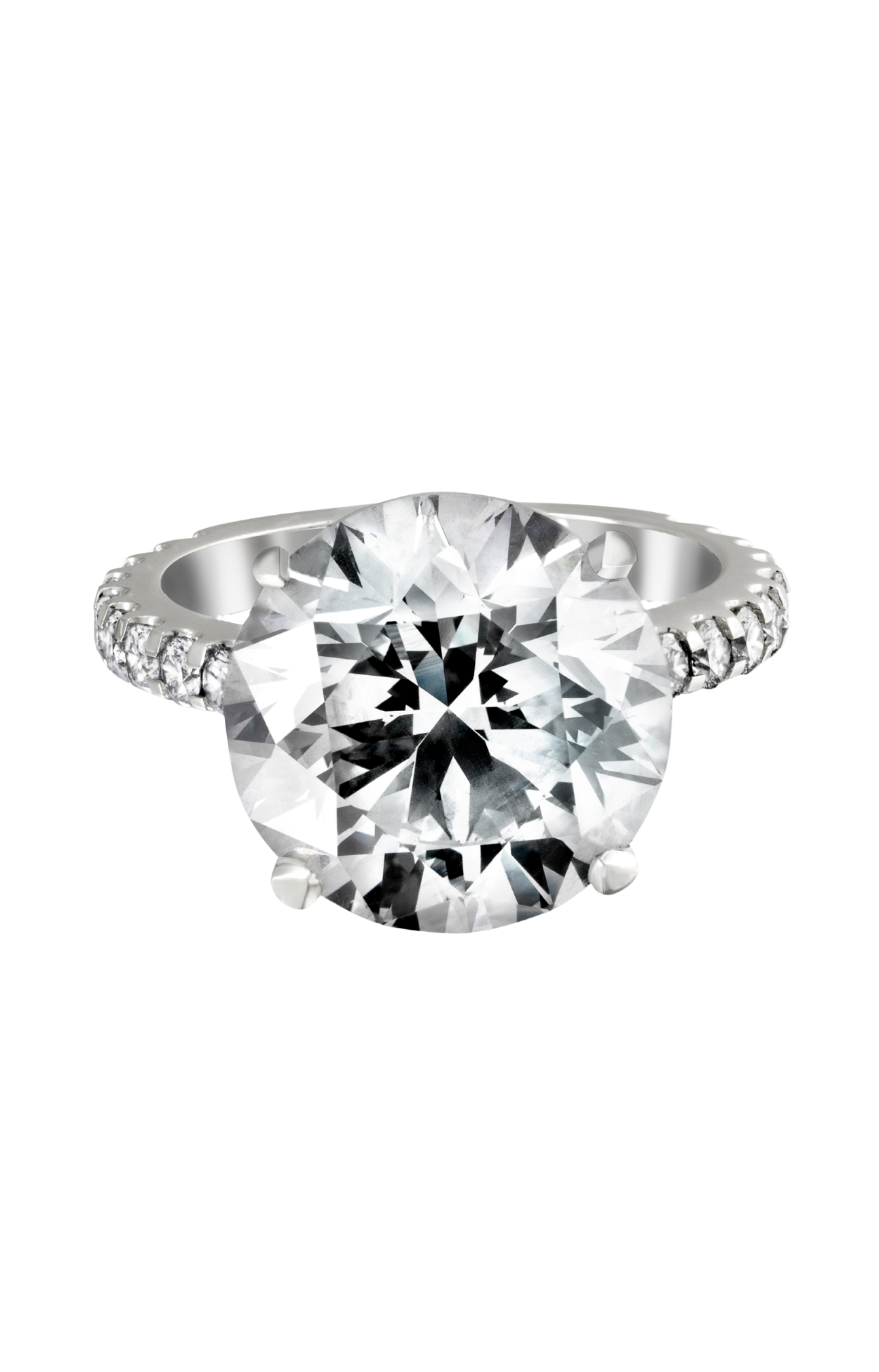
Rework is worthwhile when the change is limited: ring size, new prongs, a different setting for the same stone. If shape, profile, or construction are to change fundamentally, a new ring is usually the better path, because otherwise the work goes against the existing construction. A valuable stone can be reused in either case.
At a glance
- Easy to rework
- Sizing down, renewing prongs, tightening a stone, replacing part of the shank
- Difficult
- Pavé, channel, eternity, twisted shanks, sizing old rings up considerably
- Hardly possible
- Resizing tension settings
- Make new if
- Shape, profile, or construction of the ring are to change fundamentally
- Risk to the stone
- Resetting and heat, especially for treated or heat-sensitive stones
- Legal
- Altering an item is also a contract for work under Section 631 BGB
The decision depends on the extent of the change
A finished ring is a completed construction. Shank, setting, and stone are matched to one another, and material thicknesses and solder joints are fixed. Small interventions fit into this construction. Large interventions work against it: if you want to turn a slender solitaire into a ring with a wide shank and halo, you end up replacing almost everything while keeping solder joints a new ring would not have.
The question is therefore not whether a ring can be reworked, but what of it should remain. If the form remains and one detail changes, rework is the direct path. If only the stone or only the memory remains, a new ring is the more honest choice. In between lies a third path: the stone is removed from the old ring and used in a new setting.
What can easily be changed on a finished ring
- Sizing down: according to GIA, removing metal is easier than adding it.
- Making a slightly loose ring tighter with small gold beads on the inside.
- Rebuilding worn prongs and tightening loose stones.
- Replacing a shank worn thin with a quarter or half shank.
- Refinishing surfaces and adding an engraving.
These interventions are part of the craft of every good workshop. With older rings they are often even necessary: according to GIA, prongs become thin over the years and no longer hold the stone securely, and the back of the shank can be so worn that a section must be replaced. Such work preserves the ring and extends its life without changing its character.

Where rework reaches its limits
Rings with stones set along the shank are difficult to resize. GIA explicitly names pavé, channel settings, and eternity rings, as well as twisted or multi-row shanks. With tension settings, resizing is very difficult according to GIA and sometimes impossible. Antique and vintage rings are especially hard to adjust, above all when they are to become considerably larger or smaller.
A second risk concerns the stone. Rebuilding prongs usually requires removing and resetting the stone, which according to GIA always carries a certain risk. Heat during soldering can harm sensitive stones. Tourmaline, for example, does not tolerate high heat according to GIA. In diamonds, fracture fillings can be damaged during routine repairs, and coated and irradiated stones react sensitively to heat. The question of whether the stone is treated therefore comes before any rework.
Good to know
According to GIA, filler material in a diamond that has darkened cannot be made colorless again. If you are having a ring with an unknown stone reworked, have the stone identified first.
Rework and a new ring compared
| Criterion | Rework | New ring |
|---|---|---|
| Design freedom | Limited by the existing construction | Free, conceived from the stone |
| The stone | Usually stays in its setting | Is carried over or newly chosen |
| Risk to the stone | Present with resetting and heat | Present when removed from the old ring |
| Result | Old ring with new details and solder joints | An entirely new construction |
| Sensible when | Size, prongs, or a detail are the problem | Shape, profile, or construction do not suit |
This assessment applies to the typical case. Whether a particular ring can be reworked is shown only by an examination in a workshop.
If you have not found a suitable ring at all, you are actually facing a different question: take a finished ring and adapt it, or have one made to measure from the start. A ring that has to be reworked before you like it is rarely the better choice. The trade-off between a finished ring and a made-to-measure piece is described in the guide Made to measure or a finished engagement ring.
Reusing the stone
Often the stone is what is truly valuable about a ring, for example in an inherited piece. The obvious path is then to remove it and set it in a new design. The stone determines the construction, not the other way around. How a setting is built around an existing stone is described in the guide An individual setting for your gemstone.

The stone should be identified before the design. GIA warns that older rings do not automatically carry natural stones: they may be synthetic stones, imitations, or stones replaced at a later date. A laboratory report clarifies species, authenticity, and detectable treatments. What a GIA report contains in detail is explained in the glossary. Only with this knowledge can you decide how much effort the new ring deserves.
Contract and hallmark
Legally, rework is also as a rule a contract for work. Besides production, Section 631 of the German Civil Code (BGB) explicitly names the alteration of an item as a possible subject. Record in writing, therefore, exactly what will be changed, what result has been agreed, and how the stone will be handled. For a ring of emotional value, it is worth documenting its condition before the work with photographs.
If metal is added, it should have the same fineness as the ring. Under the German Hallmarking Act (Feingehaltsgesetz), jewelry with a stated fineness must reach the stated number in parts per thousand even when the entire piece is melted down, and the permitted deviation is no more than 10 parts per thousand. A piece of 585 gold in a 750 ring can push the fineness of the entire ring below the stamped number. More on the alloys is under 750 or 585 gold.
How to proceed
- Clarify the goalWhat exactly is wrong with the ring: the size, the setting, the shape? And what should remain in any case?
- Identify the stoneHave species, authenticity, and treatments examined before any decision about heat or resetting.
- Let the workshop judgeWhether rework makes sense or a new ring is better is shown by examining the shank, setting, and solder joints.
- Review the designFor larger changes, check the result in advance as a design or CAD model.
- Agree in writingRecord the scope, the handling of the stone, the fineness, and the date.
Common mistakes in rework
- Having a ring reworked when only the stone still appeals, instead of resetting the stone.
- Wanting an eternity or pavé ring sized up considerably.
- Assuming that the stone in an older ring is natural and untreated.
- Having metal of a different fineness added.
- Agreeing the change only verbally.
Designing anew at Vikar Ahmed
Vikar Ahmed designs engagement rings individually and makes them in Germany. A classic can be developed further or an entirely new idea realized, and every line and every stone can be refined. Custom projects are reviewed on request, and work begins only after acceptance. The house does not take on classic repairs or simple reworking of other makers' pieces. Vikar Ahmed sets a stone you bring only in rare exceptions, for example when it carries high emotional value, after gemological testing and as part of a new design. The guide Individual engagement rings describes the process.
Frequently asked questions
We have not yet found an engagement ring that really suits us. Is it better to have a finished ring reworked or to have a new one made right away?
If no ring truly appeals, a new ring is usually better. Rework is worthwhile for details such as size or prongs, not for a new shape. A ring that only fits after major interventions remains a compromise with old solder joints. Made to measure, it is conceived from the stone.
Can every ring be resized?
No. Rings with pavé, channel settings, or stones all the way around are difficult to change, and tension settings hardly or not at all. Old rings are also difficult if they are to become considerably larger or smaller. Sizing down is in principle easier than sizing up.
Can I have the diamond from an inherited ring reset?
Yes, this is a common and sensible path. Have the stone identified first, because older rings do not always carry natural or untreated stones. The new setting is then constructed around the exact dimensions of the stone and shown as a design before production.
Does rework harm the stone?
It can, if the stone is removed or exposed to heat. Fracture-filled, coated, or irradiated diamonds react sensitively to repairs, and tourmaline does not tolerate high heat. An experienced workshop clarifies in advance whether the stone is treated and plans the work accordingly.
What should I record in writing before rework?
Exactly what will be changed, how the stone will be handled, which fineness applies to added metal, and by when the work will be finished. Photographs of the condition before the work help if questions arise later. Legally, altering a ring is also a contract for work.
Private consultation
Whether your ring or your stone can be the starting point for something new is best clarified in conversation and with the piece itself. Vikar Ahmed advises in the showroom in Idar-Oberstein by appointment, and in a virtual appointment on request. Your inquiry is treated discreetly. Request a private consultation.
Further reading
- The setting of an engagement ring
- Vintage style or modern solitaire
- Glossary: Treatment
- Seeing the engagement ring as a CAD model first
Sources
- GIA 4Cs: How to Shop for Antique and Vintage Engagement Rings, accessed 2026-11-17
- GIA 4Cs: How to Determine Ring Size (Größenänderung), accessed 2026-11-17
- GIA 4Cs: Complete Guide to Engagement Ring Settings, accessed 2026-11-17
- GIA 4Cs: Diamond Treatments and What They Mean to You, accessed 2026-11-17
- GIA: October Birthstones, Tourmaline, accessed 2026-11-17
- BGB § 631: Vertragstypische Pflichten beim Werkvertrag, accessed 2026-11-17
- Gesetz über den Feingehalt der Gold- und Silberwaren (FeinGehG), accessed 2026-11-17
- Vikar Ahmed: Verlobungsringe, accessed 2026-11-16
- Vikar Ahmed: Kontakt und Custom Order, accessed 2026-11-16

A personal conversation starts here.
At the showroom in Idar-Oberstein or by video. Vikar Ahmed discusses your ideas, stones and designs with you and answers your questions calmly and in confidence.


Thank you for your request.
Your request will be handled with the utmost attention and discretion. Vikar Ahmed will get back to you.
Your details
Request
–
Occasion
–
Consultation
–
Contact
–
In the meantime
Insights: What is a Paraíba tourmaline? · Engagement ring to your own design: how does it work?
Confidential and without obligation
Back to the pagePrivate consultation
A personal conversation starts here.
- Time for your questions, wishes and ideas
- In the showroom in Idar-Oberstein or by video
- Confidential, discreet and without obligation
Vikar Ahmed · Hauptstraße 111 · 55743 Idar-Oberstein, Germany