

Which Setting Protects the Stone in an Engagement Ring?
The setting decides how much of the stone is visible and how well it survives impacts. Both cannot be maximized at once, but they can be weighed carefully.
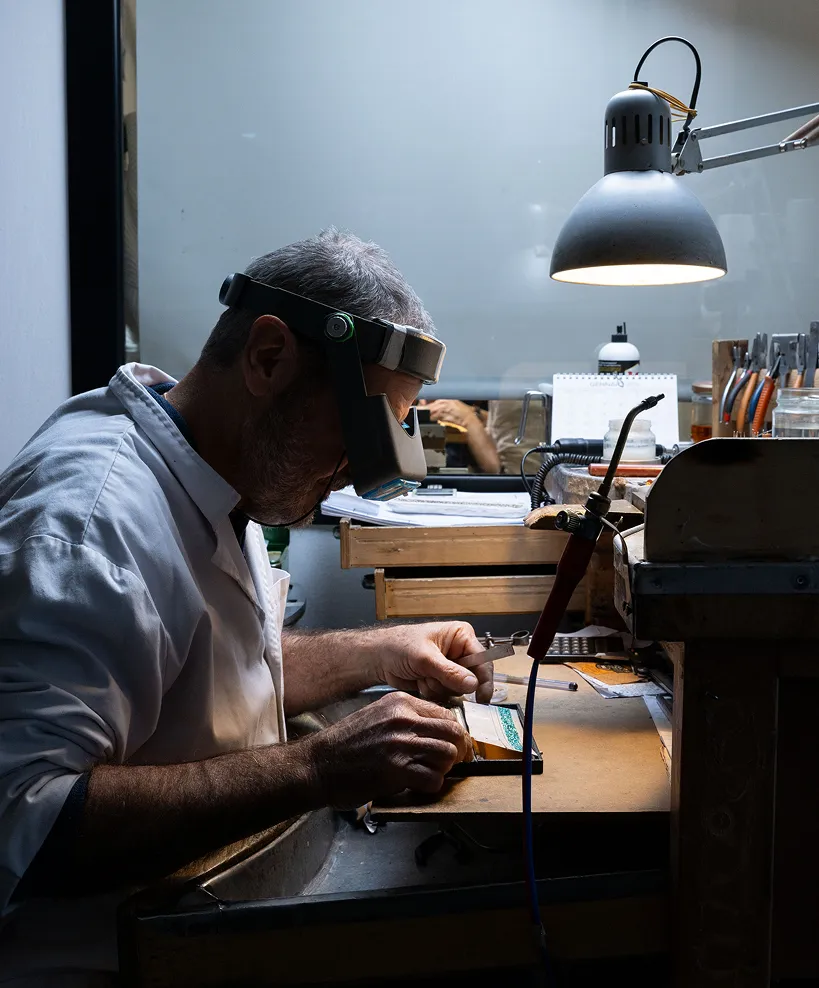
A bezel setting, in which a metal rim encloses the stone completely, offers the best protection. A stone set flush into the shank is also very durable. Prongs show more of the stone and let in more light, but protect less and must be checked regularly. Points and corners need V-shaped prongs.
At a glance
- Best protection
- Bezel: metal rim around the entire stone, protects well against chips according to GIA
- Very durable
- Flush setting, stone sits level in the shank
- Most brilliance
- Prong setting, usually with four or six prongs
- Points and corners
- V-shaped prongs or bezel
- Less suited to impacts
- Tension setting and bar setting
- Care
- Check prongs regularly, have stones tightened as needed
The bezel protects the stone best
In a bezel setting, a metal rim encloses the edge of the stone all the way around. The Gemological Institute of America, GIA for short, credits it with good protection against chips and everyday wear. It catches on clothing less often than a prong setting. The price: the metal rim takes away some light and covers a narrow strip of the stone. In a diamond, the sparkle therefore appears somewhat calmer; in a colored stone, the difference is usually hardly noticeable.

A half bezel leaves parts of the edge free, for example at the sides. It is a compromise between protection and openness. Similarly durable to the bezel is the flush setting, in which the stone is set level into the shank. According to GIA it is very durable and hardly catches, but lets in less light and needs a wider, thicker shank. It is therefore rare for large center stones, but ideal for small accents.
Prongs: more light, less protection
The prong setting is the most common setting for engagement rings. Narrow metal claws hold the stone and, according to GIA, let in the most light, and the stone remains almost entirely visible. Most round brilliants sit in four or six prongs, while larger stones need more. More prongs hold the stone at more points, fewer prongs show more of it. Six prongs emphasize a round shape, four make it look somewhat more square.
The shape of the prong also matters. GIA distinguishes rounded prongs, which are least conspicuous, tapered claws for larger stones, and V-shaped prongs, which grip pointed corners and so reduce chipping. A basket setting with horizontal bars beneath the stone stabilizes the prongs and prevents them from bending open. The drawback of all prongs: they can catch on fabric and must be checked regularly.
The settings compared
| Setting | Protection for the stone | Light and visibility | Care and sizing |
|---|---|---|---|
| Bezel | Very good, edge protected all around | Somewhat less light | Hardly catches |
| Flush | Very good, stone level in the shank | Less light than a bezel | Needs a wide, thick shank |
| Prongs | Moderate, edges exposed | Most light, stone almost fully visible | Check prongs regularly |
| Channel | Good, edges between metal walls | Good for rows of small stones | Resizing difficult |
| Tension | Low under hard impacts | Stone widely exposed | Resizing very difficult |
| Bar | Low, stones more exposed | Open between the bars | Resizing difficult |
Assessment based on GIA information on setting types. The execution of an individual piece can change protection and durability considerably.
The tension setting holds the stone solely by the pressure of the shank. GIA considers it suitable only for hard stones such as diamond and sapphire, and warns that a hard blow can shift or loosen the stone. In a bar setting, stones sit between vertical metal bars and, according to GIA, are more vulnerable to impacts than in a channel setting. Both settings look modern, but require mindful wear.
Height and construction change the protection
Besides the type of setting, what matters is how high the stone sits above the finger. In a cathedral setting, metal arches raise the center stone and give it support. According to GIA, however, the raised construction catches more easily on clothing or objects. A low-set stone is better protected in everyday life, but looks flatter. If you work a lot with your hands, you should therefore decide on the height early in the design.

A halo of small stones around the center stone makes it appear larger. According to GIA, the many small stones need more care so that they stay secure and clean. In pavé, tiny beads or prongs hold the stones; here too, occasional checks are needed, and the size is harder to change. If you want a halo, ask about the setting of the small stones, not only about the center stone.
Shape and stone determine the setting
Pointed shapes are most vulnerable at their points. For a pear shape, GIA recommends a V-shaped prong at the point; for a marquise, V-prongs at both ends. Triangular stones need a protective prong setting so that the corners do not chip. According to GIA, small heart shapes keep their shape best in a bezel or with three prongs. Which shape leads to which effect is described in the guide Which cut for the engagement ring?.
The stone itself also plays a part. Hardness describes resistance to scratches, toughness the resistance to impacts. Diamond is the hardest gemstone, but not the toughest. According to GIA, diamonds with a very thin girdle, meaning a thin edge, chip more easily. Delicate stones such as tanzanite benefit from a setting with plenty of metal. Which blue stones are durable enough is shown in the guide Blue stones for the engagement ring.
How the setting stays secure
Every setting ages. According to GIA, prongs wear down and occasionally need to be rebuilt, and stones need to be tightened. A loose diamond can even grind through the metal of its prongs, because it is harder than any alloy. Ultrasonic baths can loosen stones, so the setting should be checked before cleaning. How a setter sets a stone by hand is described in the guide Hand setting.
- Hold the ring against the light and check whether all prongs sit evenly.
- Tap the stone lightly: a click or wobble points to a loose setting.
- Run the ring along fabric: if it catches, a prong is sticking out.
- Have the ring checked by a specialist workshop before ultrasonic or steam cleaning.
- Store diamond rings separately from softer stones so that they do not scratch them.
Common mistakes when choosing the setting
- Choosing a high, open setting although the hands do a lot of work.
- Doing without V-prongs at the points of a pear or marquise.
- Placing a delicate colored stone in a tension or bar setting.
- Choosing a ring with pavé along the entire shank although the ring size is uncertain.
- Not having the prongs checked for years.
Stone setting at Vikar Ahmed
At Vikar Ahmed, gemstone setting is one of the steps carried out in the in-house atelier in Idar-Oberstein, by goldsmiths with decades of experience. Engagement rings are individually designed, and every line and every stone can be refined. The setting is visualized three-dimensionally before production so that height and prongs can be checked. As the most common techniques, the house names the prong setting, which Vikar Ahmed prefers for valuable center stones, the bezel or half bezel for everyday wear, and pavé and micro pavé, also as a halo. Stones are set under the microscope, and after handover the house recommends having the setting checked about every two years.
Frequently asked questions
Which setting best protects the stone in an engagement ring?
The bezel, in which a metal rim encloses the stone all the way around. It protects the delicate edge from impacts and hardly catches. A flush setting is almost as durable. If you want more light in the stone, choose prongs and have them checked regularly.
How do you recognize a jeweler for an engagement ring with an individual setting?
By the fact that the workshop does its own setting, shows the setting before production, and constructs it to suit the stone. Vikar Ahmed has no location in Bad Kreuznach, but makes pieces and advises in Idar-Oberstein. Information for clients from the town is under Jeweler for Bad Kreuznach.
Does a diamond sparkle less in a bezel setting?
Somewhat. The metal rim covers a narrow strip and takes away light from the side, so the sparkle appears calmer than in prongs. In a well-cut stone, the difference is only slightly noticeable from above. In return, the edge is considerably better protected.
Four or six prongs: which holds the stone more securely?
Six prongs hold the stone at more points and distribute the hold better. Four prongs show more of the stone and look lighter. More prongs are customary for large stones. With both, what matters is that they sit evenly.
Is a tension setting suitable for everyday wear in an engagement ring?
Only to a limited extent. The tension setting holds the stone solely by the pressure of the shank and is suitable only for hard stones such as diamond or sapphire. A hard blow can shift or loosen the stone. The ring size can hardly be changed, if at all.
How do I know that a prong needs to be reworked?
When the ring catches on fabric, a prong visibly sticks out or looks thinner than the others, or the stone clicks when tapped lightly. A specialist workshop should then check the setting before the stone is lost. This check always makes sense before ultrasonic cleaning.
Private consultation
Which setting suits your stone and your everyday life is best clarified with the stone and in the design. Vikar Ahmed advises in the showroom in Idar-Oberstein by appointment, and in a virtual appointment on request. Your inquiry is treated discreetly. Request a private consultation.
Further reading
- An individual setting for your gemstone
- Glossary: Solitaire
- Seeing the engagement ring as a CAD model first
- Which gold rings last longest
Sources
- GIA 4Cs: Complete Guide to Engagement Ring Settings, accessed 2026-11-17
- GIA 4Cs: More than the Mohs Scale, Gem Durability, accessed 2026-11-17
- GIA 4Cs: Expert Tips for Buying Fancy Shaped Diamonds, accessed 2026-11-17
- GIA 4Cs: Mohs Scale of Hardness, accessed 2026-11-17
- GIA: December Birthstones, Tanzanite, accessed 2026-11-17
- Vikar Ahmed: Bespoke, Designprozess, accessed 2026-11-16
- Vikar Ahmed: Verlobungsringe, accessed 2026-11-16

A personal conversation starts here.
At the showroom in Idar-Oberstein or by video. Vikar Ahmed discusses your ideas, stones and designs with you and answers your questions calmly and in confidence.


Thank you for your request.
Your request will be handled with the utmost attention and discretion. Vikar Ahmed will get back to you.
Your details
Request
–
Occasion
–
Consultation
–
Contact
–
In the meantime
Insights: What is a Paraíba tourmaline? · Engagement ring to your own design: how does it work?
Confidential and without obligation
Back to the pagePrivate consultation
A personal conversation starts here.
- Time for your questions, wishes and ideas
- In the showroom in Idar-Oberstein or by video
- Confidential, discreet and without obligation
Vikar Ahmed · Hauptstraße 111 · 55743 Idar-Oberstein, Germany