

Blue Stones for the Engagement Ring
Next to the colorless diamond, blue is the most frequent choice for an engagement ring. Yet blue stones differ greatly in what they withstand in everyday life.
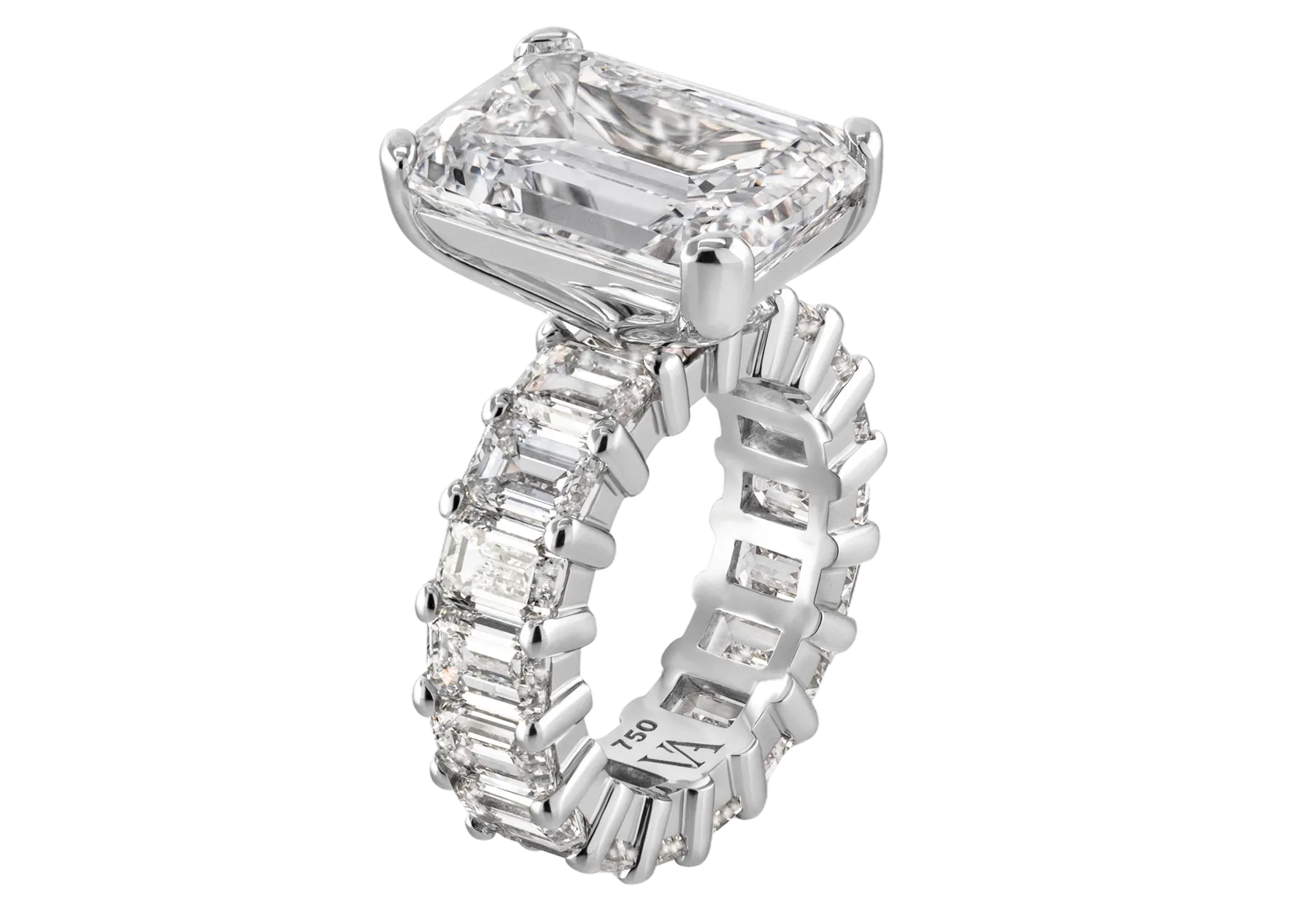
For an engagement ring without a diamond that is worn every day, blue sapphire is the best choice: it has a hardness of 9, excellent toughness, and no cleavage. Spinel and aquamarine are good alternatives, as is Paraíba tourmaline in a protective setting. Tanzanite and blue topaz are more delicate and better suit rings that are not worn every day.
At a glance
- Most durable choice
- Blue sapphire, Mohs hardness 9, excellent toughness, no cleavage
- Good alternatives
- Spinel (hardness 8), aquamarine (7.5 to 8)
- In a protective setting
- Paraíba tourmaline and other tourmalines (7 to 7.5)
- For special occasions
- Tanzanite (6 to 7), blue topaz (8, but poor toughness)
- Most common treatment
- Heating, common and permanent in sapphire, the rule in tanzanite
- Laboratory report
- States the species, natural or synthetic, and detectable treatments
Sapphire is the safest blue choice
Blue sapphire belongs to the mineral corundum, like ruby. It reaches a hardness of 9 on the Mohs scale, directly behind diamond. Even more important for a ring: the Gemological Institute of America, GIA for short, describes its toughness as excellent and lists no cleavage, meaning no tendency to break along a plane when struck. GIA therefore considers sapphire explicitly suitable for rings worn every day.
According to GIA, the most highly valued sapphires are velvety blue to slightly violetish blue in medium to medium-dark tones. The saturation, meaning the strength of the color, should be as strong as possible without the stone looking dark and lifeless. Very dark stones in navy or midnight blue are considered less desirable. According to GIA, blue sapphires come from Madagascar, Tanzania, Sri Lanka, Myanmar, and Australia, among other sources. More on the stone itself is under Sapphire.
What a stone in a ring must withstand
Three properties decide whether a stone can withstand everyday life on the finger. Hardness describes resistance to scratches. Toughness describes how well a stone survives an impact without chipping or cracking. Stability describes how it reacts to heat, light, and chemicals. A stone can be hard and still brittle. Blue topaz is the clearest example: hardness 8, but according to GIA poor toughness.

The Mohs scale looks even, but it is not. According to GIA, diamond at hardness 10 is many times harder than corundum at hardness 9. A ring knocks against door handles, table edges, and bags every day. The engagement ring is therefore the piece of jewelry held to the highest demands. Stones that are entirely sufficient for earrings or pendants can show abraded edges or small chips in a ring after a few years.
The blue stones compared
| Stone | Mohs hardness | Usual treatment | In an engagement ring |
|---|---|---|---|
| Sapphire | 9 | Heating widespread and permanent | Suitable for daily wear |
| Spinel | 8 | Not stated in the source, clarify in the report | Hard, choose the setting by shape |
| Aquamarine | 7.5 to 8 | Heating for a bluer tone | Suitable for daily wear according to GIA |
| Paraíba tourmaline | 7 to 7.5 | Clarify in the report | In a protective setting |
| Blue topaz | 8, poor toughness | Almost always treated | Beware of chips |
| Tanzanite | 6 to 7 | Usually heated | Not for daily wear according to GIA |
Hardness and treatments according to GIA. Whether an individual stone is treated is shown only by a laboratory report.
Aquamarine, spinel and Paraíba as alternatives
Like emerald, aquamarine is a color variety of the mineral beryl. Its color ranges from deep greenish blue to light, slightly greenish blue, and a moderately strong, dark blue is especially prized. With a hardness of 7.5 to 8, it is durable enough for daily wear according to GIA. It appears lighter and cooler than a sapphire and shows its color best in larger stones. The guide Engagement ring with aquamarine covers this in more detail.
Spinel is less well known, but hard: GIA gives a hardness of 8. Spinel occurs in red, orange, pink, violet, blue, and black. According to GIA, cobalt blue is among its most sought-after colors. Anyone looking for a vivid, rather cool blue who wants a stone beyond the familiar names will find a serious alternative to sapphire here. Whether the individual stone is treated is clarified by the laboratory report.
Paraíba tourmaline glows in neon green, blue, and violet. According to GIA, these stones came onto the market in the late 1980s from the Brazilian state of Paraíba, and their color comes from traces of copper. Since the early 2000s, copper-bearing tourmalines have also been found in Mozambique and Nigeria. Tourmaline has a hardness of 7 to 7.5 and according to GIA is usually suitable for daily wear, but heat can damage it. A setting that protects the edges is advisable.
Tanzanite and blue topaz need care
Tanzanite is a transparent variety of the mineral zoisite and, according to GIA, comes from only one source: the Merelani Hills in northern Tanzania. Its blue to violet usually results from heating a brownish starting material, and the result is permanent. With a hardness of 6 to 7, it wears easily and can crack with sudden changes in temperature. GIA does not recommend it in a ring for daily wear, but as jewelry for special occasions.
According to GIA, blue topaz is hardly ever naturally colored. Almost always the color is produced by irradiating and heating colorless topaz, and the result is permanent. Topaz has a hardness of 8, but poor toughness, and can chip or crack from an impact. For an engagement ring meant to last for decades, it can therefore only be recommended with a very protective setting and mindful wear. More about tanzanite is in the glossary.
Treatments must be named openly
Many blue stones are treated, and that is no flaw as long as it is stated openly. In sapphire, heating is according to GIA an accepted treatment with a permanent effect, but it must be disclosed. According to GIA, an independent report that finds no evidence of heating in a fine sapphire increases rarity and value. What a treatment means in detail is explained in the glossary.

Less common is lattice diffusion, in which an element is introduced into the stone with heat and chemicals. Such sapphires can be strongly colored, but according to GIA they are considered less valuable. In some cases the color sits so shallow that it can be lost during repolishing or through a chip. Fracture filling and dyeing also occur and require special care: filled stones, for example, do not tolerate mild acids such as lemon juice.
GIA does not issue quality grades for sapphires as it does for diamonds. Its report describes the properties of the stone, whether it is natural or laboratory-grown, which treatments are detectable, and on request the origin. For a blue stone in an engagement ring, such a report is the most reliable basis for comparing offers honestly.
Setting and care for blue stones
The more delicate the stone, the more the setting has to do. A bezel setting, meaning a metal rim around the entire stone, protects well against chips according to GIA. For shapes with points such as pear or marquise, V-shaped prongs at the points help. An aquamarine or sapphire can sit openly in prongs, while a tanzanite or topaz benefits from more metal. Which setting does what is explained in the guide The setting of an engagement ring.
- Sapphire: ultrasonic and steam cleaning are usually safe according to GIA if the stone is untreated, heated, or diffusion-treated.
- Filled or dyed sapphire: clean only with a damp cloth.
- Aquamarine: ultrasonic and steam cleaning are usually possible as long as the stone has no fractures or liquid inclusions.
- Tourmaline and topaz: no ultrasonic, no steam, no high heat.
- Tanzanite: never ultrasonic or steam, warm soapy water is sufficient.
Common mistakes with blue stones
- Choosing a stone by color alone without considering hardness and toughness.
- Taking a very dark sapphire to be especially valuable: a blue that is too dark looks almost black on the finger.
- Not asking about treatments, or accepting a report that says nothing about them.
- Setting tanzanite or topaz openly and high, although the ring is meant to be worn every day.
- Placing a ring with tourmaline or tanzanite in an ultrasonic bath.
Blue colored stones at Vikar Ahmed
Paraíba tourmaline is at the heart of the Maison, with a focus on Brazilian stones, plus stones from Mozambique and Nigeria. For Vikar Ahmed, a perfect Paraíba is defined by a glowing blue that seems to shine from within. Among blue stones, the house also regularly works with sapphire, aquamarine, and tanzanite, as well as Lagoon tourmaline. Engagement rings are individually designed and made in Germany. It is best to name the blue stones you would like to compare at the appointment when you make your inquiry. General guidance on choosing a colored stone is in the guide Engagement ring with a colored gemstone.
Frequently asked questions
Which blue stones are suitable for an engagement ring without a classic diamond?
Blue sapphire is best, because it is hard, tough, and has no cleavage. Spinel and aquamarine are also durable enough for everyday life. A Paraíba tourmaline is suitable if the setting protects its edges. Tanzanite and blue topaz are beautiful, but tolerate daily wear in a ring less well.
Is a heated sapphire worth less than an untreated one?
As a rule yes, if all other characteristics are equal. Heating is accepted and permanent in sapphire, so a heated stone is not a poor stone. An independent report with no evidence of heating, however, makes a fine sapphire rarer and therefore more valuable.
Can a tanzanite in an engagement ring be worn every day?
GIA advises against it. Tanzanite has a hardness of only 6 to 7, wears easily, and can crack with sudden changes in temperature. If you choose it nonetheless, plan a protective setting and take the ring off for housework, sports, and in the kitchen.
Is the color of blue topaz natural?
Almost never. According to GIA, blue topaz is usually produced by irradiating colorless topaz and then heating it. The color is permanent. With a hardness of 8 the stone is scratch-resistant, but has poor toughness and can chip from a hard impact.
What does a laboratory report show for a blue sapphire?
Whether the stone is corundum, whether it is natural or laboratory-grown, and which treatments are detectable, such as heating or diffusion. On request, it states the probable origin. GIA does not issue grades for color or clarity for sapphires as it does for diamonds.
How do I clean a ring with a blue colored stone correctly?
Warm soapy water and a soft brush are safe for all blue stones. Only untreated or heated sapphires and fracture-free aquamarines tolerate ultrasonic and steam cleaning. Tourmaline, topaz, and tanzanite never belong in an ultrasonic bath, and filled stones only get a damp cloth.
Private consultation
Which blue stone suits your everyday life and your ideas is best clarified with the stone itself. Vikar Ahmed advises in the showroom in Idar-Oberstein by appointment, and in a virtual appointment on request. Your inquiry is treated discreetly. Request a private consultation.
Further reading
- Engagement rings with sapphire
- Gemstone: Aquamarine
- Gemstone: Tanzanite
- Glossary: Lagoon tourmaline
- Engagement ring with a green stone
Sources
- GIA: September Birthstone, Sapphire (Härte, Zähigkeit, Behandlungen, Pflege), accessed 2026-11-17
- GIA: Sapphire Buyer's Guide, accessed 2026-11-17
- GIA: Sapphire Description (Herkünfte), accessed 2026-11-17
- GIA: December Birthstones, Tanzanite, accessed 2026-11-17
- GIA: Tanzanite (Mineral, Härte, Herkunft), accessed 2026-11-17
- GIA: March Birthstone, Aquamarine, accessed 2026-11-17
- GIA: Aquamarine, accessed 2026-11-17
- GIA: Aquamarine Description (Erhitzen), accessed 2026-11-17
- GIA: Spinel, accessed 2026-11-17
- GIA: October Birthstones, Tourmaline und Paraíba, accessed 2026-11-17
- GIA: November Birthstones, Topaz, accessed 2026-11-17
- GIA 4Cs: More than the Mohs Scale, Gem Durability, accessed 2026-11-17
- GIA 4Cs: Mohs Scale of Hardness, accessed 2026-11-17
- GIA 4Cs: Complete Guide to Engagement Ring Settings, accessed 2026-11-17
- Vikar Ahmed: Verlobungsringe, accessed 2026-11-16
- Vikar Ahmed: Collections, accessed 2026-11-16

A personal conversation starts here.
At the showroom in Idar-Oberstein or by video. Vikar Ahmed discusses your ideas, stones and designs with you and answers your questions calmly and in confidence.


Thank you for your request.
Your request will be handled with the utmost attention and discretion. Vikar Ahmed will get back to you.
Your details
Request
–
Occasion
–
Consultation
–
Contact
–
In the meantime
Insights: What is a Paraíba tourmaline? · Engagement ring to your own design: how does it work?
Confidential and without obligation
Back to the pagePrivate consultation
A personal conversation starts here.
- Time for your questions, wishes and ideas
- In the showroom in Idar-Oberstein or by video
- Confidential, discreet and without obligation
Vikar Ahmed · Hauptstraße 111 · 55743 Idar-Oberstein, Germany