

Aquamarine in an Engagement Ring for Every Day
Aquamarine brings a light, watery blue to the finger. It is harder than many colored gemstones, yet it is not a stone to be worn carelessly.
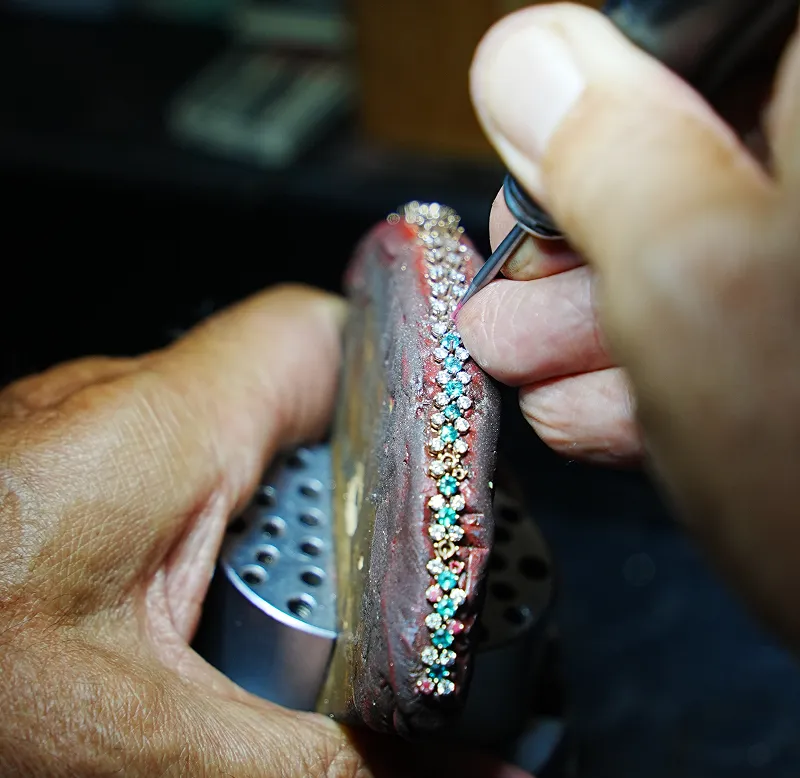
An aquamarine is suitable for an engagement ring worn every day if the setting protects its edges. With a hardness of 7.5 to 8 it is fairly scratch resistant. Rings with a bezel or sturdy prongs and a stone that is not set too high hold up best. It should avoid heat and hard knocks. A strong blue usually appears only in larger stones.
At a glance
- Mineral
- Beryl, like emerald. Aquamarine is the greenish blue to blue variety
- Hardness
- 7.5 to 8 on the Mohs scale
- Usual color
- Light, pastel greenish blue
- Most valuable color
- Dark blue to slightly greenish blue with strong saturation
- Clarity
- Most faceted aquamarines are eye-clean
- Possible treatment
- Heating, which reduces the greenish component and makes the stone bluer
Aquamarine withstands daily wear with the right setting
According to the Gemological Institute of America, GIA for short, aquamarine has a hardness of 7.5 to 8 on the Mohs scale. It is therefore harder than quartz, which has a hardness of 7 on the same scale, and resists scratches well in daily wear. GIA calls it a durable jewelry stone as long as it is treated with care. It should avoid scratches and hard knocks. A ring for every day therefore needs a setting that protects its edges.
Compared with other blue stones, aquamarine lies in the middle. Sapphire, with a hardness of 9, is considerably more durable, and tourmaline, at 7 to 7.5, is somewhat softer. If you are looking for a ring that comes along to sports, gardening and travel without a second thought, a sapphire is the better choice. If you love the light blue of aquamarine and take the ring off for rough work, you will find a good companion in it. More options are shown in the guide Engagement rings with a blue stone.
What defines the color of an aquamarine
According to GIA, aquamarine is the greenish blue to blue variety of the mineral beryl, to which emerald also belongs. Most aquamarines show a light, pastel greenish blue. The most valuable is considered a dark blue to slightly greenish blue with moderate to strong saturation. As a general rule, the purer and more intense the blue, the more highly the stone is valued.

Color is closely linked to size. According to GIA, small aquamarines are rarely saturated enough to look strong. Cut stones usually show an intense, dark blue only from about five carats. For an engagement ring, this means a trade-off. A smaller stone shows a delicate, light blue that suits a calm ring. If you are looking for a strong blue, you need a larger stone and a setting that holds it securely.
Clarity, cut and size
According to GIA, most faceted aquamarines are eye-clean. Stones with visible inclusions are mostly made into cabochons, beads or carvings. This is also due to the nature of the mineral: according to GIA, aquamarine crystals are often large, relatively clean and well formed. For an engagement ring, you can therefore expect a stone in which no inclusions can be seen without a loupe.
Because the rough material is comparatively plentiful, well-cut aquamarines are fairly common according to GIA. The stone can be cut into almost any shape. Step cuts such as the emerald cut emphasize clarity and the calm blue, while oval and round brilliant cuts bring more liveliness. With a light stone, a well-proportioned cut helps to distribute the color evenly across the surface.
Treatment and heat
Aquamarines can be heated. According to GIA, controlled heating can remove the greenish color component, after which the stone usually looks bluer. Like every treatment, heating must be disclosed when a gemstone is passed on. According to GIA, fillings in fractures are rare in aquamarine. A filled stone should only be cleaned with warm soapy water.
In a ring that is worn, the rule is: according to GIA, heat is not recommended for aquamarine. This also applies to work on the ring itself. If a workshop has to renew a prong or change the size, it should know which stone is set so that it keeps the heat away from the stone. The color of aquamarine is stable to light. Hydrofluoric acid can attack it, but it plays hardly any role in daily life.
Good to know
Whether an aquamarine has been heated cannot be seen in the stone with the naked eye. A laboratory report clarifies which stone it is. The question of treatment belongs before every commission.
Which setting protects an aquamarine
For a ring worn every day, what matters most is how well the setting protects the edges of the stone. According to GIA, a bezel encloses the edge completely, protects very well against chipping and does not catch on fabrics. Prongs let more light into the stone, which makes the color of a light aquamarine look livelier. They should be sturdy and checked regularly. More on this under prong setting.
| Setting | Protection for the stone | Light entry | In daily wear |
|---|---|---|---|
| Prongs | Good if sturdy and checked regularly | High | Can catch on fabrics |
| Bezel | Very good, edge fully enclosed | Somewhat lower | Smooth, good for active hands |
| Halo with diamonds | Frame offers partial protection | High | More small stones to care for |
| Low setting | Less exposed surface | Somewhat lower | Catches less often |
Prongs, bezel and halo according to GIA's descriptions. The choice also depends on the shape and size of the stone.
A ring of small diamonds around the aquamarine, the so-called halo, frames the light stone and, according to GIA, makes it look larger. It brings additional sparkle but needs more care so that all the small stones stay secure and clean. For people who work a lot with their hands, a simple bezel is often the better choice. How the setting affects the stone in daily wear is described in the guide The setting of an engagement ring.
Caring for an aquamarine ring
- According to GIA, warm soapy water and a soft brush are always safe.
- Ultrasonic cleaning and steam are usually harmless, except with liquid inclusions or fractures.
- Clean filled stones only with warm soapy water.
- Avoid heat, including during work on the ring in the workshop.
- Take the ring off for rough work and sports.
A light stone such as aquamarine shows dirt faster than a dark one. Soap, hand cream and skin oils collect on the underside and dull the blue. Regular cleaning with warm water and a soft brush brings the color back. The prongs should be checked about every six months, as GIA recommends for engagement rings.

Common mistakes with an aquamarine ring
- Choosing a very small stone and expecting a strong blue.
- Setting the stone high with thin prongs, even though the ring is worn every day.
- Not mentioning that an aquamarine is set when the ring is resized.
- Treating the aquamarine like a sapphire and wearing it for sports and gardening.
- Judging the color only from photos, which often show light blue as stronger.
An aquamarine in your own design
At Vikar Ahmed, engagement rings are designed individually and made in Germany. Every line, every gemstone and every detail can be tailored to your own ideas. The three-dimensional visualization before production makes it possible to check how high an aquamarine sits and whether a bezel or prongs better suit daily life. Aquamarine is among the stones Vikar Ahmed regularly works with. The house states every treatment in the consultation and in writing on the certificate, expert opinion, and invoice, as CIBJO rules require.
Frequently asked questions
Which aquamarine engagement rings are suitable for everyday wear?
Rings whose setting protects the edges of the stone and does not set it too high. The safest is a bezel that encloses the edge completely. Sturdy prongs are also suitable if they are checked regularly. With a hardness of 7.5 to 8, aquamarine withstands daily life, but it should avoid hard knocks and heat.
Is aquamarine harder than tourmaline?
Yes, slightly. According to GIA, aquamarine has a hardness of 7.5 to 8, tourmaline 7 to 7.5. Both are at least as hard as quartz and therefore fairly scratch resistant. Considerably more durable than both is sapphire with a hardness of 9, which is better suited to very active hands.
Is aquamarine treated?
That does occur. Aquamarines can be heated to reduce the greenish color component, after which the stone looks bluer. The treatment must be disclosed. Fillings in fractures are rare in aquamarine. A laboratory report clarifies which stone it is.
Which aquamarine color is most sought after?
A dark blue to slightly greenish blue with strong saturation. According to GIA, the stone is valued more highly the purer and more intense the blue. Most aquamarines, by contrast, show a light, pastel greenish blue, which suits understated rings well.
Can a ring with aquamarine go in an ultrasonic cleaner?
Usually yes; according to GIA, ultrasonic cleaning and steam are generally harmless. Exceptions are stones with liquid inclusions or fractures, as well as filled stones. These should only be cleaned with warm soapy water. When in doubt, gentle cleaning by hand is always the safe choice.
Why do small aquamarines often look pale?
Because the color of aquamarine depends on its size. According to GIA, small stones are rarely saturated enough to look strong. Cut aquamarines usually show an intense, dark blue only from about five carats. Smaller stones show a delicate, light blue.
Private consultation
How light or strong your aquamarine should be and which setting suits your daily life becomes clear in conversation. Vikar Ahmed advises in the showroom in Idar-Oberstein by appointment or in a virtual appointment. Your inquiry is treated discreetly. Request an appointment for a private consultation.
Further reading
- Gemstone: Aquamarine
- Aquamarine or Paraíba tourmaline?
- Engagement ring with a colored gemstone
- Rose gold or white gold for an engagement ring?
- Glossary: Treatment
Sources
- GIA: Aquamarine Description, accessed 2026-11-17
- GIA: Aquamarine Quality Factors, accessed 2026-11-17
- GIA: Aquamarine Care and Cleaning Guide, accessed 2026-11-17
- GIA: Gem Treatment, accessed 2026-11-17
- GIA 4Cs: More Than Mohs, Gem Durability, accessed 2026-11-17
- GIA 4Cs: Complete Guide to Engagement Ring Settings, accessed 2026-11-17
- GIA 4Cs: How to Protect Your Diamond Engagement Ring, accessed 2026-11-17
- GIA: Sapphire Care and Cleaning Guide, accessed 2026-11-17
- GIA: Tourmaline Care and Cleaning Guide, accessed 2026-11-17
- Vikar Ahmed: Verlobungsringe, accessed 2026-11-16
- Vikar Ahmed: Collections, accessed 2026-11-16
- CIBJO: Introduction to the Blue Books, accessed 2026-11-17

A personal conversation starts here.
At the showroom in Idar-Oberstein or by video. Vikar Ahmed discusses your ideas, stones and designs with you and answers your questions calmly and in confidence.


Thank you for your request.
Your request will be handled with the utmost attention and discretion. Vikar Ahmed will get back to you.
Your details
Request
–
Occasion
–
Consultation
–
Contact
–
In the meantime
Insights: What is a Paraíba tourmaline? · Engagement ring to your own design: how does it work?
Confidential and without obligation
Back to the pagePrivate consultation
A personal conversation starts here.
- Time for your questions, wishes and ideas
- In the showroom in Idar-Oberstein or by video
- Confidential, discreet and without obligation
Vikar Ahmed · Hauptstraße 111 · 55743 Idar-Oberstein, Germany