

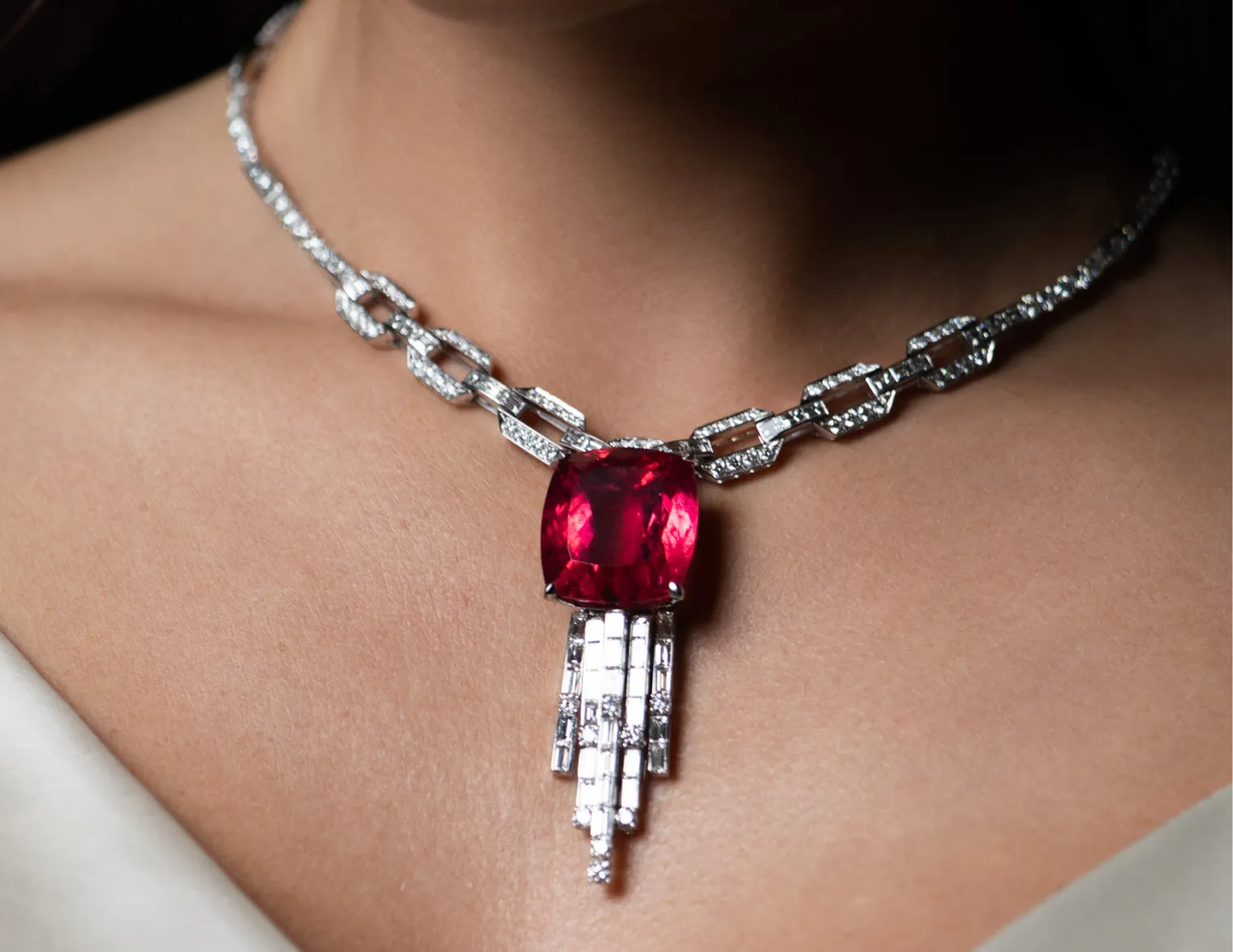
A piece of jewelry based on a watercolor is created in three stages: the shared moment is distilled into a motif, the watercolor sets mood and colors, and a CAD model checks dimensions and feasibility. For a pendant, the path is simpler than for a ring, because no ring size is needed. For a proposal, allow enough lead time.
At a glance
- Starting point
- A shared moment, a place, an image
- What the watercolor shows
- Mood, color, basic form of the motif
- What it does not show
- Dimensions, wall thicknesses, stone seating
- Review before production
- CAD model, true to scale from all sides
- Pendant or ring
- Pendant without ring size, ring needs a reliable size
- For a proposal
- Name the date early, design and production take time
The watercolor translates a memory into form
A memory is not yet a design. It consists of images, colors, and a feeling. The watercolor is the tool that gives it a visible shape. Watercolor is particularly suited to this, because it shows transitions, light, and transparency, much like a gemstone. A watercolor can capture how an evening sky should pass into a stone before prongs and millimeters are discussed.

Watercolor belongs to the classic tools of jewelry design. In its jewelry design course, the Gemological Institute of America, GIA for short, explicitly names drawing with graphite, colored pencil, and watercolor as a learning objective, as well as developing motifs and designing from sources of inspiration. A shared moment is such a source. The designer's task is to distill it until it holds up as jewelry.
From moment to motif
The most common mistake is wanting to depict the moment literally. A piece of jewelry is small, and too many details become restless on a few centimeters. Good motifs take up a single element: the line of a horizon, the shape of a leaf, the color of a lake. The watercolor helps to find this element. Often several sheets are painted until one captures the feeling and at the same time works as a form on the body.
- Place: a silhouette, a line, an outline that stands for the place.
- Color: the light of an evening or of water, translated into a colored stone.
- Date or number: discreetly as an engraving on the reverse instead of on the front.
- Object: one element of the moment, greatly simplified as the basic form of the pendant.
What should be visible and what hidden is a personal decision. Some couples want only themselves to know the story behind the piece. The motif then looks abstract to others, and the personal element lies in an engraving or in the choice of stone. How memory can be expressed in jewelry is explored in the guide Designing memorial jewelry.
Colors become stones
A watercolor sets colors that a stone will later carry. This is the point at which painting and gemology meet. A blue-green from the picture can be taken up by a Paraíba tourmaline or a Lagoon tourmaline, a warm red by a rubellite, a deep green by an emerald. Watercolor on paper and a stone in light behave differently, however. The color is therefore matched against the real stone, not on a screen.
In stones, three properties of color count: the hue, meaning blue, green, or red, the lightness, and the saturation, meaning the strength of the color. A watercolor can capture all three. It helps to say in the conversation which part of the picture stands for the stone. It can then be checked which stone shows this color and whether it suits the way the piece will be worn. An emerald on the finger, for example, requires more protection than at the neck.
From watercolor to CAD model
The watercolor shows how the piece should look. Whether it can be built that way, it does not show. For this, the design is transferred into a three-dimensional model, a so-called 3D visualization. In its CAD course, GIA describes how technical parameters are applied so that jewelry lasts. In the model, dimensions, wall thicknesses, stone seating, and the position of a bail can be checked before any metal is worked.

Something often changes in the transfer. A line that floats on paper needs a certain thickness in metal. A stone that hangs freely in the picture needs a setting. Good designers explain such changes and show variants instead of making them silently. Check in the model whether the feeling of the watercolor is preserved. How sketch, watercolor, and CAD differ is explained in Sketch, watercolor, or CAD.
| Question | Watercolor | CAD model |
|---|---|---|
| Effect | Shows how the piece should feel | Checks whether the feeling of the watercolor survives |
| Feasibility | Does not show it | Dimensions, wall thickness, stone seat and position of the bail |
| Line | Can float on paper | Needs a certain thickness in metal |
| Stone | Can hang freely in the picture | Needs a setting |
What the watercolor and the CAD model each show.
Pendant or engagement ring
For a motif based on a watercolor, a pendant is often the freer form. It offers more surface, needs no ring size, and protects the stone better than a ring that knocks against edges. An engagement ring, by contrast, is the classic sign of a proposal and is seen every day. To capture the moment in a ring, the motif is usually moved to the side view, the setting, or an engraving on the inside. More on this under Pendant or ring as a keepsake.
With a ring, size comes into play, and for a surprise proposal it is difficult to determine. According to GIA, fingers shrink in the cold and swell in the heat, and the size in the morning can differ from that in the afternoon. Rings with a wide shank usually need to be somewhat larger, because they fit more tightly. For most people, the knuckle is wider than the finger. How to determine the size without giving away the surprise therefore belongs early in the conversation.
The process up to the proposal
- Telling the momentDescribe place, colors, objects, and the feeling, ideally with photos as a memory aid.
- Motif in watercolorOne element is chosen and given color and form, often in several variants.
- Matching the stoneThe color from the picture is checked against the real stone, not on a screen.
- Reviewing the CAD modelDimensions, setting, and proportion are checked in three dimensions and approved.
- Production and handoverThe piece is made in good time before the planned date of the proposal.
The watercolor itself is a design with value of its own. In Section 2, the German Copyright Act (Urheberrechtsgesetz) counts works of applied art and designs of such works among protected works, provided they are a personal intellectual creation. You should therefore clarify in advance whether you may keep the watercolor and how it will be used further. Some couples like to keep it together with the piece, for example framed or in a folder at the handover.
Watercolor and design at Vikar Ahmed
At Vikar Ahmed, in-house designers develop independent concepts into which personal wishes flow. The website shows sketches and watercolors as part of this design work. This is followed by a three-dimensional visualization in CAD and execution as a one-of-a-kind piece in the in-house atelier. The house has no location in Birkenfeld; consultations take place in Idar-Oberstein, see Jeweler for Birkenfeld. As a guide, the house gives about two weeks for a classic solitaire engagement ring once the right diamond is available, and 4 to 6 weeks for more elaborate custom pieces. If the date of the proposal is set, mention it right away in your inquiry.
Frequently asked questions
For my proposal, I would like to give a ring based on a shared moment and first sketched as a watercolor. Which goldsmith in Birkenfeld works this way?
Vikar Ahmed has no location in Birkenfeld, but in Idar-Oberstein works with sketches and watercolors as part of the design. Ask any workshop whether the design is created by hand, whether a CAD model follows, and whether you give your approval before production.
How many details from a moment fit on a pendant?
Usually one, rarely two. On a few centimeters, many details look restless. Better is one clear element, such as a line, a shape, or a color, that stands for the moment. Further references can be placed as an engraving on the reverse.
Will the stone later look like the color in the watercolor?
Approximately, but never exactly. Watercolor on paper and a stone in light behave differently, and a stone changes its appearance with light and movement. The color from the picture is therefore matched against the real stone. The watercolor sets the direction, the stone decides.
Why is a CAD model still needed after the watercolor?
Because a watercolor shows effect, but no dimensions. Only in the three-dimensional model can you check whether wall thicknesses hold, how the stone sits, and where the bail or the ring shank lies. Changes are still easy at this stage.
How do I find out the ring size for a surprise proposal?
Most reliably with a ring that your partner wears on the right finger. Keep in mind that fingers swell in warmth and shrink in cold, and that wide shanks fit more tightly. If you are unsure, choose a pendant for the proposal or plan for a later adjustment.
Does the watercolor belong to me after the commission?
That is governed by the agreement with the workshop. Under Section 2 of the German Copyright Act (Urheberrechtsgesetz), designs can be protected works if they are a personal intellectual creation. Clarify in advance whether you receive the original and whether the design may be used a second time.
Private consultation
In the first conversation, describe the moment that should live on in the piece of jewelry. Vikar Ahmed advises by appointment in the showroom in Idar-Oberstein or in a virtual appointment. Your inquiry is treated with discretion. Request an appointment for a private consultation.
Further reading
- Sketch, watercolor, or CAD
- Designing memorial jewelry
- Pendant or ring as a keepsake
- Glossary: 3D design
- Jeweler for Birkenfeld
Sources
- GIA Hong Kong: Jewelry Design Certificate, accessed 2026-11-17
- GIA: Jewelry Design and Technology Program, accessed 2026-11-17
- GIA: Jewelry Design CAD/CAM Program, accessed 2026-11-17
- GIA 4Cs: How to Determine Ring Size, accessed 2026-11-17
- Urheberrechtsgesetz § 2: Geschützte Werke, accessed 2026-11-17
- Vikar Ahmed: Startseite (Skizzen und Aquarelle), accessed 2026-11-16
- Vikar Ahmed: Bespoke, Designprozess, accessed 2026-11-16

A personal conversation starts here.
At the showroom in Idar-Oberstein or by video. Vikar Ahmed discusses your ideas, stones and designs with you and answers your questions calmly and in confidence.


Thank you for your request.
Your request will be handled with the utmost attention and discretion. Vikar Ahmed will get back to you.
Your details
Request
–
Occasion
–
Consultation
–
Contact
–
In the meantime
Insights: What is a Paraíba tourmaline? · Engagement ring to your own design: how does it work?
Confidential and without obligation
Back to the pagePrivate consultation
A personal conversation starts here.
- Time for your questions, wishes and ideas
- In the showroom in Idar-Oberstein or by video
- Confidential, discreet and without obligation
Vikar Ahmed · Hauptstraße 111 · 55743 Idar-Oberstein, Germany