

Vintage or Modern: Which High Jewelry Style Endures?
Styles come and go, and some return at intervals. For High Jewelry meant to accompany you for decades, it is worth looking at what remains of a fashion and what disappears with it.
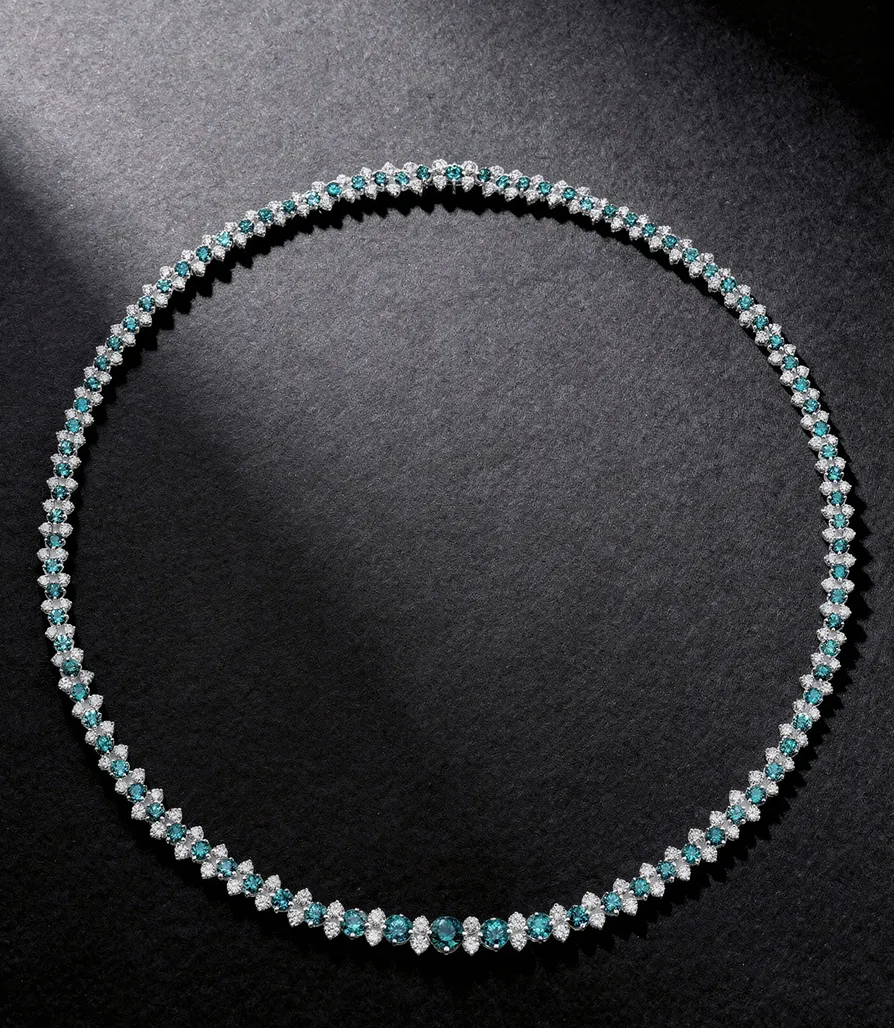
Neither vintage nor modern is more timeless in itself. In ten years, the style that convinces is the one built on a clear basic form, a significant stone and clean execution. Vintage-style pieces age well when they take up a model calmly, modern ones when they rely on reduction rather than an effect. What looks short-lived above all is the exaggerated.
At a glance
- Antique
- Jewelry made more than 100 years ago
- Vintage
- Not contemporary, but not yet antique, with no fixed year limit
- Vintage style
- Newly made, modeled on an earlier era
- Art Deco
- 1920s and 1930s, geometric forms, strong contrasts
- Return
- Geometric designs most recently in demand again in the 1960s and 1970s
- What lasts
- Clear basic form, significant stone, durable setting
Timelessness is not an era but a way of building
The question of vintage or modern sounds like a choice between old and new. For the effect after ten years, another distinction is more important: does the piece carry a form that explains itself, or does it live from an effect that happens to be in demand? A necklace in the style of the 1920s can look fresh today. An entirely new design can look dated in five years if it merely repeats a trend.

High Jewelry has an advantage over fashion jewelry here. At its center is a rare stone, and it does not age. A Paraíba tourmaline, an emerald or a colorless diamond looks the same in ten years as it does today. What changes is the view of the design around it. The more the design serves the stone, the less the piece depends on the time it was made.
Fashions return: what history shows
The Gemological Institute of America, GIA for short, describes geometric jewelry as a style that has returned in waves for centuries. During the Art Deco period, meaning the 1920s and 1930s, it was very widespread. In the 1960s and 1970s it experienced a revival, and GIA later observed it again at trade fairs. What is considered a modern line today therefore often has a model that is a hundred years old.
Other styles were more strongly bound to their time. According to GIA, many designers in the 1960s turned away from faceted stones and relied on cabochons, uncut stones, textured gold and abstract, asymmetrical forms. Such pieces are sought-after testimonies of their era today. As a style for a new piece of jewelry, however, they look more clearly dated than calm geometry, because they live from the signature of their time.
A simple observation can be derived from this. Styles built on basic forms such as rectangle, circle and triangle return, because they can be translated into any era. Styles that live from a particular surface, a material or a motif of the season return less often. For a piece meant to be worn for a long time, this is a useful yardstick.
What vintage means in High Jewelry
GIA distinguishes three terms. Antique is jewelry made more than 100 years ago. Vintage is jewelry that is not contemporary but not yet antique. Estate refers to previously worn jewelry of any age. A newly made piece in vintage style is none of these: it takes up the design language of an era and is built with today's means. This distinction is important because it also determines durability and care.
Art Deco is the model that appears most often in High Jewelry. GIA names as its features geometric patterns, symmetry with a center stone and matching side stones, and strong color contrasts, such as diamonds next to black onyx or next to emerald, sapphire and ruby. The setting of small diamonds in pavé also developed during this period. Anyone looking for a ring in vintage style will find the eras in detail in the guide Vintage one-of-a-kind piece.
Modern lines: reduction and its limits
Modern lines rely on reduction: few elements, smooth surfaces, a stone in a clear setting. This restraint ages well, because it contains hardly anything that can go out of fashion. A solitaire is the best-known example. In necklaces and bangles, modern design often shows itself in continuous lines, such as a row of evenly set stones that follows the body.

Reduction has limits, however. A very simple piece demands a stone that carries the attention and flawless execution, because every unevenness stands out. Modern designs become short-lived where they rely on an effect: extremely narrow shanks that bend, tension settings without regard for the stone, or unusual proportions that work mainly in photos. Modern then means only the new, not the good.
What lasts over ten years
| Criterion | Vintage style | Modern lines |
|---|---|---|
| Design language | Geometry or ornament after a model | Few elements, smooth surfaces |
| What ages well | Calmly adopted basic forms, symmetry | Clear proportion, cleanly set stone |
| What dates quickly | Overloaded details, mixing several eras | Effects that only work in photos |
| Demands on production | Fine details such as pavé and milgrain edges | Flawless surfaces and edges |
| Care | Check small stones regularly | Check prongs and shank occasionally |
General classification. A single piece can take something from both sides.
The table shows that both styles can make the same mistakes, just in different ways. A vintage piece fails through too many details, a modern one through too little substance. Both succeed when the proportion is right and the setting suits where the piece is worn. According to GIA, rings and bracelets are more exposed to knocks than earrings and necklaces. A fine ornament that lasts a long time on the ear can suffer more quickly on the finger.
Metal and color as a question of style
Metal shapes style more than one might think. According to GIA, Art Deco designers preferred platinum for its strength and because it does not tarnish. White gold and yellow gold were added as more affordable alternatives, especially in the 1930s. According to the World Gold Council, yellow remains the most popular gold color to this day. Rose gold gets its warm tone from copper in the alloy. More on the composition under 18k (750) gold.
Colored gemstones are a stylistic device of their own. Strong contrasts of color and colorless diamonds are a legacy of Art Deco and still look clear today. Anyone unsure whether a color will still please in ten years should pay less attention to the trend than to their own wardrobe and skin tone. How colored gemstones are chosen and used in High Jewelry is described in the guide Colored gemstones in High Jewelry.
Typical mistakes in choosing a style
- Mixing several eras in one piece without a model remaining recognizable.
- Making a seasonal trend the central idea of a one-of-a-kind piece.
- Planning fine vintage details on a ring that is worn every day.
- Setting a very simple piece with a stone that does not carry it.
- Choosing the metal last, although it also determines color and style.
One remedy against all five mistakes is a clear sentence before the design begins: what should this piece still say in twenty years? Anyone with an answer to that can freely combine models and modern means. The guide What makes a bespoke design timeless? explores how timelessness can be secured in the design process.
Style in design at Vikar Ahmed
Vikar Ahmed names craftsmanship, rarity and timeless aesthetics as the guiding principles of the house. The design follows three steps: in-house designers develop an independent concept that incorporates personal wishes, a 3D CAD design with a photorealistic view shows the piece before production, and goldsmiths realize it as a one-of-a-kind piece in the in-house atelier. Especially for the question of style, the visualization helps to check proportions before the first metal. The house works with 18k (750) gold in white, rose, and yellow as well as platinum 950.
For engagement rings, according to the house, both are possible: the further development of a classic or an entirely new idea. The pieces shown are crafted in 18k (750) white gold and rose gold, and one example of modern lines is the Signature Bangle in rose gold with a double row of hand-set diamonds. How the design process unfolds in detail is shown on the Bespoke page.
Frequently asked questions
Vintage style or modern lines: which High Jewelry look will still work in ten years?
Both can convince in ten years. What matters is whether the piece is built on a clear basic form and a significant stone. A vintage look ages well when it takes up a model calmly, a modern one when it relies on reduction rather than an effect. Overloaded details and seasonal trends age fastest.
What is the difference between antique jewelry and jewelry in vintage style?
According to GIA's classification, antique jewelry is more than 100 years old. Jewelry in vintage style is newly made and only takes up the design language of an earlier era. It therefore has contemporary settings and materials and does not show the wear that old pieces often bring with them.
Why is Art Deco considered particularly timeless?
Because the style is built on basic forms such as rectangle, triangle and circle and relies on clear symmetry. Such forms can be translated into any era. GIA describes how geometric jewelry, after the 1920s and 1930s, was in demand again in the 1960s and 1970s and keeps reappearing.
Does a colored gemstone suit a timeless style?
Yes. The stone itself does not age, and strong color contrasts with colorless diamonds have been part of the repertoire of the jeweler's art since Art Deco. More important than the color is that the design places the stone at the center and that the setting suits its hardness and toughness.
Which metal looks calmest over decades?
That depends on the stone and the style, not on a fixed rule. White metals make colorless diamonds and cool colors appear clear, rose gold blends with warm tones. White gold occasionally needs new rhodium plating to stay bright. Choose the metal together with the stone.
Can an existing piece be modernized in style?
Often yes, if the stone is retained and a new design is created around it. It is checked whether the stone is undamaged and which setting suits it. How this works for an engagement ring is described in the guide on Redesigning an engagement ring.
Private consultation
Whether a model from an earlier era or a reduced line suits you is best seen in conversation and in the design. Vikar Ahmed advises in the showroom in Idar-Oberstein by appointment or in a virtual appointment. Request an appointment for a private consultation.
Further reading
- What makes a bespoke design timeless?
- Having a one-of-a-kind piece designed in vintage style
- Vintage style or modern solitaire for an engagement ring
- Glossary: Haute Joaillerie
- Timeless High Jewelry
Sources
- GIA 4Cs: How to Shop for Antique and Vintage Engagement Rings, accessed 2026-11-17
- GIA 4Cs: Art Deco Engagement Rings, accessed 2026-11-17
- GIA 4Cs: Getting Geometric with Jewelry Design, accessed 2026-11-17
- GIA 4Cs: 60s Jewelry Design, Then and Now, accessed 2026-11-17
- GIA 4Cs: Gem Durability, more than the Mohs Scale, accessed 2026-11-17
- GIA 4Cs: Best Ring Material for Everyday Wear, accessed 2026-11-17
- World Gold Council: Gold Jewellery, Colour, Carat and Purity, accessed 2026-11-17
- Vikar Ahmed: Startseite, accessed 2026-11-16
- Vikar Ahmed: Bespoke, Designprozess, accessed 2026-11-16
- Vikar Ahmed: Verlobungsringe, accessed 2026-11-16

A personal conversation starts here.
At the showroom in Idar-Oberstein or by video. Vikar Ahmed discusses your ideas, stones and designs with you and answers your questions calmly and in confidence.


Thank you for your request.
Your request will be handled with the utmost attention and discretion. Vikar Ahmed will get back to you.
Your details
Request
–
Occasion
–
Consultation
–
Contact
–
In the meantime
Insights: What is a Paraíba tourmaline? · Engagement ring to your own design: how does it work?
Confidential and without obligation
Back to the pagePrivate consultation
A personal conversation starts here.
- Time for your questions, wishes and ideas
- In the showroom in Idar-Oberstein or by video
- Confidential, discreet and without obligation
Vikar Ahmed · Hauptstraße 111 · 55743 Idar-Oberstein, Germany