

Paraíba Tourmaline or Fancy Yellow Diamond?
Yellow is the most common color among colored diamonds, while Paraíba tourmaline is an exception among tourmalines. What this means for collectors.
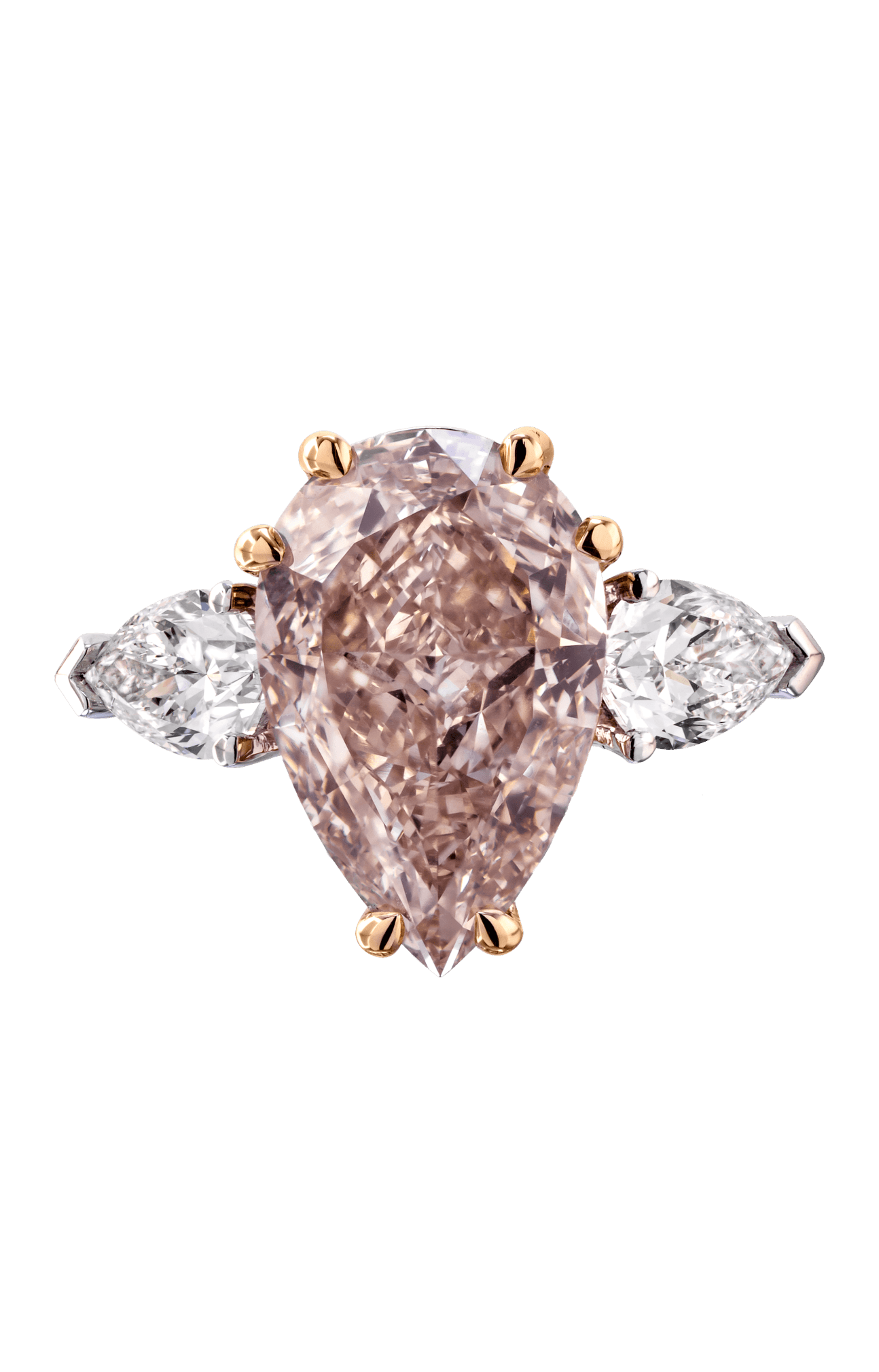
As a collector's piece, Paraíba tourmaline is usually the rarer choice, the Fancy Yellow Diamond the more durable one. According to GIA, yellow is the most common color among colored diamonds. Only Fancy Intense and Fancy Vivid are special there. With Paraíba, the vividness of the copper decides, and large stones are rare. With a hardness of 7 to 7.5, however, it is considerably more delicate.
At a glance
- Cause of color
- Yellow diamond: nitrogen in the crystal. Paraíba tourmaline: copper and manganese
- Frequency
- According to GIA, yellow accounts for around 60 percent of colored diamonds
- Color grades
- Yellow diamond from Fancy Light, paler stones fall on the D-to-Z scale
- Size of Paraíba
- Rarely over one carat according to GIA, color counts more than size
- Mohs hardness
- Diamond 10, tourmaline 7 to 7.5
- Laboratory
- Diamond: report stating the cause of color. Paraíba: identification, origin on request
Rare is not always rare in the same way
Comparing a Fancy Yellow Diamond with a Paraíba tourmaline means comparing two kinds of rarity. Among colored diamonds, yellow is the most common color. GIA puts its share at around 60 percent of this group and calls it the most accessible of all color varieties. Measured against total diamond production, it nevertheless remains a small share. With yellow diamonds, rarity arises only through the strength of the color.
Paraíba tourmaline, by contrast, is already an exception as a variety. Among the many colors of tourmaline, only the copper-bearing stones are Paraíba tourmalines, and according to GIA large specimens are seen only rarely over one carat. For a collector's piece this means: with diamonds, one looks for the exception within a common color, while with Paraíba even a well-colored stone of medium size is a find.
Both stones by the same criteria
| Criterion | Fancy Yellow Diamond | Paraíba tourmaline |
|---|---|---|
| Cause of color | Nitrogen, which absorbs blue light | Copper and manganese in tourmaline |
| Frequency | Most common color among colored diamonds | Rare variety, hardly over one carat in large sizes |
| Color assessment | GIA grades from Fancy Light to Fancy Vivid | No grading scale, description in words |
| Mohs hardness | 10 | 7 to 7.5, toughness fair |
| Treatment | In lighter stones irradiation, annealing, HPHT, coating | Heating common, sometimes fissure filling |
| Synthesis | Easily grown in the laboratory | Imitations of glass, apatite or topaz known |
Comparison based on information from GIA and SSEF. For an individual collector's piece, the report and the color of that stone count.
The most important difference lies in the assessment. For colored diamonds there is a fixed GIA scale that grades hue, tone and saturation. This makes the yellow diamond easy to compare. With Paraíba tourmaline, a laboratory describes the color but does not grade it. The value of a Paraíba must therefore be judged more with your own eyes, side by side and under different light.

How the yellow diamond gets its color
Yellow diamonds form when traces of nitrogen enter the crystal lattice during growth. The nitrogen atoms absorb blue light, and the stone appears yellow. In its research, GIA emphasizes that nitrogen alone does not make a beautiful fancy stone. What matters are the amount and arrangement in the crystal. The trade likes to call strongly yellow stones Canary, a term that GIA explicitly does not use as a grade.
Important for collectors is the boundary between two scales. The D-to-Z scale for colorless diamonds assesses the absence of color, the scale for colored diamonds its presence. For yellow diamonds, the fancy scale begins with Fancy Light, and paler stones are graded on the D-to-Z scale. As a rule, the strongest grades, Fancy Intense and Fancy Vivid, are valued highest. More on this under Fancy Color Diamond.
How Paraíba tourmaline gets its color
With Paraíba tourmaline, copper is the key. The harmonization body of the major laboratories, LMHC, defines it as a blue, bluish green, green or yellowish green tourmaline of medium to high saturation whose color is caused mainly by copper and manganese. Tourmalines with only traces of copper and weak color do not qualify. According to this definition, the name applies regardless of the source country, whereas SSEF calls only Brazilian stones Paraíba in its report.
GIA names blue and violet as the most sought-after colors, alongside greenish blue, bluish green and green. Most stones are heated to improve the color. An older GIA article describes that excessive heating can also cause the color to fade. A collector should therefore know that the color of a Paraíba is often the result of nature and treatment at the same time. How vividness is classified is explained under Neon quality.
Treatment, synthesis and imitation
With yellow diamonds, the question of the origin of color is central. According to GIA, lighter yellow or brown diamonds are often treated, for example by irradiation, annealing, HPHT or coating. In addition, yellow diamonds are easy to grow in the laboratory, with nitrogen added deliberately. A colored diamond report states whether the color is natural. Treated stones can be sensitive to heat, which plays a role in repairs. Vikar Ahmed does not work with lab-grown diamonds, and the focus is on natural diamonds, including colored ones in Fancy Intense and Fancy Vivid.

With Paraíba tourmaline, imitations are the bigger issue. GIA names, among others, copper-free tourmalines, bluish green apatite, irradiated blue topaz and doublets of tourmaline and glass. They can be distinguished with standard gemological tests. Heating, on the other hand, is often undetectable, and filled fissures must be disclosed under the rules of the World Jewellery Confederation (CIBJO). How to recognize a genuine stone is described in the guide Genuine Paraíba Tourmaline.
As a loose stone and later in jewelry
A loose stone can be examined better than a mounted one. This applies to both stones. A laboratory sees inclusions, color distribution and traces of treatment more completely on the unmounted stone. With yellow diamonds there is the added factor that the cut can intensify the color: according to GIA, mixed cuts such as the radiant make even weaker yellow tones appear stronger face up. The grade in the report is therefore more important than the first impression.
If the stone is to be set later, the two stones behave very differently. According to GIA, yellow gold deepens the color of a yellow diamond and makes it look warmer, while white metals make strong tones look clearer. A Paraíba tourmaline requires above all protection for edges and points, especially in a ring. The comparison with a pink diamond can be found under Paraíba Tourmaline or Fancy Pink Diamond.
Which suits whom
The Fancy Yellow Diamond suits collectors who value clear classification: a fixed color scale, a report stating the cause of color and a stone that can be worn every day. It becomes particularly interesting in the grades Fancy Intense and Fancy Vivid. Anyone who would like to see yellow diamonds in jewelry will find a separate guide on the Pendant with Yellow Diamonds.
Paraíba tourmaline suits collectors who are looking for a color that exists only once in the gemstone world in this form, and who are prepared to judge the color with their own eyes. It rewards patience in the search for size and saturation and calls for care when worn. When a Paraíba counts as a collector's piece is explored in depth in the guide Paraíba as a Collector's Piece.
Frequently asked questions
Natural Fancy Yellow Diamond or Paraíba tourmaline, which loose stone is the more interesting collector's piece?
That depends on what you collect. As a variety, Paraíba tourmaline is rarer, and no other stone has its copper-caused color. Yellow is the most common colored diamond color, but in the grades Fancy Intense and Fancy Vivid it becomes an exception. It is harder and easier to compare through a fixed color scale.
What does Canary mean for yellow diamonds?
Canary is a trade name for strongly yellow diamonds. GIA does not use it as a grade. What counts is the color grade in the report, such as Fancy, Fancy Intense or Fancy Vivid Yellow, together with the statement of whether the color is natural.
When does a yellow diamond count as a colored diamond?
At GIA, the fancy scale for yellow diamonds begins with the grade Fancy Light. Paler stones are graded on the D-to-Z scale for colorless diamonds and assessed there as slightly yellowish. Only from Fancy Light onward is the color understood as a value characteristic.
Are there laboratory-grown yellow diamonds?
Yes. According to GIA, yellow diamonds can be grown in the laboratory using the HPHT and CVD processes, with nitrogen added deliberately. A GIA report identifies laboratory-grown stones as such. For a collector's piece, a report stating the origin of the color is therefore indispensable.
How is the color of a Paraíba tourmaline described in the report?
In words, not in grades. A report names the hue, such as blue or greenish blue, and the variety. SSEF explicitly avoids trade terms such as Neon or Electric Blue. How vivid a stone looks is therefore best judged by yourself on the stone.
Which of the two stones copes better with everyday life?
The yellow diamond. It has a hardness of 10 and practically does not scratch in everyday life. Paraíba tourmaline lies at 7 to 7.5, its toughness is fair, and high heat can alter its color. As a pendant or earring it is easy to wear, while in a ring it needs a protective setting.
Private consultation
Whether a yellow diamond or a Paraíba tourmaline suits your collection shows most clearly in a direct comparison of the colors. Vikar Ahmed advises in the showroom in Idar-Oberstein by appointment or virtually and creates made-to-measure pieces as one-of-a-kind pieces in its in-house atelier. Request a private consultation.
Further reading
- Paraíba tourmaline or Fancy Pink Diamond
- Guide: Paraíba as a collector's piece
- Guide: Colored diamonds
- Gemstone: Fancy Color Diamond
- Glossary: Paraíba tourmaline
Sources
- GIA 4Cs: Yellow Diamond Buying Guide, accessed 2026-11-17
- GIA Gems & Gemology: Naturally Colored Yellow and Orange Gem Diamonds, The Nitrogen Factor, accessed 2026-11-17
- GIA: Fancy Color Diamond Quality Factors, accessed 2026-11-17
- GIA: Fancy Color Diamond Description, accessed 2026-11-17
- GIA FAQ: Colored Diamond Grading and D-to-Z Grading, accessed 2026-11-17
- GIA: Tourmaline Quality Factors, accessed 2026-11-17
- GIA: Tourmaline Care and Cleaning, accessed 2026-11-17
- GIA Gems & Gemology: An Update on Paraíba Tourmaline from Brazil (2001), accessed 2026-11-17
- LMHC Information Sheet 6: Paraiba Tourmaline, accessed 2026-11-17
- SSEF: Paraiba Tourmaline, accessed 2026-11-17
- SSEF: Fissure-filling in Paraiba Tourmaline, accessed 2026-11-17

A personal conversation starts here.
At the showroom in Idar-Oberstein or by video. Vikar Ahmed discusses your ideas, stones and designs with you and answers your questions calmly and in confidence.


Thank you for your request.
Your request will be handled with the utmost attention and discretion. Vikar Ahmed will get back to you.
Your details
Request
–
Occasion
–
Consultation
–
Contact
–
In the meantime
Insights: What is a Paraíba tourmaline? · Engagement ring to your own design: how does it work?
Confidential and without obligation
Back to the pagePrivate consultation
A personal conversation starts here.
- Time for your questions, wishes and ideas
- In the showroom in Idar-Oberstein or by video
- Confidential, discreet and without obligation
Vikar Ahmed · Hauptstraße 111 · 55743 Idar-Oberstein, Germany