


Paraíba and Lagoon tourmaline jewelry is best compared directly side by side, under the same light and on the body. Pay attention to the saturation, lightness, and luminosity of the stones, not only the hue. Whether a stone may be called Paraíba is decided by copper and manganese as the cause of color, documented by a laboratory report. Laboratories name it differently depending on origin.
At a glance
- Paraíba tourmaline
- Blue to green, color mainly due to copper and manganese
- Lagoon tourmaline
- Trade name for a light blue-green, not a gemological variety name
- First Paraíba finds
- Late 1980s in the state of Paraíba, Brazil
- Further countries of origin
- Nigeria and Mozambique, according to GIA since the beginning of the 21st century
- Size
- Paraíba according to GIA rarely over one carat
- Report for jewelry
- At SSEF as a Test Report, also for mounted stones
Side by side, what a photo conceals becomes visible
Blue-green tourmalines are among the stones that screens reproduce worst. Cameras adjust colors, displays boost saturation, and a single photo shows no scale. A Paraíba pendant and a Lagoon ring can look almost identical online. When they lie side by side on a neutral cloth, differences in saturation, lightness, and luminosity become visible at once. Where comparison on a screen reaches its limits is described in Showroom appointment or selection on screen?.
With jewelry, more comes into play than with a loose stone. Metal, setting, and surrounding diamonds change how a tourmaline looks. A stone in a closed setting appears darker than the same stone with an open back. Comparing finished pieces therefore answers a different question than comparing two loose stones: not which stone is more beautiful, but which piece looks on the body the way you imagine it.
The same mineral group, a different cause of color
Paraíba and Lagoon tourmalines both belong to the tourmaline group, a family of closely related mineral species with the same crystal structure. What separates them is the cause of their color. According to the definition of the laboratory association LMHC, a Paraíba tourmaline is a blue, blue-green, or green tourmaline of medium to high saturation whose color is based mainly on copper and manganese. It was discovered in the late 1980s in the Brazilian state of Paraíba.

Lagoon tourmaline, by contrast, is a trade name for a light, clear blue-green. The name describes a color, not a cause of color and not an origin. A Lagoon stone can therefore be very beautiful, but it follows different standards. If you see both side by side, you are essentially comparing two kinds of blue-green: the often luminous, saturated Paraíba blue and the calmer, more transparent Lagoon greenish blue.
| Feature | Paraíba tourmaline | Lagoon tourmaline |
|---|---|---|
| Mineral group | Tourmaline | Tourmaline |
| Designation | Variety as defined by the LMHC | Trade name for a color |
| Cause of color | Mainly copper and manganese | The name says nothing about the cause of color |
| Color impression | Often vivid and saturated | Light, clear, calmer blue-green |
| Origin | Discovered in the late 1980s in the state of Paraíba, Brazil | The name says nothing about origin |
Based on the LMHC definition cited in the text and GIA information on tourmaline.
What to look for in a direct comparison
Hue alone decides little, because both stones lie in the blue-green range. More telling are saturation, meaning the strength of the color, and lightness, meaning how light or dark the stone appears. For Paraíba tourmalines, GIA names a range from greenish blue through green to violet. Added to this is the question of how evenly the color is distributed in the stone and whether dark zones or a light spot in the center stand out.
- Saturation: Does the color look strong or rather pastel?
- Lightness: Does the stone stay lively in subdued light or turn dark?
- Luminosity: Does the stone seem to glow from within or merely to shine?
- Evenness: Are there color zones or a window in the center?
- Size and proportion: How does the stone look in relation to the setting?
- Matching: Do several stones in one piece suit one another?
Light and metal change the impression
Blue-green stones react clearly to the color of light. Daylight at a window shows the color most neutrally, while under warm or cool artificial light the same stone can look greener or bluer. For a fair comparison, both pieces should be viewed under several light sources one after another, but always at the same time. A piece that convinces in daylight and in the evening will disappoint less often in everyday life than one that only shines under spotlights.
The metal acts like a frame. White gold and platinum make cool blue appear clearer, while rose gold warms the surroundings and can soften a blue-green. Diamonds around the stone add bright points of light that make the color of the tourmaline appear stronger. If possible, therefore compare pieces in the same metal, or pay deliberate attention to how much of the difference comes from the setting and how much from the stone.
The name in the report: two views
According to the LMHC definition, a copper- and manganese-bearing tourmaline of matching color is called Paraíba, regardless of the country of origin. The SSEF laboratory proceeds differently: if, in its assessment, the stone comes from Brazil, the report states Paraiba tourmaline. If it comes from another country and meets the criteria for color and chemistry, the designation is tourmaline, with the note that the stone may also be called Paraíba in the trade.
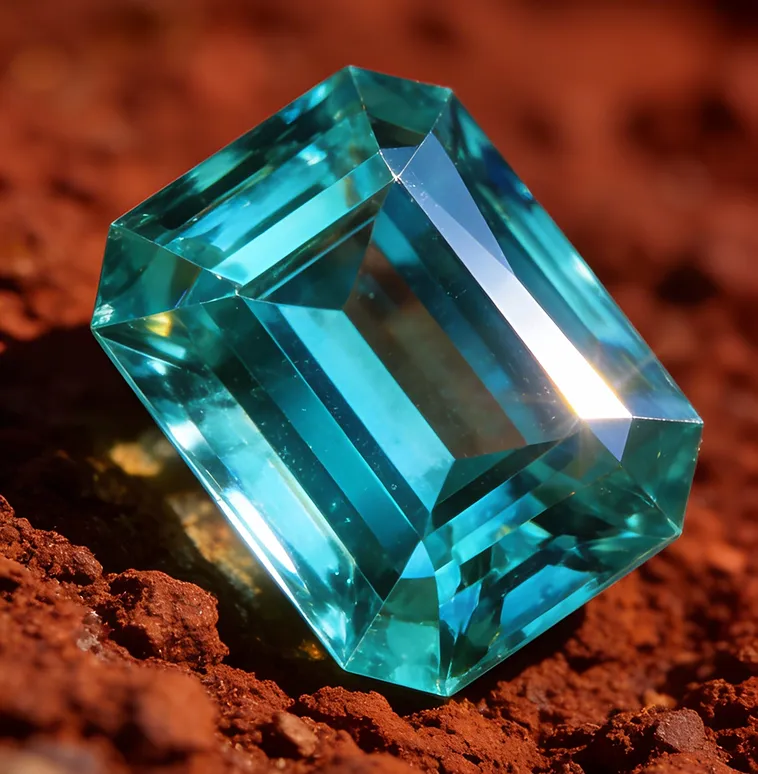
Both views are widespread in the industry, and neither applies exclusively. For the comparison, this means: check which laboratory issued the report before setting the designations of two pieces against each other. According to GIA, the origin of copper-bearing tourmalines cannot be determined with standard gemological tests, and an analysis of trace elements is necessary. More on this is explained in How do you recognize a genuine Paraíba tourmaline?.
Treatment and care of tourmaline jewelry
According to SSEF, heating is common with Paraíba tourmaline. The report notes indications of heating, no indications of it, or that the question cannot currently be resolved. According to GIA, color changes from heating in tourmaline are stable and not detectable. This explains why many reports leave the question open. SSEF describes fillings of fissures as minor, moderate, or significant, and insignificant amounts are not mentioned.
In everyday wear, the same rules apply to both tourmalines. They reach 7 to 7.5 on the Mohs scale, and GIA rates their toughness as fair. Heat and sudden changes in temperature can damage them. They are cleaned with warm soapy water, while ultrasonic and steam are not recommended. If you want to wear a tourmaline ring every day, look for a setting that protects the edges.
How to compare tourmaline jewelry during an appointment
- Review the reports in advanceClarify which laboratory described which stone and how it is named.
- Have the pieces shown at the same timeBoth pieces side by side on a neutral background, not one after the other.
- Change the lightDaylight, warm room light, and subdued light, each time with both pieces together.
- Check on the bodyPut them on and look in the mirror and from a little distance, with the clothing you will wear the piece with.
- Note your impressionBriefly record which piece convinced you in which light before you decide.
A common mistake is to judge Paraíba and Lagoon by name alone. The name says something about the cause of color, but nothing about whether this particular stone looks beautiful in this particular piece. A second mistake is comparing under a single spotlight, which makes every stone shine. A third is comparing reports from different laboratories without knowing their naming rules.
Paraíba and Lagoon at Vikar Ahmed
Paraíba tourmaline is at the heart of the Maison Vikar Ahmed, set in 18k gold, platinum, and diamonds. The pieces shown include Brazilian Paraíba tourmaline and Lagoon tourmaline. The house works with heated and unheated Paraíbas and states the treatment in writing on the certificate and invoice, and with Lagoon, Vikar Ahmed expects almost eye-clean clarity. The house describes its showroom in Idar-Oberstein as a place of selection, and visits take place by appointment. If the appointment should allow a direct comparison of Paraíba and Lagoon, it is best to write that in your request.
Vikar Ahmed has no location and no showroom in Trier. Consultations take place in Idar-Oberstein or in a virtual appointment, and the details for clients from Trier can be found under Jeweler for Trier. How the two stones differ independently of the piece of jewelry is explained in Lagoon tourmaline or Paraíba tourmaline?.
Frequently asked questions
Who shows Paraíba and Lagoon tourmaline jewelry side by side in a showroom in Trier?
Vikar Ahmed has no showroom in Trier. The house's showroom is in Idar-Oberstein and receives clients by appointment. Wherever you compare, ask to see both pieces at the same time under different light, and have the reports for both stones shown to you.
Can a tourmaline that is already set still be examined by a laboratory?
Yes, with limitations. SSEF issues a Test Report for mounted stones and jewelry, whereas the Gemstone Report is issued only for individual loose stones. Parts of the stone lie under metal and cannot be fully examined. For a statement of origin, a loose stone is usually the better starting point.
Why are Paraíba tourmalines in jewelry usually small?
Because larger stones are rare. GIA writes that Paraíba tourmalines are only rarely found larger than one carat. Many pieces of jewelry therefore work with smaller stones or a single center stone. A large Lagoon tourmaline next to a small Paraíba is therefore not a fair size comparison but shows two different stones.
Which light is suitable for comparing tourmaline jewelry?
The most neutral is daylight near a window, without direct sun. In addition, you should check warm room light and subdued light, because you will also wear the piece in the evening. What matters is to see both pieces at the same time in each case. Individual spotlights make almost any stone shine and distort the comparison.
Can the color of a heated Paraíba tourmaline revert?
According to GIA, color changes from heating in tourmaline are stable. A heated color is therefore retained during normal wear. Caution applies with great heat in the workshop, for example when soldering on a mounted piece, because tourmalines can react to it with color changes or fractures.
Is a Lagoon tourmaline a second-rate Paraíba tourmaline?
No, these are two different designations. Paraíba requires a color based mainly on copper and manganese. Lagoon describes a hue in the trade, without this condition. A beautiful Lagoon tourmaline is a stone in its own right, with a clear, calm color, and not a weaker substitute.
Private consultation
Tourmaline jewelry is best judged when you see the pieces side by side yourself. Vikar Ahmed advises in the house's showroom in Idar-Oberstein by appointment or in a virtual appointment. It is best to note questions about light, metal, and reports in advance. Request an appointment for a private consultation.
Further reading
- Paraíba tourmaline: placing color and origin
- What is a Lagoon tourmaline?
- Gemstone: Tourmaline
- Paraíba at Vikar Ahmed
- Glossary: SSEF and Gübelin
Sources
- GIA Gems & Gemology: Paraíba Tourmaline Geographic Origin Determination (Winter 2019), accessed 2026-11-17
- SSEF: Paraiba tourmaline reports, accessed 2026-11-17
- SSEF: Understanding a SSEF report, accessed 2026-11-17
- GIA: Tourmaline Quality Factors, accessed 2026-11-17
- GIA: Tourmaline Description, accessed 2026-11-17
- GIA: Tourmaline Care and Cleaning, accessed 2026-11-17
- Vikar Ahmed: Paraíba, accessed 2026-11-16
- Vikar Ahmed: Kollektionen, accessed 2026-11-16
- Vikar Ahmed: Über uns, accessed 2026-11-16
A personal conversation starts here.
At the showroom in Idar-Oberstein or by video. Vikar Ahmed discusses your ideas, stones and designs with you and answers your questions calmly and in confidence.





Thank you for your request.
Your request will be handled with the utmost attention and discretion. Vikar Ahmed will get back to you.
Your details
Request
–
Occasion
–
Consultation
–
Contact
–
In the meantime
Insights: What is a Paraíba tourmaline? · Engagement ring to your own design: how does it work?
Confidential and without obligation
Back to the pagePrivate consultation
A personal conversation starts here.
- Time for your questions, wishes and ideas
- In the showroom in Idar-Oberstein or by video
- Confidential, discreet and without obligation
Vikar Ahmed · Hauptstraße 111 · 55743 Idar-Oberstein, Germany