

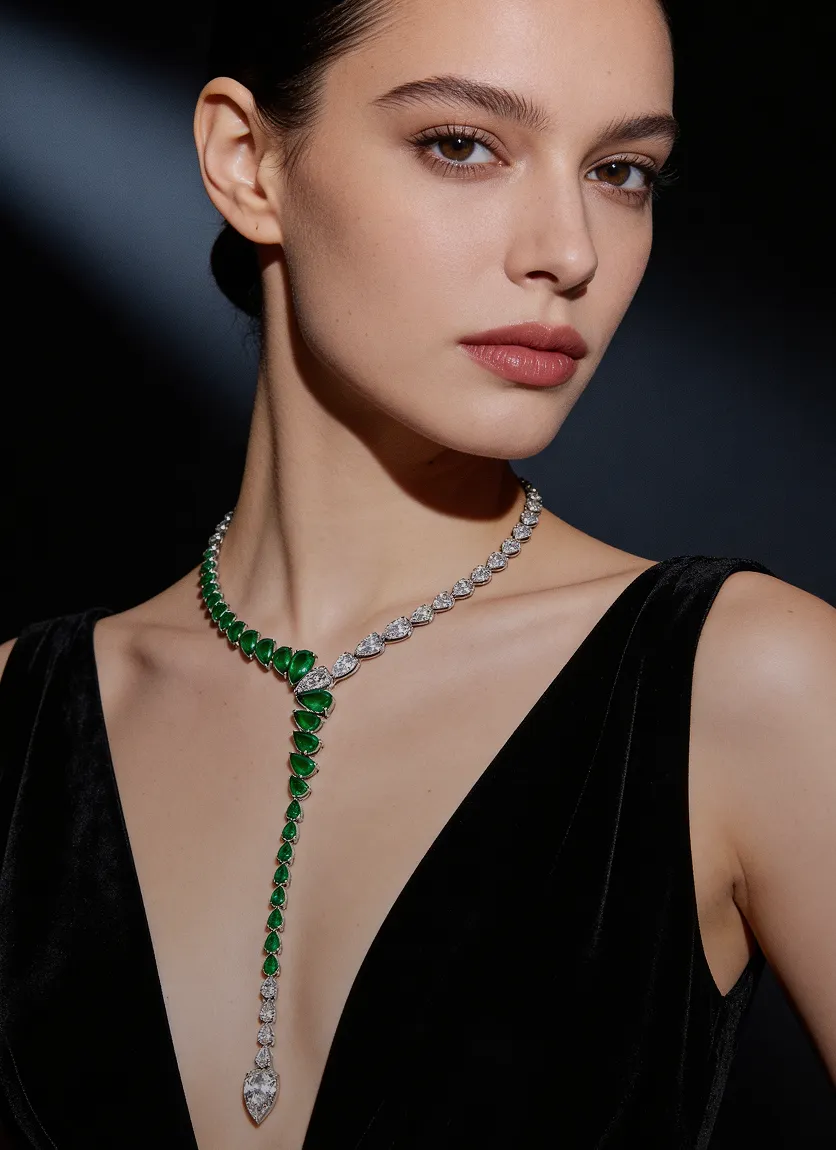
A colored diamond is a genuine alternative to a colorless one, but it follows a different logic. With a colorless diamond, value rises the closer it comes to colorlessness. With a fancy color diamond, it rises the stronger and purer the color is. What matters is a report that identifies the color as natural and a cut that shows it to advantage face-up.
At a glance
- Colorless diamond
- Value rises with closeness to colorlessness, D to Z scale
- Fancy color diamond
- Value rises with the strength and purity of the color
- Color grading
- Hue, tone, and saturation, 27 hues at GIA
- Rarest colors
- Red, green, violet, and orange, followed by pink and blue
- Most common colors
- Yellow and brown
- In the report
- Origin of color: natural or treated
Two stones, two standards
Colorless diamonds are graded on the D to Z scale. The closer a stone comes to complete colorlessness, the higher its value. Colored diamonds, called fancy color in the trade, lie outside this scale. According to GIA, the opposite applies to them: value rises the stronger and purer the color is. GIA calls large fancy color diamonds with vivid color extremely rare and very valuable.
For the choice of pendant, this means: with a colorless diamond, it is about light, that is, sparkle and brightness. With a fancy color diamond, it is about the color itself. A faint yellow tint that lowers the value of a colorless stone can become a sought-after Fancy Yellow at strong saturation. If you are torn between the two, first decide whether the pendant should sparkle or show a color. More on the terms under Fancy Color Diamond.
How the color of a fancy color diamond is graded
GIA describes color with three dimensions. Hue is the actual color, such as pink or yellow. Tone indicates how light or dark the stone appears. Saturation describes the depth and strength of the color. Under controlled conditions, the grader selects one of 27 hues and describes tone and saturation with grades such as Fancy Light, Fancy Intense, or Fancy Vivid. The more saturated and clear the color, the higher the grade.

Besides the main hue, secondary hues count. In pink, GIA values pure hues more highly than those with a purplish, orangy, brownish, or grayish modifier. Blue diamonds usually show a slight gray tint, and green ones usually fall in the yellowish green range. Clarity plays a smaller role than in a colorless stone. A stone with inclusions but beautiful face-up color can still be prized. Inclusions that threaten durability, however, reduce the value considerably.
Which colors are rare
| Color | Classification according to GIA | Note for the pendant |
|---|---|---|
| Red, green, violet, orange | Generally the rarest | Strong hues very rare, report indispensable |
| Pink, blue | Rare, after the four above | Pure hues valued more highly than those with a modifier |
| Yellow | Most common color alongside brown | Wide range of saturation, wears well in jewelry |
| Brown | Common | Warm, medium to dark tones are preferred |
| Black, gray, white | Also classified as fancy | White fancy diamonds can appear opalescent |
Rarity refers to the color in nature. Only the report says something about the individual stone.
Yellow diamonds are comparatively common among fancy color diamonds, but they make up only a small part of total diamond production. According to GIA, many natural colors are muted rather than strong. A vivid hue is therefore the exception in every color. How yellow diamonds look in a pendant is explored in the guide Pendant with a yellow diamond, and an overview of all colors is given in Fancy color diamonds.
Natural or treated: the report decides
The color of a diamond can be created or altered artificially. GIA describes several methods. In high pressure, high temperature treatment, HPHT for short, color is removed or changed, and the result is considered permanent. Irradiation can produce black, green, blue, deep yellow, orange, pink, and red diamonds, among others. Thin coatings alter the color at the surface and are prone to scratching, especially at the facet edges.
This cannot be seen with the naked eye. GIA advises treating strong green, pink, and red hues with caution as a rule. The GIA report for colored diamonds records whether the color is natural or treated, along with the color grade, weight, clarity, and a plot of the characteristics. According to GIA, treatments must be disclosed. What this means in detail is explained in the guide Gemstone treatment.
Good to know
According to GIA, irradiated colors can be damaged by the flame of a jeweler's torch. For repairs or alterations to a pendant, the workshop should therefore know whether the stone's color is natural.
Cut and size intensify the color
In a fancy color diamond, the cut serves the color. According to GIA, larger stones and deeper pavilions lengthen the path of light through the stone, which can intensify the color. Mixed cuts such as the radiant can intensify the yellow of stones at the lower end of the D to Z scale so much that they appear Fancy Yellow face-up. The radiant also uses more of the rough than a round brilliant.
For a pendant, the face-up view counts. It usually hangs still against the skin and is seen from the front. A cut that distributes the color evenly across the surface has a stronger effect here than one that mainly sparkles. The metal plays a part too: a yellow stone can look warmer in a yellow setting, a pink one softer in rose gold. A direct comparison of two colored stones in jewelry is given in Rubellite or pink diamond.
The pendant as a way of wearing a stone
A pendant is exposed to fewer knocks than a ring. The hand strikes table edges and doors, the neck rarely does. Durability still matters: according to GIA, the more durable a stone is, the better suited it is to jewelry worn often. With diamond, hardness is not a problem, but cleavage under a hard blow is. A setting that protects edges and points makes sense on a pendant as well.

- Bail and chain: they carry the weight and rub against each other, and both should suit the stone.
- Back: an open back lets more light into the stone but also collects more skin oil.
- Orientation: a pendant should hang straight and not turn onto its side.
- Care: a soft cloth and mild dish soap, ultrasonic and steam only after the setting has been checked.
- Inspection: have the prongs and bail checked from time to time, especially with daily wear.
Typical mistakes with a diamond pendant
- Judging a fancy color diamond by the scale for colorless stones.
- Assuming a strong color is natural without a report on the origin of color.
- Choosing the cut for sparkle, even though the color plays the leading role.
- Planning the chain and bail too weak for the weight and movement of the pendant.
- Having a pendant with a treated stone repaired without informing the workshop.
Fancy color diamonds at Vikar Ahmed
Alongside colorless diamonds, the pieces by Vikar Ahmed include natural fancy color diamonds in Yellow, Pink, Purplish Pink, and Orangy-Brown. A pendant made to your own wishes is created in three steps: design, three-dimensional visualization, and realization as a one-of-a-kind piece in the in-house atelier in Idar-Oberstein. For diamonds, the house works almost exclusively with GIA, in exceptional cases with HRD Antwerp. With a colored diamond, what matters most is that the report states the color as natural. The house has no location in Bad Kreuznach.
Frequently asked questions
Is a pendant with a colored diamond a good alternative to colorless diamonds?
Yes, if the color is meant to take center stage. Fancy color diamonds are graded by the strength and purity of their color, not by their closeness to colorlessness. In a pendant, which is seen from the front and rarely knocked, the color shows to advantage. What matters is a report that identifies the color as natural.
Where can I have a pendant with colored diamonds made entirely to my wishes?
At a house that designs its own pieces, knows fancy color diamonds, and shows a design before production. Vikar Ahmed works with natural fancy color diamonds and makes one-of-a-kind pieces in its in-house atelier in Idar-Oberstein, from the design through a three-dimensional visualization to the finished piece. Consultations are by appointment.
Which diamond colors are the rarest?
According to GIA, red, green, violet, and orange are generally the rarest, followed by pink and blue. Yellow and brown are the most common colors. Within every color, strong, pure hues are the exception, and many natural colors tend to be muted.
How can I tell whether a diamond's color is natural?
Not with the naked eye. Irradiation, HPHT treatment, and coatings can create or alter colors. The GIA report for colored diamonds records whether the color is natural or treated. For strong green, pink, or red, GIA explicitly advises caution.
What do Fancy Intense and Fancy Vivid mean?
They are grades GIA uses to describe the tone and saturation of a fancy color diamond. Fancy Vivid stands for a particularly strong, clear color, Fancy Intense for a strong one, and Fancy Light for a lighter one. The more saturated and distinct the color, the higher the grade.
How do you clean a diamond pendant properly?
With a soft, lint-free cloth, a mild dish soap, or a commercial jewelry cleaner. GIA does not recommend ultrasonic and steam cleaners for use at home because they can loosen stones. Gentle methods are especially important for treated fancy color diamonds.
Private consultation
Whether a colored or a colorless diamond suits your pendant better becomes clear in conversation and in the design. Vikar Ahmed advises in the showroom in Idar-Oberstein by appointment, and virtually on request. Your inquiry is treated discreetly. Request an appointment for a private consultation.
Further reading
- Pendant or ring as a keepsake?
- Gemstone: Fancy Color Diamond
- Ring with a Fancy Pink Diamond
- Pendant of your own design
- Jeweler for clients from Bad Kreuznach
Sources
- GIA: Fancy Color Diamond Quality Factors, accessed 2026-11-17
- GIA: Fancy Color Diamond Description, accessed 2026-11-17
- GIA 4Cs: Colored Diamond Grading Report, accessed 2026-11-17
- GIA: Gem Treatment, accessed 2026-11-17
- GIA: 4Cs Color, accessed 2026-11-17
- GIA 4Cs: Mohs Scale of Mineral Hardness, accessed 2026-11-17
- GIA: Diamond Care and Cleaning Guide, accessed 2026-11-17
- Vikar Ahmed: Collections, accessed 2026-11-16
- Vikar Ahmed: Bespoke, Designprozess, accessed 2026-11-16

A personal conversation starts here.
At the showroom in Idar-Oberstein or by video. Vikar Ahmed discusses your ideas, stones and designs with you and answers your questions calmly and in confidence.


Thank you for your request.
Your request will be handled with the utmost attention and discretion. Vikar Ahmed will get back to you.
Your details
Request
–
Occasion
–
Consultation
–
Contact
–
In the meantime
Insights: What is a Paraíba tourmaline? · Engagement ring to your own design: how does it work?
Confidential and without obligation
Back to the pagePrivate consultation
A personal conversation starts here.
- Time for your questions, wishes and ideas
- In the showroom in Idar-Oberstein or by video
- Confidential, discreet and without obligation
Vikar Ahmed · Hauptstraße 111 · 55743 Idar-Oberstein, Germany