

The Classic Engagement Ring and Its Alternatives
The diamond solitaire is the benchmark for engagement rings. Those who wish to depart from it find alternatives in other stones and in other ring forms.
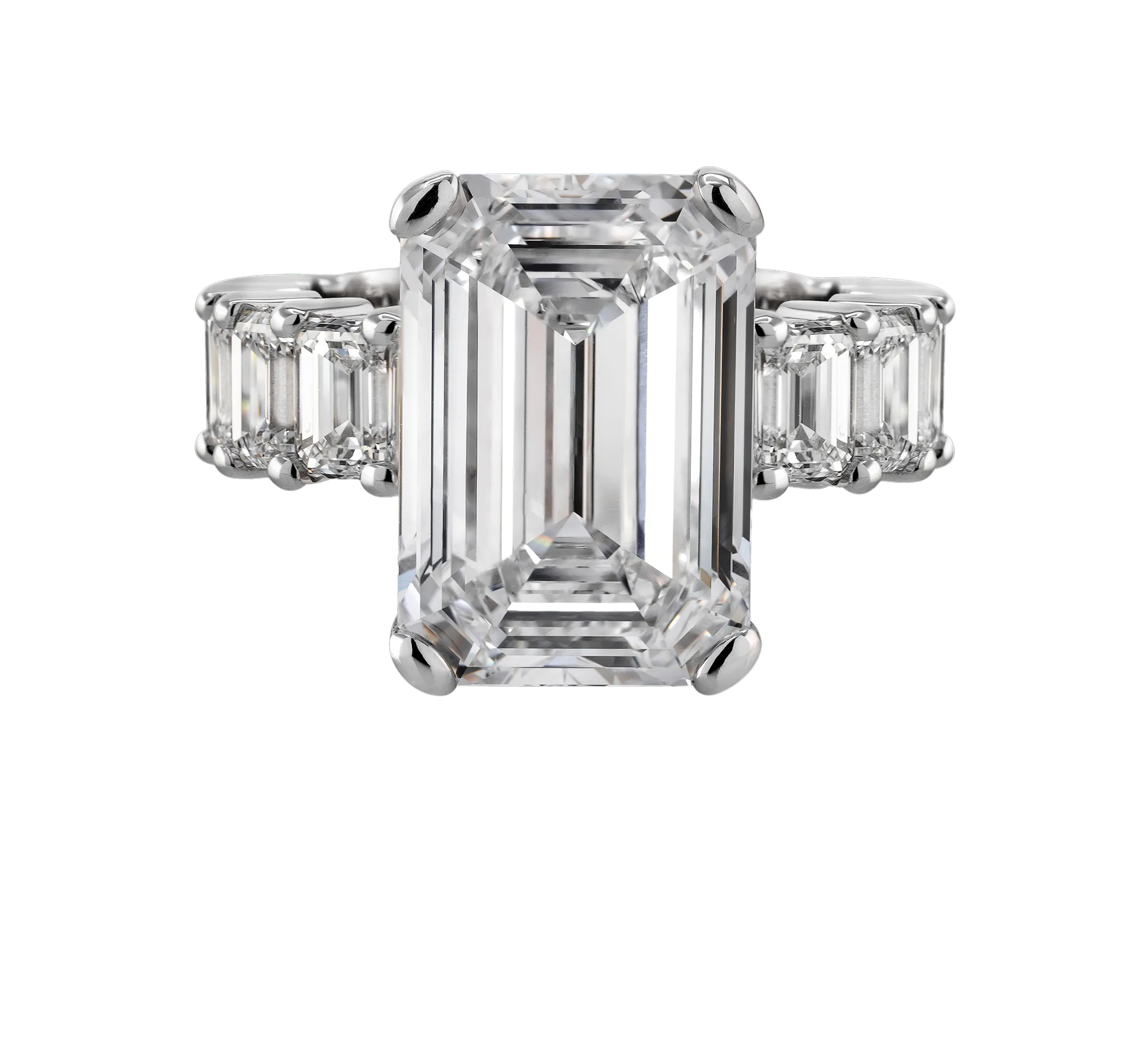
The classic is the solitaire: a single diamond, usually held in four or six prongs. Good alternatives are sapphire and ruby with a hardness of 9, spinel with 8, and emerald and aquamarine with a protective setting. Those who want to stay with a diamond vary the form: three-stone ring, halo, bezel, or a band set with stones.
At a glance
- The classic
- Diamond solitaire in four or six prongs
- Hardest alternatives
- Sapphire and ruby, hardness 9, toughness excellent
- Well suited
- Spinel, hardness 8, toughness good
- With protection
- Emerald and aquamarine, hardness 7.5 to 8
- Other forms
- Three-stone ring, halo, bezel setting, band set with stones
- Always advisable
- Independent laboratory report on the main stone
What makes an engagement ring classic
The solitaire is considered classic: a ring with a single main stone, usually a diamond, that carries all the attention without further accent stones. It is generally held by four or six prongs, narrow metal claws that reach over the edge of the stone. According to the Gemological Institute of America, GIA for short, this setting shows much of the stone and lets in a lot of light. This creates the sparkle associated with an engagement ring.
Classic does not mean dull, but reduced. The solitaire can be combined with almost any wedding band, suits many occasions, and hardly ages in style. Its effect depends almost entirely on the stone. That is precisely why the quality of the diamond decides the classic: cut, color, clarity, and weight. Those who wish to depart from it have two paths: a different stone or a different form.
When an alternative is worthwhile
An alternative is worthwhile when the classic does not suit the person. Typical reasons are the wish for color, for a stone with its own story, or for a flat form that does not catch on anything in daily life. GIA points out that raised prongs can snag on fabrics and should be checked occasionally. Those who work with their hands therefore often find a high solitaire impractical.

A second reason is weighting. With a diamond, the 4Cs determine value, and even small differences in color or weight change it noticeably. A colored stone is judged mainly by its color. Whether that is an advantage depends on what matters more to you in the ring: light or color.
Five stones that hold their own beside the diamond
| Stone | Mohs hardness | Toughness according to GIA | To consider in a ring |
|---|---|---|---|
| Sapphire | 9 | Excellent | Blue and many other colors, often heated |
| Ruby | 9 | Excellent | Glass-filled stones need more care |
| Spinel | 8 | Good | Intense heat can fade some colors |
| Emerald | 7.5 to 8 | Fair to good | Almost always fracture filled, bezel advisable |
| Aquamarine | 7.5 to 8 | Not stated | Protect from scratches and hard knocks |
Data from GIA care guidance. For comparison: diamond 10, tourmaline 7 to 7.5.
Sapphire and ruby are both corundum and, according to GIA, suitable for rings worn every day. Spinel, with a hardness of 8 and good toughness, is likewise durable. It is sometimes heated, which remains stable in daily wear. The emerald is weaker in its structure and, according to GIA, requires more care in wear than ruby or sapphire. Aquamarine, a blue beryl, is considered durable if it is protected from scratches and hard knocks.
Each of these stones has its own character. Sapphire is the obvious choice for blue, ruby for strong red. Spinel offers similar colors with somewhat lower hardness. Emerald stands for deep green and lives with visible inclusions. Aquamarine looks light and clear. The guide Emerald or Sapphire compares two of these stones in detail, and the guide Ruby in an engagement ring covers the ruby.
The five stones also differ when it comes to the report. GIA offers a report with an origin determination for ruby, sapphire, emerald, and red spinel, among others, but not for aquamarine. Anyone for whom origin matters, such as an emerald from Colombia or a sapphire from Sri Lanka, should consider this when choosing the stone. Origin is an expert assessment by the laboratory based on inclusions and trace elements.
Other ring forms with a diamond
Those who want to stay with a diamond can change the form. The three-stone ring places two smaller stones beside the center stone and gives the ring more width. For all-diamond rings, GIA advises choosing side stones no more than about two color grades away from the center stone, otherwise the center stone may look more yellowish. The side stones can also be colored, such as sapphires beside a diamond.
- Halo: small diamonds frame the center stone and make it look larger. More stones mean more care.
- Bezel: according to GIA, a surrounding metal rim protects the edge best and does not catch anywhere.
- Pavé: many small stones on the shank. A later resizing can loosen them.
- Band set with stones: flat, robust, without a raised center stone.
Each of these forms changes the ring more than a different stone does. A diamond in a bezel looks modern and calm, a halo playful, a three-stone ring narrative. A ring with no stone at all is also an option, covered in the guide Engagement ring without a stone. The guide Solitaire or eternity ring compares a solitaire with stones set all around.
How to assess any alternative
- Know the hardness and toughness of the stone: does it suit your daily life?
- Ask about treatment: heating is usually unproblematic, fillings require more care.
- Request a report from an independent laboratory that states identity and treatment.
- Choose the setting to suit the stone: the more delicate the stone, the more protection.
- Clarify the care: not every stone tolerates ultrasonic cleaning or steam.
The order has a reason. A beautiful stone that does not survive daily life disappoints after a few years. A robust stone without a report leaves open what one is wearing. Only when stone, treatment, and setting fit together is the alternative equal to the classic. According to GIA, laboratory reports for colored stones state the identity and the detectable treatments, and origin on request.

Common mistakes when departing from the classic
- Choosing a stone by color alone and overlooking its sensitivity.
- Placing a soft stone in a high, open basket.
- In a three-stone ring, choosing side stones whose color does not match the center stone.
- Planning a ring with pavé along the entire shank although the size is not yet fixed.
- Copying a trend instead of starting from the person who wears the ring.
The last point is the most important. A classic remains valid because it confines itself to the essentials. An alternative remains valid if it has a genuine reason: a favorite color, a family story, a profession where a flat ring fits better. The guide Vintage style or modern solitaire describes how a style stays beautiful over decades.
Developing a classic further at Vikar Ahmed
At Vikar Ahmed, engagement rings are designed individually and made in Germany. A classic can be developed further just as well as an entirely new idea can be realized. Every line, every diamond, and every gemstone can be tailored to your own ideas. Besides natural colorless and colored diamonds, Paraíba tourmaline, and rubellite, the house regularly works with sapphire, ruby, aquamarine, emerald, tanzanite, morganite, and spinel, but not with laboratory-grown diamonds. The ring is presented in a specially designed box.
Frequently asked questions
Which engagement rings are good alternatives to the classic diamond solitaire?
A solitaire with sapphire, ruby, or spinel, which are hard and tough enough for every day. Those who stay with a diamond choose a different form: a three-stone ring, a halo, a flat bezel, or a band with set stones. What matters is that the alternative suits the daily life of the wearer.
Which five stones besides diamonds are best suited to engagement rings?
By hardness and toughness: sapphire and ruby with a hardness of 9, spinel with 8, plus emerald and aquamarine with 7.5 to 8, which need a protective setting. Tourmalines such as rubellite or Paraíba, at 7 to 7.5, are somewhat softer and are also suitable when worn with care.
Is spinel hard enough for an engagement ring?
Yes. GIA gives spinel a hardness of 8 and good toughness. It is stable to light and chemicals. Only intense heat can cause some colors to fade. For a ring worn every day, it is therefore a robust choice.
How many prongs are customary for a classic solitaire?
Four or six. Four prongs show more of the stone, six hold it at more points. Both variants are proven. More important than the number is that the prongs are made strong enough and are checked by a goldsmith from time to time.
What is a three-stone ring?
A ring with a center stone and one smaller stone on each side. It looks wider than a solitaire and is often read as a symbol of past, present, and future. The side stones can be diamonds or colored stones that match the center stone.
Which colored stones have a hardness similar to diamond?
None quite reaches it. Sapphire and ruby come closest with a hardness of 9. The Mohs scale, however, is not evenly graduated: according to GIA, the diamond at 10 is many times harder. For a ring worn every day, a hardness of 9 is nonetheless quite sufficient, because hardly any everyday object scratches corundum.
Private consultation
Classic or alternative, the decision is easier when you see stones and forms side by side. Vikar Ahmed advises in the showroom in Idar-Oberstein by appointment or virtually. Arrange an appointment for a private consultation.
Further reading
- Glossary: Solitaire
- Sapphire engagement rings
- Solitaire or colored stone
- Three-stone engagement rings
- Aquamarine engagement ring
Sources
- GIA 4Cs: Complete Guide to Engagement Ring Settings, accessed 2026-11-17
- GIA: Sapphire Care and Cleaning Guide, accessed 2026-11-17
- GIA: Ruby Care and Cleaning Guide, accessed 2026-11-17
- GIA: Spinel Care and Cleaning Guide, accessed 2026-11-17
- GIA: Emerald Care and Cleaning Guide, accessed 2026-11-17
- GIA: Aquamarine Care and Cleaning Guide, accessed 2026-11-17
- GIA: Tourmaline Care and Cleaning Guide, accessed 2026-11-17
- GIA: Colored Stone Reports, accessed 2026-11-17
- GIA 4Cs: Tips for Buying an Engagement Ring, accessed 2026-11-17
- SSEF: Sapphire, Herkunftsbestimmung, accessed 2026-11-17

A personal conversation starts here.
At the showroom in Idar-Oberstein or by video. Vikar Ahmed discusses your ideas, stones and designs with you and answers your questions calmly and in confidence.


Thank you for your request.
Your request will be handled with the utmost attention and discretion. Vikar Ahmed will get back to you.
Your details
Request
–
Occasion
–
Consultation
–
Contact
–
In the meantime
Insights: What is a Paraíba tourmaline? · Engagement ring to your own design: how does it work?
Confidential and without obligation
Back to the pagePrivate consultation
A personal conversation starts here.
- Time for your questions, wishes and ideas
- In the showroom in Idar-Oberstein or by video
- Confidential, discreet and without obligation
Vikar Ahmed · Hauptstraße 111 · 55743 Idar-Oberstein, Germany