

Solitaire in White Gold or a Ring with a Colored Stone?
Classically colorless or deliberately colored: both paths lead to a ring for life. Where they differ in everyday wear, in grading, and in care.
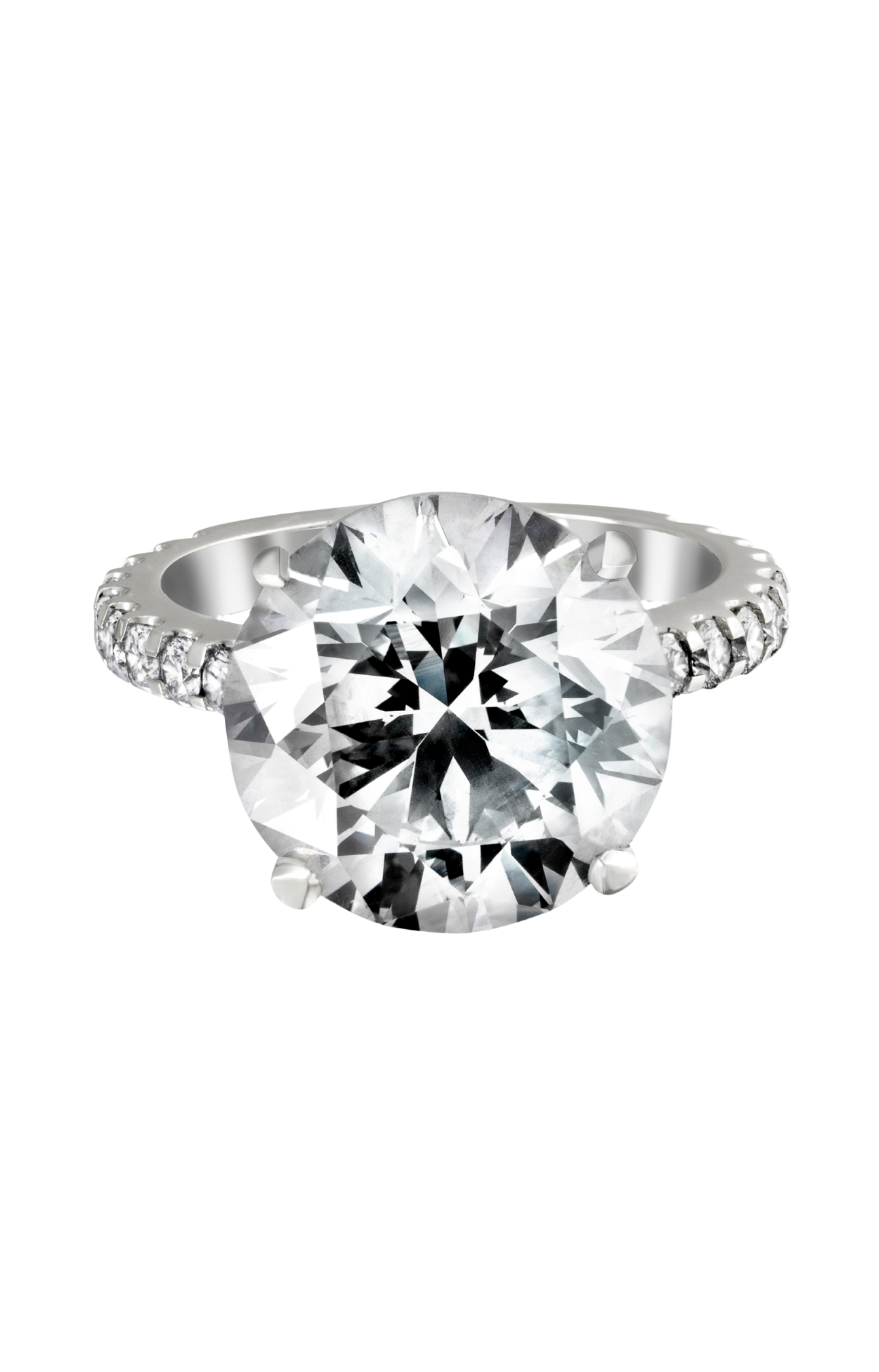
A solitaire with a diamond in white gold is the classic and most robust choice, because diamond has a hardness of 10 and suits almost any wedding band. A colored stone makes the ring more personal and lives from its color. Sapphire and ruby withstand everyday wear well, while an emerald calls for more care. The deciding factors are wearing habits, a favorite color, and a report on the stone.
At a glance
- Hardness of diamond
- 10 on the Mohs scale, only a diamond scratches a diamond
- Sapphire and ruby
- Hardness 9, with excellent toughness and no cleavage
- Hardness of emerald
- 7.5 to 8, toughness only fair to good
- Value of a diamond
- Determined by the 4Cs: color, clarity, cut, and carat weight
- Value of a colored stone
- Color first, there is usually no uniform scale for clarity
- Colored stone report
- Confirms the species and states whether and how the stone was treated
Two paths to the same promise
A solitaire in white gold places a colorless diamond at the center. The pale metal recedes, and the stone brings light and sparkle. This form is so widespread that it is regarded as the epitome of the engagement ring. That is precisely its advantage: it is understood everywhere, suits almost any clothing, and can later be worn with nearly any wedding band.

A ring with a colored stone sets a different accent. The focus is not on sparkle but on a hue: the blue of a sapphire, the red of a ruby, the green of an emerald. The colored center stone is often framed by small diamonds. According to GIA, such a halo adds contrast and protects the stone at the same time. Anyone who associates a color with a memory finds a very personal statement in it.
The comparison by criteria
| Criterion | Solitaire with diamond | Ring with colored stone |
|---|---|---|
| Hardness | 10, the highest value on the Mohs scale | 9 for sapphire and ruby, 7 to 8 for emerald and tourmaline |
| Effect | Sparkle, neutral to any color | Color as a personal statement |
| Grading | 4Cs with fixed grades for color and clarity | Color first, clarity usually without a uniform scale |
| Report | Diamond report with grades for the 4Cs | Identification with a statement on treatment |
| Care | Uncomplicated, check the prongs regularly | Depends on the stone, no ultrasonic or steam for emerald |
| Setting | Prongs customary, plenty of light in the stone | A protective bezel setting or halo is often sensible |
Basis: GIA information on hardness, toughness, and care. The values apply to the gemstone species, not to individual stones.
What everyday wear demands of a stone
For a ring worn every day, two properties count. Hardness describes how well a stone resists scratches. Toughness, according to GIA, describes how well it withstands breaking, chipping, and cracking. The two do not coincide. With a hardness of 10, diamond can hardly be scratched, but it has cleavage directions. A hard blow in the wrong place can therefore split it, even after cutting.
Sapphire and ruby both belong to the corundum family. GIA gives them a hardness of 9, excellent toughness, and no cleavage. Untreated and heated stones are regarded there as very durable. This makes them the obvious choice when a colored stone is to cope with everyday life without special care. The hardness of tourmaline is 7 to 7.5, that of tanzanite only 6 to 7.
Emerald calls for the most caution. Its hardness is 7.5 to 8, its toughness only fair to good. According to estimates cited by GIA, 90 percent or more of all emeralds are filled with oils or resins. Heat, steam, and ultrasonic cleaning can attack these fillings. An emerald ring therefore belongs in its case during sport and rough work.
How the two stones are graded
For a diamond, grading follows fixed scales. Color, clarity, cut, and carat weight, together the 4Cs, are stated in grades in the report. The carat is a unit of weight of 200 milligrams. GIA emphasizes that two diamonds of the same weight need not be of equal value, because the other three characteristics are decisive. This comparability makes the diamond predictable for many couples.

For a colored stone, color is by far the most important factor according to GIA. For most colored stones there is no uniform system for clarity, and the cut also tends to follow the individual crystal. For sapphire, GIA values a velvety blue to violetish blue in a medium to medium dark tone most highly. How to assess a colored stone step by step is described in the guide Choosing a colored stone.
Good to know
According to GIA, a report on a colored stone confirms the species of the stone, describes its size and color, and states whether and how it was treated. Depending on the stone, it may also include a statement on geographic origin.
White gold as a frame for both stones
White gold is created when fine gold is alloyed with white metals such as palladium or silver. It usually also receives a layer of rhodium, which according to the World Gold Council creates a harder, brighter surface. This layer wears off. GIA expects that it needs to be renewed every few years. For a colorless diamond, white gold is the most harmonious frame, because it reflects no color of its own into the stone.
With a colored stone, white gold appears cool and calm. A blue sapphire or a green emerald looks particularly clear in it. Warm tones such as a ruby or a pink tourmaline also suit rose gold, which picks up the hue. The guide Rose gold or white gold explores the effect of the two gold colors on a stone. On the durability of the white metals, the comparison Platinum or white gold helps.
Typical mistakes in the decision
- Looking only at hardness: even a diamond can chip from a hard blow, and the setting counts too.
- Treating an emerald like a diamond: ultrasonic cleaning and steam can attack its fillings.
- Choosing the colored stone from photos: tone and saturation can only be judged reliably on the stone itself.
- Not asking about treatment: it affects care and value and should be stated in writing.
- Choosing the color according to a trend rather than the person who will wear the ring every day.
Which suits whom
- The solitaire with a diamond suits you if the ring is to look classic and be worn without special care.
- It also suits you if a wedding band or a guard ring is to be freely combined with it later.
- A sapphire or ruby suits you if color is desired and the ring has to cope with everyday life.
- An emerald suits you if the green matters more than robustness and a protective setting is chosen.
- Diamonds around a colored stone suit you if you want both: color at the center, sparkle at the edge.
At Vikar Ahmed, engagement rings are individually designed and made in Germany. Every line, every diamond, and every gemstone can be tailored to your own ideas. The house's pieces include colorless diamonds as well as colored stones, such as Colombian emerald, rubellite, or Paraíba tourmaline. The house also regularly works with sapphire, ruby, aquamarine, tanzanite, morganite, and spinel. More on sapphire as a center stone in the guide Engagement rings with sapphire.
Frequently asked questions
We plan to get engaged next year and are torn between a classic solitaire in white gold and a ring with a colored stone. What speaks for each option?
Hardness, comparability through the 4Cs, and free combination with any wedding band speak for the solitaire. Personality and color speak for the colored stone. In that case, choose a sapphire or ruby if the ring will be worn every day. A year of lead time is enough to settle the stone and the design calmly.
Which colored stone withstands the most in an engagement ring?
Sapphire and ruby. Both have a hardness of 9, excellent toughness, and no cleavage. This brings them closest to diamond in everyday wear. Tourmaline, emerald, and tanzanite are softer or more brittle and need a protective setting as well as somewhat more care when worn.
Does a colored stone in an engagement ring need a report?
A report is highly recommended. It confirms which stone it is and names any treatment such as heating or filling. This information affects care and value. For some stones, the report can also state an origin. More on this in the guide to gemstone reports.
Can diamond and colored stone be combined in one engagement ring?
Yes. A colored center stone is often framed by small diamonds. This adds contrast and protects the edges of the center stone. The reverse is also possible, with a diamond at the center and colored stones at the sides, for example in a three-stone ring.
How do I clean an engagement ring with an emerald?
Most safely with warm soapy water and a soft brush. Ultrasonic cleaning and steam are risky for emerald, because they can widen fissures and dissolve fillings of oil or resin. High heat also damages the stone. A check by the goldsmith does not replace cleaning at home.
Does a colored stone look different in white gold than in yellow gold?
Yes. White gold appears cool and makes blue and green stones look particularly clear. Yellow gold and rose gold place a warm tone around the stone and deepen red, orange, and pink. In the end, the comparison on the stone itself decides, not theory.
Private consultation
Whether a diamond or a colored stone suits you better becomes clearest when you see both side by side. Vikar Ahmed advises in the showroom in Idar-Oberstein by appointment, and in a virtual appointment on request. Request an appointment for a private consultation.
Further reading
- Engagement ring with a colored gemstone
- Emerald or sapphire compared
- Choosing the solitaire engagement ring
- Gemstone: Sapphire
- Glossary: Solitaire
Sources
- GIA 4Cs: Colored Gemstone Engagement Rings Buying Guide, accessed 2026-11-17
- GIA: Diamond Care and Cleaning Guide, accessed 2026-11-17
- GIA: Sapphire Care and Cleaning Guide, accessed 2026-11-17
- GIA: Emerald Care and Cleaning Guide, accessed 2026-11-17
- GIA: Sapphire Quality Factors, accessed 2026-11-17
- GIA 4Cs: Diamond Carat Weight, accessed 2026-11-17
- GIA 4Cs: Best Ring Material for Everyday Wear, accessed 2026-11-17
- World Gold Council: About gold jewellery, accessed 2026-11-17
- Vikar Ahmed: Verlobungsringe, accessed 2026-11-16
- Vikar Ahmed: Collections, accessed 2026-11-16

A personal conversation starts here.
At the showroom in Idar-Oberstein or by video. Vikar Ahmed discusses your ideas, stones and designs with you and answers your questions calmly and in confidence.


Thank you for your request.
Your request will be handled with the utmost attention and discretion. Vikar Ahmed will get back to you.
Your details
Request
–
Occasion
–
Consultation
–
Contact
–
In the meantime
Insights: What is a Paraíba tourmaline? · Engagement ring to your own design: how does it work?
Confidential and without obligation
Back to the pagePrivate consultation
A personal conversation starts here.
- Time for your questions, wishes and ideas
- In the showroom in Idar-Oberstein or by video
- Confidential, discreet and without obligation
Vikar Ahmed · Hauptstraße 111 · 55743 Idar-Oberstein, Germany