

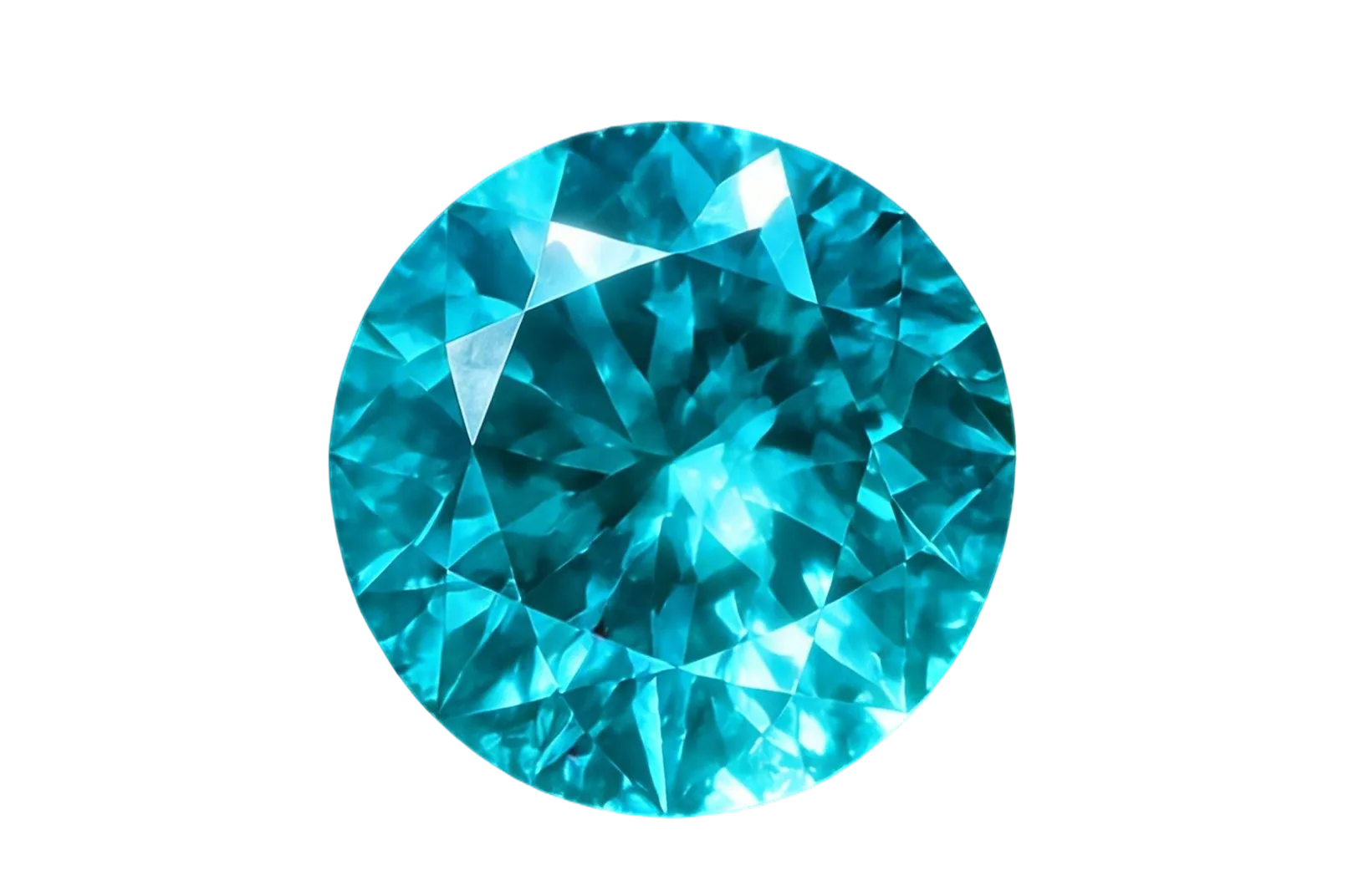
Tourmaline earrings succeed when both stones match in color, lightness, and orientation. Tourmaline shows different colors depending on the viewing direction, so both stones must be cut and set the same way. Long forms suit drop earrings, strong rubellites suit calm studs. Tourmalines tolerate heat and ultrasonic cleaning poorly, which also applies to repairs.
At a glance
- Hardness and toughness
- 7 to 7.5 on the Mohs scale, toughness according to GIA fair
- Colors
- According to GIA, one of the widest color ranges of any gem species
- Trade names
- Rubellite (pink to red), indicolite (blue), Paraíba (copper-bearing, blue to green)
- Pleochroism
- Strong: a different color depending on the crystal direction
- Typical shape
- Long rectangles, Paraíba mostly as pear or oval
- Care
- Warm soapy water, no ultrasonic, no steam
Tourmaline offers the widest choice of colors for earrings
Tourmaline is not a single mineral but a group of closely related mineral species with the same crystal structure. GIA counts it among the gemstones with the widest color range of all. For earrings, this means that almost any color to go with your wardrobe or skin tone can be realized with a tourmaline, from pink through red and green to blue. Separate names have become established for individual colors.
Pink to red tourmalines are called rubellite, dark blue to greenish blue ones indicolite. Paraíba tourmaline is an intensely blue to green tourmaline whose color is based mainly on copper and manganese. There are also bicolored stones whose colors adjoin one another in the crystal. For earrings, the choice of color is therefore more open than with sapphire or emerald, while matching the pair is more demanding. More on the stone can be found under Tourmaline.
Pleochroism: why two stones look different
Tourmaline is strongly pleochroic. According to GIA, this means it can show different colors depending on the crystal direction. The most valuable green stones show an attractive color in both directions. Cutters make use of this: with pale rough, they orient the table across the length of the crystal to deepen the color. With dark material, they orient it parallel to the length to lighten the stone.
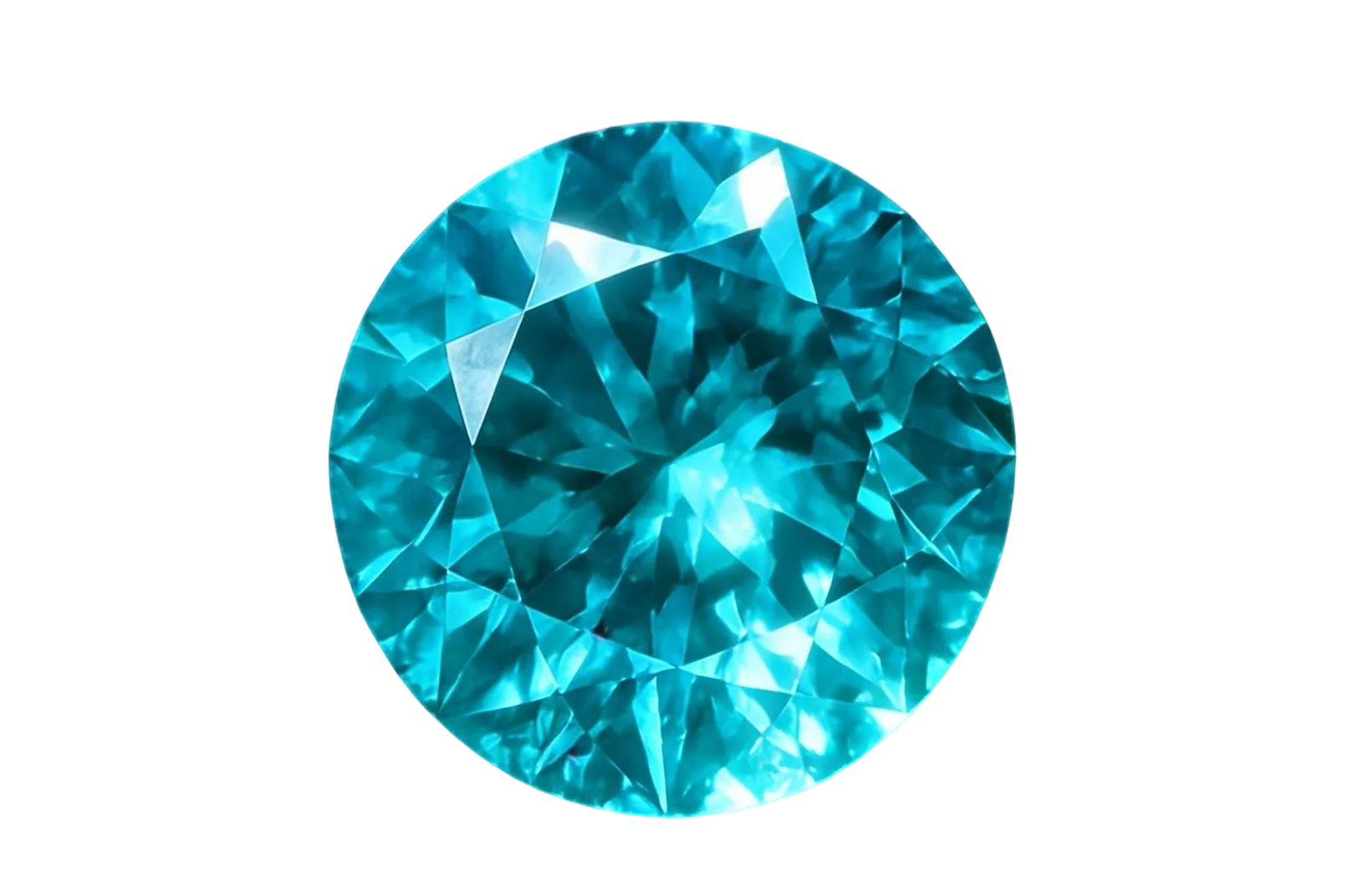
For a pair of earrings, this has a practical consequence. Two tourmalines can carry the same color description in the report and still look different in the ear if they were cut with a different orientation. Therefore examine both stones side by side, from the front and at a slight angle, because that is how they are seen when worn. Well-matched pairs are often cut from the same rough stone or from stones of one parcel.
Long forms for earrings with movement
According to GIA, typical inclusions in tourmaline run parallel to the length of the crystal, and cutters often shape tourmalines as long rectangles. For drop earrings, this is an advantage: an elongated stone emphasizes the line from ear to neck and moves calmly along. According to GIA, Paraíba tourmalines are mostly cut as brilliants, often as pears or ovals, and are rarely larger than one carat.
A special case is watermelon tourmaline, with a pink core and a green rim. GIA reports that designers sometimes cut such crystals into slices and set these slices instead of faceting them. In the ear, they look graphic and light. Because each slice is patterned differently, such pairs are never exactly identical, which can be used deliberately as a design idea.
Chandelier with tourmalines or earrings with rubellite
For a festive evening, two paths are open. According to GIA, a chandelier has three or more drops on a common element, and it received its name in the 1920s. With tourmalines of different colors, it becomes colorful and full of movement. Earrings with rubellite, on the other hand, rely on a single strong color. Which solution looks more elegant depends less on the stone than on the occasion and the clothing.
| Criterion | Chandelier with tourmalines | Earrings with rubellite |
|---|---|---|
| Effect | Moving, multicolored, expansive | Calm, one clear color |
| Suits | A plain dress, hair worn loose or up | Patterned clothing, shades of red and black |
| Matching | Many stones matched in color and size | Two main stones chosen precisely as a pair |
| Weight | Higher, the clasp must provide support | Usually lighter |
| Risk | Quickly looks restless if the colors do not harmonize | Can look too severe if the stone is too dark |
Both forms can also be combined, for example as a chandelier with rubellite drops.
A rubellite has the strongest effect in the evening when its tone is not too dark. GIA points out that dark tourmalines are more common but less attractive. A chandelier made of different tourmalines, by contrast, needs a unifying idea, such as a color family or a gradient from light to dark. The comparison with Paraíba is shown in Paraíba or rubellite earrings?.
Namibian tourmalines in earrings
Namibia is one of the origins often mentioned in connection with tourmaline earrings. In the collection of the gemologist Eduard Gübelin, which GIA documents, tourmalines from Namibia come in green, blue, and red, that is, as verdelite, indicolite, and rubellite. The range from a single country of origin is therefore wide. For a pair, what counts in the end is not the country but that both stones suit each other.
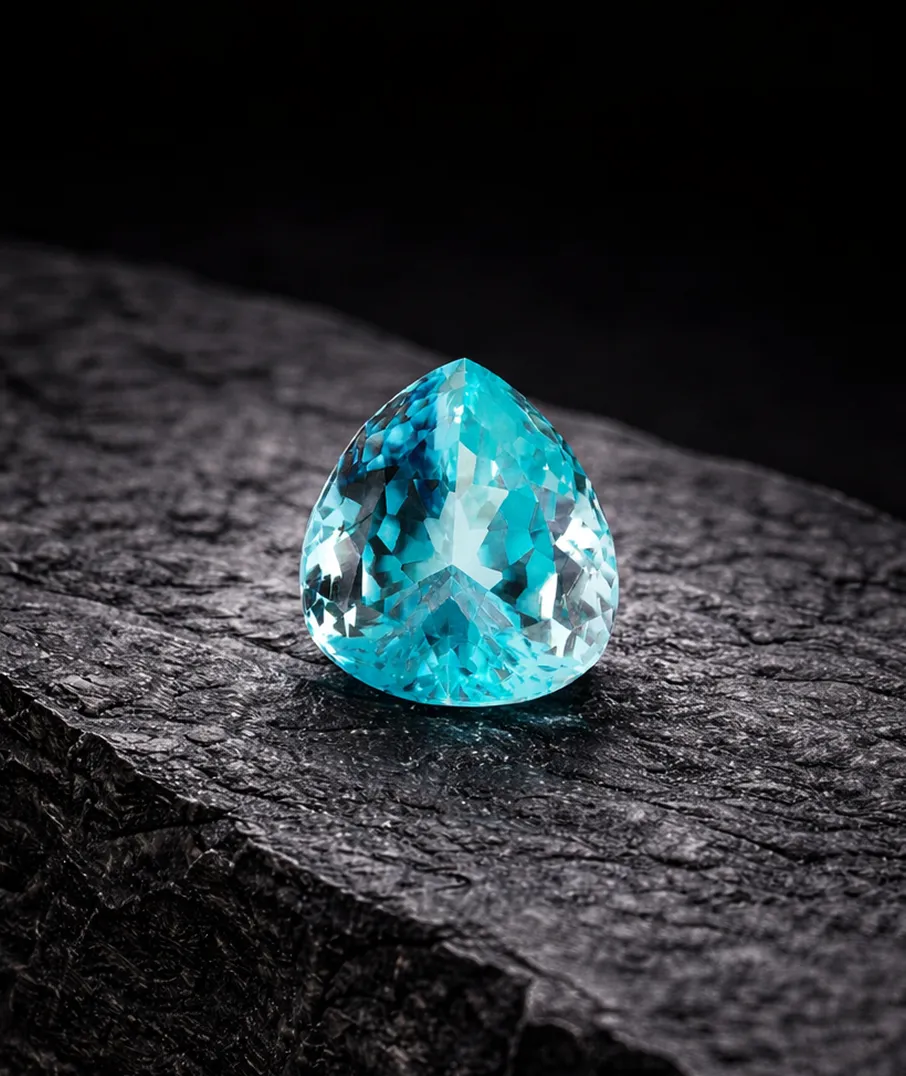
A statement of origin is a statement about the locality, which can hardly be read from the stone itself. For copper-bearing tourmaline, GIA states that the origin cannot be determined with standard gemological tests and that a trace element analysis is necessary. If origin matters to you, you should therefore have it documented. How Namibian stones differ from Brazilian Paraíba is explained in Namibian tourmalines and Brazilian Paraíba tourmalines.
Heat and light: what tourmaline earrings do not like
According to GIA, tourmaline is generally stable to light and household chemicals, but heat can damage it. High temperatures can change the color, and a sudden change in temperature can cause fractures. This mainly concerns the workshop: if a bail or a clasp is re-soldered, the stones should be removed from the setting beforehand. With chandeliers with many small bails, this is a reason to entrust repairs only to an experienced workshop.
Some tourmalines are treated, and according to GIA the most important methods are heating and irradiation. Colors produced by heating are considered stable. Color changes from irradiation, on the other hand, can fade with heat or strong light. For earrings that are often worn in sunlight, it is therefore worth asking about the treatment of both stones. They are cleaned with warm soapy water, while ultrasonic and steam are not recommended.
Common mistakes with tourmaline earrings
- Choosing two stones as a pair based only on the color description in the report.
- Comparing the stones only flat from above instead of in wearing position.
- Choosing a very dark rubellite for an evening by candlelight.
- Mixing colors in a chandelier that have no common line.
- Having bails re-soldered without first removing the stones from the setting.
- Cleaning the earrings in an ultrasonic bath.
Tourmaline earrings at Vikar Ahmed
Tourmalines are among the stones Vikar Ahmed works with. The pieces shown include Brazilian Paraíba tourmaline, Lagoon tourmaline, Namibian tourmaline, and rubellite. One-of-a-kind pieces are created in three steps: design by the in-house designers, three-dimensional visualization in CAD, and realization in the house's in-house atelier in Idar-Oberstein. The showroom there receives clients by appointment, and directions are described in Jeweler in Idar-Oberstein.
Vikar Ahmed has no location in Birkenfeld, and consultations take place in Idar-Oberstein or virtually. What clients from the Birkenfeld district should know is described under Jeweler for Birkenfeld. If you want to see several tourmaline colors side by side at the appointment, mention it in your request. On request, Vikar Ahmed also sends photos or short videos in daylight in advance. For general questions about form and clasp, Having earrings designed as a one-of-a-kind piece helps.
Frequently asked questions
Which looks more elegant for a festive evening, chandelier earrings with tourmalines or earrings with rubellite?
That depends on the rest of the evening. A chandelier with tourmalines looks full of movement and color and suits a plain dress. Rubellite earrings set a single strong color and also go with patterned clothing. Both look elegant if the rubellite is not too dark and the colors in the chandelier follow a common line.
Why do two tourmalines of the same color look different in earrings?
Usually because of pleochroism. Tourmaline shows a different color depending on the crystal direction, and cutters orient stones differently to make them look lighter or darker. Two stones with the same color description can therefore appear different in the ear. Only a direct comparison in wearing position helps.
Are tourmalines durable enough for earrings?
Yes. At 7 to 7.5 on the Mohs scale, tourmalines are sufficiently scratch-resistant, and their toughness is considered fair. GIA names earrings and necklaces as a good choice for stones that tolerate knocks less well. In the ear they knock against things less often than on the finger, and a protective setting helps further.
Can the color of a tourmaline in an earring fade?
According to GIA, tourmaline is generally stable to light, and colors from heating are considered stable. If the color was changed by irradiation, it can diminish with heat or strong light. Therefore ask about the treatment of both stones before choosing earrings for sunny days.
What is a watermelon tourmaline?
A tourmaline with a pink to red core and a green rim, whose colors recall the flesh and rind of a watermelon. According to GIA, instead of faceting it, designers sometimes cut the crystal into slices. In earrings, such slices look graphic, although a pair is never patterned completely alike.
What needs to be considered when repairing tourmaline earrings?
Tourmalines do not tolerate heat or sudden changes in temperature. If soldering is needed on bails, hooks, or clasps, the stones must first come out of the setting. With a chandelier with many drops, this is laborious, but it is the safe way. Afterward, cleaning is done with soapy water, not in an ultrasonic bath.
Private consultation
A pair of tourmaline earrings begins with two stones that look alike in the ear. Vikar Ahmed advises in the house's showroom in Idar-Oberstein by appointment or in a virtual appointment. You can mention color, form, and occasion in your request. Request an appointment for a private consultation.
Further reading
- What makes good chandelier earrings
- Rubellite earrings
- How tourmalines are treated
- Glossary: Rubellite
- Choosing colored gemstone earrings
Sources
- GIA: Tourmaline Quality Factors, accessed 2026-11-17
- GIA: Tourmaline Description, accessed 2026-11-17
- GIA: Tourmaline Care and Cleaning, accessed 2026-11-17
- GIA: Gübelin Gem Project, Tourmaline, accessed 2026-11-17
- GIA Gems & Gemology: Paraíba Tourmaline Geographic Origin Determination (Winter 2019), accessed 2026-11-17
- GIA 4Cs: The Classic Chandelier Earring Gets a Modern Makeover, accessed 2026-11-17
- GIA 4Cs: More than Mohs, Gem Durability, accessed 2026-11-17
- Vikar Ahmed: Kollektionen, accessed 2026-11-16
- Vikar Ahmed: Bespoke, Designprozess, accessed 2026-11-16
A personal conversation starts here.
At the showroom in Idar-Oberstein or by video. Vikar Ahmed discusses your ideas, stones and designs with you and answers your questions calmly and in confidence.





Thank you for your request.
Your request will be handled with the utmost attention and discretion. Vikar Ahmed will get back to you.
Your details
Request
–
Occasion
–
Consultation
–
Contact
–
In the meantime
Insights: What is a Paraíba tourmaline? · Engagement ring to your own design: how does it work?
Confidential and without obligation
Back to the pagePrivate consultation
A personal conversation starts here.
- Time for your questions, wishes and ideas
- In the showroom in Idar-Oberstein or by video
- Confidential, discreet and without obligation
Vikar Ahmed · Hauptstraße 111 · 55743 Idar-Oberstein, Germany