

The diamond in an engagement ring: stone, setting, documentation
An engagement ring is worn every day, often for a lifetime. What the diamond must bring to this, and which questions should be settled before the design.
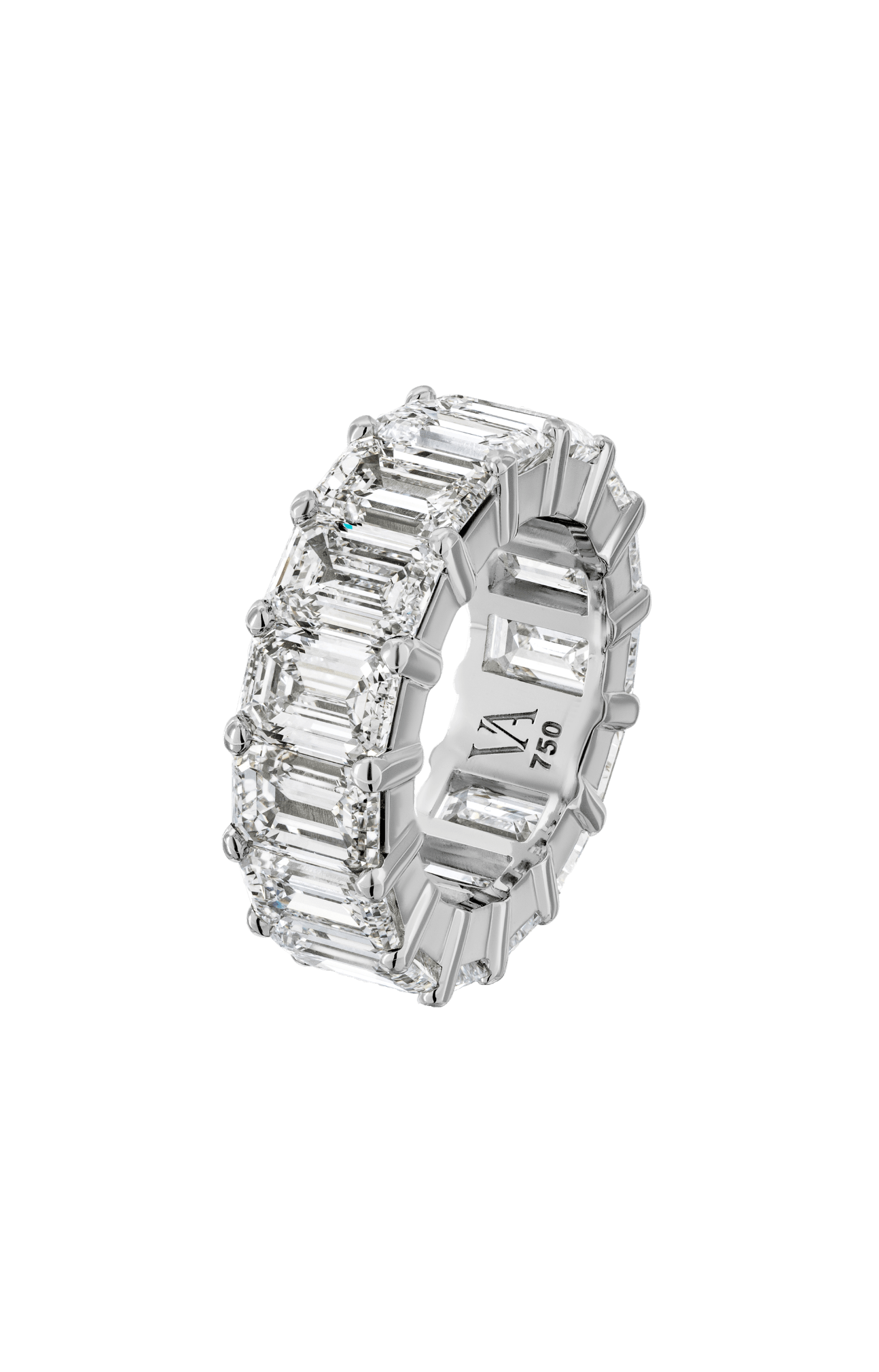
A diamond suits an engagement ring because, at hardness 10, it is more scratch-resistant than any other gemstone. It is not unbreakable: a hard blow can cleave it. That is why, in addition to the 4Cs, the setting matters, as does a laboratory report identifying the stone as natural or laboratory-grown, and regular checks of the prongs.
At a glance
- Mohs hardness
- 10, the highest level on the scale
- Weak point
- Cleavage: a hard blow can split the stone
- Color scale
- D (colorless) to Z (light yellow or brown)
- Laboratory-grown diamond
- Chemically and optically like a natural one, reliably distinguished only in a laboratory
- Kimberley Process
- Certification for rough diamonds, in force since 2003
- Care
- Soft cloth and mild detergent, no ultrasonic cleaning at home
Scratch-resistant, but not unbreakable
At 10, the diamond stands at the very top of the Mohs scale. Hardness here means only resistance to scratching. GIA, the Gemological Institute of America, emphasizes that the intervals on the scale are not even: diamond is many times harder than sapphire and ruby, which sit one level below. For a ring worn while washing hands, during sport, and at work, that is a clear advantage.

According to GIA, however, durability has three parts: hardness, toughness, and stability against heat and chemicals. Toughness describes how well a stone withstands an impact. Here the diamond has a weakness, its cleavage. In certain directions, the atoms lie farther apart. A cutter uses this to divide a rough stone deliberately. A hard blow in this direction can, however, also cleave a cut stone in the ring.
Natural or laboratory-grown
According to GIA, laboratory-grown diamonds are chemically and optically the same as natural ones. They cannot be distinguished with conventional gemological observation and instruments. A trained eye with a loupe is therefore not enough. Certainty comes only from examination in a gemological laboratory. For you, this means that whether the stone comes from the earth or from a laboratory is a detail that must be documented, not one you can see.
Both paths are legitimate as long as they are clearly named. If you decide on a natural diamond, ask for a report from an independent laboratory that records exactly this. How the two stones differ in origin, value development, and perception is explored in the comparison Laboratory-grown or natural diamond. What a report contains in detail is explained in the glossary under GIA report.
The 4Cs with the ring in mind
Color, clarity, cut, and carat weight describe the quality of the stone. The GIA color scale runs from D for colorless to Z for light yellow or brown. Grading is done by comparison with stones of known color under precisely defined light. Many differences between adjacent grades are so fine that an untrained eye cannot see them. According to GIA, most diamonds in jewelry fall in the colorless to near-colorless range.
| Criterion | What it describes | Significance in the ring |
|---|---|---|
| Color | Distance from colorlessness, D to Z scale | Works together with the color of the metal |
| Clarity | Inclusions and characteristics under a 10x loupe | Note inclusions near the setting |
| Cut | Proportions, symmetry, polish | Determines sparkle and face-up effect |
| Carat | Weight, not size | Face-up size also depends on the shape |
| Fluorescence | Glow under UV light | Assessed in every GIA diamond report |
The four Cs describe the stone. Whether it looks good in the ring is decided only by its interplay with setting and metal.
For the ring, balance is what counts. Choosing the maximum on every grade gives away room for what is truly visible on the finger. How to weigh clarity against weight is explained in the guide Clarity or carat. Which shape makes the stone look larger and which sparkles most is shown in Which cut for the engagement ring.
The setting protects what hardness cannot
Because the diamond can cleave, the setting takes over part of its protection. Round brilliants usually sit in four or six prongs. According to GIA, fewer prongs show more of the stone, more prongs hold it more securely. Six prongs emphasize the round shape, four make the stone look somewhat more square. On pointed corners, as with princess or marquise, V-shaped prongs protect against chipping. More on construction under prong setting.
- Bezel setting: a metal rim encloses the stone and protects its edges very well but lets in somewhat less light.
- Prong setting: plenty of light and brilliance; the prongs should be checked from time to time.
- Halo: a ring of small stones frames the center stone and makes it look larger but needs more care.
- Tension setting: the stone is held only by pressure, and a hard blow can shift it.
- Cathedral setting: arches support the head, but the ring is more likely to catch on fabric.
With a large center stone, the demands increase. The head sits higher, the prongs carry more weight, and the ring knocks against things more often. Whether a higher setting with more light or a lower one with more protection is the better fit depends on the hands and on everyday life. What else to consider with large stones is covered in the guide Engagement rings with a large stone.
Origin: what the Kimberley Process regulates
The Kimberley Process is a certification scheme intended to stop the trade in conflict diamonds. These are rough diamonds that rebel groups use to finance wars against legitimate governments. The scheme was signed by 37 participants in Interlaken in November 2002 and entered into force in 2003. Since then, every export of rough diamonds must be accompanied by a valid certificate. The participants each implement the rules themselves.

The limit of this scheme is important. It concerns rough diamonds in trade between countries. It says nothing about which mine an individual cut stone in your ring comes from. If you wish to know more about the path of a particular stone, ask about it specifically. Which forms of evidence exist for this and what they provide is covered in the guide Origin of diamond jewelry.
Care and checks in everyday life
A diamond attracts grease. Hand cream and soap settle on the underside and rob it of light. According to GIA, it can be cleaned safely with a lint-free cloth, a commercial jewelry cleaner, or mild detergent. GIA does not recommend ultrasonic and steam cleaners for home use, because they can loosen stones in the setting. Professionals therefore check a piece for loose stones before using such equipment.
The diamond's hardness has a downside. If the stone sits loosely, it can wear through a prong over time. A slight rattle or catching on sweaters are warning signs. GIA advises having the prongs checked from time to time and names no fixed interval. If you wear the ring daily and work with your hands, it makes sense to have it examined more often than someone who wears it for occasions.
Common mistakes when choosing
- Confusing hardness with unbreakability and keeping the ring on during sport or rough work.
- Choosing a stone without a report from an independent laboratory and receiving details on origin only verbally.
- Choosing a higher color grade than necessary and economizing on cut or setting in return.
- Planning a high, open setting for an everyday life in which the hand often knocks against things.
- Taking the Kimberley Process for proof of origin of the individual stone.
Diamond engagement rings at Vikar Ahmed
Vikar Ahmed designs engagement rings individually and makes them in Germany, in its in-house atelier in Idar-Oberstein. Every diamond and every detail can be tailored to your own ideas. For the center stone, the house uses only natural diamonds from 0.50 carats with a GIA certificate, in color D to H and clarity IF to VS2, at most a very clean SI1. You can check a GIA report online yourself using its number. The house has no location in Trier or Bad Kreuznach; consultations take place in Idar-Oberstein.
Frequently asked questions
Which goldsmiths in Idar-Oberstein make diamond engagement rings to individual wishes?
What matters is a workshop that designs and makes its pieces itself. Vikar Ahmed designs engagement rings individually in Idar-Oberstein: from design through a three-dimensional visualization to execution as a one-of-a-kind piece in its in-house atelier. Line, diamond, and details are agreed with you. Ask every house who actually makes the ring.
Can a diamond in an engagement ring break?
Yes. Diamond is the hardest gemstone and therefore very scratch-resistant, but it has cleavage. A hard blow in an unfavorable direction can cleave it or chip an edge. A protective setting and taking the ring off for rough work reduce this risk considerably.
Can a laboratory-grown diamond be recognized with the naked eye?
No. According to GIA, laboratory-grown diamonds are chemically and optically like natural ones, and conventional gemological tests cannot separate them. The distinction is possible only with special equipment in a laboratory. That is why a natural diamond in an engagement ring should come with an independent report.
Which color grade makes sense for a diamond in an engagement ring?
There is no fixed rule. The scale runs from D to Z, and many differences between adjacent grades are invisible to an untrained eye. It makes sense to view the stone in the planned metal color and under different light, rather than deciding by the letter alone.
Does the Kimberley Process document where my cut diamond comes from?
No. The Kimberley Process certifies rough diamonds on export and is intended to keep conflict diamonds out of trade. It does not document which mine an individual cut stone comes from. That requires separate evidence, which you should ask about specifically.
How often should the setting of a diamond ring be checked?
GIA names no fixed interval but advises having the prongs checked from time to time. A loose diamond can wear through a prong over time. If you wear the ring daily, have it examined more often, and at the latest when the stone rattles or the ring catches on fabric.
Private consultation
Which diamond and which setting suit your everyday life is best discussed with the stone in hand. Vikar Ahmed offers consultations in the house's showroom in Idar-Oberstein by appointment, and virtually on request. Your request is handled discreetly. Request an appointment for a private consultation.
Further reading
- GIA report for an engagement ring
- Laboratory-grown or natural diamond
- Gemstone: diamond
- Glossary: solitaire
- Jeweler for clients from Idar-Oberstein
Sources
- GIA 4Cs: Mohs Scale of Mineral Hardness, accessed 2026-11-17
- GIA: Diamond Care and Cleaning Guide, accessed 2026-11-17
- GIA: 4Cs Color, accessed 2026-11-17
- GIA 4Cs: How to Buy a Diamond, accessed 2026-11-17
- GIA FAQ: How do I identify laboratory-grown diamonds?, accessed 2026-11-17
- GIA 4Cs: Complete Guide to Engagement Ring Settings, accessed 2026-11-17
- Kimberley Process: What is the KP, accessed 2026-11-17
- Vikar Ahmed: Verlobungsringe und Engagement, accessed 2026-11-16
- Vikar Ahmed: Collections, accessed 2026-11-16

A personal conversation starts here.
At the showroom in Idar-Oberstein or by video. Vikar Ahmed discusses your ideas, stones and designs with you and answers your questions calmly and in confidence.


Thank you for your request.
Your request will be handled with the utmost attention and discretion. Vikar Ahmed will get back to you.
Your details
Request
–
Occasion
–
Consultation
–
Contact
–
In the meantime
Insights: What is a Paraíba tourmaline? · Engagement ring to your own design: how does it work?
Confidential and without obligation
Back to the pagePrivate consultation
A personal conversation starts here.
- Time for your questions, wishes and ideas
- In the showroom in Idar-Oberstein or by video
- Confidential, discreet and without obligation
Vikar Ahmed · Hauptstraße 111 · 55743 Idar-Oberstein, Germany