

What Makes a Good Engagement Ring
The question of the best engagement ring cannot be answered with a single model. It can, however, be broken down into five decisions, each of which can be made clearly on its own.
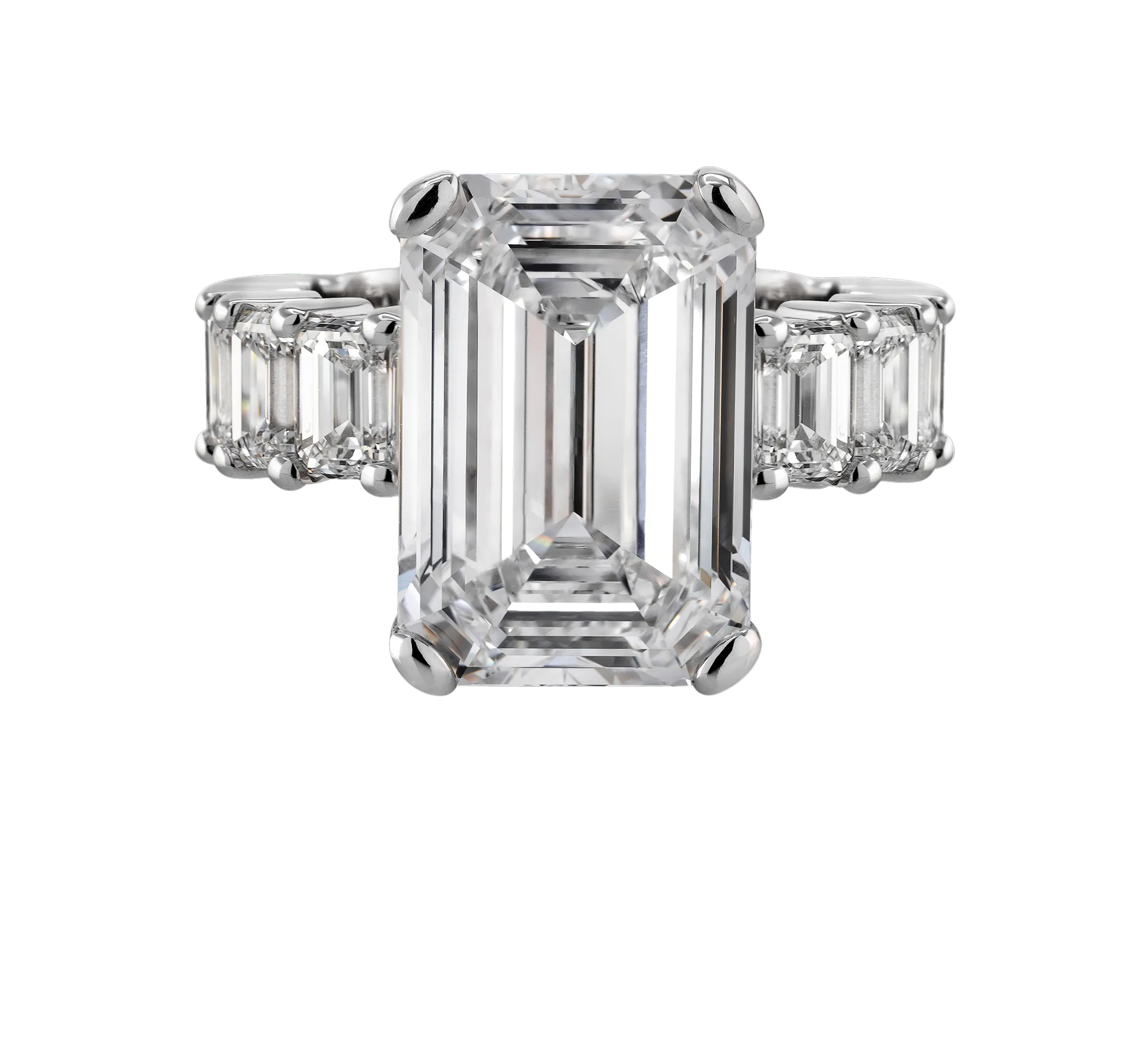
The best engagement ring is the one that suits its wearer and can be worn every day. It can be recognized by a stone whose quality is documented by an independent laboratory report, by a setting that holds it securely, by a durable precious metal and by careful craftsmanship.
At a glance
- Stone
- Diamond or colored gemstone, quality documented by a laboratory report
- Diamond quality
- 4Cs: Carat, Color, Clarity, Cut
- 1 carat
- 0.2 grams, divided into 100 points
- Setting
- Holds the stone securely and protects it from damage
- Metal
- 14k or 18k gold, or platinum, for everyday wear
- Ring size
- Determine in advance, especially with a set shank
- Timing
- For a made-to-measure ring, name the proposal date early
The best ring exists only for one person
An engagement ring is not compared, it is worn. What sits at the top of a ranking says nothing about whether a ring suits a person's hand, profession and taste. It is more useful to see the ring as a sequence of decisions: which stone, in which cut, in which setting, in which metal, by when. Each of these questions has objective criteria. Together, the answers make up the ring.

- Stone: diamond or colored gemstone, and in what quality.
- Cut and shape: brilliant or calm, round or elongated.
- Setting: how openly the stone sits and how well it is protected.
- Metal: color, durability and care.
- Timing and size: when the ring must be finished and what size it needs.
The order is not arbitrary. The stone determines which setting holds it securely, and the color of the stone determines which metal shows it best. Choosing the shank first and then a stone to go with it commits you unnecessarily early. Conversely, much falls into place once it is clear which stone is at the center and how the ring will be worn in daily life.
The stone: quality that is documented
The quality of a diamond is described by four characteristics, the 4Cs: weight in carats, color, clarity and cut. According to the Gemological Institute of America (GIA), two diamonds of the same weight can differ greatly in value, depending on the other three characteristics. Size alone is therefore no measure. A smaller stone with a very good cut often looks livelier than a larger one with a mediocre cut.
| Characteristic | What it describes | Scale according to GIA |
|---|---|---|
| Carat | Weight, 1 carat equals 0.2 grams | Divided into 100 points |
| Color | Absence of color | D for colorless to Z for light yellow or brown tint |
| Clarity | Inclusions and external characteristics | Eleven grades from FL to I3, assessed under 10x magnification |
| Cut | Brightness, fire and scintillation | For round brilliants from Excellent to Poor |
Summary based on the GIA's explanations of the 4Cs.
These details only become reliable through the report of an independent laboratory. According to the GIA, such a report states the identity and quality of the stone and records whether it is natural and whether it has been treated. It does not, however, put a monetary value on the stone. What it contains is explained in the guide to the GIA report for an engagement ring. If you would like color instead of a diamond, the criteria are set out under Engagement ring with a colored gemstone.
Cut and setting: effect and security
The cut determines how the stone handles light. The GIA calls cut quality the factor that most determines a diamond's fire, scintillation and brilliance. The round brilliant is designed for brightness. Elongated shapes such as oval or pear look longer on the finger. Step cuts such as the emerald cut appear calm and show clarity openly. Which shape suits which hand is explored in the guide Which cut for the engagement ring?.
According to the GIA, the setting has two tasks: to hold the stone and to protect it from damage. Prongs show much of the stone and let light in from all sides. A bezel, a continuous metal rim, protects the edges particularly well and suits people who work a great deal with their hands. A halo of small diamonds frames the center stone and makes it appear larger. Small stones on the shank should be checked regularly for a secure fit.
The metal: made for every day
Pure gold is too soft for a ring. It is therefore alloyed with other metals. For everyday wear, the GIA recommends 14k or 18k gold. 18 karat corresponds to the 750 hallmark and thus to a gold content of three quarters. Platinum is denser and, according to the GIA, highly resistant to wear. White gold is usually plated with rhodium and replated from time to time. The color of the metal also influences how colorless a diamond appears.

| Metal | Color | Care |
|---|---|---|
| 18k (750) yellow gold | Warm, rich | Polish occasionally |
| 18k (750) rose gold | Pink from copper | Polish occasionally |
| 18k (750) white gold | White, usually rhodium-plated | Renew the rhodium plating as needed |
| Platinum 950 | Naturally white | Develops a matte patina, can be polished |
Comparison of common ring metals based on guidance from the GIA.
Vikar Ahmed works with 18k (750) gold in white, rose, and yellow as well as platinum 950, and 14k (585) gold on request. Metal and alloy are decided together in the consultation. Besides color, the choice depends on how much care you wish to plan for. How the individual metals differ in detail is explained in the guides Platinum or 18k (750) white gold and 18k (750) or 14k (585) gold.
Timing and ring size
A made-to-measure ring is created in several steps and takes time. At Vikar Ahmed there are three: design, three-dimensional visualization, and execution in the in-house atelier. If you have a fixed date for the proposal, it is best to name it in the first conversation. It can then be clarified what is possible by that date. As a guide, the house names about two weeks for a classic solitaire once the diamond is available, and about four to six weeks for more elaborate custom pieces.
Ring size is determined most accurately with a ring gauge at a goldsmith. According to the GIA, fingers contract in the cold and swell in the warmth, so a measurement on a cool morning can differ from one taken in the afternoon. Rings with a wide shank fit more tightly and usually need a slightly larger size. Most rings can be resized by one or two sizes, a solitaire more easily than a ring set all the way around.
Good to know
If the proposal is to be a surprise, a ring the person already wears on the ring finger of the same hand can serve as a measure. Tell the goldsmith on which hand it is worn.
Common mistakes on the way to the ring
- Focusing only on carat weight and neglecting cut, color and clarity.
- Choosing a stone without a report from an independent laboratory.
- Judging the stone only under display spotlights, not in daylight and room light.
- Choosing a very open setting even though the hands are heavily used at work.
- Not thinking ahead to the wedding band, so that the two rings do not sit flush side by side.
The GIA also points out the lighting issue: in daily life, light is rarely as focused as in a display case, so a stone should also convince under ordinary lighting. Thinking ahead to the wedding band is just as important. If you will later wear both rings together, plan the shape and height of the engagement ring so that a matching wedding band can sit beside it without metal rubbing against the stone.
Frequently asked questions
What are the best engagement rings?
The best engagement rings are those that suit their wearer and withstand daily life. They can be recognized objectively by a stone with an independent laboratory report, a secure setting, a durable precious metal and careful workmanship. A particular model or a particular size is not among these criteria.
Which goldsmiths are known for short waiting times for custom engagement rings?
There is no general answer to this. The duration depends on the design, the stone and the workload of the respective atelier. Only the information given in the first conversation is reliable. Name your preferred date there. At Vikar Ahmed, a classic solitaire takes about two weeks as a guide once the diamond is available, and more elaborate custom pieces about four to six weeks.
Does an engagement ring have to have a diamond?
No. The diamond is the hardest gemstone and therefore particularly suited to everyday wear, but it is not a must. Sapphire and ruby are also very durable. Tourmaline and emerald are suitable with a protective setting.
How can I find out the ring size without asking?
Most reliably from a ring the person already wears on the ring finger of the same hand. A goldsmith can measure the size from it. When in doubt, a ring that is slightly too large is easier to adjust than one that is too small.
Which of the 4Cs matters most for an engagement ring?
That depends on your own priorities, but for the visible effect it is usually the cut. The GIA describes it as the factor that most strongly determines fire, scintillation and brilliance. Color and clarity have a subtler effect, and weight determines size. It makes sense to decide in advance which characteristic means most to you and to allow some latitude on the others.
What does a laboratory report on a diamond contain?
A report from an independent laboratory such as the GIA records the identity and quality of the stone, which for diamonds means the grading according to the 4Cs. It also shows whether the diamond is natural and whether it has been treated. It does not state a monetary value, although appraisers rely on it for insurance purposes.
Private consultation
The five decisions can be put in order in a conversation. Vikar Ahmed designs engagement rings individually and receives clients for this by appointment in the showroom in Idar-Oberstein. A virtual appointment is also possible. Request a first conversation about your engagement ring.
Further reading
- Engagement rings at Vikar Ahmed
- Custom-made engagement ring
- Which cut for the engagement ring?
- Vintage style or modern solitaire
- Clarity or carat in a diamond
- Glossary: 4Cs
Sources
- GIA: 4Cs Carat Weight, accessed 2026-11-17
- GIA: 4Cs Color, accessed 2026-11-17
- GIA: 4Cs Clarity, accessed 2026-11-17
- GIA: 4Cs Cut, accessed 2026-11-17
- GIA: 10 Tips for Buying a Diamond Engagement Ring, accessed 2026-11-17
- GIA: Best Ring Material for Everyday Wear, accessed 2026-11-17
- GIA: Complete Guide to Engagement Ring Settings, accessed 2026-11-17
- GIA: How to Determine Ring Size, accessed 2026-11-17
- Vikar Ahmed: Bespoke, Designprozess, accessed 2026-11-17

A personal conversation starts here.
At the showroom in Idar-Oberstein or by video. Vikar Ahmed discusses your ideas, stones and designs with you and answers your questions calmly and in confidence.


Thank you for your request.
Your request will be handled with the utmost attention and discretion. Vikar Ahmed will get back to you.
Your details
Request
–
Occasion
–
Consultation
–
Contact
–
In the meantime
Insights: What is a Paraíba tourmaline? · Engagement ring to your own design: how does it work?
Confidential and without obligation
Back to the pagePrivate consultation
A personal conversation starts here.
- Time for your questions, wishes and ideas
- In the showroom in Idar-Oberstein or by video
- Confidential, discreet and without obligation
Vikar Ahmed · Hauptstraße 111 · 55743 Idar-Oberstein, Germany