

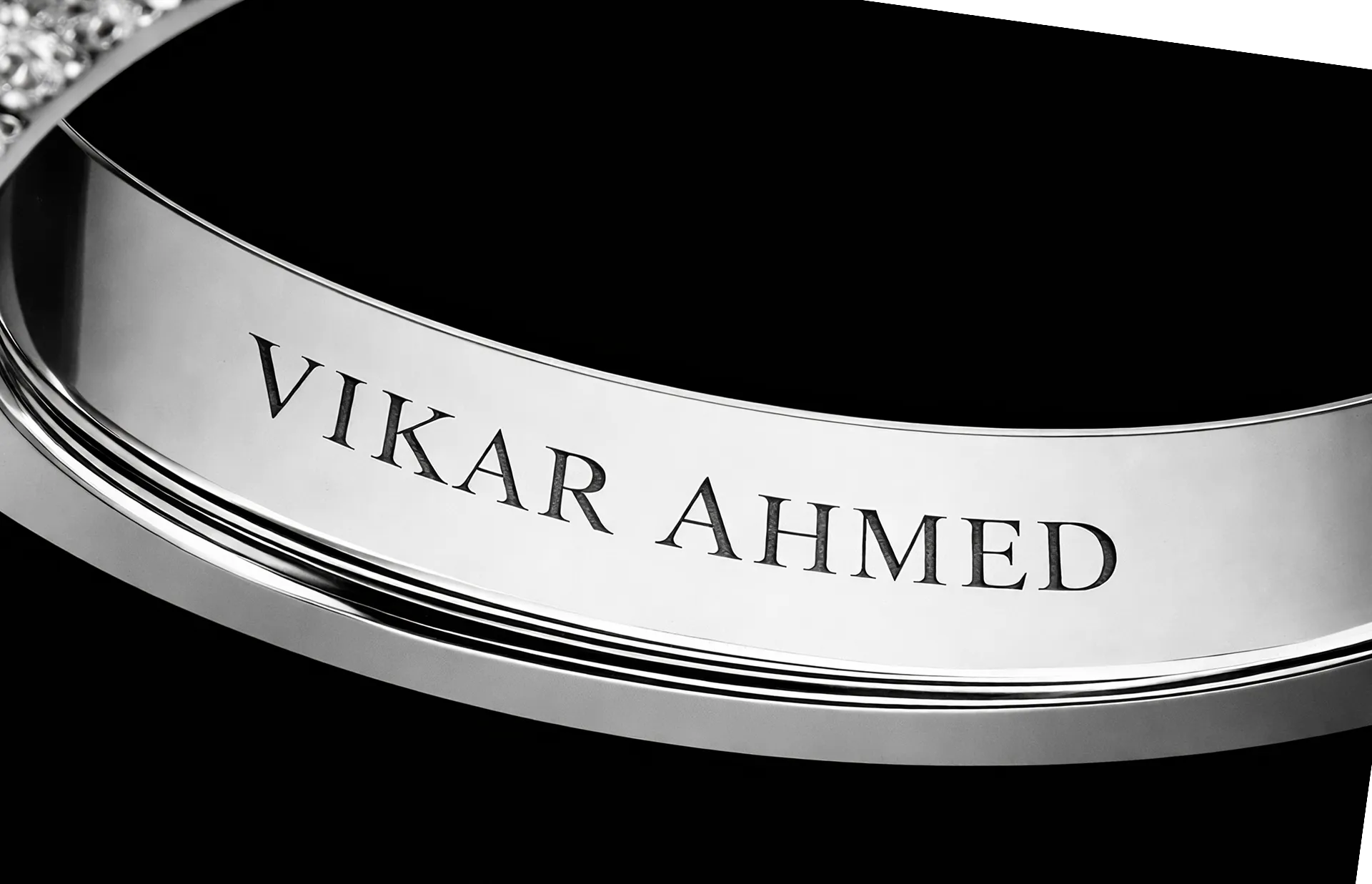
Exceptional High Jewelry differs from the classic not through size, but through an idea of its own that is carried through into construction and setting. This can be an unusual stone, a free form, a new color combination, or a different way of wearing the piece. The design is successful when it still sits securely, can be worn comfortably, and protects the stones.
At a glance
- Classic design
- Proven types such as solitaire, rivière, or eternity with well-established proportions
- Exceptional design
- Deliberately departs in stone, form, color, setting, or way of wearing
- Touchstone
- Wearability, security of the stones, weight, care
- Risky setting
- Tension setting: according to GIA, a hard knock can shift the stone
- Delicate stones
- According to GIA, better suited to earrings and necklaces than to rings
- Design tools
- Sketch, watercolor, CAD model, printed prototype
Exceptional means: one idea, consistently built
Classic designs follow types that have proven themselves over decades: the solitaire, the diamond rivière, the eternity ring. Their proportions are well established, their construction is familiar. An exceptional design leaves these paths at one point at least. It does so not for the sake of effect, but because an idea demands it: a stone with an unusual color, a form taken from nature, an object that is not otherwise conceived as jewelry.
Whether a design is truly exceptional therefore does not show in the first impression. A conspicuous piece can, at its core, be a classic with more stones. A restrained piece, on the other hand, can be entirely independent in construction, choice of stones, and line. A separate guide describes how to recognize independent design in luxury jewelry in general. Here the question is where a piece deliberately departs from the familiar.
Where a design can depart from the familiar
There are five points at which an unusual design separates from the classic. Usually one of them is enough to give a piece an independent character. Changing all five at once risks a piece without a center. Good designs choose one departure as the main idea and subordinate everything else to it. The following list helps you name, while looking at a piece, what it actually does differently.

- The stone: a colored stone such as Paraíba tourmaline or a fancy color diamond instead of the colorless brilliant.
- The color: combinations of several stones that are not limited to white and one color.
- The form: asymmetrical lines, organic forms, unfamiliar proportions.
- The setting: surfaces of pavé, visible construction, stones that appear to float freely.
- The way of wearing: jewelry for unfamiliar places on the body, or an object not usually associated with jewels.
Unusual must remain wearable
Every departure from the classic comes at a price in construction. A freestanding stone is more exposed to knocks, a large surface of small stones needs more care, a heavy drop pulls on the earlobe. When it comes to the durability of a stone, GIA distinguishes three properties: hardness as resistance to scratching, toughness as resistance to breaking and chipping, and stability with respect to light, chemicals, and temperature.
An exceptional design has to take all three into account. According to GIA, stones with lower toughness are better placed in earrings and necklaces, because there they knock against hard surfaces less often. For rings and bracelets, GIA recommends them rather for special occasions. Even diamond, with a hardness of 10, can cleave or break from a hard blow. A bold piece is therefore only good if it shows the stone where the stone is safe.
The setting decides between boldness and durability
Many unusual effects are created through the setting. A tension setting makes the stone appear to float, a bezel setting of smooth metal gives it a closed, graphic form, a surface of pavé turns metal into light. Each of these techniques has strengths and limits, which GIA describes in its overview of settings. The table summarizes what matters for an unusual design.
| Setting | Effect in the design | Limit according to GIA |
|---|---|---|
| Prongs | Plenty of light in the stone, the stone stands free | Prongs can snag, check them regularly |
| Bezel | Closed, calm, graphic | Somewhat less light, but good protection of the edge |
| Pavé | A continuous surface of sparkle | Check the stones regularly for a secure fit |
| Channel | Rows of stones flush in the shank | Rings are difficult to resize |
| Tension setting | The stone appears to float | A hard knock can shift the stone |
The limits apply to every execution. A good design plans for them instead of concealing them.
For an unusual design, this means that the choice of setting is part of the idea and not a secondary matter. Anyone who wants to show a stone freely chooses a setting that demands more attention and should know this beforehand. What the setter's work involves is explained in hand setting, and the basic form of the prong setting in the glossary.
How an unusual design comes into being
An exceptional piece needs more preparatory work than a classic, because there is no proven template. It begins with a sketch or watercolor, which captures the idea, the mood, and the color. Then comes the 3D model. In GIA's training, this includes constructing designs on the computer, rendering them, and printing them as a prototype, in order to make them durable and comfortable to wear.

GIA also names the limits within which every design is created: cost, time, size, style, and the method of manufacture. With an unusual piece in particular, it is worth discussing these limits openly. A printed model shows weight and volume before any metal is cast. A visualization shows whether the stone sits well when seen from the side. How design and approval work together is explained in The bespoke design.
Typical mistakes in unusual designs
- Packing several ideas into one piece until none of them carries it.
- Placing a delicate stone in a ring that is meant to be worn every day.
- Underestimating weight: earrings and pendants must hang comfortably.
- Forgetting the back: the side facing the body must also be smooth and well built.
- Confusing conspicuousness with independence: more stones are not yet a new idea.
The second mistake weighs most heavily, because it cannot be corrected without rebuilding the piece. Before a stone goes into an unusual setting, its species and treatment should be known. An identification report from a laboratory such as GIA describes the species of the stone and lists detectable treatments, including for stones that are already set. This provides the basis for every decision about setting and care.
Exceptional designs at Vikar Ahmed
Vikar Ahmed works in Idar-Oberstein, in the heart of the Naheland. The in-house designers develop independent concepts into which personal wishes are incorporated. Designs are created as a sketch and as a watercolor, then as a 3D CAD model with a photorealistic view in which details can still be adjusted. Every piece is made as a one-of-a-kind piece in the in-house atelier, by goldsmiths with decades of experience. Stones are set under the microscope and polished by hand in several stages to a high shine.
On its website, the house names bespoke projects that are far removed from classic jewelry, among them a Diamond Glove, a Gladiator Mask, and The W4 Football. Further details on these pieces are not described there. How long such an elaborate one-of-a-kind piece takes depends on design, material, and effort. If a date is fixed, mention it right in your inquiry. An overview of the path from wish to finished piece is given in Having jewelry made.
Frequently asked questions
Is exceptional jewelry less timeless than a classic design?
Not necessarily. A piece appears timeless when it follows a clear idea and is well built. Fashionable effects age quickly, whereas an independent form with harmonious proportions does not. Designs that only want to stand out through size or quantity are more likely to look short-lived.
Which gemstones are suitable for unusual jewelry forms?
For exposed forms in rings and bracelets, hard stones such as diamond or sapphire are suitable. More delicate stones such as emerald or tanzanite are better suited to earrings, pendants, and necklaces. What matters is where the stone sits in the piece and how often the piece is worn.
Is a tension setting secure enough for an exceptional piece?
It is possible, but demanding. GIA points out that a hard knock can shift or loosen the stone and that rings with a tension setting can hardly be resized. For a piece worn every day, a bezel setting or a sturdy prong setting is usually the safer choice.
May a piece of jewelry be deliberately asymmetrical?
Yes, asymmetry is a proven means of giving a design a sense of life. It must, however, be planned: the weight should be distributed so that a pendant hangs straight and a ring does not tip to one side. This can be checked on the CAD model or on a printed prototype before production.
Does an exceptional piece need a laboratory report for its stones?
For the main stone, a report is useful because it records the species and detectable treatments. This helps when choosing the setting and later with care and repair. For many small accent stones, an individual report is usually not customary; there, a clear description from the supplier is what counts.
What distinguishes an exceptional design from a conspicuous one?
A conspicuous design draws attention through size, quantity, or brilliance. An exceptional design changes something in the construction: the stone, the form, the setting, or the way the piece is worn. A piece can appear quiet and still be exceptional.
Private consultation
If you have an idea that cannot be translated into a classic, the work begins with a conversation. Vikar Ahmed advises in the showroom in Idar-Oberstein by appointment or in a virtual appointment. Your inquiry is treated with discretion. Request an appointment for a private consultation.
Further reading
- What makes a bespoke design timeless?
- Vintage or modern: which High Jewelry style endures?
- Glossary: High Jewelry
- Bespoke at Vikar Ahmed
- Timeless High Jewelry
Sources
- GIA 4Cs: Guide to Ring Settings, accessed 2026-11-17
- GIA 4Cs: More than Mohs, Gem Durability, accessed 2026-11-17
- GIA: Jewelry Design and Technology Program, accessed 2026-11-17
- GIA: Colored Stone Reports, accessed 2026-11-17
- GIA: Diamond Description, accessed 2026-11-17
- Vikar Ahmed: Bespoke, Designprozess, accessed 2026-11-16
- Vikar Ahmed: Startseite, accessed 2026-11-16

A personal conversation starts here.
At the showroom in Idar-Oberstein or by video. Vikar Ahmed discusses your ideas, stones and designs with you and answers your questions calmly and in confidence.


Thank you for your request.
Your request will be handled with the utmost attention and discretion. Vikar Ahmed will get back to you.
Your details
Request
–
Occasion
–
Consultation
–
Contact
–
In the meantime
Insights: What is a Paraíba tourmaline? · Engagement ring to your own design: how does it work?
Confidential and without obligation
Back to the pagePrivate consultation
A personal conversation starts here.
- Time for your questions, wishes and ideas
- In the showroom in Idar-Oberstein or by video
- Confidential, discreet and without obligation
Vikar Ahmed · Hauptstraße 111 · 55743 Idar-Oberstein, Germany