

Which Cut Brings Out the Color of an Emerald?
With an emerald, the cut decides not about sparkle but about color and durability. Why the emerald cut is so widespread and when an oval can be the better choice.
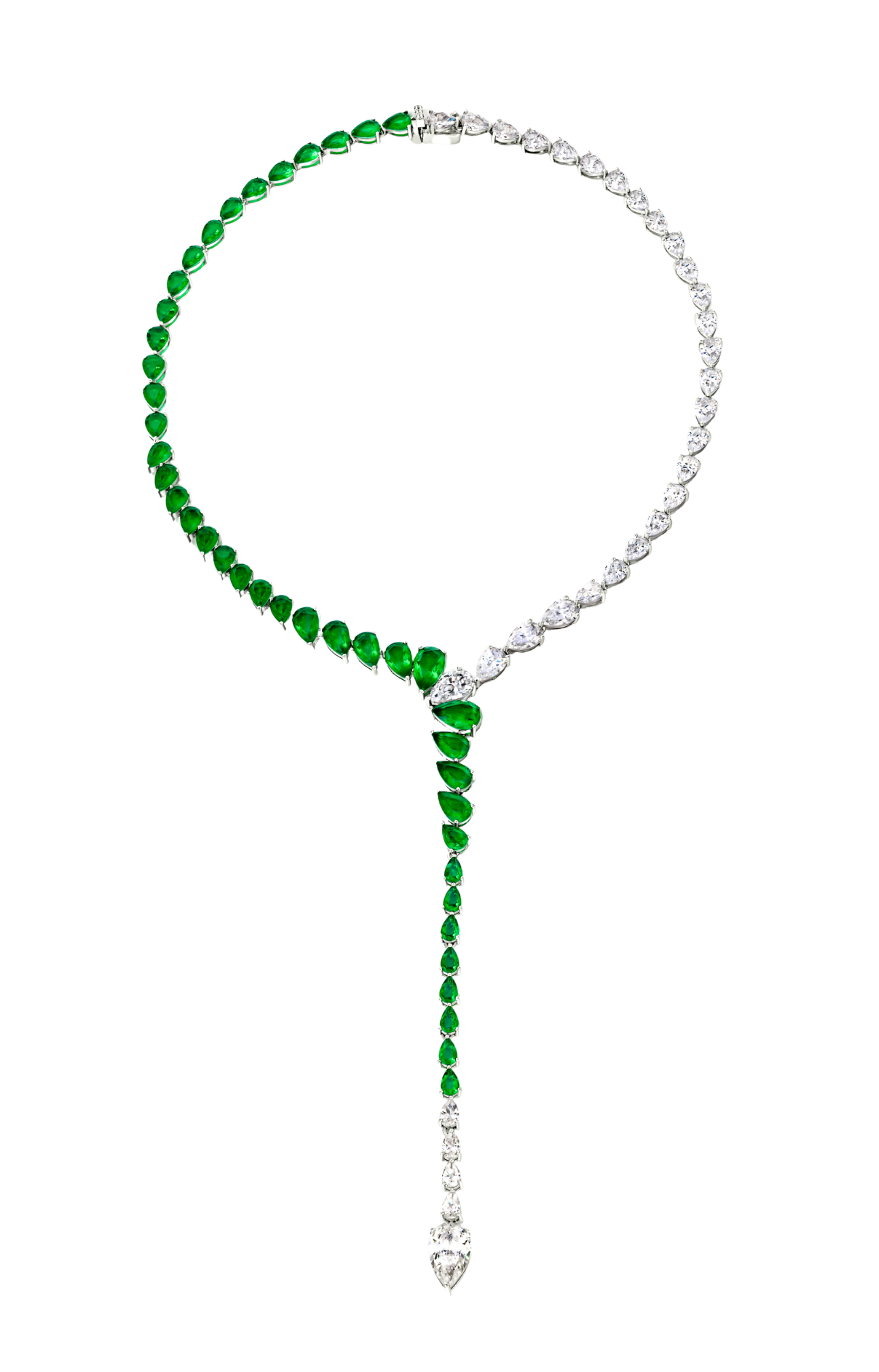
The emerald cut shows the color of an emerald calmly and in broad planes, and its beveled corners protect the brittle stone. An oval in a mixed cut distributes the color more lively and can disguise a small window in the center. More important than the shape are depth, table size, and orientation: they determine how saturated the green appears.
At a glance
- Most common cut
- Emerald cut, a step cut with beveled corners
- Mixed cut
- Brilliant-cut crown, step-cut pavilion, often in ovals and cushions
- Light stone
- Deep cut, small table, fewer facets darken it
- Dark stone
- Shallow cut, large table, more facets lighten it
- Window
- Pavilion too shallow, the stone becomes see-through and gray in the center
- Hardness and toughness
- 7.5 to 8 on the Mohs scale, toughness fair to good
Color is created in the cutting
With a diamond, the cut is meant above all to return light. With an emerald, it has a different task: it should show the green as evenly and richly as the rough allows. The Gemological Institute of America, GIA for short, describes how much influence the cutter has on this. A light stone can be darkened with a deep cut, a small table, and few facets. A dark stone can be lightened with a shallow cut, a large table, and additional facets.
Added to this is the orientation within the crystal. The color also depends on the viewing direction within the crystal. GIA advises placing the table perpendicular to the long axis of the crystal so that the bluish green shows most strongly. The shape, whether rectangle or oval, is therefore only one of several decisions. Two emeralds from the same rough can look markedly different depending on depth and orientation. What defines emerald as a mineral is explained in the glossary.
Why the emerald cut belongs to the emerald
According to GIA, the emerald cut is the most common cut for emeralds and is named after them. It is a step cut: the facets are four-sided and lie as long steps parallel to the table and the girdle. At the bottom, they meet not in a point but in a line, the keel. The effect is calm. Instead of many small points of light, the stone shows broad, clear planes in which the color stands as if in a window of glass. More on the shape under Emerald Cut.

The second reason is durability. According to GIA, almost all emeralds have distinct fissures and are more brittle than ruby or sapphire. Sharp corners are the most vulnerable points of a stone. In the emerald cut they are beveled, and GIA expressly names the protection of the delicate corners as an advantage of this cut. For a stone that demands great care in cutting, setting, and wearing, this is more than a question of style. Here, the cut is also protection.
The oval: livelier, but more demanding
Oval colored stones are usually mixed cut. The crown, that is, the upper part, carries brilliant-cut facets, and the pavilion below has steps as in a step cut. A GIA article on the value factors of colored stones describes how this combination breaks up the light into a pattern of its own, evens out the color, and makes a small window at the bottom less visible. The oval therefore looks more animated than the emerald cut, with the color appearing in many small planes instead of a few large ones.
For emerald, the oval is the less common choice. The same article notes that emeralds are offered almost exclusively in the emerald cut. An oval emerald is therefore not a mistake, but often a decision in favor of a particular rough whose shape or color distribution would be lost in a rectangle. The rounded outline of the oval requires a setting that holds the stone evenly all around. How the oval cut works in diamonds is described in the glossary.
Window and extinction: the flaws in the cut
Two phenomena reveal a cut that does not suit the stone. A window occurs when the pavilion is too shallow. Light passes through the stone instead of being reflected back, and a gray, dull area appears in the center. With a window, the background also influences the color: in a pendant, the skin or fabric beneath tints the stone. In strongly colored stones, small windows are less noticeable than in light ones.
Extinction shows as dark, almost black areas. It is caused by steep angles in the pavilion that do not return light from outside to the viewer. A skilled cutter uses this deliberately: some extinction makes the color appear more saturated. Too much of it makes an emerald look dull. According to the article mentioned, beryl needs greater depth than garnet, for example, to avoid showing a window, because of its low refractive index. In an oval, the arrangement of the facets can further reduce the window.
Emerald cut and oval compared
| Criterion | Emerald cut | Oval, mixed cut |
|---|---|---|
| Color effect | Calm, broad, even | Animated, in many small planes |
| Inclusions | Openly visible under a large table | Tend to recede in the animated pattern |
| Window | Clearly visible if cut too shallow | Facet arrangement can reduce it |
| Protection of corners | Beveled corners | No corners, girdle to be protected all around |
| Prevalence in emerald | The usual cut | Less common, often dictated by the rough |
General comparison. How an individual stone looks depends on depth, table, and orientation.
The table shows that no shape fundamentally brings out color better. A richly colored, relatively clean emerald benefits from the emerald cut because the large planes spread the green calmly. A stone with uneven color or visible inclusions can gain in an oval because the animated pattern compensates. Anyone undecided between the two should therefore compare not shapes, but two specific stones under the same light.

How to recognize a well-cut emerald
- Look at the center from aboveA gray, see-through area under the table indicates a window and a cut that is too shallow.
- Tilt the stone slowlyDark zones that move as you tilt are normal. Large, fixed black areas indicate angles that are too steep.
- Compare the colorThe green should be evenly distributed, without visible color zoning, and appear neither too yellowish nor too bluish.
- Check corners and edgesBeveled corners and a clean girdle protect the stone. Chips at the corners are a warning sign.
- Read the reportIt states dimensions, shape, and cutting style as well as the amount of filling. The effect of the cut is judged on the stone.
Cut, filling, and setting belong together
The cut reveals what is inside the stone. Emeralds are very often filled with oil or synthetic resin to make fissures less visible. The Swiss laboratory SSEF and GIA grade the amount of filling in the report, GIA as minor, moderate, or significant. How laboratories proceed is described in the guide Emerald treatment.
With 7.5 to 8 on the Mohs scale, emerald is sufficiently hard according to GIA, but because of its fissures requires more care in wear than ruby or sapphire. Heat can widen existing fissures, and ultrasonic cleaning can weaken previously damaged stones. For the setting, this means: protect corners and edges, apply little pressure when setting, and keep heat away from the stone. Which settings are suitable is explained in the guide Having an emerald set.
Emeralds in one-of-a-kind pieces at Vikar Ahmed
Vikar Ahmed works mainly with emeralds from Colombia, supplemented by Zambia, and the emerald cut is among the cuts shown. A new piece is created by the house from design through three-dimensional visualization to realization as a one-of-a-kind piece in the in-house atelier in Idar-Oberstein. The visualization makes it possible to check in advance how cut and setting work together. If you would like to see emerald cut and oval side by side at the appointment, say so when you make your request. More on origin in the guide Colombian emeralds.
Frequently asked questions
Oval cut or emerald cut for a loose emerald: which brings out the color better?
That depends on the stone. An emerald with rich, even color shows its green calmly and in broad planes in the emerald cut. A stone with uneven color or a small window can gain in a mixed-cut oval. Depth, table, and orientation are decisive, which is why it is best to compare two stones side by side.
Why are emeralds usually cut in the emerald cut?
Because the step cut shows the color in calm planes and the beveled corners protect the brittle, usually fissured stone. According to GIA, the emerald cut is the most common cut for emeralds. A GIA article notes that emeralds are offered almost exclusively in this shape.
What is a window in an emerald?
A gray, see-through area in the center of the stone. It occurs when the pavilion is cut too shallow and light passes through instead of coming back. The background then tints the stone. In strongly colored emeralds, a small window is less disturbing than in light ones.
Can an emerald be recut to improve its color?
In principle yes, but only with loss of weight and with caution. Emeralds are brittle and almost always fissured, and according to GIA heat can widen existing fissures. Whether recutting can remedy a window or chips should be assessed on the stone by an experienced colored stone cutter before any tool is applied.
Does an emerald cut show more inclusions than an oval?
As a rule, yes. The large, open table and the broad steps allow a view deep into the stone. In the mixed cut of an oval, light breaks into smaller planes and inclusions tend to recede. Inclusions are normal in emerald, but they should not cloud the transparency.
Is the cut of an emerald stated in the laboratory report?
Shape and cutting style are stated in the report, along with the dimensions. At SSEF, these details describe the outline and the type of faceting, not the quality of the cut. Whether a stone shows a window or the color is well oriented can only be judged on the stone itself.
Private consultation
Whether an emerald looks better in an emerald cut or as an oval is decided on the stone and under good light. Vikar Ahmed advises in the showroom in Idar-Oberstein by appointment, and in a virtual appointment on request. Your inquiry is treated discreetly. Request an appointment for a private consultation.
Further reading
- Gemstone: Emerald
- Having a piece of jewelry made with emerald
- Which cut for an engagement ring?
- Glossary: Emerald Cut
- Emerald or tourmaline for a one-of-a-kind piece?
Sources
- GIA: Emerald Quality Factors, accessed 2026-11-17
- GIA, Al Gilbertson: Value Factors, Design, and Cut Quality of Colored Gemstones (The GemGuide 2016), accessed 2026-11-17
- GIA: Emerald Care and Cleaning Guide, accessed 2026-11-17
- SSEF: Emerald, accessed 2026-11-17
- Vikar Ahmed: Collections, accessed 2026-11-16
- Vikar Ahmed: Bespoke, Designprozess, accessed 2026-11-16

A personal conversation starts here.
At the showroom in Idar-Oberstein or by video. Vikar Ahmed discusses your ideas, stones and designs with you and answers your questions calmly and in confidence.


Thank you for your request.
Your request will be handled with the utmost attention and discretion. Vikar Ahmed will get back to you.
Your details
Request
–
Occasion
–
Consultation
–
Contact
–
In the meantime
Insights: What is a Paraíba tourmaline? · Engagement ring to your own design: how does it work?
Confidential and without obligation
Back to the pagePrivate consultation
A personal conversation starts here.
- Time for your questions, wishes and ideas
- In the showroom in Idar-Oberstein or by video
- Confidential, discreet and without obligation
Vikar Ahmed · Hauptstraße 111 · 55743 Idar-Oberstein, Germany