

The Tourmaline Bracelet: Matching Colors, Protecting Stones
Tourmaline occurs in almost every color. In a bracelet, this becomes a task: many stones that belong together and withstand everyday knocks.
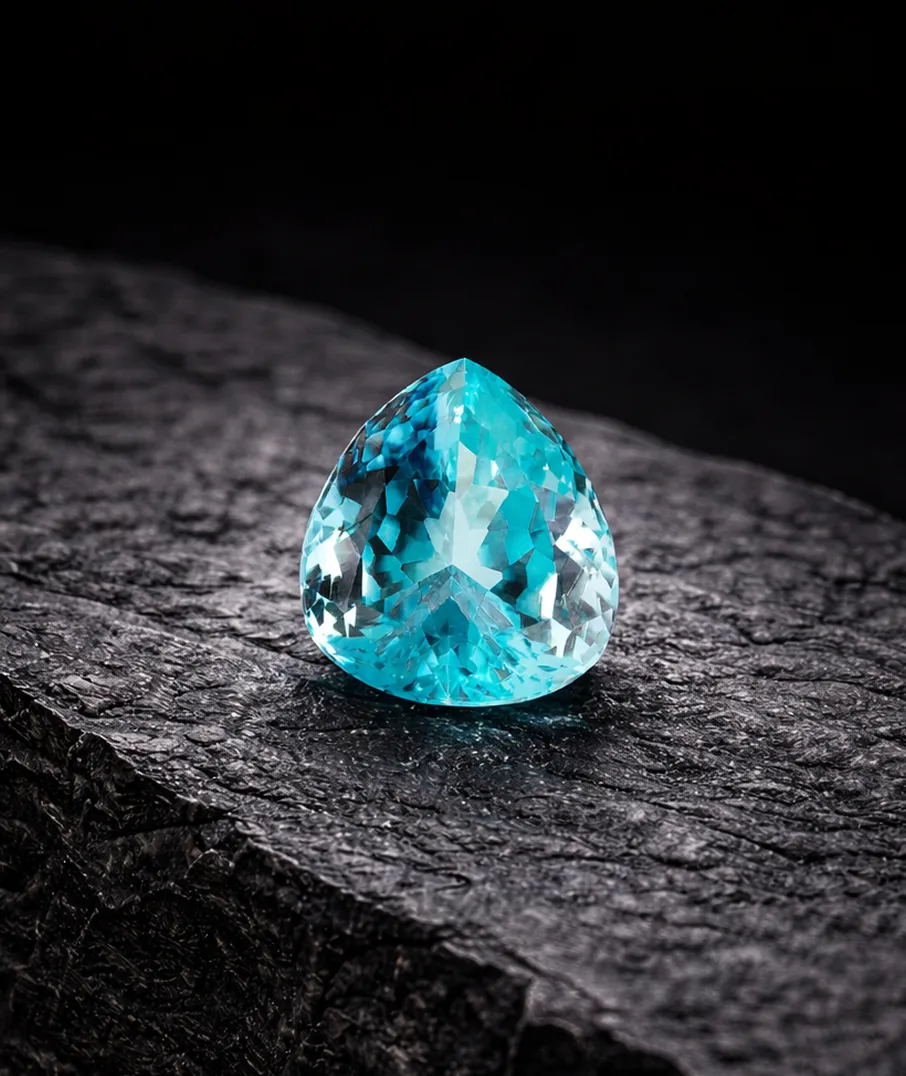
A good tourmaline bracelet consists of stones matched in hue, lightness and size, and of a setting that protects their edges. At 7 to 7.5 on the Mohs scale, tourmaline is fairly scratch resistant, but its toughness is only fair. In a bracelet that often knocks against edges, a bezel setting, channel setting or strong prongs and a secured clasp therefore matter.
At a glance
- Colors
- Tourmaline occurs in every color
- Hardness
- 7 to 7.5 on the Mohs scale
- Toughness
- Fair, edges need protection
- Red and pink
- Manganese, traded as rubellite
- Neon blue to green
- Copper and manganese, traded as Paraíba tourmaline
- Fit
- About one finger of space between wrist and bracelet
- Cleaning
- Warm soapy water, no ultrasonic, no steam
In a bracelet, the stone is put to the greatest test
A bracelet sits where the hand works. It brushes against table edges, door frames and bags. For a tourmaline, this means it must not only resist scratches but also withstand knocks. According to the Gemological Institute of America, GIA for short, its hardness is 7 to 7.5 on the Mohs scale. That is quite sufficient against everyday scratches. Its toughness, meaning its resistance to impact and chipping, is rated by GIA as only fair.
This leads to the most important rule for any tourmaline bracelet: the setting protects the edges. A ring is often taken off, while a bracelet frequently stays on the wrist all day. Good bracelets set the stones deep enough that the metal absorbs the first knock. The links are made so that they remain flexible without the stones striking each other. How the same questions are solved with diamonds is shown in the guide Assessing diamond bracelets.
One mineral, many colors
Tourmaline is a mineral with an unusually wide range of colors. According to GIA, traces of iron and possibly titanium produce green and blue tones, manganese produces red and pink. Trade names arise from this. Red to pink stones are called rubellite. Blue to green tourmalines whose color, according to the Swiss Gemmological Institute SSEF, is due mainly to copper and manganese are called Paraíba tourmaline.

For a bracelet, this variety is both an opportunity and a task. One can show a single color in a row, a gradient from light to dark, or deliberately combine several colors. In every case, the design must define how strict the matching should be. A single-color bracelet barely tolerates deviations, while a gradient depends on precisely measured differences. The page Tourmaline gives an overview of the mineral.
Many stones, one color: the matching
Tourmaline is strongly pleochroic. It shows different colors in different viewing directions, and one direction is usually noticeably darker. Depending on how the cutter orients the table to the crystal, the same rough stone becomes lighter or darker. For a bracelet, this means two stones from the same find can look different once set. Matching is therefore always done on the cut stone, viewed from above, just as it will later sit in the bracelet.
Shape adds to this. Tourmaline crystals grow long and narrow. According to GIA, cutters therefore often produce long rectangles, because this wastes the least material. The result is many narrow stones in unusual dimensions. A row in a bracelet, however, needs equal dimensions so that settings and links stay the same. GIA points out that many buyers prefer standard sizes for exactly this reason: they are easier to set.
- Define the color directionSingle color, gradient or combination: the decision determines how tight the tolerance in hue and lightness is.
- Sort stones by sizeEqual length and width for each link, so that setting and spacing are the same throughout.
- View under two light sourcesCheck the row in daylight and in warm artificial light. Outliers become apparent immediately.
- Record the sequenceThe matched sequence is documented before setting. It can hardly be changed afterwards.
Paraíba, rubellite and Lagoon compared
Three tourmalines appear particularly often in High Jewelry bracelets. Paraíba tourmaline is known for its vivid blue to green. According to GIA, it rarely occurs above one carat, and color matters more than size. A bracelet with many Paraíbas therefore usually consists of smaller stones. Rubellite, by contrast, is also found in larger stones but often shows visible inclusions. Lagoon tourmaline is a blue-green tourmaline whose name comes from the trade.
| Criterion | Paraíba tourmaline | Rubellite | Lagoon tourmaline |
|---|---|---|---|
| Color | Neon blue to green | Pink to red | Blue with a green tint |
| Cause of color | Copper and manganese | Manganese | See the laboratory report |
| Typical size | Rarely above one carat | Larger stones too | Depends on the stone |
| Inclusions | Depends on the stone | Often visible to the naked eye | Depends on the stone |
| Treatment | Often heated | Heating or irradiation possible | Laboratory report clarifies |
Information according to GIA and SSEF. Only a laboratory report clarifies whether an individual stone has been treated.
With Paraíba tourmaline, origin also shapes the name. SSEF calls stones from Brazil Paraíba tourmaline. Stones from Nigeria and especially Mozambique with the same color and trace elements are called tourmaline in the report, with the note that the trade also calls them Paraíba tourmaline. The guide Paraíba or Lagoon in a bracelet compares two blue-green bracelets directly.
Setting, links and clasp
Three setting styles carry most gemstone bracelets. Prongs hold each stone with small metal claws and let in plenty of light. The channel setting places the stones in a row between two metal rails. It forms a smooth surface on which nothing catches, and it protects the edges. The bezel setting, a metal rim around each stone, offers the strongest protection according to GIA and suits bracelets that are worn often.

A bracelet should fit so that about one finger fits between wrist and band. It should not slide up the arm but should move easily. The clasp needs a safety catch, such as an additional latch. Different rules apply to a rigid bangle, because it does not conform to the wrist. What matters there is explained in the glossary under Bangle and in the guide Bespoke bangle.
White gold, rose gold or platinum
The metal changes how the color of the tourmaline appears. 18 karat gold, stamped 750, consists of 75 percent fine gold. Rose gold gets its color from copper and silver in the alloy. White gold contains palladium, nickel or zinc and is usually rhodium plated, meaning coated with a thin layer of rhodium that wears off over time. According to GIA, platinum is denser and stronger than gold, and platinum prongs break less often.
For the color effect, a simple rule of thumb applies: a white metal keeps blue and green cool and clear, a warm metal deepens pink and red. A Paraíba in white gold therefore appears particularly fresh, a rubellite in rose gold looks cohesive and warm. Anyone prone to nickel allergy should, according to GIA, raise this with white gold. More on fineness can be found under 18k (750) gold.
Common mistakes with a tourmaline bracelet
- Judging stones individually instead of in the row: only side by side does it show whether the colors belong together.
- Choosing high, open prongs: in a bracelet, the stone edges then take the knocks first.
- Planning the clasp without a safety catch: an unsecured clasp is the most common cause of loss.
- Choosing the bracelet too loose: it slides, turns and knocks against things more often.
- Not clarifying treatments: irradiated colors can fade under heat or strong light.
Everyday care
Tourmaline is stable in light and does not react to common chemicals. It is sensitive to heat: strong heat can change the color, and rapid temperature changes can cause fractures. GIA advises against ultrasonic and steam cleaners and recommends warm soapy water with a soft brush. With a bracelet, it is worth looking at the links: dirt collects between them and makes the stones appear dull.
Once a year, a goldsmith should check the settings, hinges and clasp. Loose prongs and worn hinges are barely noticeable when wearing the piece, until a stone is missing. With rhodium plated white gold, the rhodium layer can also be renewed on this occasion. How treatments of tourmaline are disclosed and what they mean for care is described in the guide Treatment of tourmalines.
A tourmaline bracelet as a one-of-a-kind piece
In the house's pieces, Vikar Ahmed works with Brazilian Paraíba tourmaline, Lagoon tourmaline, Namibian tourmaline and rubellite, set among other metals in 18k (750) white gold and rose gold. A bracelet is created there as a one-of-a-kind piece: from the design through three-dimensional visualization with CAD to production in the in-house atelier in Idar-Oberstein, where the goldsmiths set the stones by hand. The house discloses the treatment of each stone openly, in the consultation and in writing on the certificate and invoice.
Frequently asked questions
Who makes a custom-designed bracelet with tourmalines?
A workshop that handles design, stone matching and setting itself. Vikar Ahmed designs bracelets as one-of-a-kind pieces and makes them in its in-house atelier in Idar-Oberstein. The goldsmiths set the stones by hand. The house works with Paraíba, Lagoon and Namibian tourmaline as well as rubellite, among other stones.
Paraíba tourmaline or rubellite: which stone is the better choice for a High Jewelry bracelet?
Both are suitable; they lead to different bracelets. Paraíba tourmaline rarely occurs above one carat and makes its effect through vividness in smaller stones. Rubellite is also found in larger sizes but often shows visible inclusions. Hardness is the same for both, and with both the setting must protect the edges.
Compare Paraíba bracelets and Lagoon tourmaline bracelets in white gold.
In white gold, both appear cool and clear. The Paraíba bracelet shows a distinctive, vivid tone due to the copper content of its stones and is usually built from smaller stones. The Lagoon bracelet shows a calm blue-green that stands out particularly clearly in white gold. With both, what counts is that the colors in the row are carefully matched.
How tightly should a gemstone bracelet fit?
So that about one finger fits between wrist and bracelet. If it sits tighter, it presses when the hand bends. If it sits looser, it slides up the arm, turns and knocks its stones against edges more often. With a rigid bangle, the inner diameter is adjusted instead.
Can tourmalines of different colors be combined in one bracelet?
Yes, tourmaline is particularly suited to this because it occurs in almost every color. A plan is essential: a gradient needs even steps, a free combination needs equal sizes and similar lightness. Otherwise the bracelet looks restless rather than colorful.
How do you clean a tourmaline bracelet properly?
With warm soapy water and a soft brush, including between the links. Then rinse well and dry. Ultrasonic and steam cleaners are not suitable for tourmaline, because heat and vibration can cause fractures or change colors.
Private consultation
Whether a bracelet should be made in one color, as a gradient or in several tourmaline colors is best decided with the stones in view. Vikar Ahmed advises by appointment in the showroom in Idar-Oberstein or virtually. Request an appointment for a private consultation.
Further reading
- Paraíba or Lagoon in a bracelet
- Gemstone: Tourmaline
- Glossary: Lagoon tourmaline
- Namibian tourmalines
- Paraíba tourmaline at Vikar Ahmed
Sources
- GIA: Tourmaline Description, accessed 2026-11-17
- GIA: Tourmaline Quality Factors, accessed 2026-11-17
- GIA: Tourmaline Care and Cleaning, accessed 2026-11-17
- SSEF: Paraiba tourmaline, accessed 2026-11-17
- GIA 4Cs: Tennis Bracelet Buying Guide, accessed 2026-11-17
- GIA 4Cs: White, Yellow and Rose Gold Engagement Rings, accessed 2026-11-17
- GIA 4Cs: Picking the Right White Metal, accessed 2026-11-17
- Vikar Ahmed: Collections, accessed 2026-11-16
- Vikar Ahmed: Bespoke, Designprozess, accessed 2026-11-16
- CIBJO: Introduction to the Blue Books, accessed 2026-11-17

A personal conversation starts here.
At the showroom in Idar-Oberstein or by video. Vikar Ahmed discusses your ideas, stones and designs with you and answers your questions calmly and in confidence.


Thank you for your request.
Your request will be handled with the utmost attention and discretion. Vikar Ahmed will get back to you.
Your details
Request
–
Occasion
–
Consultation
–
Contact
–
In the meantime
Insights: What is a Paraíba tourmaline? · Engagement ring to your own design: how does it work?
Confidential and without obligation
Back to the pagePrivate consultation
A personal conversation starts here.
- Time for your questions, wishes and ideas
- In the showroom in Idar-Oberstein or by video
- Confidential, discreet and without obligation
Vikar Ahmed · Hauptstraße 111 · 55743 Idar-Oberstein, Germany