

Untreated Rubellite: What Can Be Proven
With red tourmaline, the question of untreated reaches a limit of gemology. Why this is so, and how you can still make a well-founded decision.
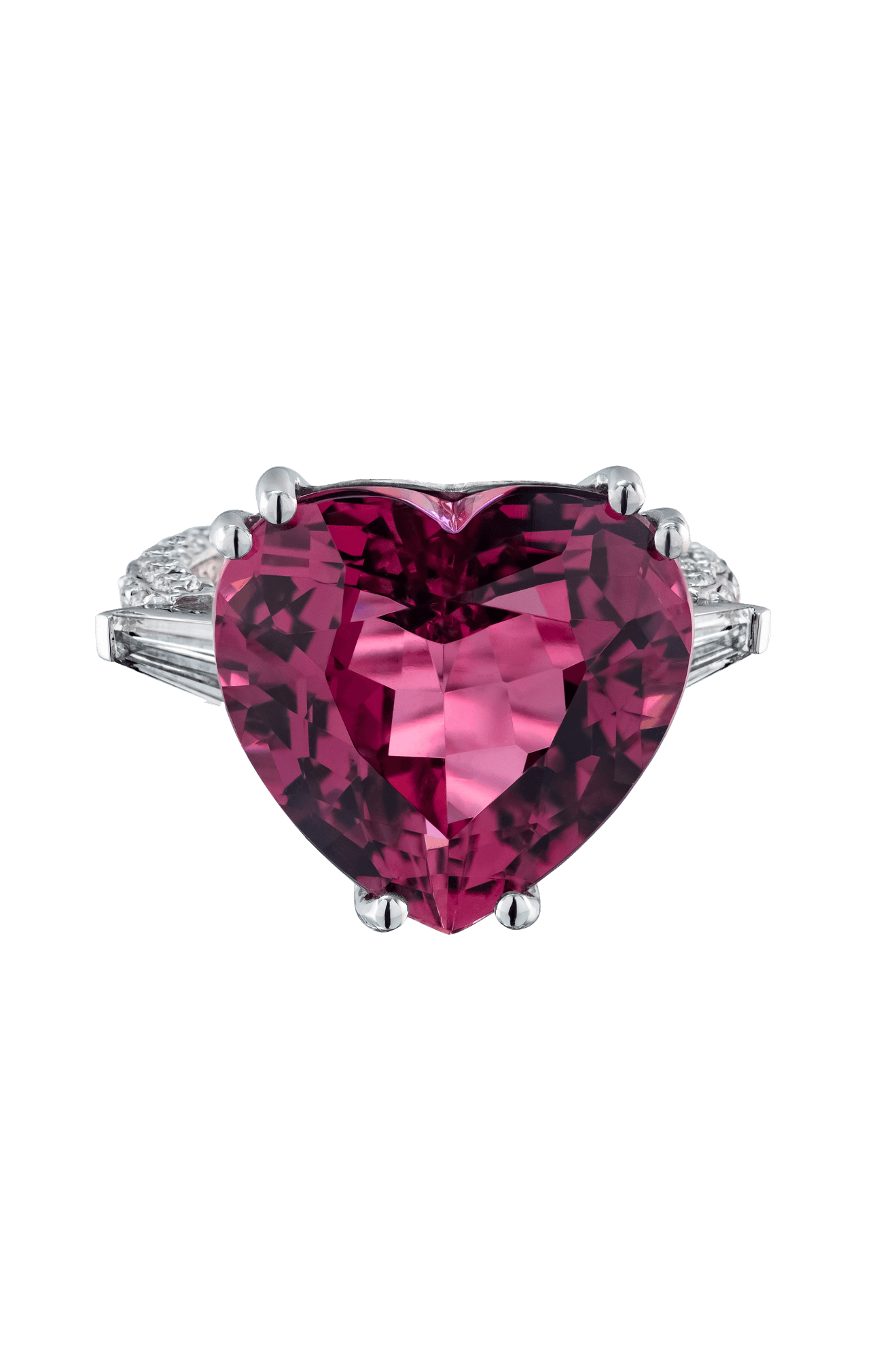
A premium for an untreated rubellite is rarely justified, because heating of tourmaline usually cannot be detected. Laboratories therefore often note that the origin of color cannot be determined. Fillings in fissures, by contrast, can be proven. Decide on the basis of color, clarity, and a report that states identity and detectable treatments.
At a glance
- Rubellite
- Trade name for pink, red, purplish red to brownish red tourmaline
- Main treatments
- Heating and irradiation (GIA)
- Detection of heating
- Usually not possible, color is considered stable
- Detection of fillings
- Possible, resins and glasses in fissures are recognizable
- Origin report
- Not offered by GIA for rubellite
- Hardness
- 7 to 7.5 on the Mohs scale, toughness fair
Why untreated is hard to prove for rubellite
The Gemological Institute of America, GIA for short, uses the name rubellite for pink, red, purplish red, orangy red, and brownish red tourmaline. Some in the trade want to reserve the name for strong red tones only. According to GIA, the two most important treatments of tourmaline are heating and irradiation. Both change the color. For heating, GIA states that the change is stable and cannot be detected.

This statement changes the whole question. If a laboratory cannot tell whether a rubellite was heated, it also cannot confirm that it is unheated. The laboratory committee LMHC, in which GIA, SSEF, Gübelin, and the German DSEF among others align their report wording, therefore lists tourmaline among the stones whose origin of color typically cannot be determined. It provides fixed wording for this in the report.
What a report says about rubellite
For stones that are frequently heated or irradiated and where this cannot be detected, the LMHC specifies three variants. The report can note that the stone is commonly or possibly heated or irradiated. It can state that the authenticity of the color is currently undeterminable. Or it records that it was not determined. The variants can be combined. None of them means that the stone is treated.
| Test point | Detection possible | What the report states |
|---|---|---|
| Identity: tourmaline | Yes | Species and variety, such as tourmaline, rubellite |
| Heating | Usually no | Commonly heated or origin of color undeterminable |
| Irradiation | Often no | Possibly irradiated or origin of color undeterminable |
| Filling of fissures | As a rule, yes | Type and amount of filling |
| Country of origin | Not offered by GIA | No statement |
Based on LMHC Information Sheet 8 and the GIA report offering for colored stones. Other laboratories may differ.
A GIA identification report describes the material and lists detectable treatments. GIA determines origin only for selected stones such as emerald, ruby, sapphire, or Paraíba tourmaline, not for rubellite. A report on a rubellite is still useful: it confirms that the stone is tourmaline and not a similar-looking material, and it shows whether fissures are filled. More on the structure of such documents in the guide Gemstone report.
Heating, irradiation, filling: what the methods do
According to GIA, heating can lighten tourmalines that are too dark or change their color. Stones with many liquid inclusions do not tolerate the heat. In some pink and yellow tourmalines, the color goes back to color centers created by radiation. This radiation may have acted naturally in the rock or in a laboratory. Important for the wearer: according to GIA, color produced by irradiation can fade under heat or strong light. Heated color, by contrast, is considered stable.
Fillings are a different case. According to GIA, resins and glasses can be introduced into any durable stone with fissures that reach the surface. They improve apparent clarity, not color. A trained gemologist usually recognizes filled stones under magnification. For rubellite, this question is often more important than the question of heating, because red tourmalines frequently grow with inclusions and fissures. An overview of all methods is given in the guide Tourmaline treatment.
When a premium can be justified
A premium can only be justified by a finding, not by a claim. For rubellite, the reliable finding is usually: no filling, no detectable treatment, origin of color undeterminable. Gemology rarely yields more. If a stone is explicitly offered as unheated, ask what the statement is based on. If it rests only on the supply chain, it is not false, but it is not verified either.

A higher standing for a rubellite is justified above all by what can be seen. GIA describes that red tourmalines with visible inclusions are tolerated as long as the color is strong and beautiful. Whitish, conspicuous inclusions, by contrast, are considered undesirable. For stones of the same color and clarity, the price per carat usually rises markedly according to GIA once the stones exceed five carats. Color, clarity, and size say more here than the label untreated.
For colored stones such as sapphire or emerald, the question of untreated can often be answered more clearly. When the premium is worthwhile there is described in the guide untreated colored gemstone. What untreated means as a term and where detection ends is explained in the glossary. For rubellite: anyone who spends more for untreated should know that this added value usually does not appear in the report.
How to recognize a good rubellite
- Color: strong, even red to pinkish red without a pronounced brown tint.
- Clarity: inclusions may be visible but should not stand out as whitish.
- Fissures: no open fissures at edges and point, where the stone is set.
- Report: identity as tourmaline and a statement on fillings.
- Cut: even color in face-up view, no dark or window-like zones.
Color is the most important criterion for rubellite. GIA describes that red and pink tourmalines can come close to ruby and pink sapphire in hue and depth. Even so, a rubellite is not a ruby but a different mineral with a different hardness. How the two differ is shown in the guide Rubellite or ruby. How many inclusions remain appropriate for which color is covered in the guide on rubellite clarity.
Common mistakes with the question of untreated
- Reading "no indications of heating" as proof: in tourmaline, heating is usually not detectable.
- Understanding the note "origin of color undeterminable" as a flaw: it describes a limit of testing.
- Asking only about heating and overlooking fillings in fissures.
- Treating a rubellite like a ruby: it is softer and less tough.
- Justifying a higher standing solely with the statement untreated.
What all these mistakes have in common is the wish for a simple category. For rubellite, there is none. What is reliable is the identity, the finding on fillings, and a look at color and clarity. Everything else is information from the supply chain that you should classify as such. Knowing this, you can confidently choose a stone with an honestly worded report without paying more for a property that cannot be verified.
Wearing rubellite in a one-of-a-kind piece
Tourmaline reaches 7 to 7.5 on the Mohs scale, and GIA rates its toughness as fair. It is stable to light and hardly reacts to chemicals, but it does not tolerate heat: high temperatures can change the color, sudden temperature changes can cause fractures. GIA recommends lukewarm soapy water and advises against ultrasound and steam. For rings, a setting that protects edges and point is advisable, more on this under Setting for rubellite.
Among the pieces Vikar Ahmed shows are works with rubellite. One-of-a-kind pieces are created in-house from the design through three-dimensional visualization to production in the in-house atelier in Idar-Oberstein. For rubellite, what counts most for Vikar Ahmed is the radiance of the color and a precise cut, and he accepts fine inclusions as long as they do not cloud the color. The house states every treatment in writing on the certificate, the expert report, and the invoice. More about the stone itself on the Rubellite page in the gemstone knowledge section.
Frequently asked questions
Is an untreated rubellite worthwhile compared with a treated one for a one-of-a-kind piece of jewelry?
Usually not, because heating in rubellite generally cannot be detected and heated color is considered stable. For a one-of-a-kind piece, what counts is color, clarity, and a report that clarifies identity and fillings. Pay more attention to whether any fissures are filled and whether the stone is clean at edges and point.
Is an untreated rubellite worth the premium over a treated one?
Only if the statement is proven, and with rubellite that is rarely the case. Laboratories usually note that the origin of color cannot be determined. A higher price for a property that cannot be verified is hard to justify. Color, clarity, size, and the finding on fillings in fissures are more reliable.
What does "origin of color undeterminable" mean in a rubellite report?
The note means that the laboratory cannot establish whether the color is natural or was produced by heating or irradiation. It follows a shared wording of the laboratory committee LMHC for stones such as tourmaline. It does not say that the stone is treated, but describes a limit of testing.
Can the color of a rubellite fade?
According to GIA, color produced by irradiation can fade under heat or strong light. Color changed by heating is considered stable. In everyday wear, tourmaline is stable to light. Protect the stone from high heat, for example during soldering on the setting, and clean it only with lukewarm soapy water.
Is there an origin report for rubellite?
Not at GIA. The institute determines origin only for selected stones such as emerald, ruby, sapphire, or Paraíba tourmaline. For rubellite, it issues an identification report that describes the material and names detectable treatments. Statements of origin for rubellite therefore usually come from the supply chain.
Are rubellites also filled?
It does occur. According to GIA, resins and glasses can be introduced into any durable stone with open fissures to improve clarity. Unlike heating, such a filling is generally detectable by a laboratory. Ask explicitly, therefore, for the finding on fillings.
Private consultation
Which rubellite suits your one-of-a-kind piece is decided at the stone and by its report. Vikar Ahmed offers consultations by appointment in the showroom in Idar-Oberstein, and in a virtual appointment on request. Your inquiry is treated with discretion. Request a private consultation.
Further reading
- Gemstone: Rubellite
- Glossary: Rubellite
- How tourmalines are treated
- Rubellite in an engagement ring
- Glossary: Treatment
Sources
- GIA: Tourmaline Care and Cleaning Guide, accessed 2026-11-17
- GIA: Tourmaline Description, accessed 2026-11-17
- GIA: Tourmaline Quality Factors, accessed 2026-11-17
- GIA: Gem Treatment, accessed 2026-11-17
- GIA: Colored Stone Reports, accessed 2026-11-17
- LMHC Information Sheet 8: Gemstones where colour authenticity is undetermined (Januar 2023), accessed 2026-11-17
- Vikar Ahmed: Collections, accessed 2026-11-17
- CIBJO: Introduction to the Blue Books, accessed 2026-11-17

A personal conversation starts here.
At the showroom in Idar-Oberstein or by video. Vikar Ahmed discusses your ideas, stones and designs with you and answers your questions calmly and in confidence.


Thank you for your request.
Your request will be handled with the utmost attention and discretion. Vikar Ahmed will get back to you.
Your details
Request
–
Occasion
–
Consultation
–
Contact
–
In the meantime
Insights: What is a Paraíba tourmaline? · Engagement ring to your own design: how does it work?
Confidential and without obligation
Back to the pagePrivate consultation
A personal conversation starts here.
- Time for your questions, wishes and ideas
- In the showroom in Idar-Oberstein or by video
- Confidential, discreet and without obligation
Vikar Ahmed · Hauptstraße 111 · 55743 Idar-Oberstein, Germany